Google Makes Gemini Tasks Free in Six Countries: The Agent That Calls, Signs In and Buys Now Reaches Non-Paying Users
Google's Tasks in Gemini, formerly the paid Spark agent, is now free in six countries. Here's what works today, which features are U.S.-first, and how approvals work.
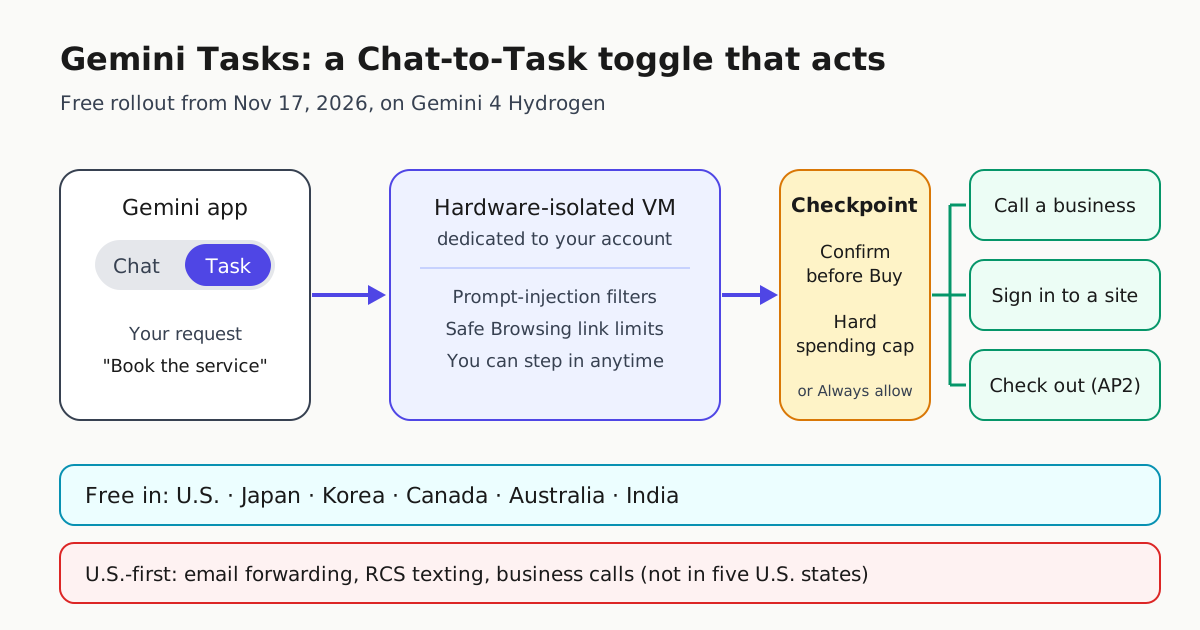
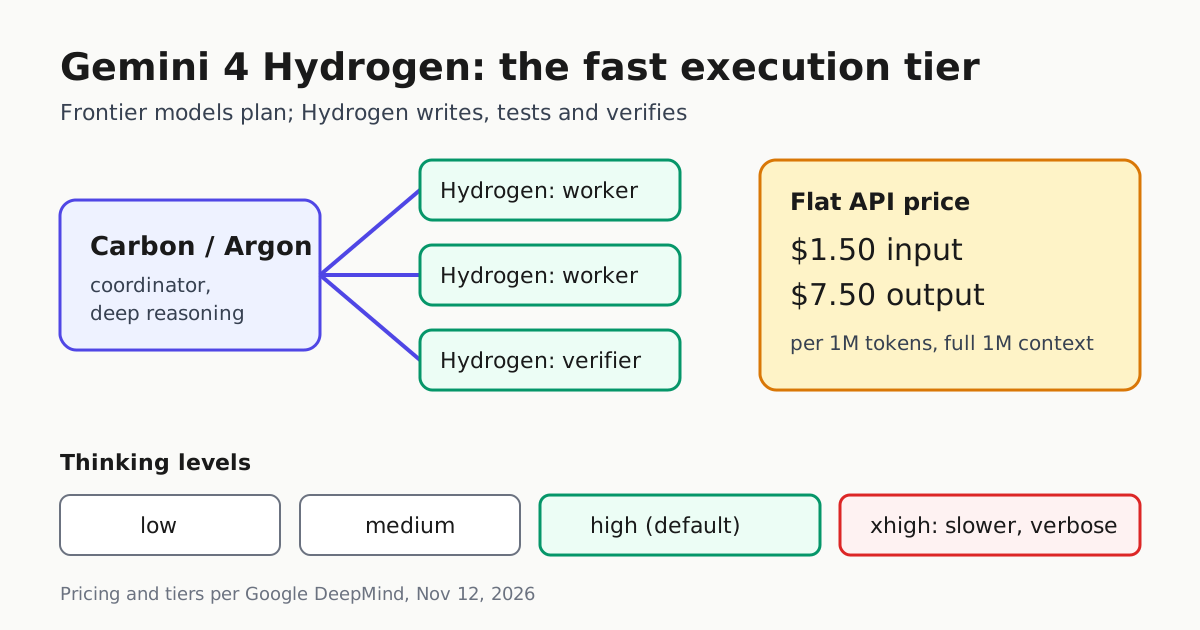
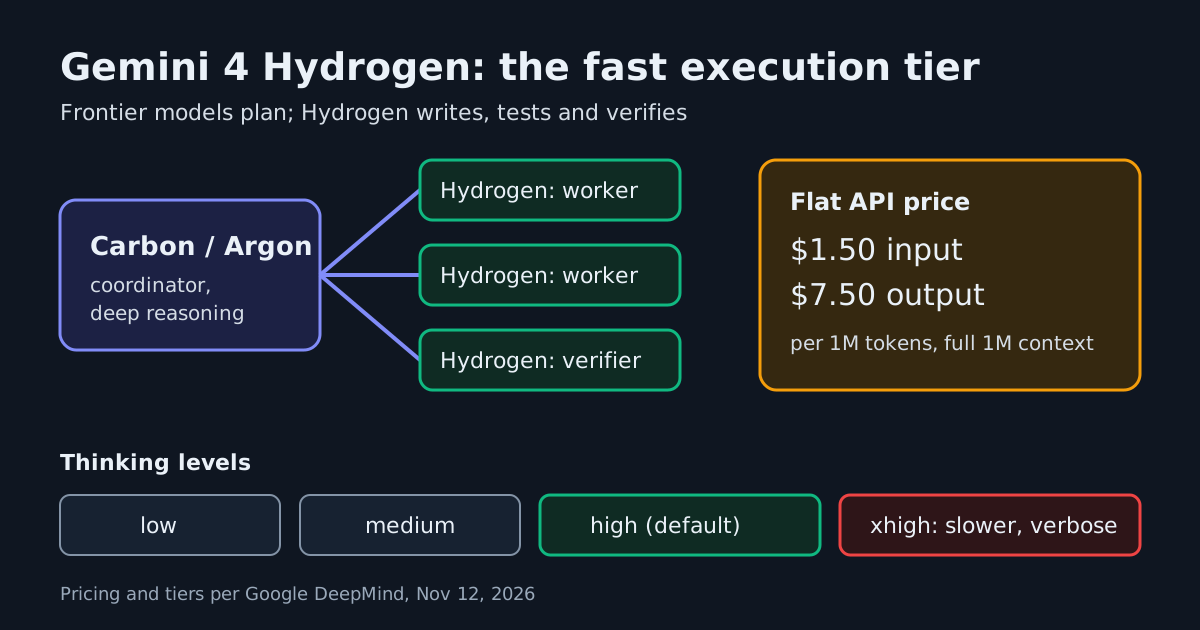
Google has started rolling out Tasks in Gemini, the agent mode it first offered as Spark, free of charge in six countries. In a Nov. 17 post on The Keyword, Josh Woodward, Google’s vice president for Labs, the Gemini app and AI Studio, says the update is “rolling out free of charge for hundreds of millions of people across the U.S., Japan, Korea, Canada, Australia, and India.” It runs on the new Gemini 4 Hydrogen model. A separate set of “advanced features” is rolling out “starting in the U.S.”
The change matters because of what the agent can do. It can phone businesses, sign into websites with saved passwords and complete purchases with a stored card. Until now, people had to pay for an assistant that holds their logins and spends their money. In these six markets it is now a toggle on the Gemini home screen.
What is live, and where
Google’s post doesn’t list availability for every feature by country. This table combines its statements and footnotes with The Verge’s report.
| Capability | Availability | Basis |
|---|---|---|
| Chat-to-Task toggle on Gemini 4 Hydrogen | Free in U.S., Japan, Korea, Canada, Australia, India | |
| Forwarding emails to gemini@google.com | Starting in the U.S. | |
| Texting Gemini over RCS | Requires a U.S. number on an eligible carrier | Google footnote |
| Calling businesses | U.S.; not in Indiana, Louisiana, Minnesota, Montana or Nebraska | The Verge; Google footnote |
| Purchases with Google Pay | U.S. | The Verge; Google |
| Sign-in through Google Password Manager | U.S. | The Verge; Google |
| Universal Commerce Protocol checkout | Announced as “up next,” not shipped |
To start, open Gemini and switch the home-screen toggle from Chat to Task. According to The Verge, Tasks outside the U.S. can still build meal plans, manage a calendar and search email for recurring expenses. Neither Google nor the coverage gives a task cap or other usage limit for free users.
From paid Spark to free Tasks
The reports describe Spark’s paid history slightly differently. TechCrunch says it launched to select testers in May and then expanded to U.S. subscribers on Google AI Ultra. The Verge says it was available to Google AI Pro and Ultra subscribers. Both agree that a feature that required a subscription is now free.
Google’s examples show the kind of work Tasks is meant for. Woodward says Gemini called two car dealerships at once, waited on hold, booked an early-Friday service slot and added it to his calendar “in less than five minutes.” He gave it access to a utility portal through the new Password Manager integration, and it traced a $389 electric bill to a heat pump running during peak pricing. It also compared USB-C chargers and checked out through Google Pay. Google says Gemini connects with more than 60 apps, including Instacart.
These are vendor anecdotes, not independent tests. The post admits that tasks can fail. It also says that on some sites Gemini “can make it most of the way through and then hand the screen back to you to click the final button.”
The control model Google is shipping
This free agent holds payment details, so the main safety question is what checkpoints Google built. According to the post:
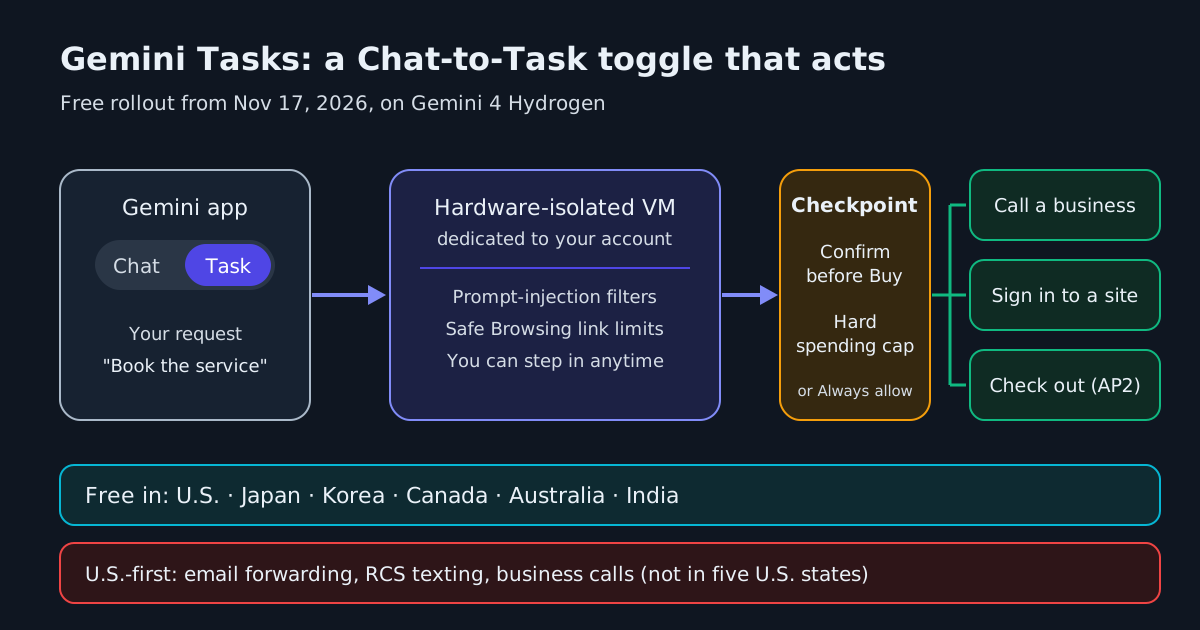
- Isolation: Tasks run through Google Cloud’s Agent Compute Engine in a “hardware-isolated virtual machine that’s dedicated to your account and never shared with other users.” Prompt-injection filters scan search results and web pages, and Safe Browsing limits which links Gemini can open.
- Approval: Gemini is “designed to ask for your confirmation or pre-approval before clicking ‘Buy’,” and to pause before critical steps. Users can step in with new instructions at any point.
- Standing permission: Users can set routine actions to “Always allow” so Gemini stops asking.
- Spending: Purchases use the Agent Payments Protocol (AP2) with tokenized Mastercard and Visa cards. American Express is “coming soon.” Users can set a hard spending cap.
- Calls: Gemini says it is an AI at the start of a call. Businesses can opt out, and Gemini won’t share payment or private account details unless the user says so.
The Verge reports the same design: before a sensitive step such as a purchase, the agent stops and asks for permission.
The wording is “designed to,” not a guarantee. “Always allow” turns a one-time approval into a standing permission. The post doesn’t explain how to review or revoke those permissions beyond adjusting task settings and disconnecting apps. If you build similar flows, our checkout pre-authorization checklist and delegated-approval receipt ledger cover what Google’s post leaves out: what was approved, by whom, and for how long.
Why it matters
Distribution. The Verge places Tasks next to Claude Duet, OpenAI’s Dots and Meta’s Muse. Google’s version is free, reaches a very large existing user base, and draws on data already in Gmail, Calendar, Password Manager and Google Pay. Woodward argues that because this data “already lives at Google,” users “don’t have to send it elsewhere.” In our view, competitors’ paid agent tiers now have to justify their price against a free default.
Businesses will get AI callers. U.S. dealerships, clinics and shops should expect calls from an agent that identifies itself as AI. Google says these businesses can opt out.
Websites will see logged-in agents. Google argues that bots have long been blocked by default and that personal assistants need “a more nuanced approach” based on “open, verifiable standards.” It says it is working directly with major websites and security providers. Teams already building agent access, such as Walmart with its agent gateway, will now see agent traffic from Google’s own consumer app.
Consent goes mass-market. Regulators are already asking how agents should touch bank accounts, as Fed Governor Barr’s guardrails show. Free access in six countries raises the stakes. Our Gemini 4 Hydrogen launch coverage covers the model behind Tasks.
Still unclear
- Whether free users face task limits, and how they compare with paid plans.
- When, or whether, the U.S.-first features reach the other five countries.
- How “Always allow” permissions can be audited and revoked.
- Timing for American Express support and UCP checkout.
Google links to a technical paper on its defense-in-depth approach and invites researchers to its AI Vulnerability Reward Program. Independent testing of its isolation and approval claims should start there.