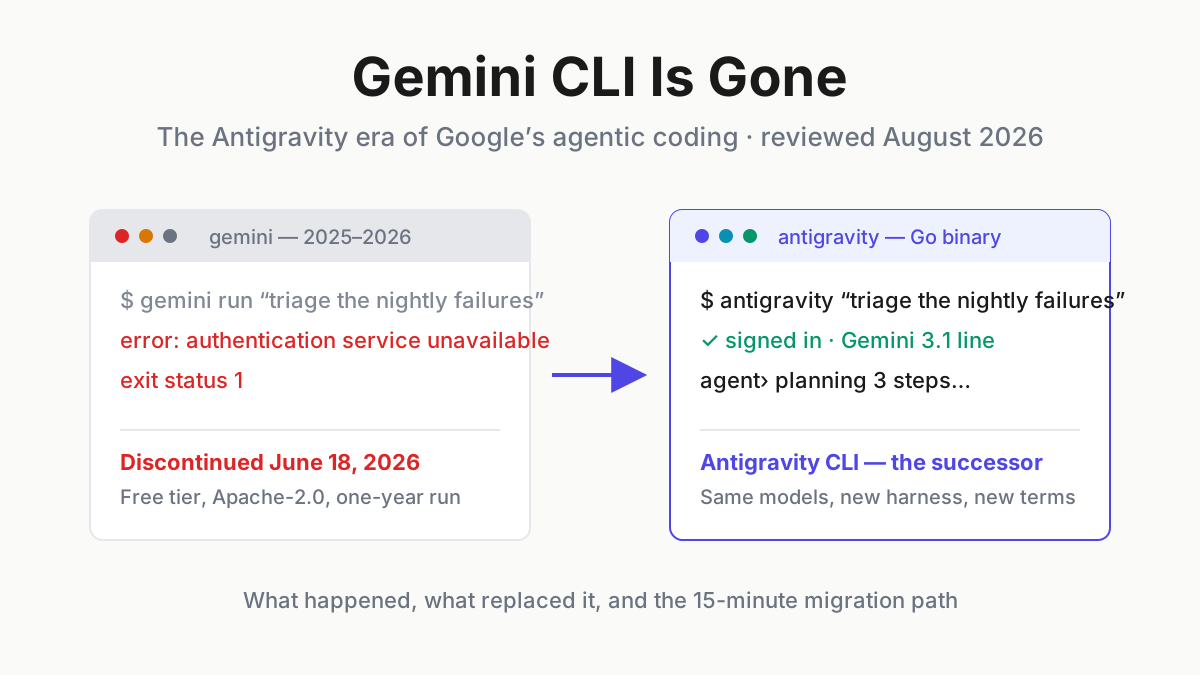
Gemini CLI Is Gone: The Antigravity Era of Google's Agentic Coding
Google shut Gemini CLI down on June 18, 2026, and CI pipelines broke overnight. What happened, how Antigravity CLI replaces it, and the 15-minute migration.

Go deeper. Build your own.
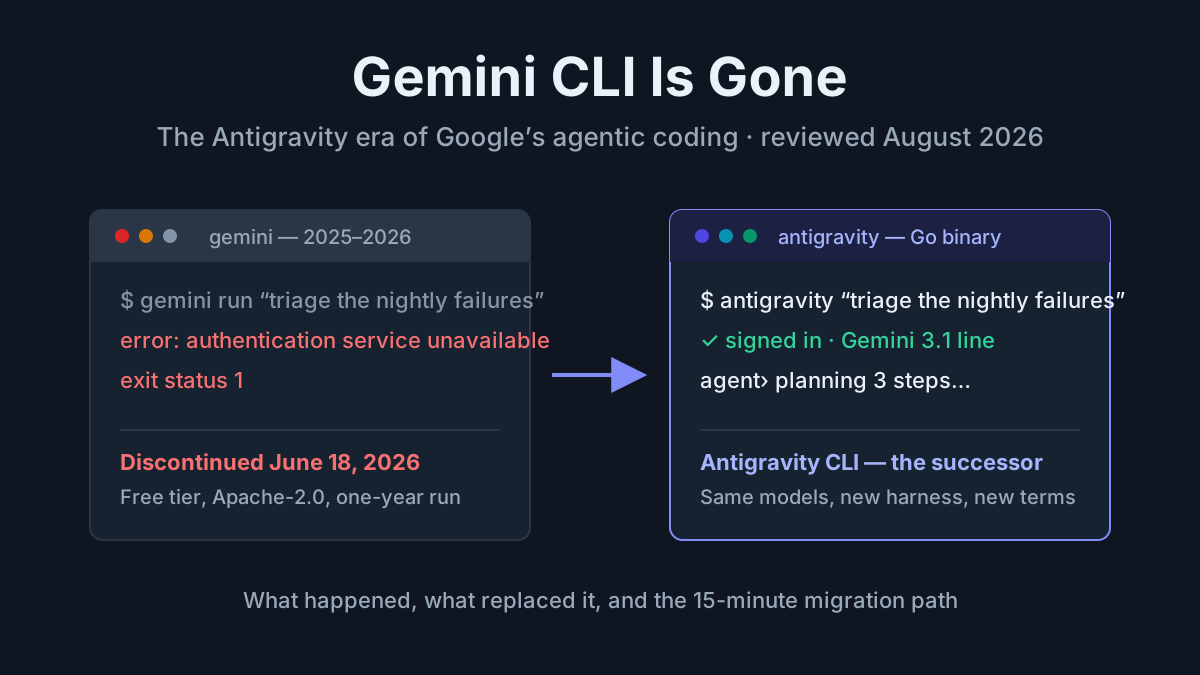
On June 18, 2026, Gemini CLI stopped answering. Authentication calls failed, the binary exited non-zero, and CI pipelines that had quietly depended on Google’s free terminal agent went red across the industry — TechTimes ran the story the same day, and the Hacker News thread filled with people discovering their nightly jobs had a dead harness in them. Google’s most-installed agentic coding tool lived just under a year.
This article is the record and the way forward. What Gemini CLI was and why it mattered, how the shutdown actually played out, what the episode teaches about building on free-tier harnesses, a proper review of Antigravity and the Go-based Antigravity CLI that replaced it, a migration path you can run in about fifteen minutes, and a sober read on what to trust from Google now. If you are auditing the whole category rather than one vendor, start with our agent harness field map and come back.
What Gemini CLI was, and why it mattered
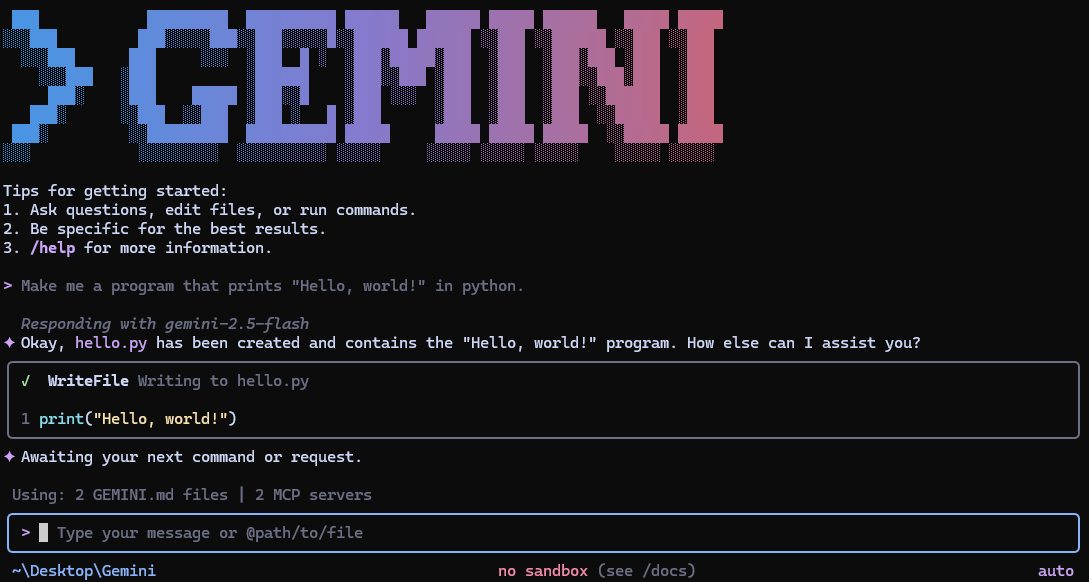
Gemini CLI was Google’s open-source terminal agent harness: an agent loop around the Gemini models with built-in tools for file operations, shell, grep, and web fetch, plus Google Search grounding for live context. Released in June 2025 under Apache-2.0, it was discontinued on June 18, 2026, after less than a year of service.
What made it matter was not the loop — it was the price. A personal Google account bought roughly 60 requests a minute and 1,000 a day at no cost , which in mid-2025 was the loudest free offer in the category by an order of magnitude. Every capacity-constrained developer on a $20 plan suddenly had a second lane for bulk work, and every rival pricing page got compared against Google’s zero.
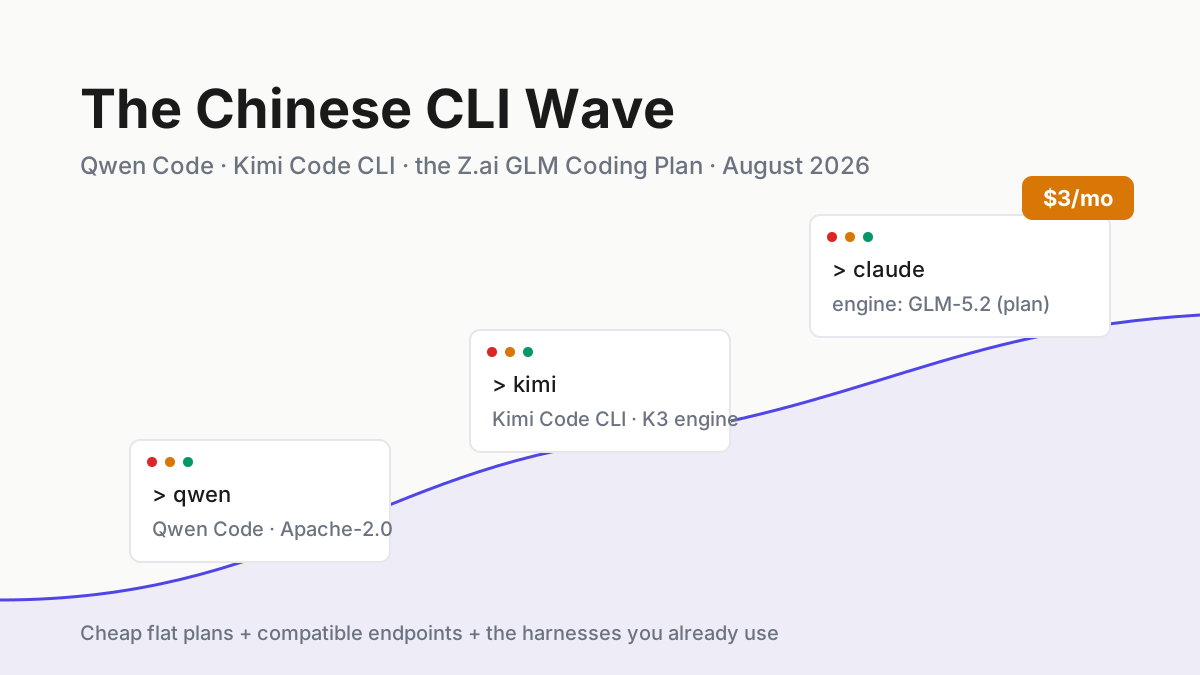
The license mattered too. Apache-2.0 meant the harness was genuinely forkable, and it got forked: Qwen Code began life as a Gemini CLI fork before growing into the anchor of the Chinese CLI wave. Whole teams learned harness internals by reading its source, and more than one competing tool quietly borrowed its patterns.
The daily mechanics were legitimately good for the era. GEMINI.md context files carried project memory in a global-plus-per-repo hierarchy, the direct ancestor of the AGENTS.md habit everyone has now. Checkpointing snapshotted state before risky edits so you could restore after a bad run, approval prompts gated shell commands and writes, and a bluntly named YOLO mode turned the gates off for the brave. MCP servers, custom commands, and an extensions system bundling both gave it a real ecosystem; headless mode made it scriptable — which is exactly how it ended up load-bearing in so many pipelines.
The daily-driver truth, for the record: it was a competent second harness and a frustrating primary. On scoped tasks — summarization, triage, bulk edits, giant-context reads against the million-token window — it earned its keep. On long agentic chains it was chattier and more retry-prone than Claude Code or Codex CLI, and under load the free tier could silently downgrade you to a lighter model mid-session. At $0, most of us shrugged and routed around it. That shrug is part of this story.
June 18, 2026: how the Gemini CLI shutdown played out
The end came fast by infrastructure standards. Google announced the deprecation in the spring with a runway measured in weeks , pointed users at Antigravity, and cut service on June 18. The binary did not gracefully degrade; it hard-failed on authentication. Per TechTimes’ shutdown-day coverage, the same story repeated everywhere: CI and CD pipelines with gemini steps in them started failing, and teams learned at 2 a.m. which of their automations had a free tier as a load-bearing wall.
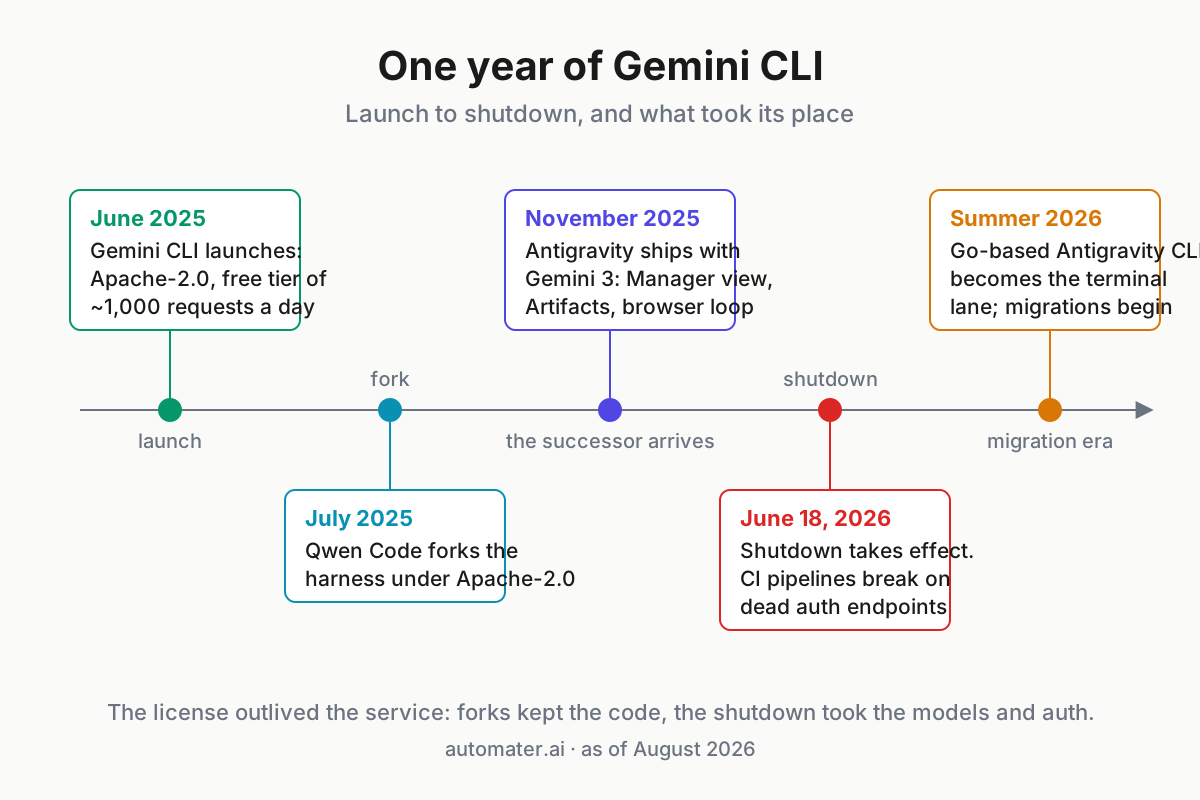
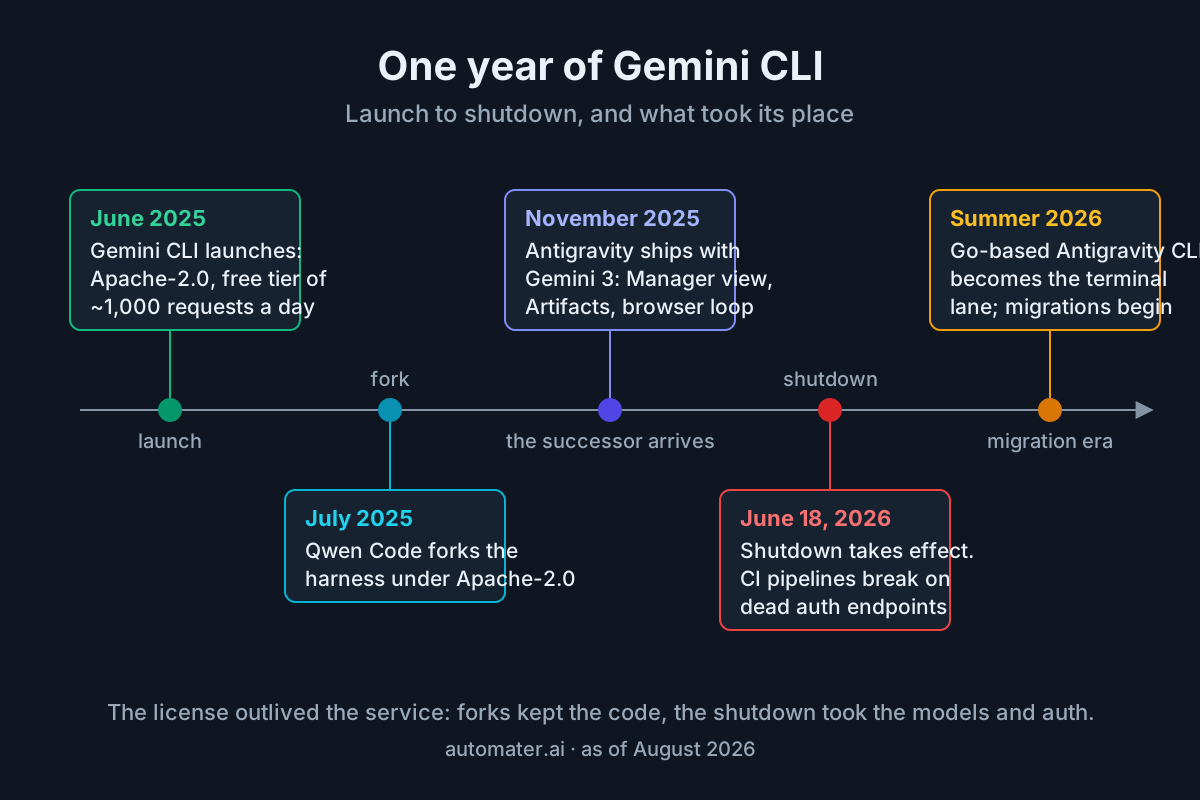 Twelve months, condensed: launch, fork, successor, shutdown, migration era.
The failure signature is worth recording for anyone still finding stragglers. Interactive users got a clear enough authentication error. Headless CI got the worst of it: OAuth refresh flows in runners died first, the binary exited non-zero, and pipelines interpreted a vendor shutdown as a test failure — red builds, paged on-calls, and no code change anywhere in the diff. Jobs pinned to cached credentials limped hours longer than fresh logins, which spread the breakage across a confusing day rather than one clean cliff.
The Hacker News thread is worth reading in full as a post-incident report written by a thousand authors. The recurring notes: nightly triage and release-notes jobs silently depended on it; the deprecation window was too short for enterprise change cycles; and — said with varying degrees of self-awareness — nobody had priced in the risk of free. A minority pointed out, correctly, that the writing had been on the wall since Antigravity launched in November 2025 and Google started routing its announcements there.
Two things softened the blow. First, Apache-2.0 outlived the product: the source survives in archives and forks , and Qwen Code — the fork — kept working through the shutdown untouched, because it never depended on Google’s auth or models. Second, Google shipped a successor rather than a shrug: the Go-based Antigravity CLI arrived as the designated terminal path, reviewed below.
Zoom out and June 18 was not an isolated event. The same season took iFlow CLI, Roo Code, and Phind, and put Cascade on end-of-life, per the mid-2026 harness map. We cover the pattern — and how to pick survivors — in the great harness die-off. Gemini CLI is simply its most famous casualty.
What the shutdown teaches about free-tier harnesses
The uncomfortable part is that Google’s free tier worked exactly as designed. It was customer acquisition: inference capacity spent the way startups spend venture money, to reset developer defaults and pull users toward the Gemini ecosystem. When the strategy consolidated on Antigravity, the spend moved with it. Nothing about that is scandalous. It is just worth pricing correctly. Three lessons, as of August 2026:
A free quota is a promotion, not a contract. Gemini CLI’s 1,000 requests a day vanished with the product; Qwen’s free OAuth tier ended April 15, 2026, per the same mid-2026 reporting; preview products throttle whenever demand spikes. Treat any free lane as spot capacity — use it enthusiastically, and assume a termination date you cannot see. The plan-economics breakdown covers what paid tiers actually guarantee, which is less than you would hope but more than zero.
Open source protects the code, not the service. Apache-2.0 meant the harness survived; it did not mean your workflow survived, because the models, quota, and auth were the service. A forkable harness plus a revocable model endpoint is still a dependency on the endpoint. This is why harness-model decoupling — any harness, any provider — is the property to select for.
Portability is the only real hedge. Teams that kept context files in-repo, wrote them in provider-neutral AGENTS.md conventions, and knew exactly which jobs called which harness migrated in an afternoon. Teams that had to grep their own infrastructure to find out where Gemini CLI lived took a week. Know your exposure before the announcement, not after.
Product note: A shutdown should cost you a tool, not your history. Automater Lite archives every agent session locally with full-text search and meters tokens across providers — Claude Code, Codex, and whatever Google ships next — so when a harness dies you keep the record and know exactly how exposed you were. Free, on automater.ai.
Antigravity, reviewed: the agent-first IDE that survived
Antigravity is Google’s agentic development platform: a VS Code-lineage editor rebuilt around agents, launched in November 2025 alongside Gemini 3. Its organizing idea is the Manager view — a mission-control surface where you run and supervise multiple agents across workspaces, with the editor as just one view. Since the Gemini CLI shutdown, Google Antigravity is the company’s primary agentic coding surface.
Reviewed on its own merits, the Antigravity IDE gets three things genuinely right. The Manager view treats delegation, not typing, as the default posture — you brief agents, watch them work in parallel, and drop into the editor only when supervision demands it. Artifacts — task lists, implementation plans, walkthroughs, screenshots — give you reviewable work products instead of a raw diff, which changes what code review feels like . And browser-in-the-loop verification lets the agent drive Chrome to check its own frontend work, closing a loop most harnesses leave open .
The model menu runs on the Gemini 3.1 line as of this writing , and during the preview it has included non-Google options — Anthropic models have appeared in the picker — though the menu shifts without notice . Access remains a free public preview at antigravity.google, with rate limits that reset in windows and have fluctuated hard under demand .
The honest verdict: Antigravity is the most interesting IDE bet in the category and not yet a foundation. The Manager view is a real preview of where development environments are heading, and it costs nothing to learn. But preview economics — shifting limits, shifting menus, no contractual quota — put it in the experiment slot, not the daily-anchor slot. For the broader IDE-versus-terminal decision, our Claude Code vs Cursor shootout has the framework; Antigravity currently sits closer to “research preview you should actually try” than to either.
Antigravity CLI: the Go-based successor, reviewed
The Antigravity CLI is the piece Google shipped for the terminal crowd it had just orphaned — a single static Go binary, noted in TechTimes’ launch coverage as arriving the same season the shutdown took effect. It fronts the same Antigravity platform as the IDE: same account, same models, same agent identity in a different surface.
What carried over from Gemini CLI: the Gemini model line with Search grounding, MCP server support, and the context-file habit — the Antigravity CLI reads AGENTS.md-style project instructions, and imports from GEMINI.md are straightforward . Sign-in is the same Google account, with entitlements shared with the Antigravity preview and the paid Google AI plans .
What changed is the shape of the thing. The Node dependency is gone — one Go binary installs anywhere your CI runs, which reads as a lesson learned from watching npm-based installs break at scale. And the standalone free-quota identity is gone with it: there is no published 1,000-requests-a-day lane attached to this tool. Capacity flows through Antigravity’s preview limits and Google’s paid tiers instead . The free lunch got smaller and vaguer at the same time.
What is missing, as of August 2026: the extension ecosystem is young, checkpoint-and-restore parity with the old CLI is not fully there , and the community lore — the blog posts, the config gists, the known failure modes — is a fraction of what a year of Gemini CLI accumulated. None of that is damning for a tool this new. All of it argues for treating the Antigravity CLI as a new harness with familiar models, not a renamed Gemini CLI.
The succession, side by side:
| Gemini CLI (2025–2026) | Antigravity CLI (2026–) | |
|---|---|---|
| Runtime | Node/npm install | Single Go binary |
| License | Apache-2.0, forkable | Not open source at launch |
| Free lane | ~1,000 requests/day, standalone | Via Antigravity preview limits, fluctuating |
| Context files | GEMINI.md hierarchy | AGENTS.md-style |
| MCP support | Yes | Yes |
| Strategic status | Expendable — proven June 18 | The designated surface |
Our verdict: a competent v1 with an obvious future, because it is now the strategic surface rather than the expendable one. That is the strongest survivability signal Google can send, and after June 18, survivability is a review criterion.
The 15-minute migration path
For an individual machine, the migration is genuinely about fifteen minutes. For CI, budget an hour and do it properly. The steps, in order:
- Inventory call sites (2 min). Grep your repos, Makefiles, and workflow files for the old binary before touching anything. The June 18 failures were almost all forgotten call sites.
- Install and sign in (3 min). One Go binary, then authenticate with the same Google account; existing plan entitlements apply .
- Carry your context (2 min). Move GEMINI.md content into AGENTS.md conventions and trim anything Gemini-CLI-specific. Keep it provider-neutral this time.
- Re-register MCP servers (5 min). Your MCP servers are harness-agnostic by design; they just need re-pointing.
- Patch CI and pin a fallback (3 min on paper). Swap pipeline steps, pin the binary version, and make agent-auth failures alert distinctly from test failures.
# 1) Find everything that still calls the dead binary
grep -rn 'gemini' .github/workflows/ scripts/ Makefile

# 2) Install the Antigravity CLI (single Go binary) and sign in
curl -fsSL https://antigravity.google/cli/install.sh | bash
antigravity auth login

# 3) Carry project context forward
git mv GEMINI.md AGENTS.md   # then edit out Gemini-CLI-specific sections

# 4) Re-register the MCP servers you relied on
antigravity mcp add github -- npx -y @modelcontextprotocol/server-github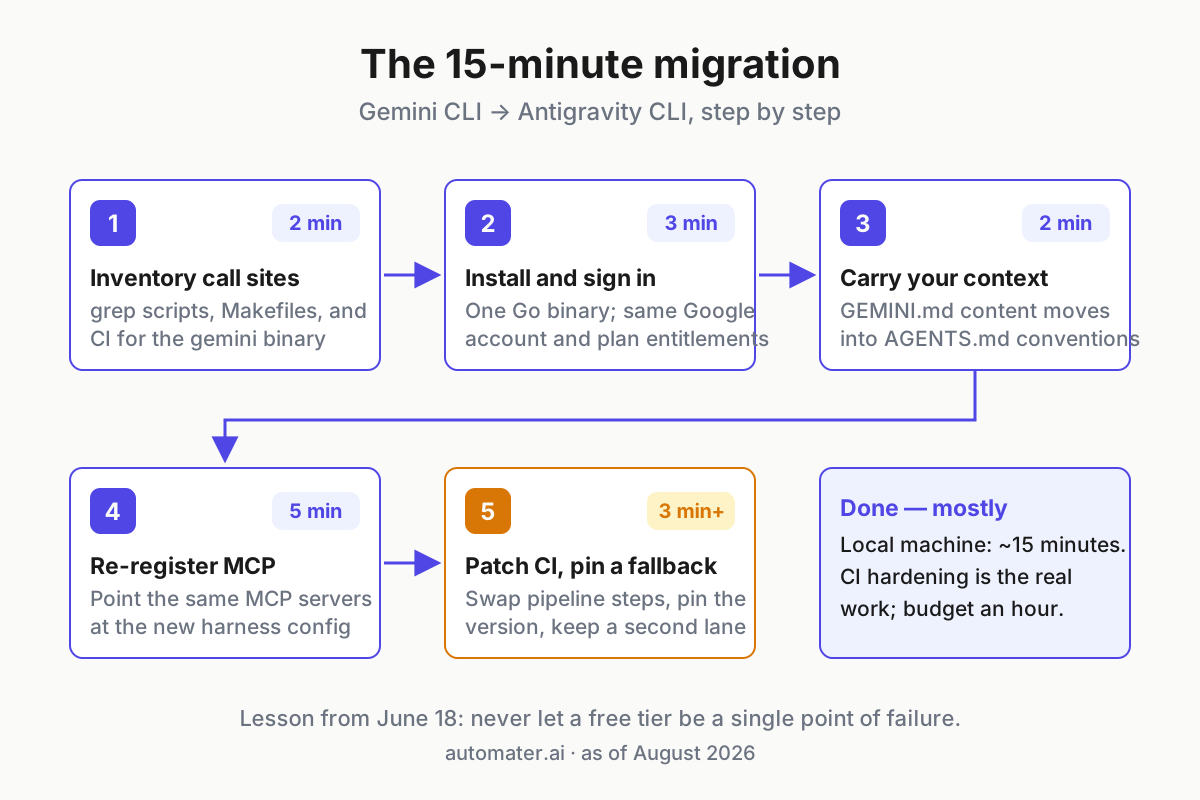
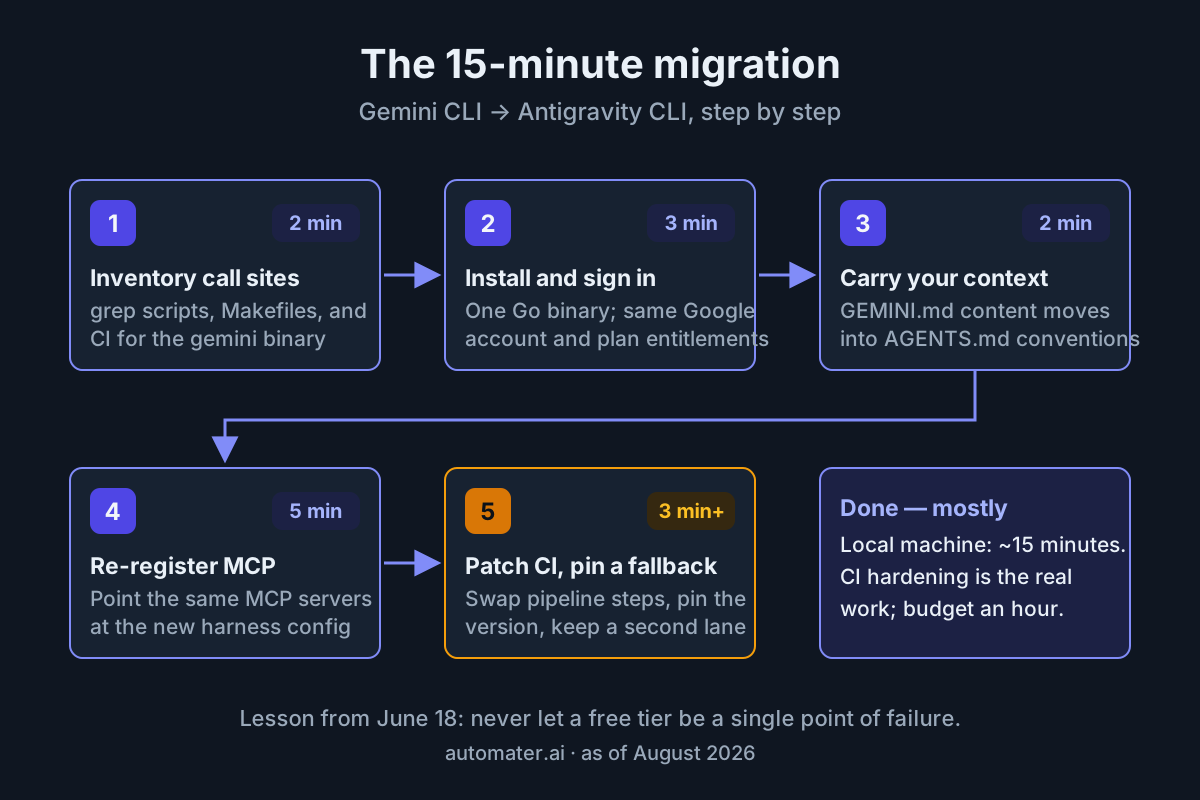 The fifteen minutes, itemized. Step five is where the real hour hides.
The CI step deserves the extra care, because it is where June 18 actually hurt. Pin versions instead of curling latest. Vendor the installer if your pipeline is allergic to external fetches. And wire a second harness into the same jobs behind a flag — Claude Code, Codex CLI, or an open-source option from our tested tools roundup — so the next shutdown is a config change, not an incident. If the episode soured you on Google entirely, note the irony that the most direct replacement is Qwen Code, the fork that outlived its parent.
What to trust from Google now
The cynical read — trust nothing, Google kills everything — is satisfying and useless. The accurate read is narrower: trust the layers Google sells on contract, and treat the layers Google gives away as the promotions they are.
Trust the models and the paid API. The Gemini 3.1 line is a serious frontier family , and nobody credibly thinks Google is exiting models. The Gemini API and Vertex AI are priced, versioned, deprecation-scheduled products with enterprise customers attached — the opposite of a free preview. Model access was never the thing that died in June.
Trust Antigravity as a direction, cautiously as a dependency. The platform is clearly where Google’s agentic investment lives, which makes the Antigravity CLI the safest Google harness bet since the category existed. It is still a preview with fluctuating limits . Learn it seriously; anchor nothing critical to it until the pricing and quota structure become contractual.
Trust no free tier with load-bearing work — Google’s or anyone’s. That is the durable lesson, and it applies equally to every vendor’s promotional lane.
Read the data terms per lane, every time. Google’s free consumer tiers have historically permitted human review and training use of prompts and code unless you opt out or pay, while API, Workspace, and enterprise lanes carry stricter defaults . Whatever was true of Gemini CLI’s terms, do not assume it transferred to Antigravity; the surface changed, so reread the paperwork before pointing it at proprietary code.
In fleet terms: keep a premium primary — for most of our readers that is Claude Code or Codex — and slot the Antigravity CLI as the secondary lane for bulk work, giant-context reads, and Gemini-specific strengths, with routing rules that assume variance. The old Gemini CLI heuristics still apply to its successor: route by context size (huge log or whole-repo reads go to the million-token lane), by stakes (low-risk grind work goes to the cheap lane), and by quota state (when a paid window exhausts, rotate rather than stop). Just add the new rule June 18 wrote: every route needs a documented alternative. Running a second and third harness multiplies sessions, configs, and failure modes, which is exactly the problem a multi-agent command center exists to manage. The Antigravity era is real, and Google earned another chance at the terminal. Keep your go-bag packed anyway.
FAQ: the Gemini CLI shutdown and what replaced it
Why was Gemini CLI discontinued?
Google never published a detailed rationale. The public record: service ended June 18, 2026, and users were pointed at Antigravity, the agent-first platform launched in November 2025. The consensus read is consolidation — one strategic agentic surface instead of two, with free-tier inference spend redirected to the product Google intends to win with.
What replaced Gemini CLI?
The Antigravity CLI, a Go-based terminal agent fronting the same Antigravity platform as Google’s IDE. It reuses your Google sign-in, serves the current Gemini 3.1 line, and supports MCP servers and AGENTS.md-style context . Treat it as a new harness with familiar models, not a renamed Gemini CLI.
What is Google Antigravity?
Antigravity is Google’s agentic development platform, launched November 2025 alongside Gemini 3: a VS Code-lineage editor, a Manager view for supervising multiple agents in parallel, browser-in-the-loop verification, and reviewable Artifacts. Since the Gemini CLI shutdown it is Google’s primary agentic coding surface, currently in free public preview .
Can I still use Gemini CLI after the shutdown?
Not against Google’s service — authentication and model access were cut on June 18, 2026, so the binary hard-fails. The Apache-2.0 source survives in archives and forks, and Qwen Code, which began as a Gemini CLI fork, remains actively maintained. Anything in CI still calling the old binary will simply error.
Can Antigravity use Claude models?
The Antigravity model menu has included non-Google options during the preview, Anthropic models among them, but the lineup changes without notice and default capacity favors the Gemini line . Check the picker in your own workspace before planning any workflow around a specific third-party model.
Sources
- TechTimes — Gemini CLI Shutdown Takes Effect: CI/CD Pipelines Break, Go-Based Antigravity CLI Arrives (June 18, 2026)
- Hacker News — discussion thread on the Gemini CLI shutdown
- dev.to — Coding CLIs in mid-2026: the engineer’s map and what changed in 30 days
- Google — official blog (Gemini and Antigravity announcements)
- Antigravity — official site
- Google AI for Developers — Gemini API documentation
- GitHub — QwenLM/qwen-code, the actively maintained Gemini CLI fork