Claude Code vs Cursor in 2026: The Agentic Coding Shootout
Cursor AI code editor or Claude Code? We compare autonomy, review ergonomics, and real heavy-user pricing math, then give verdicts by persona. Updated for 2026.

Go deeper. Build your own.
You are not here for a feature checklist. You want a decision: where the next quarter of muscle memory and budget goes. The useful news is that between the Cursor AI code editor and Claude Code, the decision mostly follows from a single philosophical split — and once you see it, most of the feature-table noise resolves itself.
The one-sentence introductions. Cursor is Anysphere’s AI-native editor, descended from VS Code, that threads models through every editing surface. Claude Code is Anthropic’s agentic CLI — documented at docs.claude.com — that plans, edits files, and runs commands from your terminal. Both are serious implementations of agentic coding; they disagree about where you should be standing while it happens.
Here is the contract for this comparison: a verdict per capability dimension, honest pricing math in the middle, persona verdicts at the end, and no winner-by-default. One twist deserves early flagging: a large share of power users run both, deliberately. That answer gets a full section, not a throwaway line.
The philosophical split that decides most of the choice
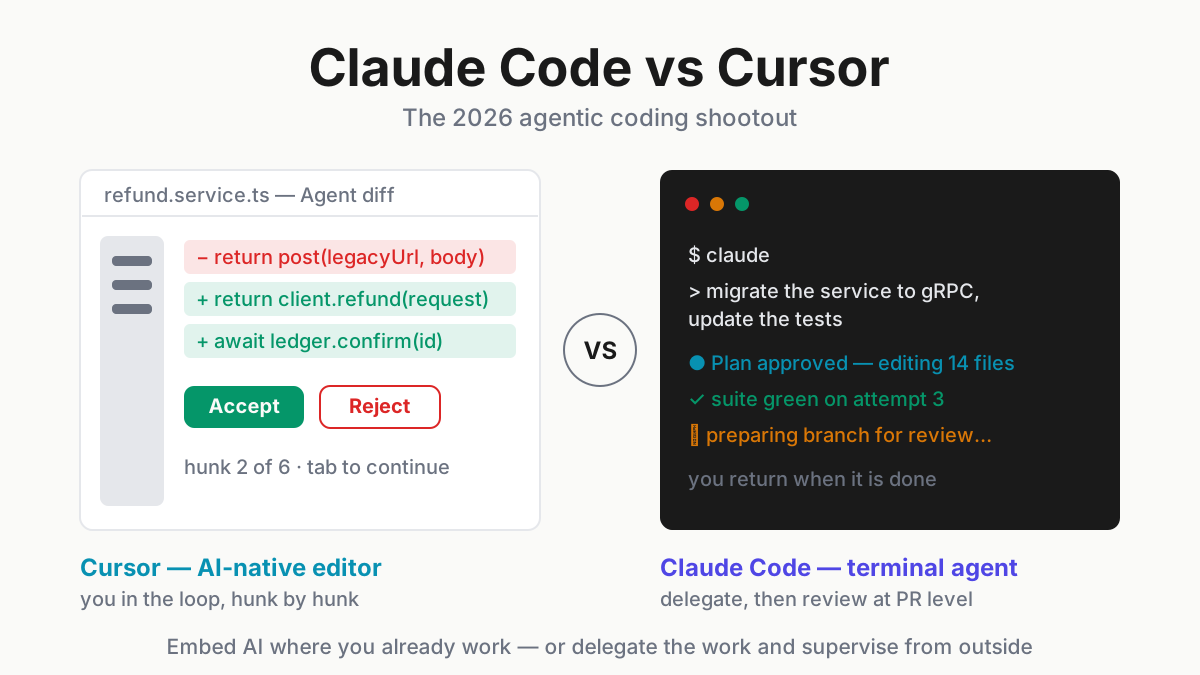
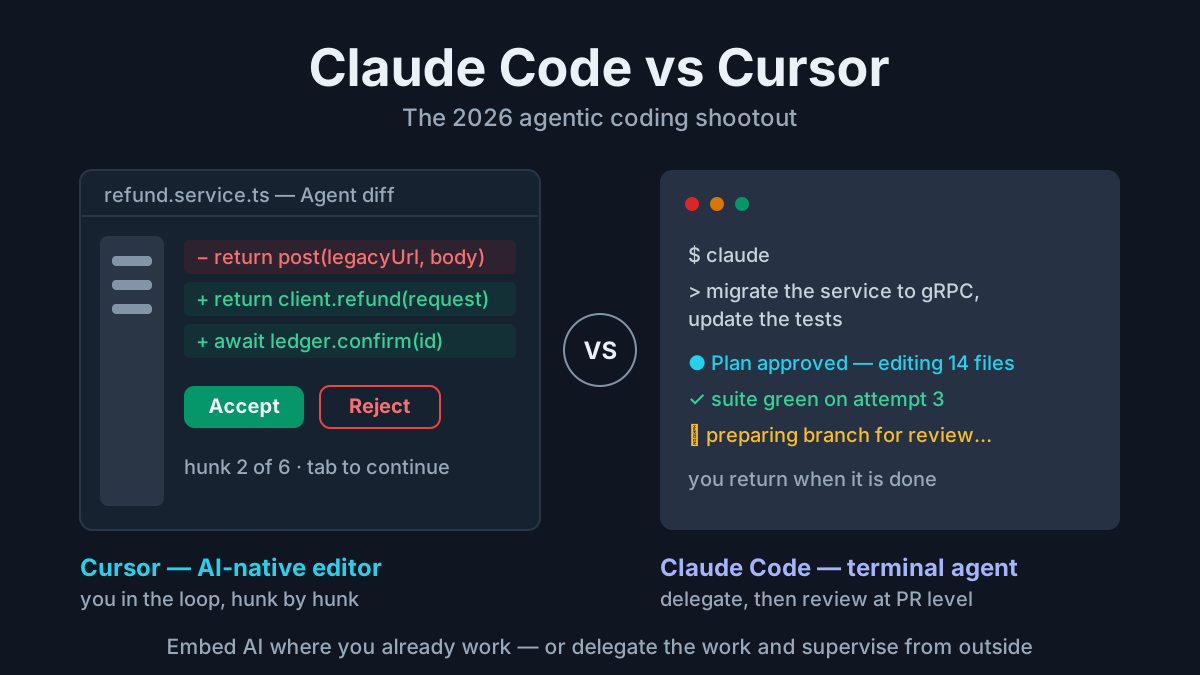
Cursor embeds AI into the place you already work. The editor, the tabs, the inline diffs — the model is threaded through each surface, and the product optimizes for you-in-the-loop at keystroke and hunk granularity. Claude Code moves the work to an autonomous agent you supervise from outside; the product optimizes for delegation at task granularity, with review at checkpoints instead of keystrokes. Delegation is the core bet of agentic software generally; embedding is the bet that your attention is the feature.
That single split predicts the downstream differences before any table does:
- Editor-first (Cursor): review happens inline as changes land; autonomy defaults conservative; extensibility means rules files and editor extensions; pricing meters the model calls your interactive work generates.
- Agent-first (Claude Code): review happens at diff and PR granularity after delegation; autonomy defaults higher; extensibility means hooks, subagents, and scriptable lifecycle; pricing meters sustained agent runtime.
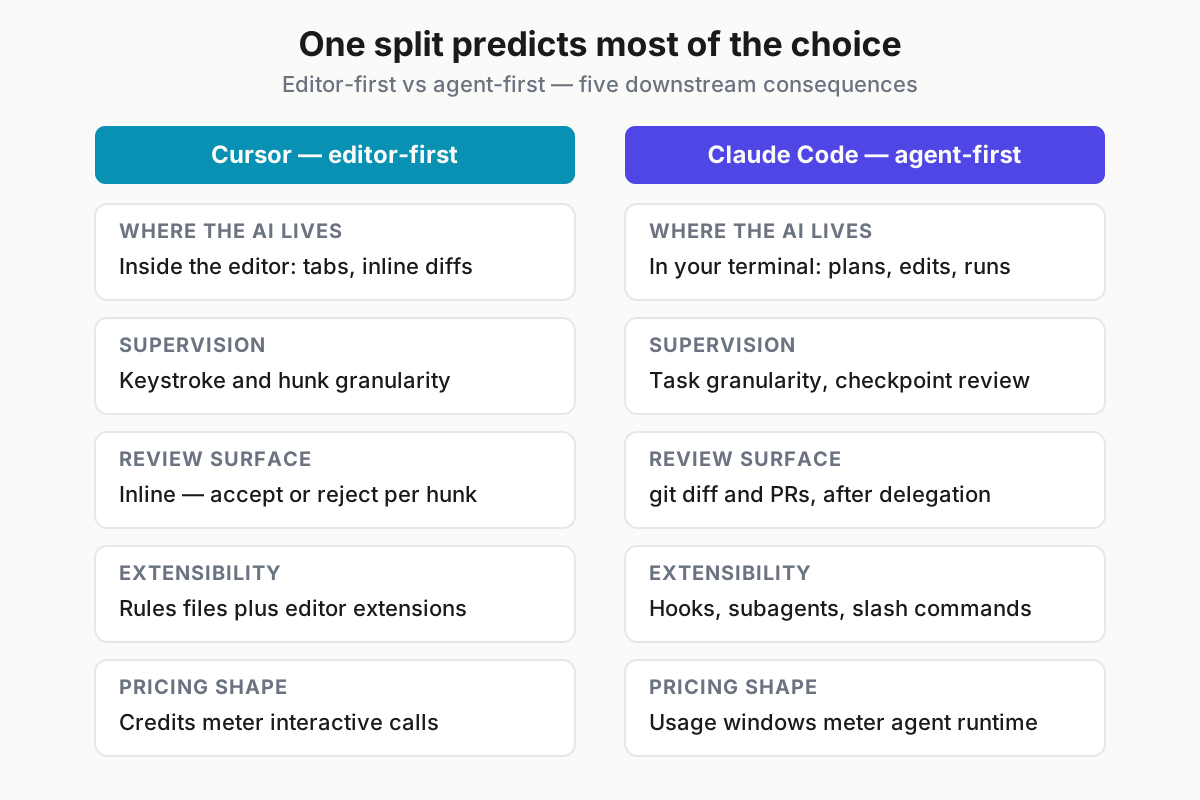
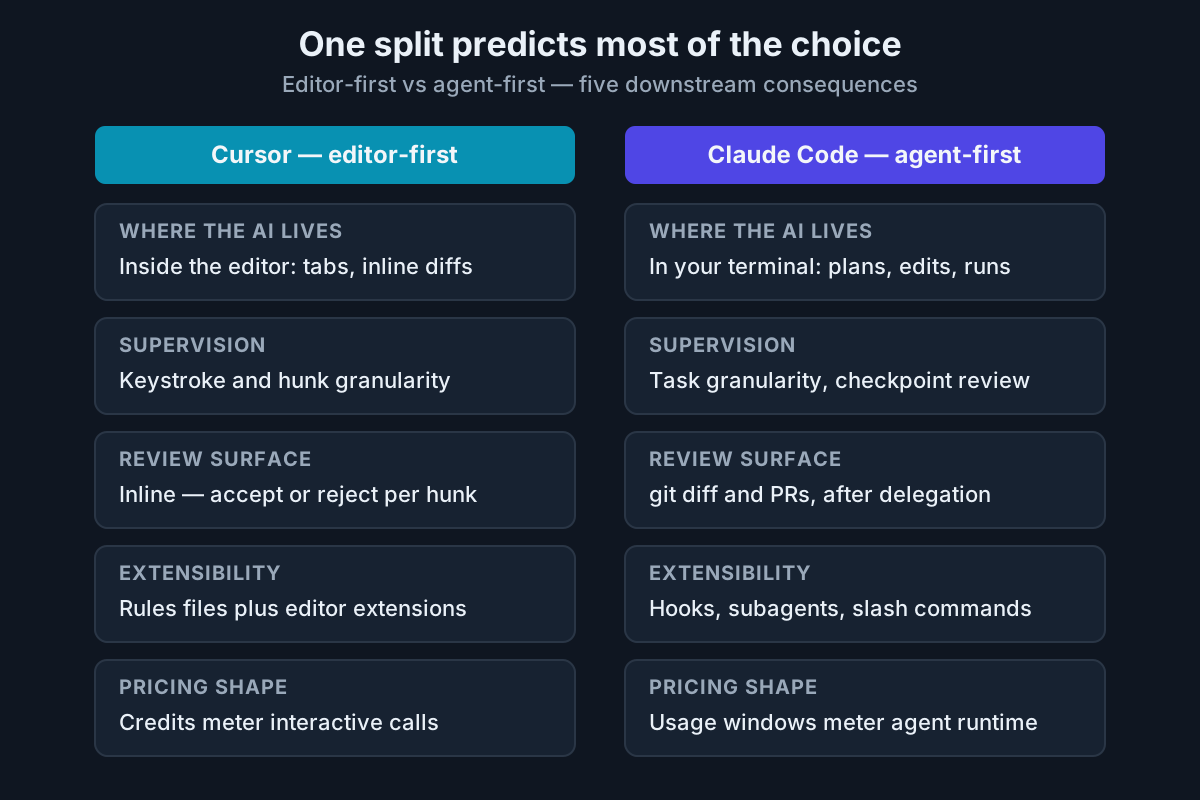 One split, five consequences. Your supervision style picks the column — not the vendors’ marketing.
Neither philosophy is wrong. Hunk-by-hunk supervision catches errors earliest; delegation buys throughput and demands trustworthy checkpoints. Notice what the split does to your calendar, too: Cursor makes your existing editing hours denser, while Claude Code manufactures hours you did not have by working while you do something else — different products even when the diffs look identical. The rest of this piece is that trade examined dimension by dimension.
Agentic autonomy: long, multi-file tasks
Hand both the same delegated task — “migrate this service from REST to gRPC and update the tests” — and the shapes diverge fast. Claude Code treats it as one long plan-edit-run loop: it maps the service, proposes a plan (read-only plan mode, if you force it), edits across files, runs the suite, and iterates on failures until green, asking permission at whatever boundaries you configured. Cursor’s Agent mode runs a similar loop inside the editor, surfacing changes as inline diffs with checkpoints for rolling back a bad step.
Unattended runtime is the practical difference. Claude Code is built to run long: hooks keep it honest mid-flight, --max-turns bounds it, and plan-mode approval front-loads the judgment call. Cursor’s in-editor agent expects you nearby; its longer-leash story is its background agents, which run in the cloud and hand back PRs.
Recovery when a mid-task step fails is where the philosophies show again. In Cursor you roll back to a checkpoint and re-steer from inside the editor — cheap, immediate, and dependent on you being there. In Claude Code you resume the session, read what it tried, and redirect — or throw the branch away, since a worktree made the whole attempt disposable. For parallel delegation, Claude Code’s worktree pattern — one branch, one session, per task — is the more battle-tested path today, with Cursor’s cloud agents as the managed alternative.
Verdict: Claude Code by a nose for long-leash, multi-hour autonomy; Cursor when you want the loop visible while it runs. The shared caveat: autonomy without review discipline is a liability in either tool.
Codebase understanding at scale
The mechanisms differ more than the outcomes. Cursor maintains an index of your codebase — embedding-based retrieval that answers “where is X handled?” almost instantly and feeds relevant chunks to the model. Claude Code skips the index and searches agentically: grep, directory listings, targeted reads, following imports the way a new senior hire would.
The trade-off is honest in both directions. A pre-built index is fast and occasionally stale — on fast-moving branches it can retrieve last week’s truth. Agentic exploration is slower and burns tokens, but it reads the current bytes and tends to go deeper before editing.
Run the reproducible test yourself: pick one cross-package data flow in your monorepo — “trace a refund from API request to ledger write” — ask both to document it, time the runs, and check the output against ground truth. Our experience: the index wins the stopwatch, agentic search wins fidelity on code that changed this week, and both are bounded far more by model quality and context-window ceilings than either vendor’s retrieval story admits.
Verdict: a tie, decided by your repo’s rate of change.
Review ergonomics: where you read the diff
Cursor’s home-field advantage is real: inline diffs, accept or reject per hunk, jump-to-definition mid-review. The editor is a purpose-built review surface, and if you review every change as it lands, nothing in a terminal matches it.
Claude Code streams diffs in-session, and most heavy users review at git or PR granularity afterward — git diff at the end of a work block, or a proper pull-request review. That moves error-catching later in the loop, which is either a problem (you wanted to catch drift at hunk two) or the entire point (you delegated precisely so you would not be watching hunk two). The partial mitigation: Claude Code’s VS Code and JetBrains extensions render the same agent’s changes in editor diff views.
The two workflows in one line each. Cursor: prompt, watch hunks land, accept or reject, repeat. Claude Code: dispatch, work on something else, review a branch, merge or redirect.
Verdict: hunk-by-hunk reviewers lean Cursor; PR-granularity delegators feel no gap.
Model flexibility: Cursor’s menu vs Anthropic-only
Cursor’s menu is the widest in the category: frontier models from Anthropic, OpenAI, and Google alongside its own in-house models, switchable per request, with premium calls metered accordingly. Claude Code is Anthropic-only: tier switching via /model — Claude Sonnet 5 for the everyday, Claude Fable 5, the Mythos-class flagship launched June 9, 2026, for the hard problems — plus Bedrock and Vertex routing for enterprises that need cloud-of-record billing.
When does the menu matter? If you chase best-model-per-task, or want a hedge against any single lab’s bad quarter, Cursor’s flexibility is genuinely valuable. It matters less than it sounds if the Anthropic line already fits: Fable 5 holds top-tier coding standing as of August 2026, a position widely noted in launch coverage.
The hidden cost of multi-model freedom that nobody advertises: behavior drifts across models, and every switch quietly invalidates the rules files and prompts you tuned for the last one. Model choice is a relationship, not a dropdown.
Verdict: depends on whether you treat models as interchangeable parts or as something you tune around.
Extensibility: rules files, hooks, and MCP on both sides
| Surface | Cursor | Claude Code | Guidance |
|---|---|---|---|
| Instruction files | .cursor/rules — scoped rules, glob-attached or always-on |
CLAUDE.md hierarchy: user → repo → per-directory, plus imports | Same intent; the hierarchy scales better in monorepos |
| Lifecycle hooks | Thin; enforcement mostly via rules and CI | Shell hooks on PreToolUse/PostToolUse/Stop with blocking exit codes | The clearest gap — hooks bind, rules suggest |
| Custom commands | Saved prompts and keybindings | .claude/commands/*.md with $ARGUMENTS, checked into the repo |
Claude Code treats prompts as reviewable repo artifacts |
| Subagents | Multi-agent runs in recent releases | Named .claude/agents/*.md with own tools, model, context window |
More mature delegation primitives on the CLI side |
| MCP | Supported | Supported, with local/project/user scopes | The equalizer — external tools reach both |
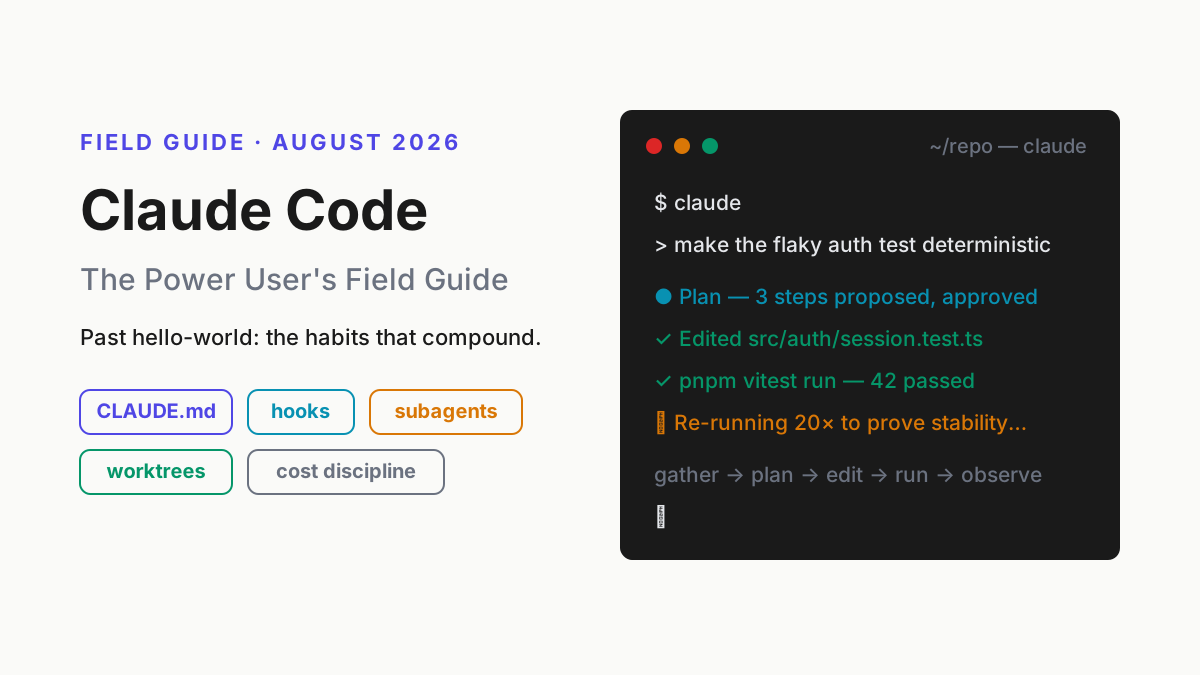
MCP support on both sides — the open standard documented at modelcontextprotocol.io — means connectors no longer differentiate these tools; the differentiation lives in lifecycle hooks and delegation primitives. One grounding example: enforce “run tests after every edit.” In Cursor, you write a rule and the model usually complies. In Claude Code, a PostToolUse hook runs the suite whether or not the model remembered — enforcement versus suggestion, the same split as everywhere else. Full mechanics, with config snippets, live in our Claude Code power guide.
Verdict: Claude Code for teams that script their guardrails; Cursor covers the common cases with less to learn.
Background and async agents
This dimension churns fastest of all; treat specifics as dated the week you read them.
- Cursor: background agents run in cloud sandboxes, work a task, and come back as PRs; you monitor from the editor or a dashboard, and runs bill against usage credits at premium-model rates.
- Claude Code: headless
-pmode for scripted runs, an official GitHub Action for PR-triggered work, and Anthropic’s web/cloud sessions for dispatching from a browser.
Walk one scenario through both — “fix this flaky test while I’m in a meeting.” Cursor: dispatch a background agent from the editor, glance at its progress from the dashboard if the meeting drags, return an hour later to a PR awaiting review. Claude Code: dispatch claude -p "make test_session_refresh deterministic; run it 20 times to prove it" --max-turns 15 in a worktree — or trigger the GitHub Action from the issue — and return to a branch plus a machine-readable log stating what was tried and what the suite said. Same destination, different console: Cursor’s monitoring is a UI you glance at, Claude Code’s is a log you grep.
The shared caveat outranks every difference: async output merged without review is where teams get burned, whichever tool produced it.
Verdict: parity on ambition; pick the dispatch surface you will actually check.
Cursor pricing vs Claude Code price: the heavy-user math
List prices first, then the math that matters. Numbers verified as of August 27, 2026 — recheck both vendors before deciding; this section ages in weeks.
| Tier | Cursor | Claude Code (Claude plans) |
|---|---|---|
| Free entry | Hobby — free, limited usage | — |
| Individual | Pro ~$20/mo with included usage credits | Pro ~$20/mo, rolling usage windows |
| Power | Pro+ ~$60/mo · Ultra ~$200/mo | Max 5x ~$100/mo · Max 20x ~$200/mo |
| Teams | Teams ~$40/user/mo; Enterprise custom | Team/Enterprise seats, custom |
| Metered path | Usage-based billing past included credits | API billing per token via the Console |
Define a heavy month concretely: roughly four hours of agent work daily, twenty-two working days, a mix of workhorse and frontier calls. On Cursor, that profile burns through Pro’s included usage in days, not weeks; heavy users live on Pro+ or Ultra, or watch usage-based charges stack past list price — a heavy month on nominal Pro can invoice at Ultra money once overage is counted. On Claude Code, Max 5x absorbs most single-developer heavy months, and Max 20x exists for the people who hit 5x’s ceiling; the failure mode is not surprise billing but rolling windows and weekly caps that wall you mid-task until reset. Cursor’s heavy-user pain is overage; Claude Code’s is throttling. Pick the pain you prefer: a bill you did not expect, or an afternoon you did not plan.
The API path inverts the math: light users — an hour a day on workhorse models — often beat subscription pricing on metered tokens, while sustained heavy use on metered billing costs multiples of a Max plan. The crossover arithmetic, and the industry-wide squeeze on flat plans, gets full treatment in token plans decoded.
Hidden costs on both sides: premium-model upcharges (frontier calls drain Cursor credits faster; Fable 5 drains Claude usage windows faster), team seats, and the general futility of predicting agentic token burn from chat-era intuition. Agents read and write orders of magnitude more than you type.
Verdict: roughly price-matched tier by tier; the real difference is failure shape — Cursor bills, Claude Code throttles.
Workflow-fit matrix
| Scenario | Better fit | Why — and the deciding question |
|---|---|---|
| Greenfield prototyping | Cursor, usually | Fast interactive iteration wins; ask: do you want to steer every screen, or scaffold by delegation? |
| Large legacy refactor | Claude Code | Long multi-file autonomy, hooks, worktree parallelism; interactive spelunking still favors Cursor’s navigation |
| Disciplined TDD | Claude Code, narrowly | A PostToolUse hook enforces the red-green loop; Cursor’s rules ask nicely |
| Exploratory debugging | Split decision | Cursor for hypothesis-testing while you read; Claude Code when reproduction needs the shell and runtime |
Screenshot it, argue with it, adjust it for your team. Each row rewards whichever supervision style the scenario actually needs — which is the philosophical split again, wearing work clothes.
The “both” answer, taken seriously
The observed pattern among power users is not either/or. It is Cursor for interactive work and Claude Code for delegated tasks — same day, same repo. That is a deliberate workflow architecture, not indecision.
The division of labor: Cursor owns review-heavy editing and code navigation; Claude Code gets dispatched to git worktrees for issue-driven tasks. A concrete day: at 9:00 you send two Claude Code sessions to worktrees — a test backfill and a dependency bump with known failures. Through the morning you do design-heavy feature work in Cursor. At midday you review both agent branches at PR granularity, merge one, redirect the other. The afternoon is interactive work in the editor while the redirected session runs. One repo, two agents, no conflict beyond ordinary git discipline.
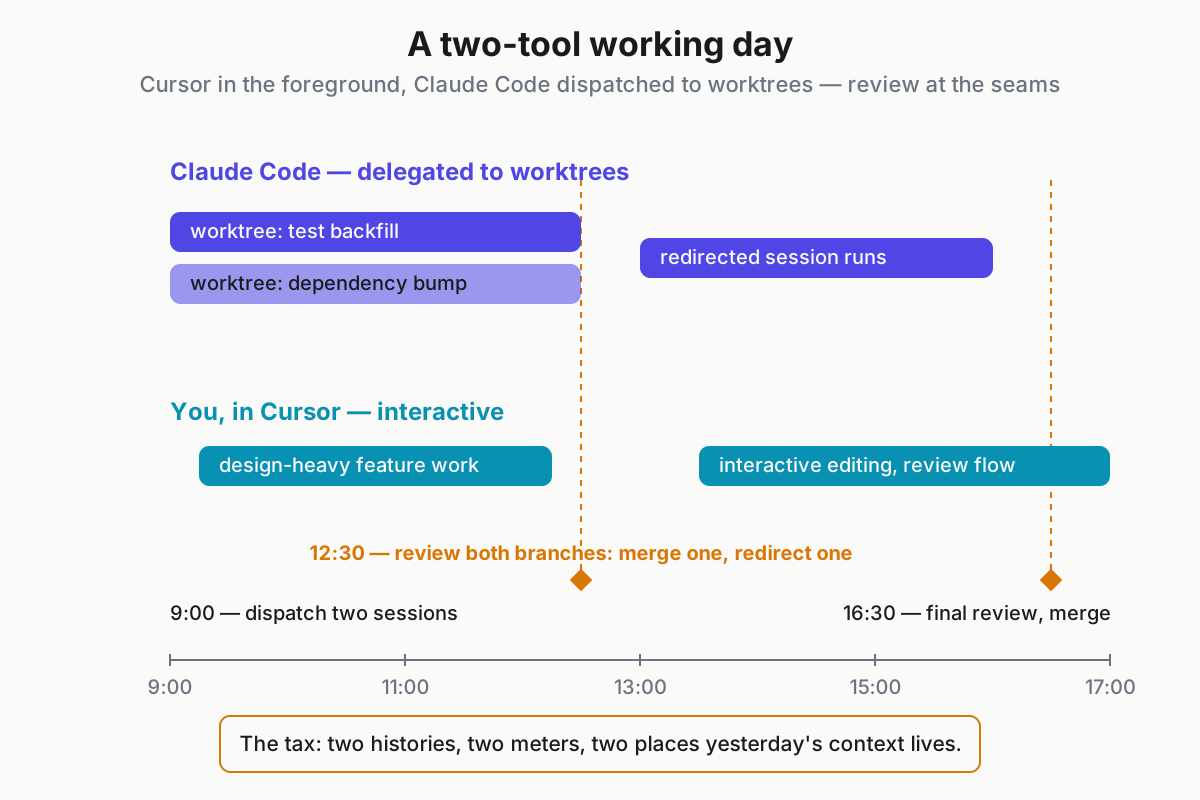
 Delegation in the background, interactive work in the foreground, review at the seams.
Cost the combo honestly: two subscriptions is real money — call it ~$120/month for Cursor Pro plus Claude Max 5x. It pays when delegated agent-hours displace enough interactive hours. If background sessions return five reviewable hours a week you would otherwise have spent typing, the second subscription clears its bar easily; if they mostly produce work you redo, it does not. Measure for a month before renewing.
Then there is the operational tax nobody prices in: two session histories, two usage meters, two places yesterday’s context lives. That is the fleet problem in miniature, and it compounds with every tool you add.
Product note: Running Cursor and Claude Code side by side is the multi-agent grind in miniature. Automater Lite gives the two-tool household one local library — full-text search across AI CLI sessions, fleet monitoring, and per-provider token metering — free, on automater.ai.
What failure looks like in each
- Cursor: speed-blind acceptance. Tab suggestions accepted at flow-state speed accumulate unreviewed drift; an Agent run on a mis-scoped prompt burns credits producing plausible wrong code; a stale index answers from last week’s branch. Mitigations: PR-level self-review even for “small” tab sessions, tightly scoped agent prompts, a reindex after big rebases. The plausible bad Tuesday: a renamed helper still ghost-referenced by index-fed suggestions, caught in CI, an hour lost to “who still calls this?”
- Claude Code: marathon drift. Context rot in long sessions, over-eager edits beyond the ask, permission fatigue that ends in bypass mode. The fixes — shorter sessions, plan mode, hooks, allowlists — are cataloged in the power guide’s failure-patterns section. The plausible bad Tuesday: hour three of a refactor session quietly reintroducing the pattern you banned in hour one, caught only because a hook ran the linter.
- The shared one. Trusting either tool’s output without tests and review. The tool changes where mistakes surface, not whether they exist.
Teams and procurement
The buyer’s checklist, liftable into an internal evaluation doc as-is:
- Seats and tiers. Cursor Teams (~$40/user/mo) and Enterprise versus Claude Team/Enterprise premium seats; model both against measured usage from a pilot, not advertised limits.
- Data policy. Training on customer code (defaults and opt-outs), retention windows, zero-retention options, SOC 2 reports. Both vendors publish positions; read the current documents, not blog summaries of them.
- Controls. SSO, spend caps, usage dashboards, model allowlists — Cursor’s admin console versus Claude Code’s managed policy settings that individual repos cannot loosen.
- Rollout pattern. Standardizing on one tool simplifies procurement; many orgs sanction both and let squads choose within a shared review-and-data policy. Decide the policy first, the tool list second.
One procurement note from the field: run the pilot with your heaviest prospective users, not volunteers picked for enthusiasm. The pricing tables above only turn into a real budget once someone’s actual month of usage has been metered, and the heavy users are the ones who find the caps, the overages, and the workflow ceilings within two weeks.
Verdict by persona
The IDE-attached developer who reviews every hunk: Cursor. The editor is your review surface, and that outweighs any autonomy delta. Claude Code’s editor extensions are decent; they are not a reason to switch attention styles.
The terminal native who delegates and lives in git: Claude Code. Hooks, subagents, worktrees, and headless mode compound into a system an editor cannot match, and you will feel the ceiling anywhere else.
The team lead standardizing tooling: decide on review culture and data policy first, tool second. If your org already reviews at PR granularity, Claude Code fits the existing process; if inline review is doctrine, Cursor is the culture-compatible pick. Most end up sanctioning both under shared guardrails.
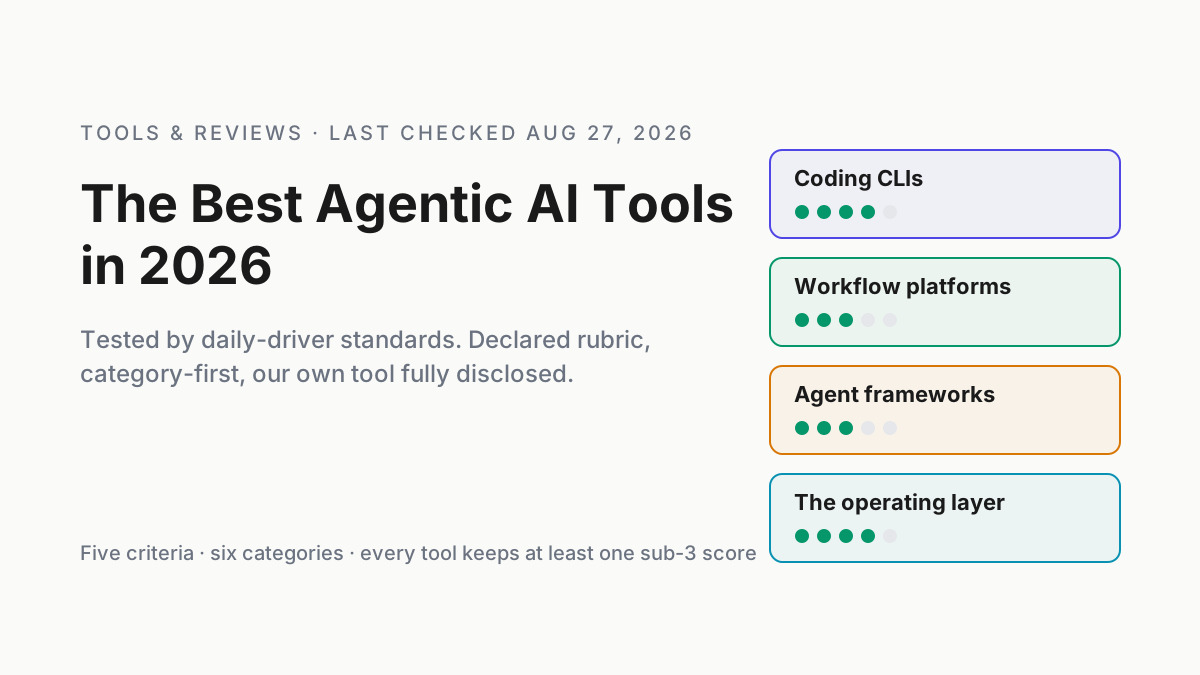
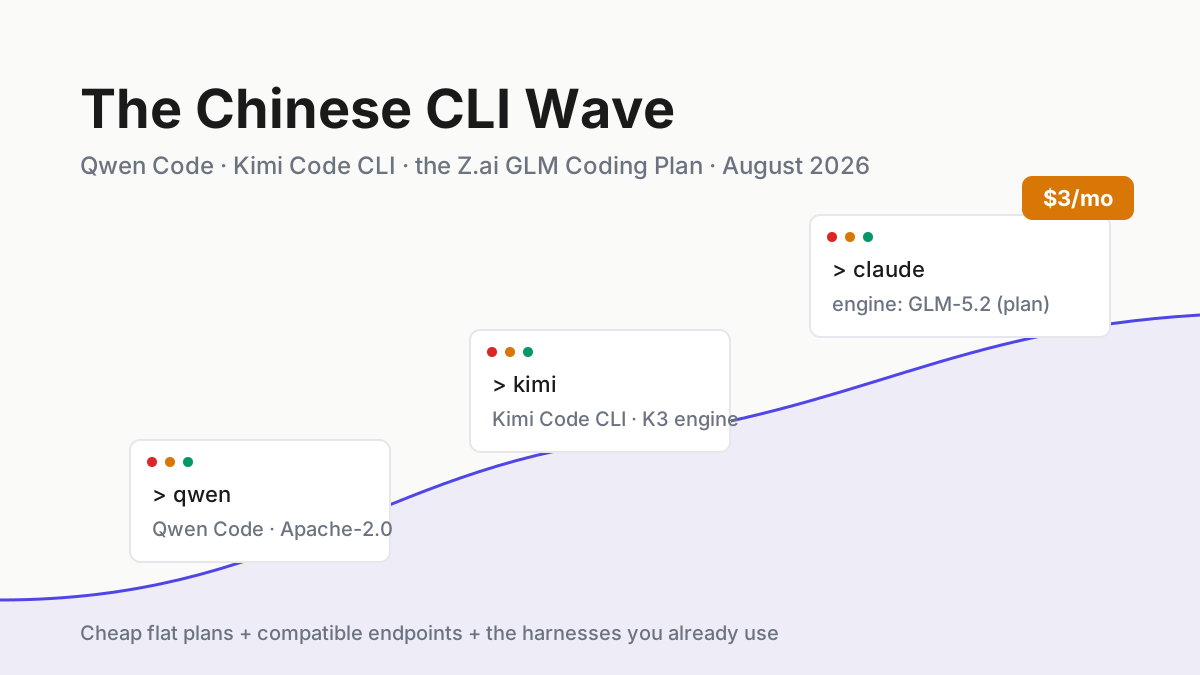
The budget-constrained: run the pricing-section math against your actual hours. Light and interactive: Cursor’s entry tiers are the honest cheap path. Delegation-heavy: Claude Pro with careful window management, upgrading only when the caps genuinely bite. For the field beyond these two — including cheaper harnesses — see the best agentic AI tools.
FAQ: Claude Code vs Cursor
Is Claude Code better than Cursor?
Neither wins by default. Claude Code is better for delegation-heavy terminal workflows — long autonomous tasks, hooks, worktree parallelism. Cursor is better for interactive editor workflows — inline review, navigation, tab completion. Your supervision style decides: watch-every-edit points to Cursor; delegate-and-review points to Claude Code.
Can Cursor use Claude models?
Yes. Cursor’s model menu includes Anthropic’s Claude line alongside OpenAI, Google, and in-house models, switchable per request. The caveat: frontier Claude calls bill at premium rates and drain included usage noticeably faster than default-tier requests, so heavy Claude-on-Cursor use gets expensive.
How much does Cursor cost?
As of August 2026: Hobby is free with limits; Pro runs about $20/month with included usage credits; Pro+ about $60; Ultra about $200 for the highest included usage; Teams about $40 per user monthly. Heavy agent use beyond included credits bills usage-based on top.
How much does Claude Code cost?
Two paths: Claude subscriptions — Pro ($20/month), Max 5x ($100), Max 20x (~$200) — governed by rolling usage windows and weekly caps, or metered API billing through the Claude Console, paying per token. Subscriptions suit sustained daily use; metered billing suits lighter or bursty work.
Can I use Claude Code and Cursor together?
Yes, and many power users do exactly that: Cursor for interactive, review-heavy editing; Claude Code dispatched to git worktrees for delegated tasks. They coexist in one repository with nothing worse than normal branch discipline. The “both” section above covers the division of labor, the costs, and the bookkeeping tax.