Agentic Software: How AI Agents Are Turning Code Into Colleagues
What a software agent is, how agentic software actually works, and how to adopt it without chaos — architecture, lifecycle, SDLC patterns, and governance.

Go deeper. Build your own.
At 2:14 on a Tuesday morning, an alert fires at a mid-size SaaS company: checkout is returning 500s for about 4% of EU traffic. Nobody wakes up. A triage agent reads the stack trace, ties it to the previous evening’s deploy, writes a patch behind a feature flag, runs the affected test suite twice, and opens a pull request with a five-line summary of its reasoning. At 8:40 an engineer reads the summary, checks the diff, and merges. Total human time: about eleven minutes.
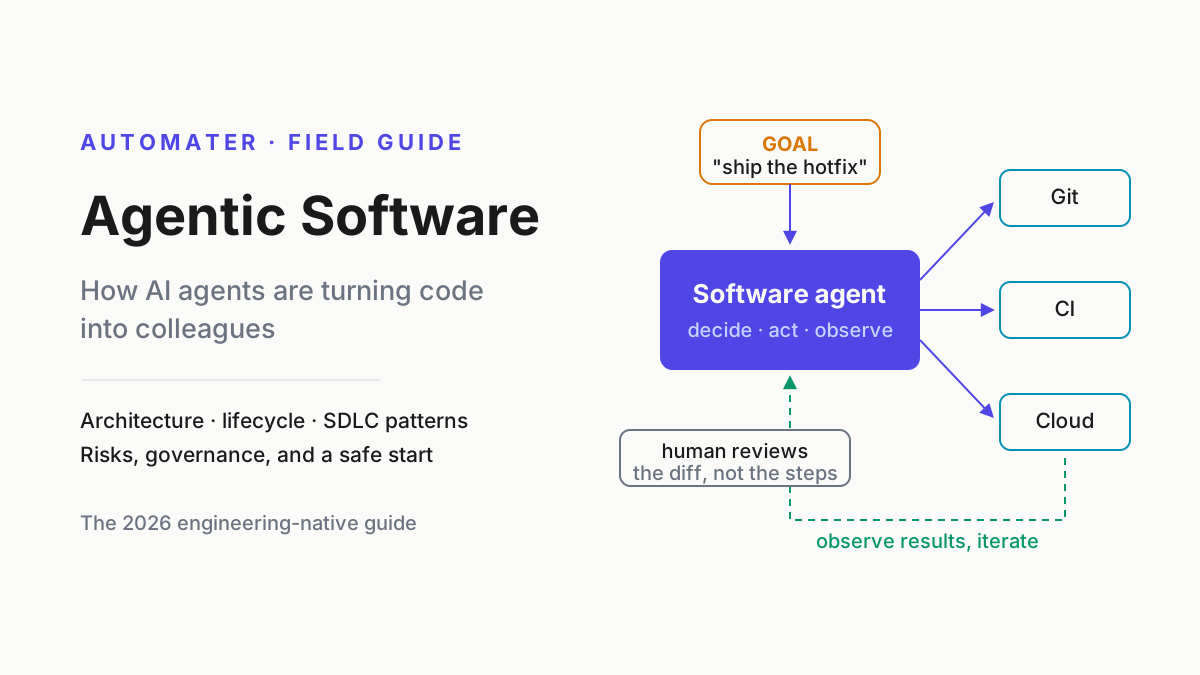
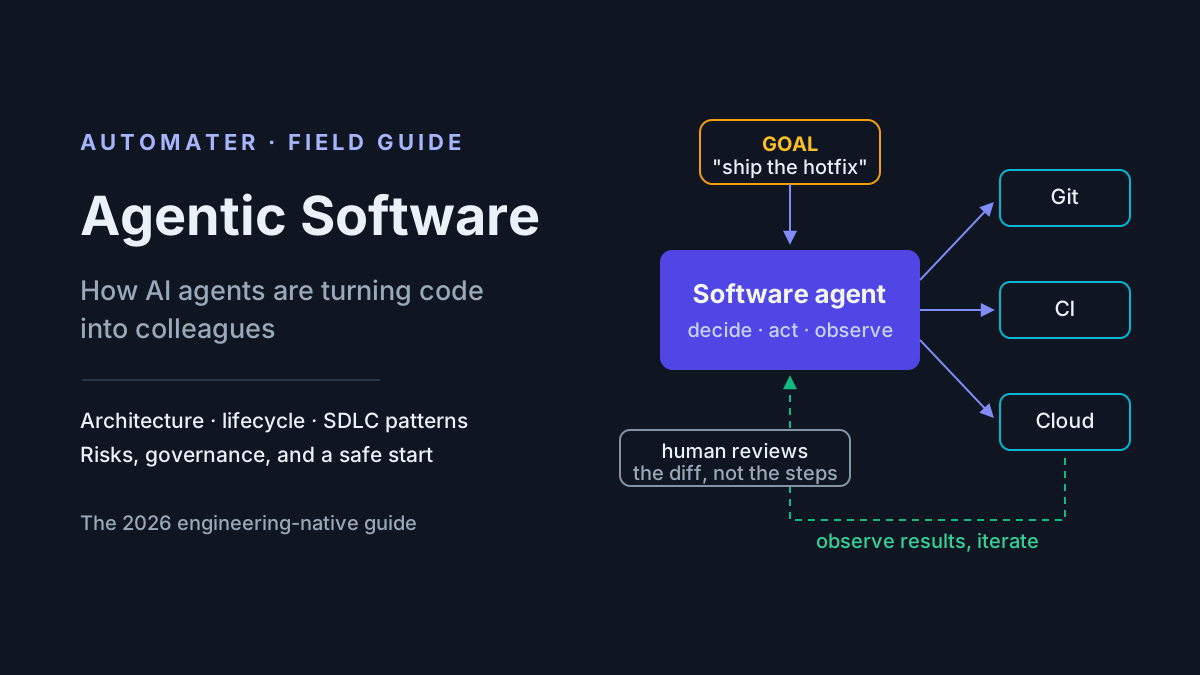
That is agentic software in production, and its unit of work is the software agent: an autonomous program that perceives the state of its environment, makes decisions, and acts through tools toward a goal on someone’s behalf. Not a chatbot waiting for the next prompt, and not a cron job replaying fixed instructions — something between a service and a colleague.
The 2020–2023 wave of AI was prompt-and-reply: you asked, a model answered, you did the work. The 2024–2026 wave is different in kind. Systems now plan, call tools, observe what happened, and try again — across repos, CI pipelines, ticket trackers, and cloud accounts. This guide is for the people deciding what to do about that: software leaders, architects, and senior engineers who already use AI assistants daily and are now evaluating autonomy.
By the end you will have:
- A definition of agentic software precise enough to use in a design review
- The architecture and lifecycle patterns production agents actually run on
- A map of where agents fit the SDLC today, with realistic examples
- The failure modes — technical, security, legal — and the controls that contain them
- A phased adoption plan with KPIs, so your first agent becomes an asset rather than an incident
What is agentic software?
Agentic software is software built around autonomous AI agents — programs that perceive the state of a system, set sub-goals, choose and call tools, and act continuously toward an objective. Humans define the goal and review the outcome; the software decides the intermediate steps.
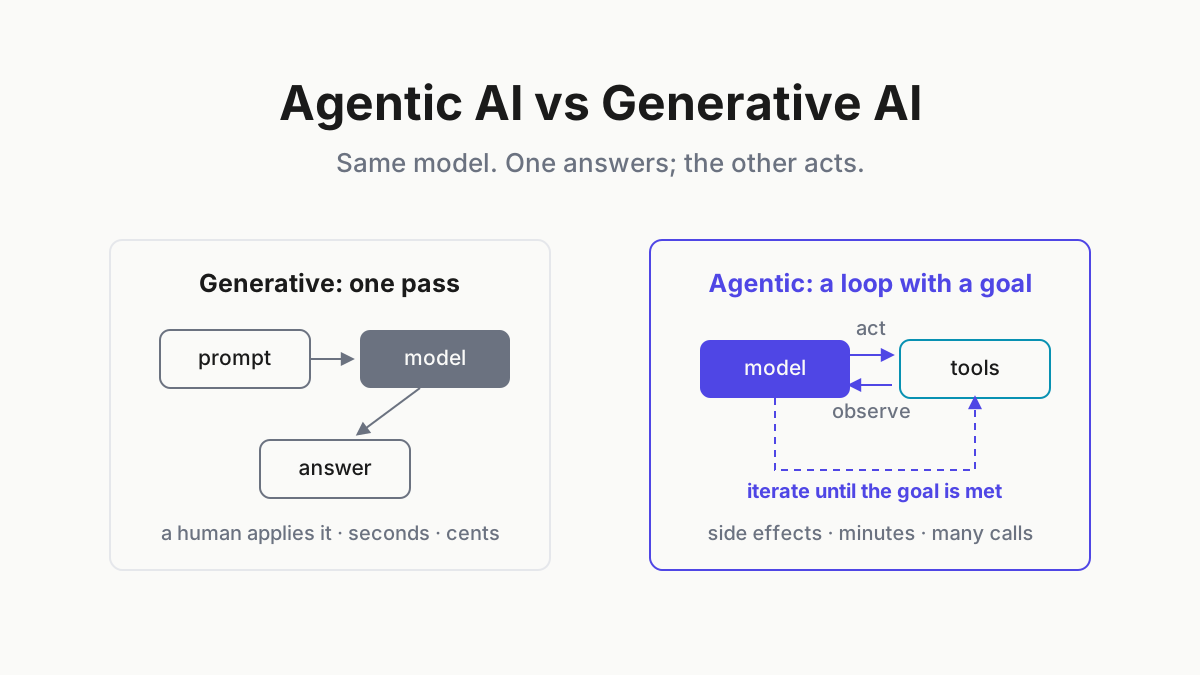
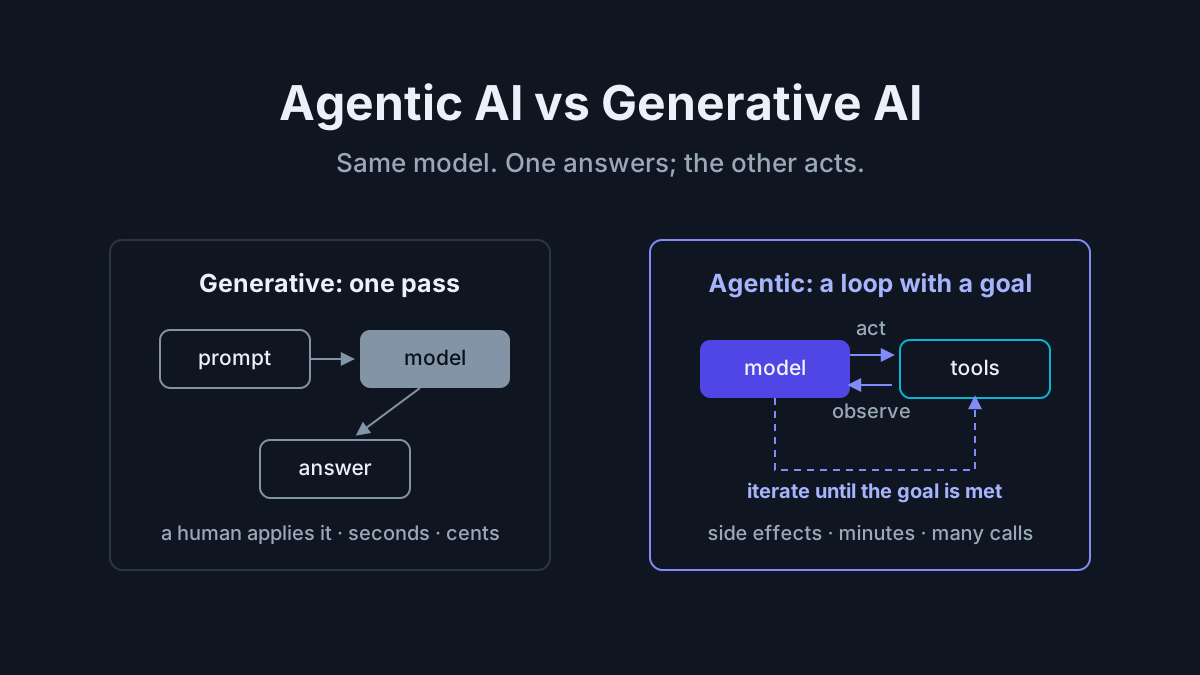
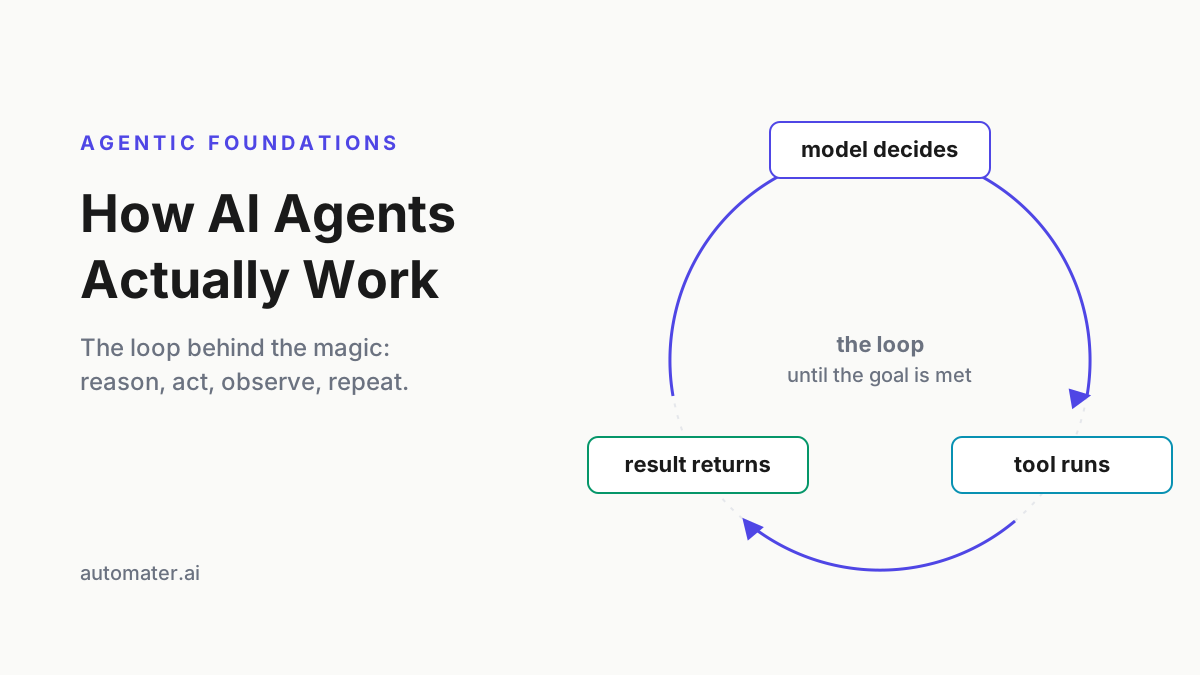
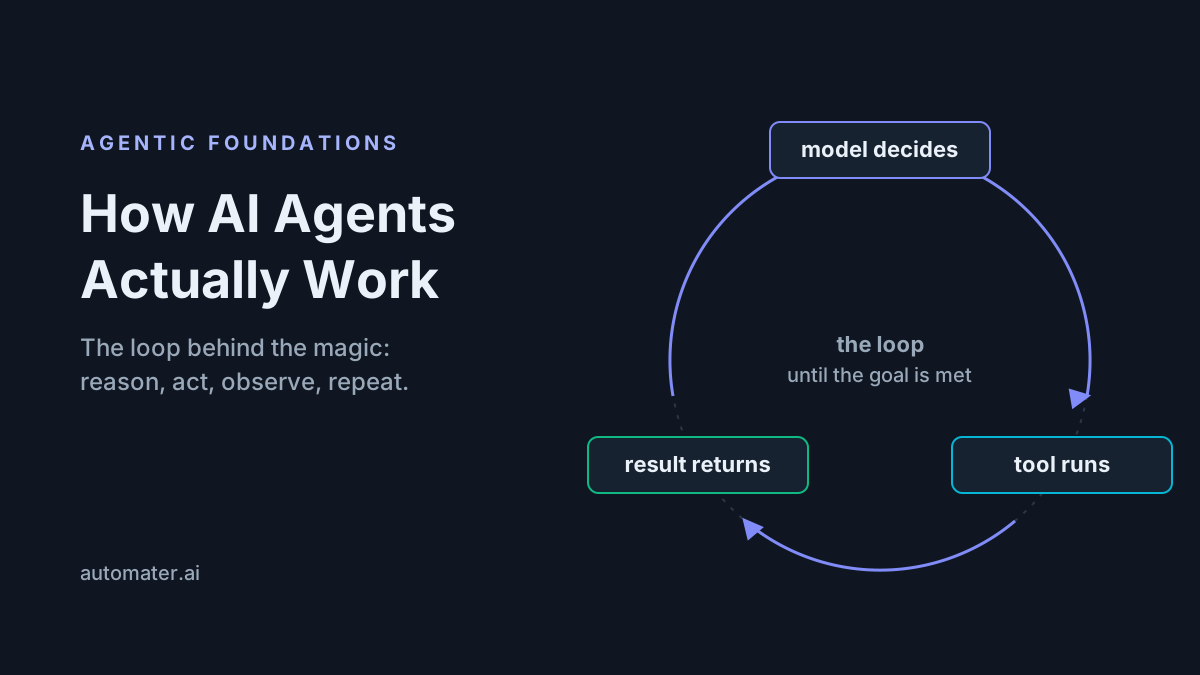
If you are asking what an agent is in software terms, the load-bearing idea is the loop: decide, act, observe, repeat until the goal is met or a limit stops it. A script executes instructions; a software agent pursues an outcome and picks its instructions along the way.
The vocabulary gets used loosely, so pin down four related terms:
- Agentic AI — the paradigm: generative models wrapped in loops, tools, state, and goals.
- AI agent — one running instance of that paradigm, with a specific role and permissions.
- Agentic AI system — the deployed composition: agents plus tools, data access, policies, and monitoring.
- Agentic AI tools — the products you buy or build with: coding CLIs, orchestration platforms, fleet managers.
When the steps are predefined and the model only fills the judgment gaps, you have an agentic workflow — related, more constrained, and often the right place to start.
What this looks like in practice:
- A release agent that watches CI, assembles release notes, stages a canary rollout, and halts it when error-budget burn crosses a threshold.
- A cloud cost agent that reads billing exports and opens Terraform pull requests downsizing the three instances nobody remembered provisioning.
- A support agent that reproduces a Zendesk-reported bug against staging, then files the GitHub issue with a failing test attached.
What makes each of these agentic rather than merely automated is not the model inside. It is the goal-driven loop around it.
Agentic AI vs classic automation: three generations
Three generations of automation now share the same office, and confusing them is how bad purchasing decisions happen. Rule-based automation follows instructions. Generative assistants produce answers. Agentic systems pursue outcomes.
| Rule-based automation | Generative assistants | Agentic software | |
|---|---|---|---|
| Examples | cron, Zapier, RPA bots | ChatGPT, Copilot autocomplete | Claude Code, custom fleet agents |
| Trigger | Schedule or event | Human prompt | Goal, event, or schedule |
| Ambiguity | Breaks | Interprets; human applies | Interprets and acts |
| On error | Fails silently or pages you | You re-prompt | Retries, replans, escalates |
| Requirements change | Rewrite the rules | Rephrase the prompt | Restate the goal |
| Verified by | Nobody, until it breaks | The human, inline | Tests, diffs, review gates |
A concrete scenario makes the difference vivid. Invoices arrive by email as PDFs and must land in the ERP. The RPA bot clicks through screen coordinates and dies the week a supplier redesigns their template. A generative assistant extracts the fields impressively — but a human still pastes every result into the ERP form. An agent watches the inbox, extracts, validates each invoice against its purchase order, posts it through the ERP API, and escalates only the 4% with mismatched totals, evidence attached.
The deeper point: generative AI is a capability, while agentic software is an architecture and runtime that wraps and directs that capability. If that distinction still feels slippery, we take it apart properly in agentic AI vs generative AI.
Core properties of a software agent
Across vendors and frameworks, production agents share six properties. Use them as a checklist whenever someone calls a product “agentic.”
- Autonomy. Executes multi-step work without per-step prompting. A dependency-migration agent updates 41 call sites, runs the suite, and fixes the four breaks it caused — one instruction, forty minutes of unattended work.
- Proactivity. Acts on state, not just requests: opening a pull request when flakiness on
checkout.spec.tscrosses 2%, rather than when someone finally complains. - Tool use. Reads files, runs shells, calls APIs — and chooses which tool fits each step, instead of following a wired sequence.
- Memory. Holds working state within a task and durable knowledge across tasks: repo conventions, past incidents, what failed last time.
- Multi-step planning. Decomposes “get us to Node 22” into ordered, verifiable steps — and replans when step three surprises it.
- Self-evaluation. Checks its own output against tests and acceptance criteria before handing it over. This is the property that separates colleagues from chaos.
These properties map directly onto model capabilities that matured between 2024 and 2026: long-context reasoning, retrieval, and reliable structured tool calling. One correction to the marketing framing, though. Guardrails are not a bolted-on apology for autonomy; constraint is part of the design. An agent that knows what it may not touch, and when to stop and ask, can be trusted with more — which is the entire point.
The building blocks: AI capabilities behind agentic software
Underneath every credible agentic AI system sits roughly the same set of components. You do not need the math; you do need to know what each part is for when you design or buy.
- A reasoning model. As of August 2026 the frontier is Claude Fable 5 (Anthropic’s Mythos-class tier, released June 9, 2026), GPT-5.6, and Gemini 3.1 — with workhorse tiers like Claude Sonnet 5 and fast open-weight models covering routine steps.
- Planning and decision logic. Usually the same model under structured prompting; in larger systems, a separate planner and critic reviewing each other’s work.
- Retrieval. Embeddings over your code, docs, and tickets — pgvector is the unglamorous default — so the agent reasons about your reality instead of its training data.
- Tool access. The progression ran from bespoke function calling to OpenAPI specs to the Model Context Protocol, now the default way agents discover and call tools. The 2026-07-28 MCP spec made the core stateless request/response, with adopters from AWS and Cloudflare to Microsoft Foundry and Google Cloud.
- Memory stores. Scratchpads for the task at hand, vector stores for recall, plain files in the repo (
AGENTS.mdand friends) for durable convention.
Note what is missing: nothing here requires the LLM to do everything. Mature systems pair boring, precise components with the model — an anomaly detector decides that something is wrong; the LLM decides what to do about it. Composition, not replacement.
Architectural patterns for agentic software
The architectural shift is that agents become first-class services: deployed, versioned, and monitored beside your microservices, reading the same queues and writing through the same APIs. Three patterns cover most of production.
- Single orchestrator with tools. One agent, one goal, a registry of tools. Simplest to reason about, easiest to audit. Where roughly 80% of teams should start.
- Hub-and-spoke. A planner hub decomposes the goal and delegates to specialist subagents — coder, tester, reviewer, docs — then integrates results. More throughput, more coordination overhead.
- Peer swarm on an event bus. Agents subscribing and publishing on Kafka or NATS, cooperating without a central planner. Powerful for open-ended monitoring; genuinely hard to debug. Earn your way here.
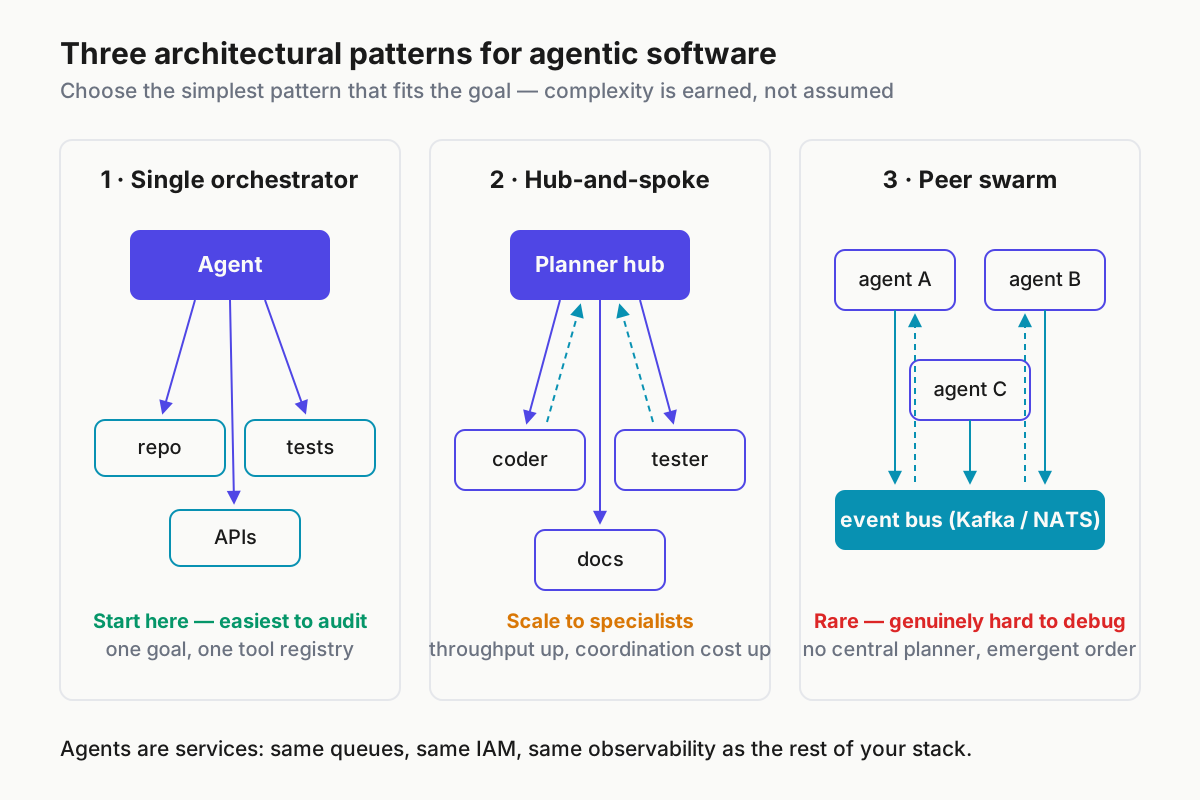
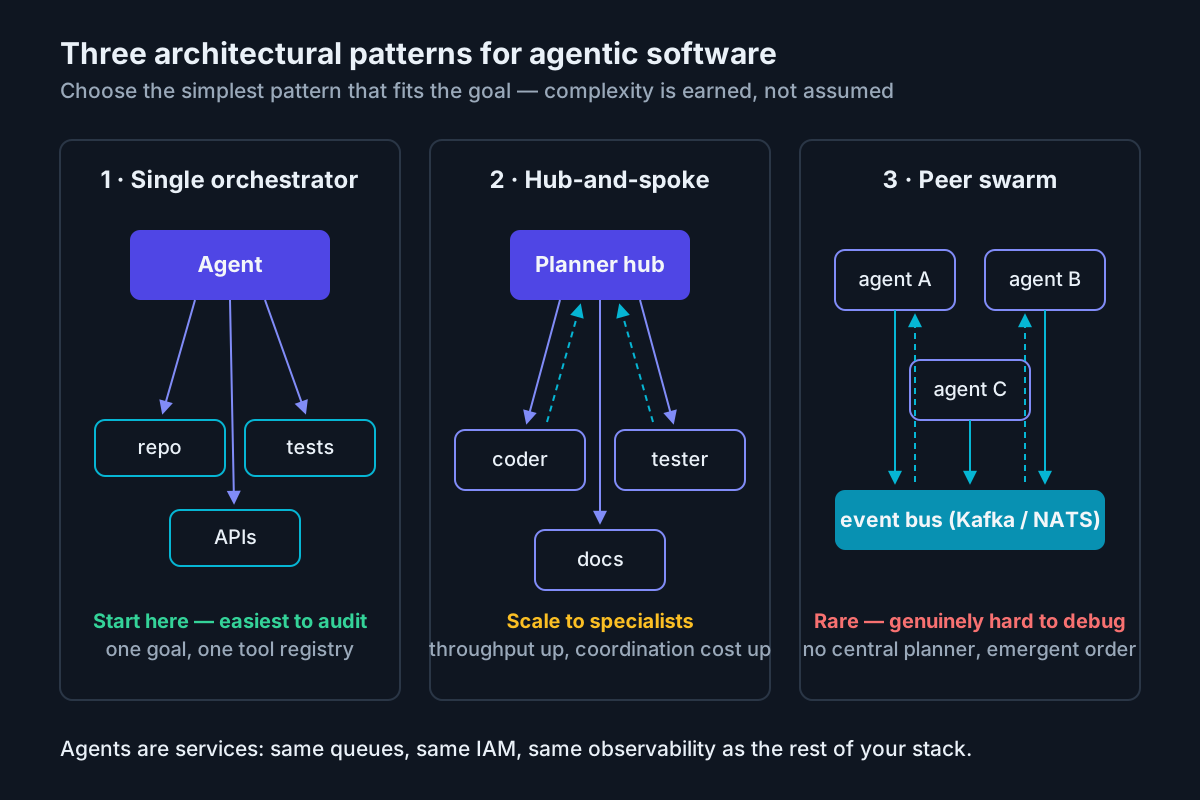 From one agent with tools to a coordinated fleet. Choose the simplest pattern that fits the goal.
You will typically assemble these from graph-style frameworks in the LangGraph mold, durable workflow engines like Temporal, or plain queues and services — the trade-offs get their own section below.
The mundane details decide success. Agents read from replicas, write through the same APIs as every other service, carry their own service accounts and rate limits, and route side effects through a queue you can drain. If your architecture diagram cannot show exactly where an agent’s writes land, the system is not ready.
The agent lifecycle: perceive, reason, act, learn
Production agents run a recognizable loop. The names vary by framework; the shape does not.
- Perceive. Gather state: tail the OpenSearch error index, read the ticket, diff the branch.
- Reason. Form a hypothesis: “the 500s started with the 17:40 deploy; the currency formatter is the only touched path.”
- Plan. Order the steps, each with a check attached: patch, test, canary, watch.
- Act. Make the change: edit the Kubernetes manifest, push the branch, run the command.
- Evaluate. Compare outcome to expectation: did error rates drop, do the tests pass twice in a row.
- Learn. Write back what mattered: a memory note, an updated runbook, a new guardrail.
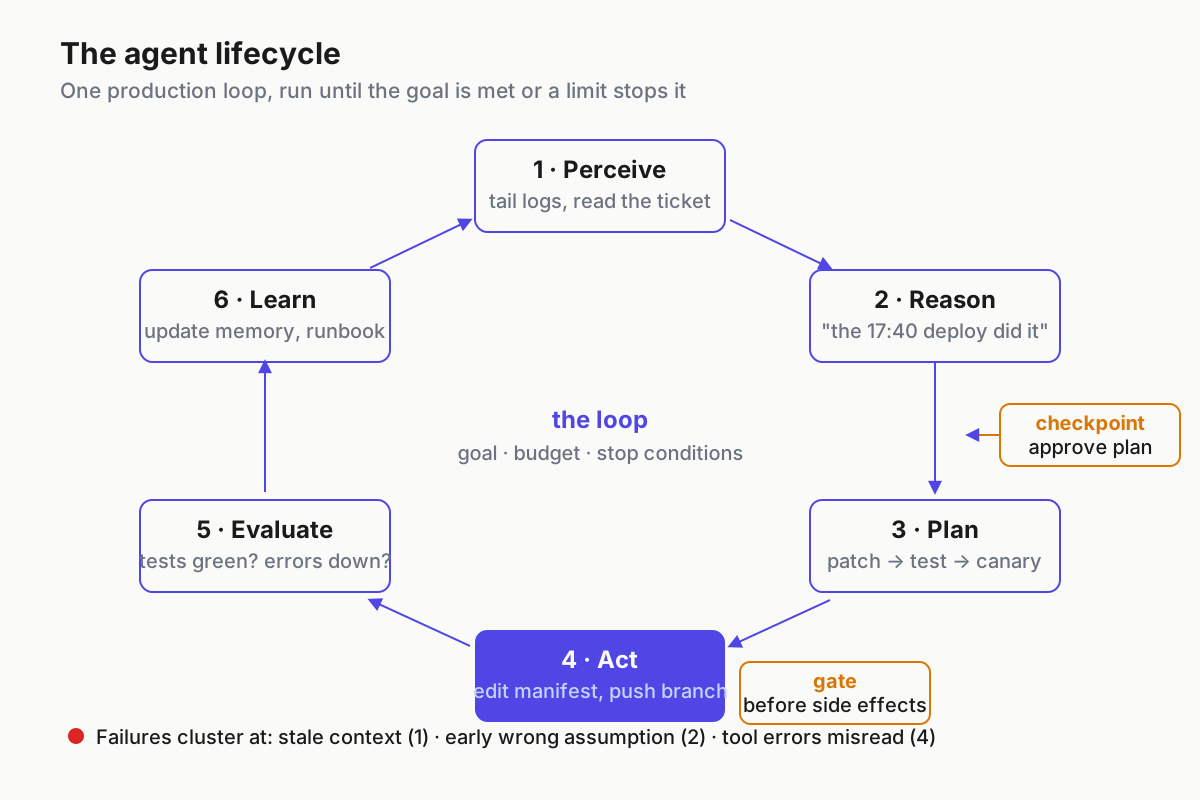
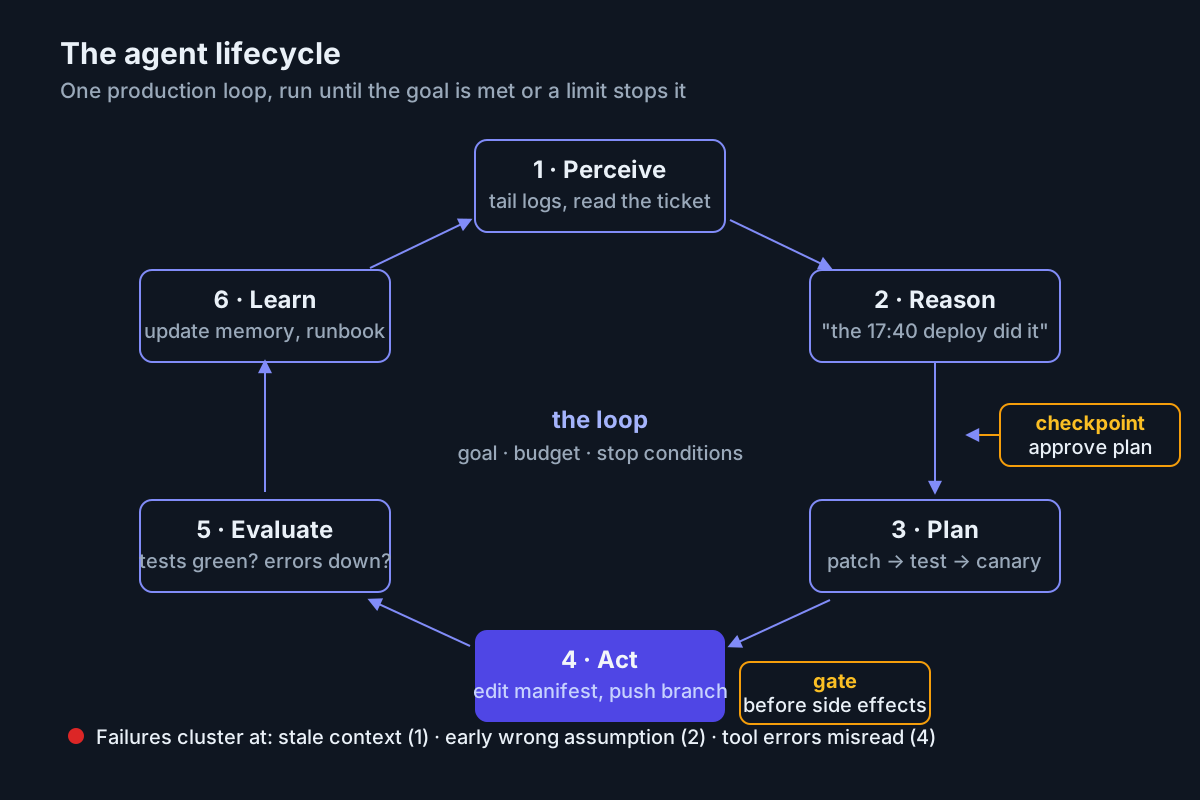 The production loop, with the two seams where humans most usefully stay in it.
Human-in-the-loop checkpoints slot cleanly into two seams: plan approval, which is cheap and catches bad assumptions early, and pre-side-effect gates before deploys, deletions, or anything customer-visible.
Failures cluster predictably. Stale context at perceive, so the agent reasons about last month’s architecture. A wrong assumption at reason, which every later step faithfully compounds. And tool failures at act misread as logic failures. Robust systems catch these in the evaluate phase, with budgets and stop conditions as the backstop. The full mechanics — context windows, tool schemas, stop conditions — are covered in how AI agents actually work.
Agentic software across the SDLC
An IDE assistant makes one developer faster. Agentic software engineering is broader: agents as durable participants across requirements, coding, testing, security, deployment, and operations, coordinating across Jira, GitHub, CI, and cloud — which is why a software engineering agent that owns test selection is a different class of thing than autocomplete. Teams already run agents that triage bugs, select tests, draft release notes, and write first-draft postmortems. Four places it shows up first:
New developer onboarding: the project concierge
A concierge agent reads the monorepo docs, the Terraform, and the production runbooks, then generates a personalized three-day onboarding plan: services in dependency order, local environment scripted, an “ask me why” channel for every architectural oddity. The new hire asks why there are two payment services and gets the 2024 migration history with links, instead of a shrug.
The benefits are measurable — days-to-first-PR, fewer mentoring interrupts, consistent onboarding regardless of who is on vacation. The constraints are real too: scope the agent’s access to what a new hire may see, redact secrets and customer data, and regenerate the knowledge base on every deploy. Confidently outdated onboarding is worse than none.
Team coordination: reading the board so nobody has to
Agents watching trackers and PR queues surface what standup misses: “PR #4312 blocks three tickets and its reviewer is out until Thursday — reassign or resequence.” Cross-repo dependency analysis proposes the decoupling refactor nobody had time to scope. Syncs get proposed only when a critical dependency actually moves, which quietly deletes a meeting or two per week.
The failure mode is an agent that micromanages humans with automated nagging. The design goal is a coordination fabric: surface state and options, let people decide.
Coding, refactoring, and CI/CD
Past autocomplete, an agent takes a feature ticket end to end — design outline, code, tests, CI adjustments — and hands you a reviewable pull request. Pipelines start to self-heal:
[ci-medic] 02:31 plan: restore node_modules cache hits (3 steps)
[ci-medic]   1/3 bump actions/setup-node v4 -> v5, pin Node 22.6
[ci-medic]   2/3 key cache on hashFiles('package-lock.json')
[ci-medic]   3/3 verify: two consecutive runs under 7 min
[ci-medic] 02:47 build p50 11m42s -> 6m18s across 2 runs; opened PR #4571
Agents also run experiments humans never have time for: three refactor strategies on three branches, benchmarked, best one proposed. Two trade-offs to manage: compute bills from frequent runs, and reviewer flood from over-automating trivial changes. Set thresholds for what deserves a pull request at all.
Code review, testing, and QA
First-pass review agents enforce style and security policy and triage which 20% of changes need deep human attention. Test agents generate regression tests, prune redundant ones, and select tests by changed components so CI runs in minutes instead of hours. Debugging agents shorten time-to-root-cause on flaky integration tests from an afternoon to under an hour .
Oversight stays structural: agents never approve their own work. Mandatory human review, protected paths via CODEOWNERS, and stricter rules for anything production-critical.
Beyond engineering: product, operations, and the business
The same architecture generalizes to anywhere work is APIs plus judgment.
- Product: an agent mines feature-usage telemetry weekly and drafts “what changed, who cares, what to sunset” — the analysis PMs mean to do and rarely have time for.
- Customer success: an agent watches churn signals — logins dropping, ticket tone souring — and opens CSM tickets with a full dossier. It drafts the outreach; a human sends it.
- Finance: a cost-anomaly agent flags the NAT gateway that quietly became a five-figure monthly line item, and files the ticket with the offending resource IDs.
- Planning: a roadmap agent reconciles Jira against the Notion roadmap so the public page stops lying about dates.
The adoption path we keep seeing: start in engineering, where verification is cheap (tests, diffs), then expand into GTM and operations once governance patterns mature. It is all still agentic software in the same sense — agents acting within software boundaries, through APIs, with the same loop and the same controls.
Designing agent roles, skills, and boundaries
Teams that do this well treat agent design like team design. Name roles narrowly — Infra Guardian, Docs Curator, Regression Hunter — because a named role forces a scoping conversation that “the AI” never gets.
Behavior lives in instruction artifacts: AGENTS.md files, skill definitions, playbooks, versioned in the repo. That keeps behavior consistent when you swap models or tools, and makes agent behavior reviewable like code.
A minimum-viable role charter:
- One human owner per agent, with pager responsibility for it
- A written scope: goal, allowed tools, data access, and what is explicitly out of bounds
- Least-privilege credentials, unique per agent — never a shared bot account
- Escalation rules: what it must hand to a human, and through which channel
- A review cadence to expand — or revoke — scope based on the record
The mental model that works: hire agents like junior teammates. Narrow scope at first, real responsibility, expansion only as reliability is demonstrated — with the paper trail to prove it.
Under the hood of an agentic AI tool
Peel open any serious agentic AI tool — a coding CLI, a workflow platform, an internal fleet — and roughly the same stack appears:
- Model core — the reasoning engine, often several models at different price points
- Planner loop — turn-taking logic, budgets, stop conditions
- Tool registry — what the agent may call, with schemas and permissions
- Execution engine — the sandboxed place where side effects actually happen
- Memory store — task state and durable knowledge
- Observability layer — transcripts, traces, token accounting
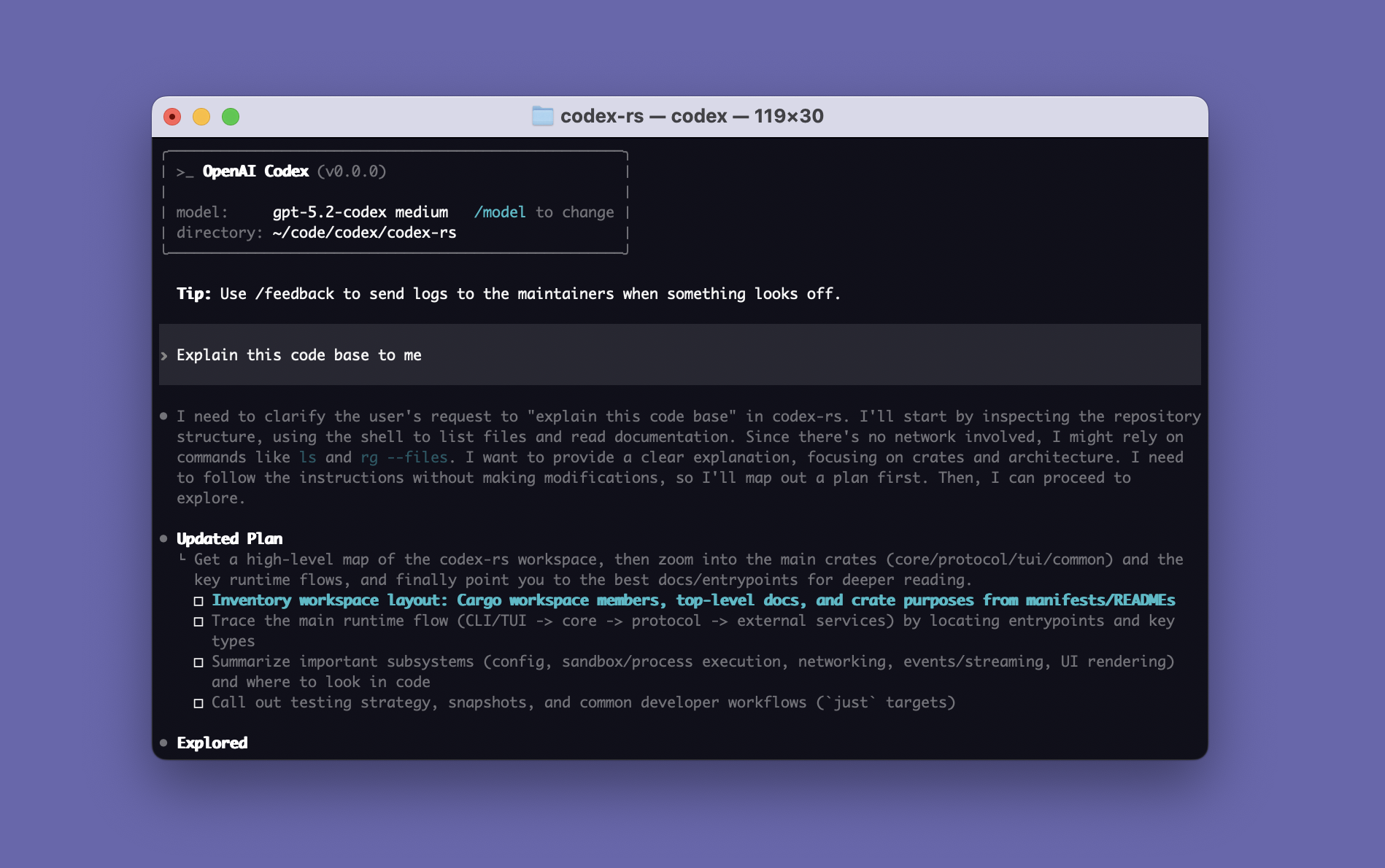
Execution is event-driven: webhooks from the tracker, cron schedules, CI state changes. A typical run: a webhook fires, the agent clones the repo into a container, edits through Git, runs the tests in the sandbox, then reports to Slack and a pull request. In the terminal world this wrapper around the model is called an agent harness, and harness quality — not model choice — explains most of the difference you feel between tools.
Three harness qualities predict daily-driver satisfaction better than any benchmark: how the tool manages context (what it re-reads, what it summarizes, what it forgets), how it gates permissions (per-command approval versus standing allowlists), and whether sessions persist — can you resume Tuesday’s half-finished migration on Thursday with the reasoning intact.
Risks and failure modes of agentic software
Autonomy amplifies whatever it touches, including your flaws. The risk register for software teams has five buckets: logic errors, cascading failures, opaque decisions, security exposure, and compliance drift.
Concrete 2026 versions, none requiring malice: an agent mass-closes 400 “stale” tickets, twelve of which were real customer bugs. A cost optimizer deletes an “unused” NAT gateway and takes out a region’s egress. A debugging agent pastes a production secret from a log into a public issue. Every one of these is scope without controls.
Hallucinations, incorrect logic, and cascading errors
- LLM-driven agents hallucinate plausible APIs, misread vague tickets, and apply the right pattern to the wrong problem when context is thin.
- The cascade is the real danger: one wrong assumption at plan time becomes code changes, then tests updated to bless the wrong behavior, then a deploy that makes it real.
- Mitigations that work: explicit constraints in the role charter, sandbox-first execution, canary releases, and automated rollback tied to error budgets.
- Close the loop after every incident: the lesson lands in the prompt, the skill file, or a guardrail policy. Agents do not learn from postmortems unless you write the learning in.
Transparency, explainability, and observability
“Why did the agent change that file” must be answerable in minutes, not by archaeology. The production baseline:
- Centralized logs and full execution traces — every model call, tool call, and diff
- Human-readable reasoning summaries attached to pull requests and tickets
- Dashboards of agent runs, with diffs visualized and runs replayable offline
- Local-first session archives, so the transcript outlives the terminal window it happened in
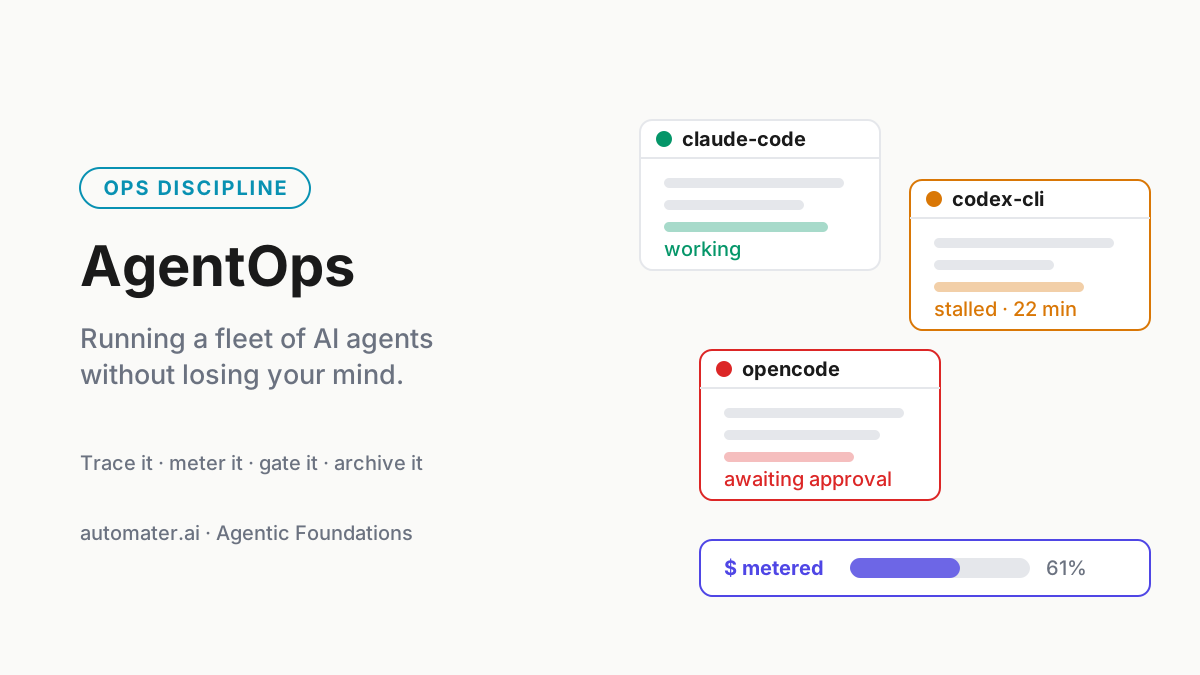
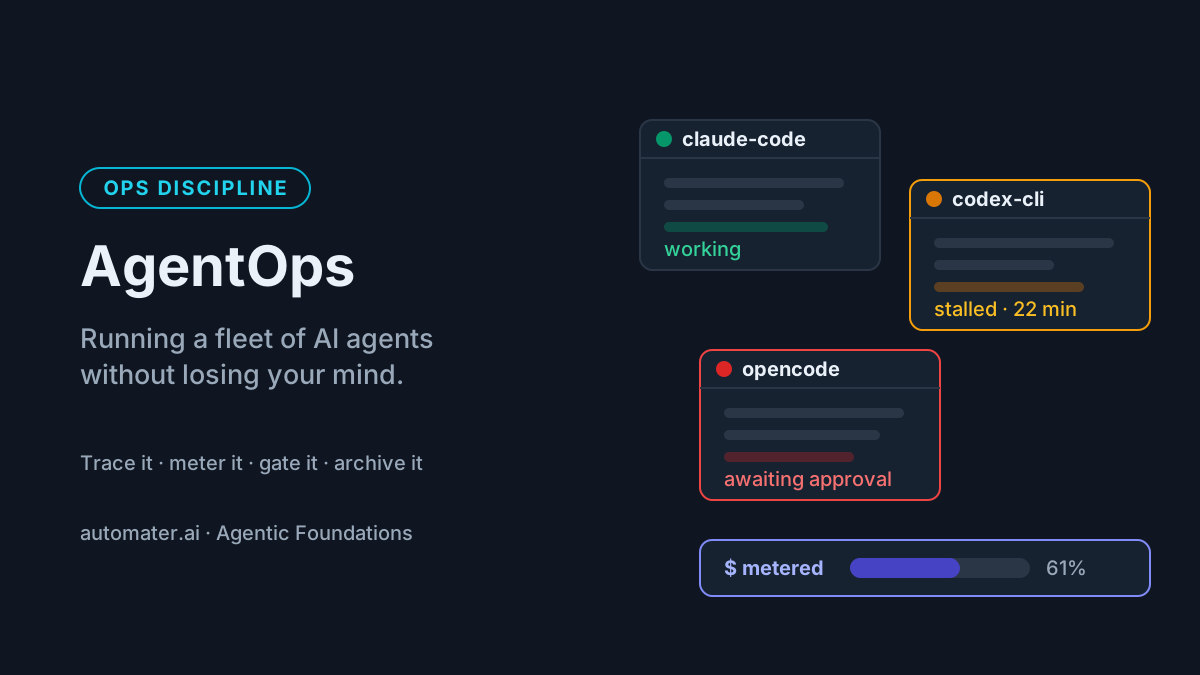
This is the same lesson distributed systems taught us about tracing, and it is non-negotiable for production agents. Running it as a discipline — fleet dashboards, budgets, escalation paths — is what AgentOps covers.
Product note: If your agents live in CLIs, Automater Lite archives, searches, and meters every session locally — the searchable flight recorder this section argues for. Free on automater.ai.
Security, access control, and malicious behavior
- The classic mistake is one bot token with org-wide write access. Least-privilege IAM, a separate service account per agent, short-lived credentials, and rotation are the floor.
- Gate sensitive actions — production deploys, data deletion, spend — behind human approval, enforced by the platform rather than the prompt.
- The adversarial reality is prompt injection through content agents read: logs, READMEs, dependency changelogs. The US government’s June 2026 MCP security guidance exists precisely because tool servers widen this attack surface.
- Monitor agent behavior the way you monitor user behavior: anomaly detection on tool-call patterns, alerts on novel scopes.
The full architecture — threat model, gates, sandboxes — is in securing AI agents.
Data privacy, compliance, and IP
- Agents touch source code, customer data, and internal docs, so GDPR, SOC 2, data residency, and the training clauses in your model contracts all apply to their traffic.
- Standard patterns: VPC or on-prem model deployment, redaction filters in front of the model, explicit no-train configurations in vendor agreements.
- Since August 2, 2026, EU AI Act Article 50 requires AI systems that interact with people to disclose it, and synthetic content to be marked. If your support agent talks to customers, that clause is about you.
- Run the legal and compliance review before an agent touches production repos or PII-bearing systems. Retrofitting consent is not a plan.
Oversight, governance, and avoiding skill erosion
- Over-trusting agents erodes exactly the skills needed to check them: debugging, architecture, security review.
- Write a RACI for agents: decisions they take alone, decisions requiring approval, decisions that stay human. Ambiguity here becomes an incident later.
- Run quarterly no-agent drills — humans work an incident cold. It keeps skills warm and doubles as a quality audit of what the agents have been doing.
- Stand up a lightweight Agent Review Board that approves new roles, permission expansions, and high-impact workflows. Thirty minutes a week, not a committee.
Cost, performance, and scalability
An agentic task is not one model call. It is dozens: context re-read every turn, tool output fed back into the prompt, retries, sometimes parallel branches. The budget shape changes before the invoice does.
- Real cost drivers: inference, retrieval infrastructure, tool-call fan-out, and the observability pipeline — traces are tokens too.
- Context limits still bite. Million-token windows exist, but a monorepo does not fit and should not. Retrieval beats giant prompts on both cost and accuracy.
- Controls that work: step-level caching; retrieval instead of stuffing; cheap models for mechanical steps. As of mid-2026, DeepSeek V4 Flash at $0.14 per million input tokens is the credible price floor — reserve frontier models for the judgment calls.
- Meter per agent, not per bill. One blended API invoice tells you nothing; per-provider, per-agent token metering tells you which colleague is expensive.
- The market signal: GitHub moved Copilot to usage-based billing in June 2026. Flat-rate economics did not survive agentic consumption, and your internal budgeting should assume the same.
- Scale overhead is coordination: concurrent agents contend for repos, rate limits, and review bandwidth. Queue the side effects and cap parallelism before your CI does it for you.
Legal, ethical, and accountability questions
- Who owns a bug an agent introduced? The convergent answer: the merging engineer owns the change, the agent’s owner owns the agent, and “the AI did it” is not a root cause.
- Licensing does not care who typed. An agent pasting GPL-licensed code into a proprietary repo creates the same obligations a human would. License scanning applies to agent PRs too.
- Attribution conventions, now. An
agent:commit trailer or Co-Authored-By line naming the agent and run ID keepsgit blamemeaningful. Example policy language: “Changes authored primarily by an agent carry a trailer with the run ID; the merging engineer owns the change.” - Fold agents into your existing AI risk program — model inventory, impact assessments where required, an incident taxonomy that includes agent actions. Article 50-style transparency duties are the beginning of audit pressure, not the end.
How to start: safe entry points for agentic software
Start where the blast radius is small and verification is cheap: documentation generation, static-analysis triage, test-environment maintenance, internal dev tooling. Nobody ever lost a region to a docs agent.
- Pick one workflow and one owner. Write the charter and the success metrics before the first run.
- Run side-by-side. For two to four weeks the agent does the work and a human either does it in parallel or reviews 100% of it.
- Measure. Time saved per run, incidents per 100 runs, review rejection rate, and a simple human-satisfaction score.
- Expand on evidence. Scope grows when the metrics hold, and shrinks when they do not. Write both rules down in advance.
- Codify. Whatever worked becomes the playbook for agent number two, which ships in half the time.
Staff the pilot cross-functionally — engineering, security, product — because the blockers are rarely technical. They are questions about access, liability, and trust, and those go faster with the right people already in the room.
One anti-pattern to avoid: piloting five agents at once to see what sticks. Five unowned experiments generate noise, not evidence. One owned workflow with clean metrics teaches you more in a month than a fleet of orphans does in a quarter.
Choosing and evaluating agentic AI tools
Evaluating an agentic AI tool is a different exercise from evaluating a generic AI tool, because you are buying behavior, not output. The rubric we use:
- Autonomy with control. Can it complete multi-step goals — and can you cap it with budgets, turn limits, and approval gates?
- Safety controls. Sandboxing, a real permission model, protected paths.
- Integration depth. Your repos, CI, and trackers; MCP support is table stakes in 2026.
- Observability. Full transcripts, traces, and export. If you cannot get the logs out, walk away.
- Prompt and tool transparency. Can you read and version the system prompts and tool definitions that steer it?
- Deployment fit. Cloud, VPC, or local, matched to your data posture.
- TCO under loop economics. Per-seat pricing math misleads when consumption is per-token.
No-code platforms and engineering-grade stacks are both legitimate; they answer different buyers. Weight alignment with your existing stack and security posture over leaderboard hype. For the build side, see our guide to AI agent frameworks; for the buy side, the best agentic AI tools is the tested roundup.
Organizational change: integrating agents into the team
- Roles shift up the stack. Engineers spend more time on system design, specification, and review. Most of agent engineering turns out to be writing down what “done” means precisely enough to delegate it.
- New rituals appear. The agent standup: ten minutes reviewing overnight runs. Fleet dashboards in the team meeting. Incident reviews that examine agent decisions with the same rigor as human ones.
- Training is deliberate. Writing specs agents can execute, debugging agent workflows, reading transcripts efficiently — agentic engineering is a skill you build, not one you absorb.
- The human part is real. Some engineers see a colleague, some see a threat. What works is positioning agents as staff you manage: visible wins, honest accounting of failures, and no pretending that review work is not work.
- Fleets hit a wall fast. Teams running several agents concurrently need shared visibility and conventions; that playbook is running multiple AI coding agents without the chaos.
Where agentic software goes next (2026–2030)
- Protocols consolidate. MCP’s stateless 2026-07-28 revision was the boring-infrastructure milestone; registries, gateways, and marketplaces are already forming on top of it.
- AgentOps becomes a control plane. Observability, policy, and orchestration converge the way feature flags and telemetry did a decade ago — one place to see, budget, and stop every agent.
- Harness engineering professionalizes. Tuning the wrapper around the model is now a named discipline with a growing community canon; job titles will follow.
- Audit pressure arrives. From Article 50 onward, “show me the transcript” becomes a compliance phrase, and certification regimes for agentic AI systems are a matter of when.
- The end state is unglamorous. Agents as standard stack components, like queues or caches. The decisions that matter in the next one to three years: standardize on a protocol, build eval and observability muscle, and expand scope only with evidence.
Conclusion: build colleagues, not chaos
The promise of agentic software is not that AI writes code. It is that AI agents become durable components of your systems — perceiving, acting, and improving under the same operational discipline as everything else you run in production.
The balance to hold: ambitious automation and strict governance are not in tension. The second is what makes the first safe to scale. Instrument everything, gate the side effects, and keep humans owning outcomes.
So start deliberately. Pick one candidate workflow this quarter, give it an owner, a charter, and explicit success metrics, and run it side-by-side until the numbers earn it more scope. A year from now the question will not be whether you run software agents. It will be whether you can trust the ones you run — and trust, for agents as for people, is built on a record.
FAQ: software agents and agentic software
What is a software agent?
A software agent is an autonomous program that perceives its environment, makes decisions, and acts toward a goal on behalf of a user or system. LLM-era agents differ from classic daemons and bots by reasoning over ambiguous input and choosing tools dynamically instead of executing fixed instructions.
What is agentic software engineering?
Agentic software engineering is the discipline of building software with and around AI agents: defining agent roles and boundaries, wiring tools and context, adding evals and observability, and governing what agents may do autonomously. The coding-specific slice of it is covered in our guide to agentic coding.
Is agentic AI the same as an AI agent?
No — one is a paradigm, the other a component. Agentic AI describes the approach of giving model-driven systems goals, tools, and loops. An AI agent is a single running instance of that approach, with a specific role, permissions, and owner inside a larger system.
What is an example of agentic software in real life?
A production bug-triage loop: an agent reads the overnight alert, links it to the last deploy, writes a patch behind a feature flag, runs the affected tests, and opens a pull request with its reasoning. A human reviews and merges in minutes the next morning.
How is a software agent different from a script or cron job?
A script or cron job replays fixed instructions and breaks when reality drifts. A software agent pursues a goal through a decide-act-observe loop: it interprets ambiguous input, chooses tools, recovers from errors, and escalates when stuck — trading determinism for adaptability under guardrails.
Sources
- Anthropic — Introducing Claude Fable 5 and Claude Mythos 5
- OpenAI — GPT-5.6
- Model Context Protocol blog — the 2026-07-28 specification revision
- NSA/CISA — Cybersecurity Information Sheet: MCP security guidance (June 2026)
- EU AI Act — Article 50 transparency rules
- GitHub Blog — GitHub Copilot is moving to usage-based billing
- Morph — The best open-source coding models of 2026
- ai-boost/awesome-harness-engineering — the harness engineering canon