Agentic AI vs Generative AI: What Actually Changes When Software Gets Goals
Agentic AI vs generative AI, minus the vendor gloss: the architecture gap, a real comparison table, cost and risk asymmetries, and when a plain prompt wins.

Go deeper. Build your own.
Last Tuesday, the same model did two very different jobs for the same engineer. In a chat window, Claude Fable 5 explained why a Postgres query planner was ignoring an index — thirty seconds, one answer, done. In a terminal, the identical model spent forty minutes inside Claude Code migrating a test suite: reading files, running pytest, reading failures, editing, running again. One model, two machines.
That is the agentic AI vs generative AI question in miniature, and it deserves a sharper answer than the vendor explainers give it. The distinction is not the model: Claude Fable 5 powers Anthropic’s chat surface and its coding agent alike, and GPT-5.6 sits under both ChatGPT and Codex. The difference is everything wrapped around the model — a loop, tools, state, and a goal. That wrapper is an architectural distinction with real cost, risk, and design consequences. It is not a rebrand.
You already know this in your hands, even if the vocabulary is fuzzy. Accepting a GitHub Copilot completion is generative AI. Letting Claude Code run the tests, read the failure, and patch the file is agentic AI. This piece pins the boundary down: a capability spectrum with real tools on each rung, the architecture gap underneath it, a comparison table, the honest cases where generative-only wins, and a stepwise path for adding agency to a feature you already ship.
Generative AI, defined
Generative AI produces content — text, code, images — from a prompt in a single inference pass: input in, output out, and a human decides what happens next. It is stateless between calls, reactive rather than goal-seeking, and free of side effects by construction.
The defining properties, stated so you can test them:
- Stateless. Each call stands alone; the model remembers nothing your context window does not carry back in.
- Reactive. It answers when asked and never initiates.
- No side effects. The model can suggest
rm -rf ./cache; only a human can run it. - Refinements do not add agency. RAG, long context, and structured output improve the single pass — they never change its shape.
The canonical surfaces: chat (ChatGPT, Claude.ai, Gemini), inline completion (GitHub Copilot, Cursor Tab), and one-shot generation — commit messages, SQL from a schema, first-draft docs.
Agentic AI, defined
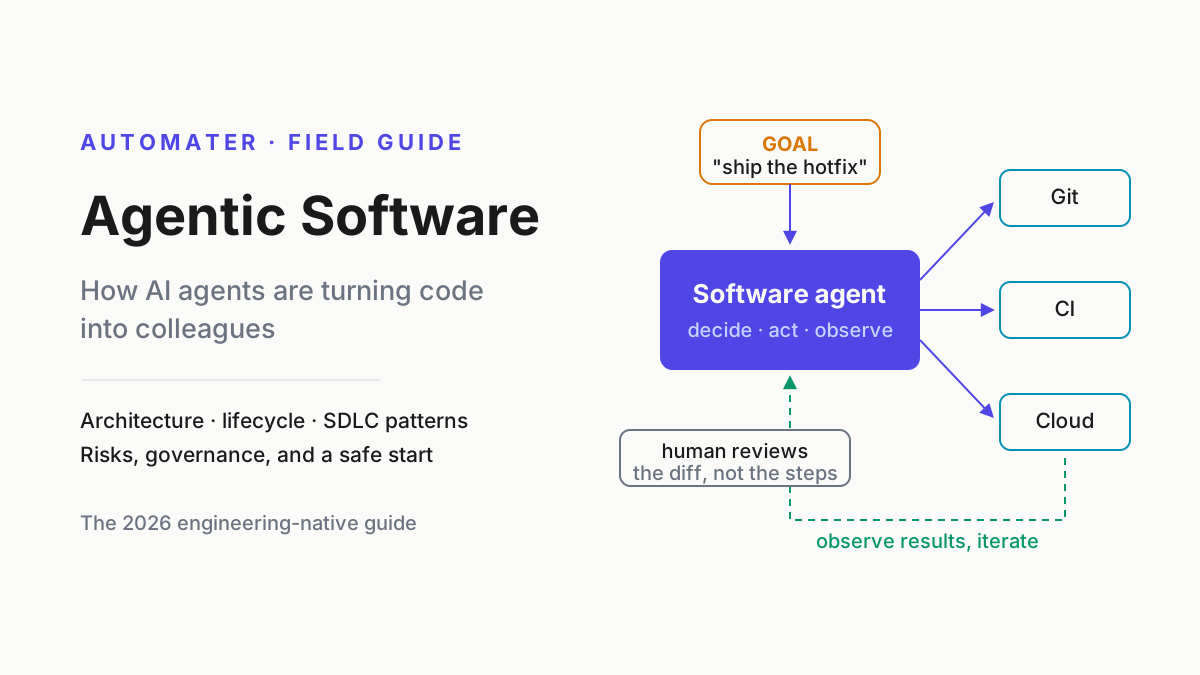
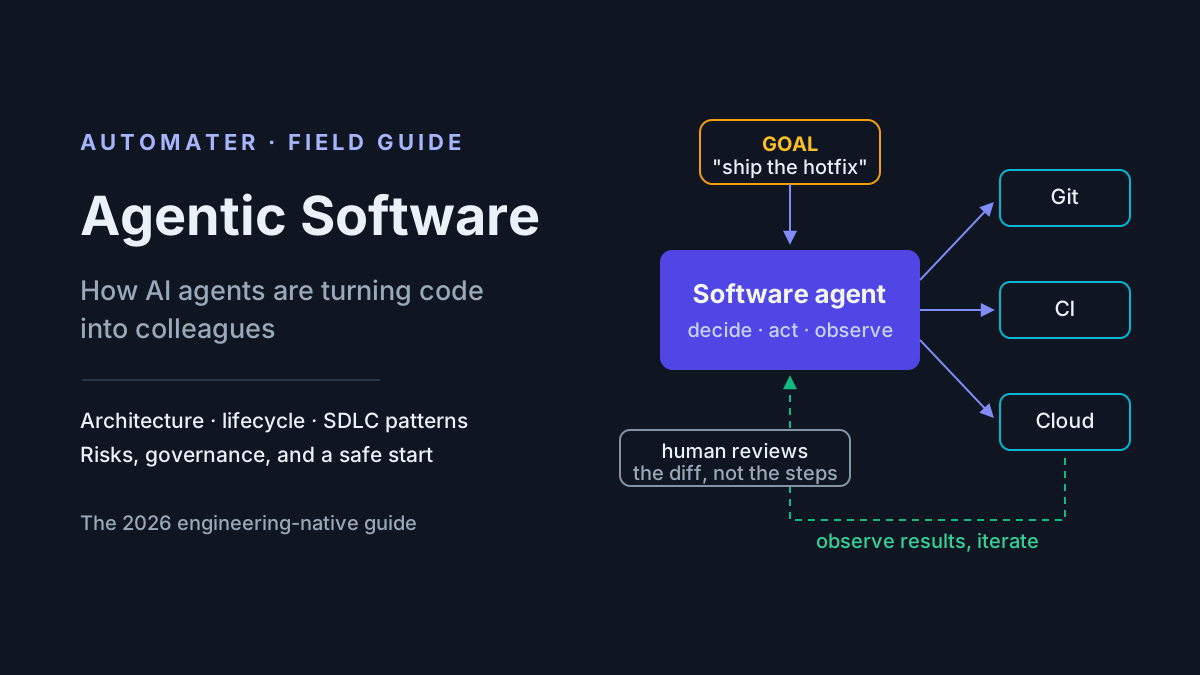
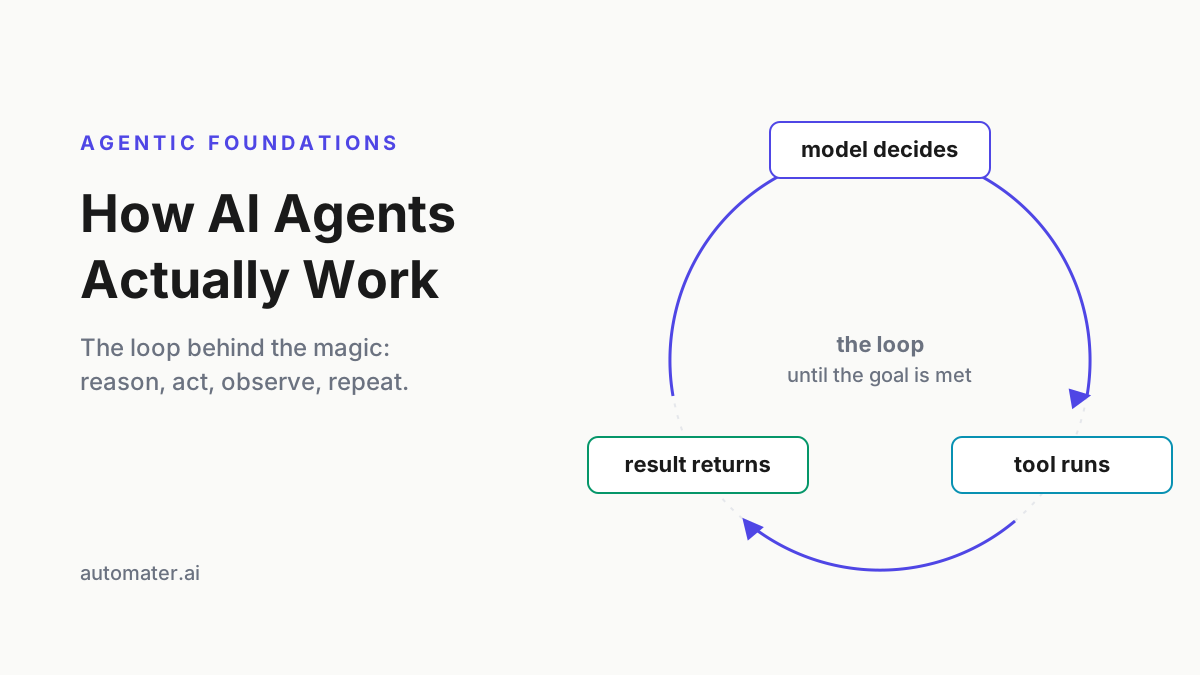
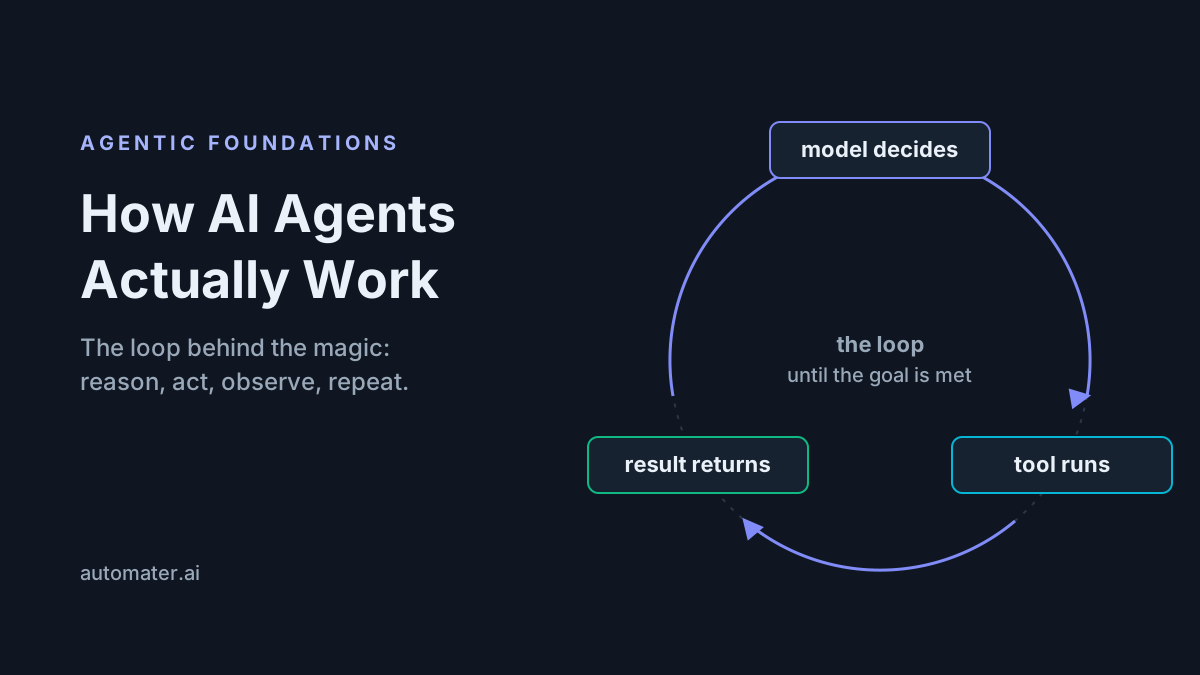
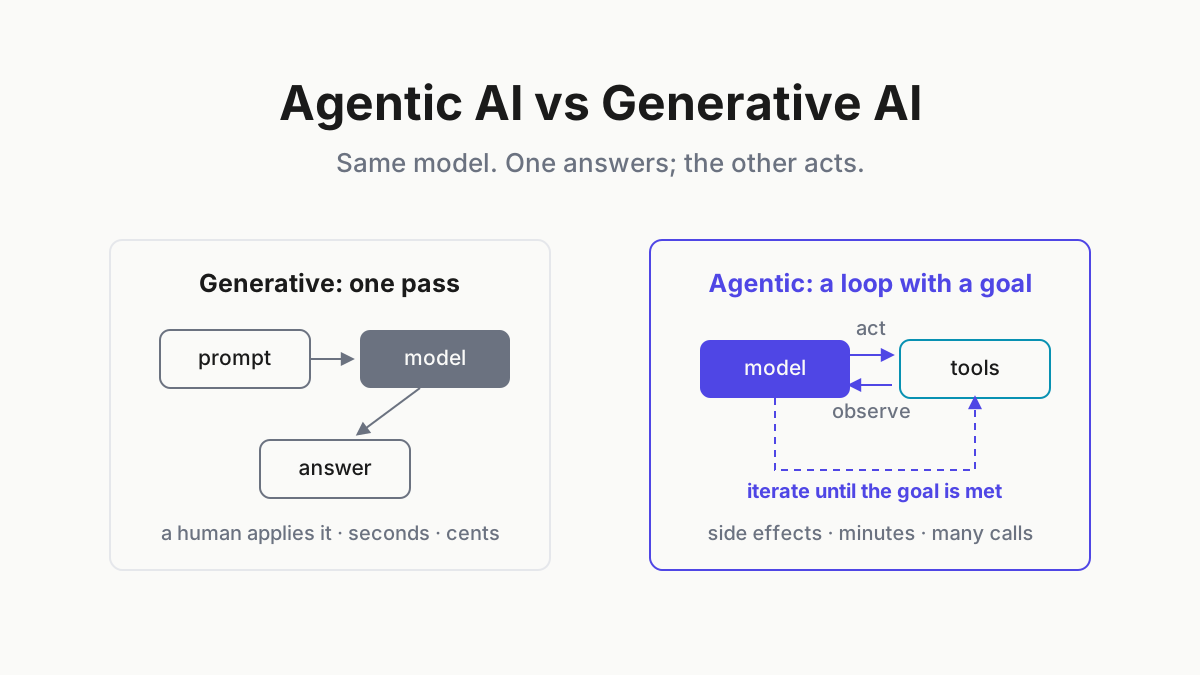
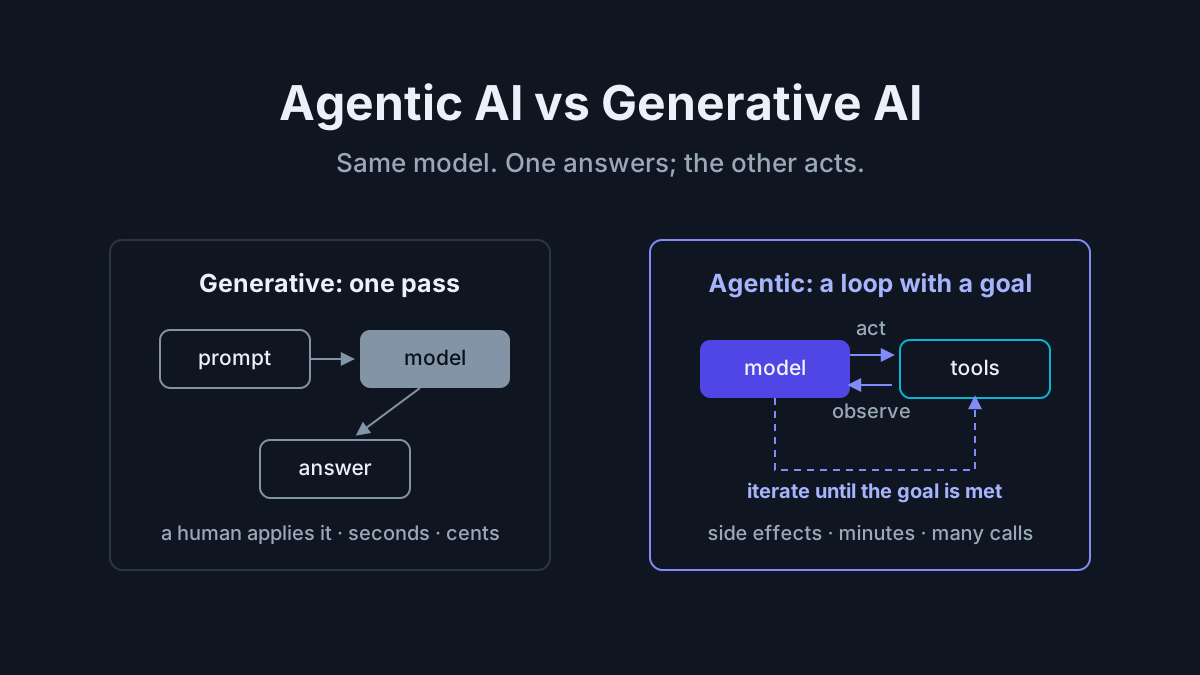
Agentic AI is a generative model wrapped in a loop with tools, state, and a goal: the system plans, acts through tools, observes the results, and iterates until the goal is met or a limit stops it. Many model calls, one human instruction.
Each of those words is load-bearing:
- Loop. One task means many inferences — plan, act, check, repeat.
- Tools. File edits, shell commands, API calls: actions with consequences, chosen by the model per step.
- State. Context accumulates across turns; the tenth step knows what the second step found.
- Goal. Success criteria pursued without per-step prompting, bounded by budgets and stop conditions.
Three terms that get blurred deserve one line each. Agentic AI is the paradigm. An AI agent is one running instance of it. An agentic workflow is a predefined orchestration where the model fills judgment gaps inside fixed steps. The mechanism behind all three — the loop itself — is dissected in how AI agents work.
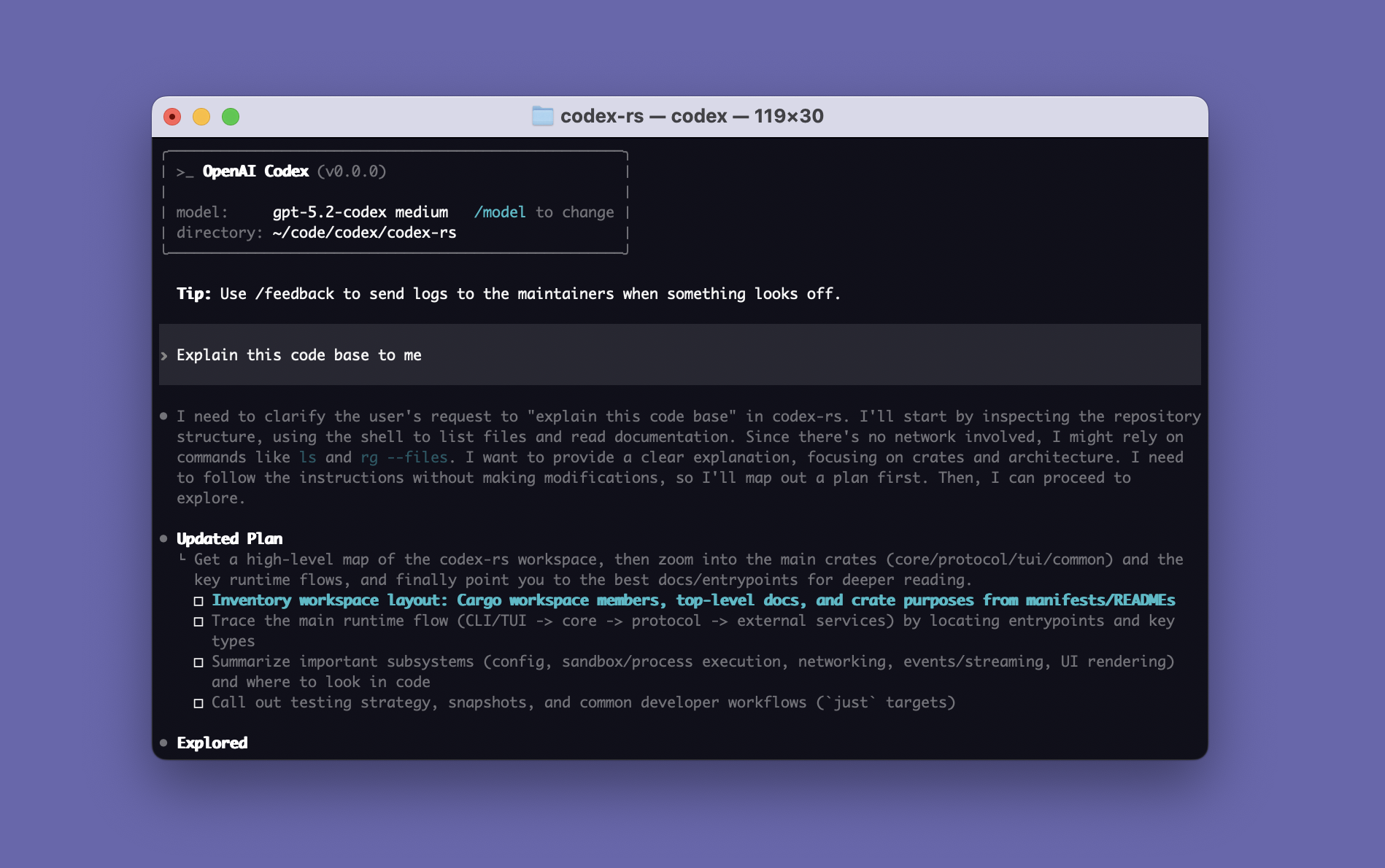
One anchor example. A coding CLI told “make the flaky checkout test deterministic” greps the suite, reads the test, replaces a sleep with clock injection, reruns it twenty times, and reports. Ten model calls, one human instruction — that is the whole difference in a sentence.
One bug, three ways
Abstractions slip; a running example does not. Here is the identical bug attacked at three rungs: an Express handler that 500s with TypeError: Cannot read properties of undefined (reading 'street') whenever a guest checkout arrives without user.address.
Autocomplete (GitHub Copilot, Cursor Tab) helps at the crash site, as you type:
// you type, inside formatAddress in shipping.js:
if (
// Copilot suggests, from surrounding context alone:
if (!user.address) {
  return res.status(400).json({ error: "shipping address required" });
}
Instant, and often right — but blind to the failing request logs, and you did all the navigation to get here. Verification is entirely yours.
Chat (Claude.ai, ChatGPT) trades speed for diagnosis:
You:   TypeError: Cannot read properties of undefined (reading 'street')
       at formatAddress (src/handlers/shipping.js:41)   [+28 lines of trace]
Model: user.address is undefined for guest checkouts. formatAddress assumes
       a saved address; guard it and fall back to the order's billing
       address. Corrected function below...
You:   [copy, paste, run tests yourself, discover billing address can be
       missing too, paste the new failure back in]
Better reasoning, same architecture: you are still the transport layer between the model and the codebase.
An agentic CLI (Claude Code, Codex CLI) is handed the crash report and the goal:
$ claude "guest checkouts 500 when user.address is missing -- fix properly"
  Grep("formatAddress", src/)          -> 3 call sites
  Read(src/handlers/shipping.js)       -> guests skip address capture
  Read(src/middleware/checkout.js)     -> billing address is optional too
  Edit(shipping.js)                    -> guard + explicit 422 when neither exists
  Write(tests/shipping.guest.test.js)  -> 3 regression cases
  Bash(npm test -- shipping)           -> 17 passed
  Done: 2 files changed. Review the diff before merging.
Note what happened in the middle: the agent found the billing-address edge case by reading the middleware — the same discovery the chat user made manually, one paste later. Identical bug, identical model class; the differences are pure architecture.
The capability spectrum: chat, copilot, agent
The market sells a binary; reality is a spectrum of initiative. Four rungs, each handing the system more of the decide-act loop:
- Chat — ChatGPT, Claude.ai, Gemini. You initiate every turn; you carry the output to where it matters.
- Copilot-in-context — GitHub Copilot, Cursor Tab. Suggests into your buffer; you accept or reject; still zero side effects.
- Supervised agent — Claude Code, Codex CLI, Antigravity CLI, Cursor’s agent mode. Mutates the repo and runs commands under permission gates; you review diffs as they land.
- Background agent — Codex cloud tasks, GitHub Copilot’s coding agent, Cognition’s Devin. Works on infrastructure you are not watching; you review a finished pull request.
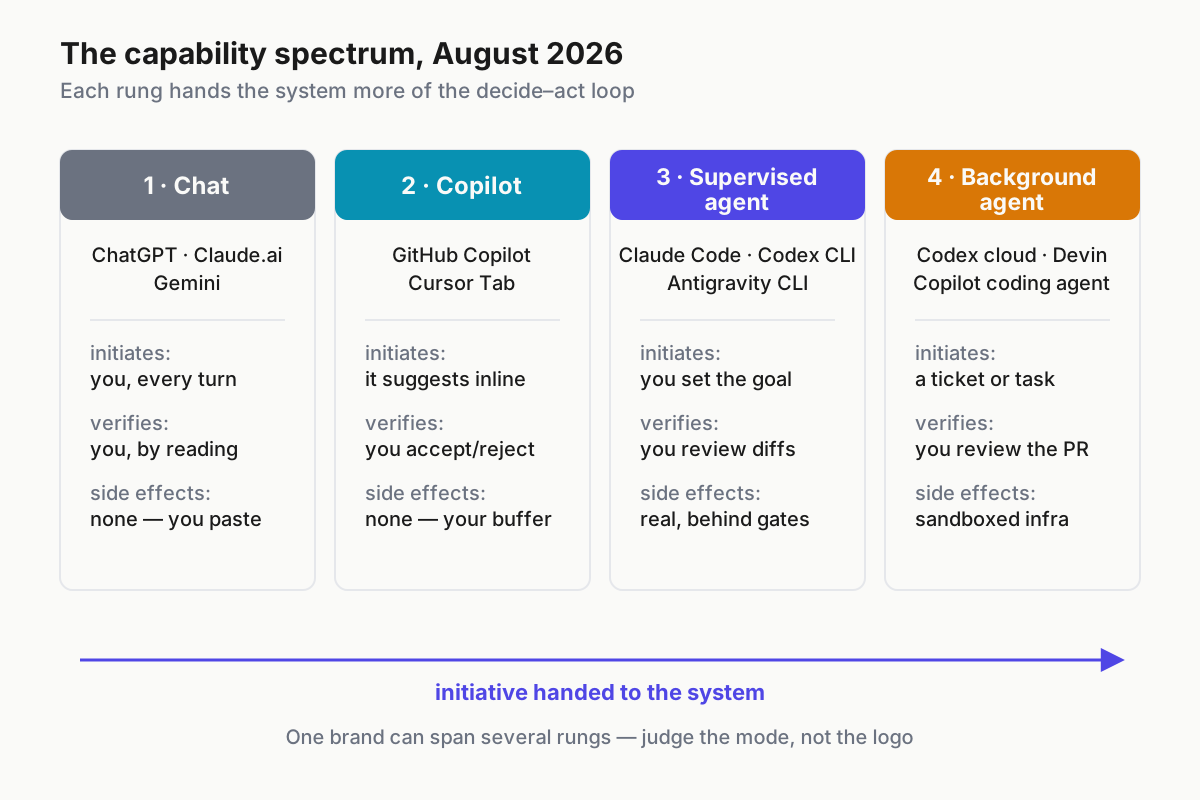
 Four rungs of initiative. The test at each boundary: who initiates, who verifies, who owns side effects.
The rung boundaries are testable, not vibes: who initiates the work, who verifies the result, and who owns the side effects. A copilot suggests into your buffer; an agent mutates your repo.
Two field notes. First, single products span rungs — GitHub Copilot alone is autocomplete, chat, and a coding agent under one brand, which is precisely why the vocabulary confuses buyers. Second, the roster churns: Gemini CLI was discontinued on June 18, 2026, and Google’s supervised-agent seat now belongs to Antigravity CLI. The current, tested roster lives in the best agentic AI tools.
The architecture gap: one pass vs loop, tools, state, goals
Underneath the spectrum sit two runtime shapes. Generative is request/response: one inference, and a human in the loop by construction. Agentic is a control loop — model call, tool call, observation, next model call — with humans at checkpoints instead of in every gap.
The loop demands infrastructure a single pass never needs:
- A tool registry — what the model may call, with schemas and permissions; standardized enough by mid-2026 that the 2026-07-28 MCP spec could make its core stateless request/response.
- An executor — the sandboxed place where side effects actually happen.
- State that survives turns, so observations accumulate instead of evaporating.
- Stop conditions — goal met, budget exhausted, turn limit hit.
- Error-recovery paths — a failed tool call is information to reason about, not an end state.
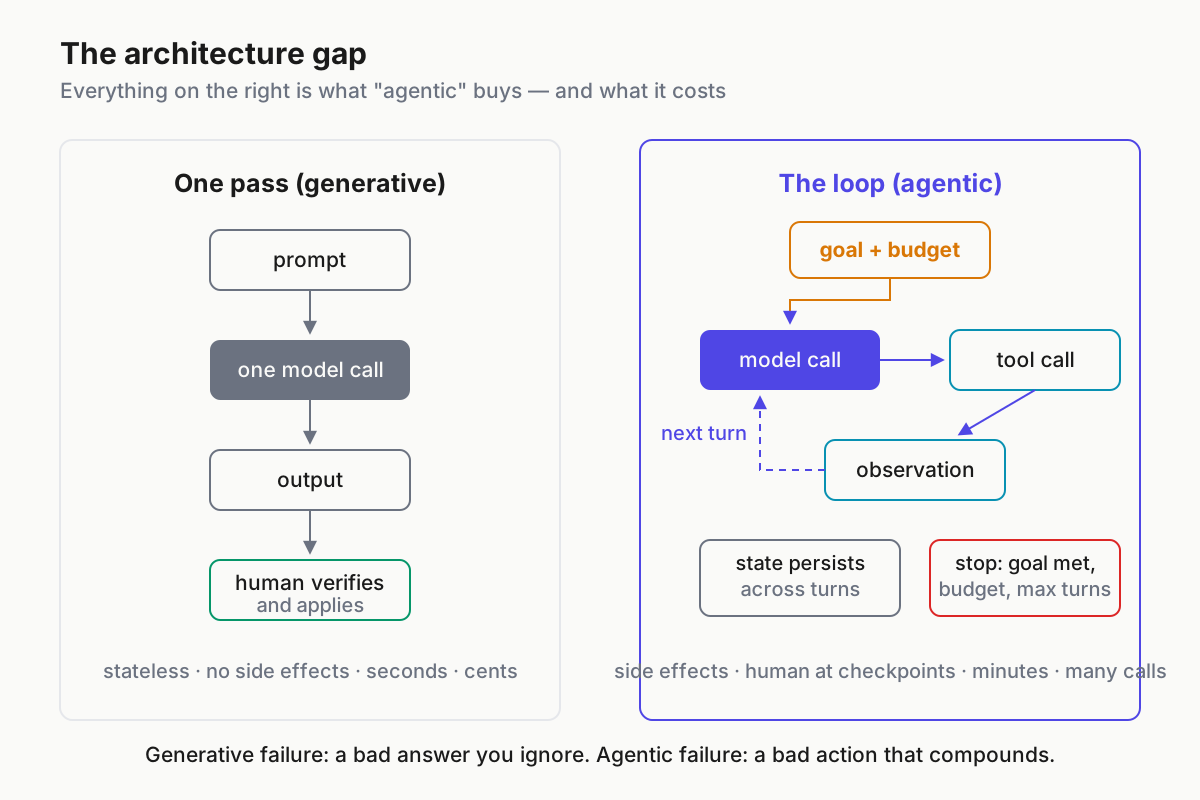
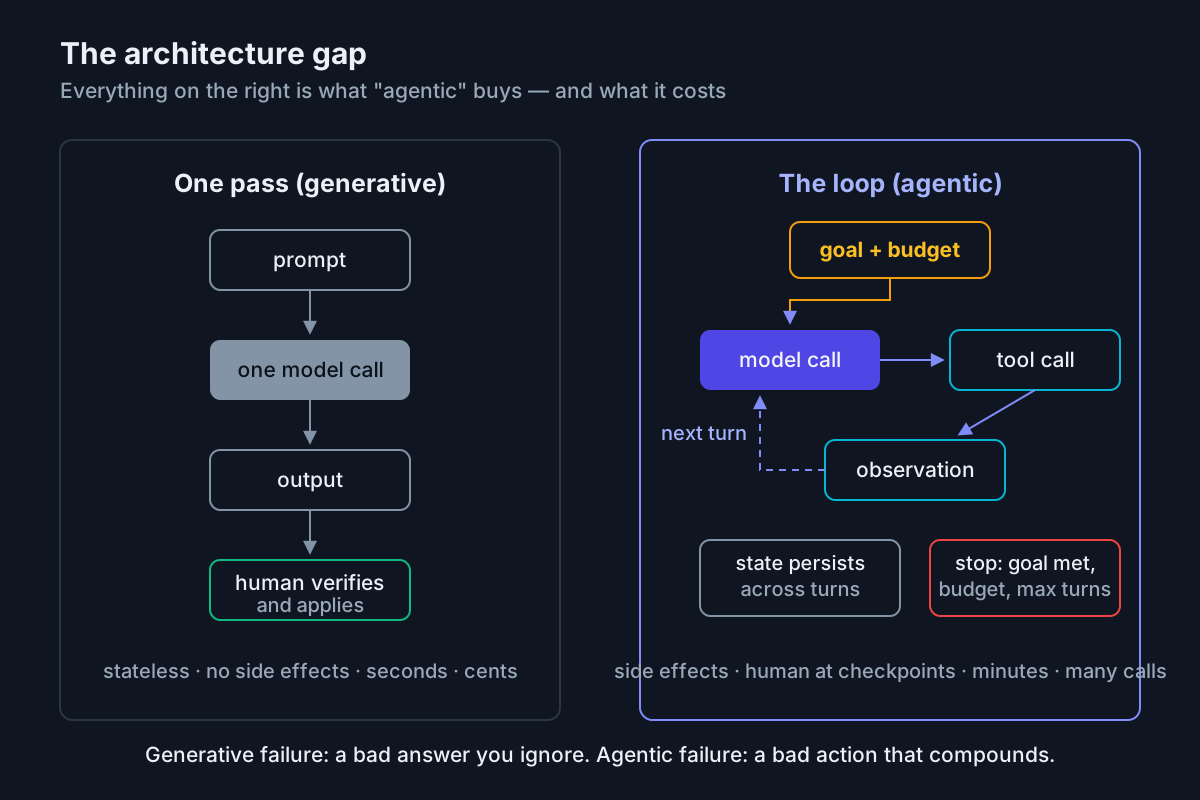 The architecture gap. Everything on the right is what “agentic” actually buys — and costs.
The consequence follows directly. A generative failure is a bad answer you ignore; an agentic failure is a bad action that compounds. That is why serious agent deployments lead with sandboxes, permission gates, and audit trails rather than better prompts.
And notice the economic inversion: a single pass returns in seconds for cents, while a loop runs for minutes across dozens of calls. The loop pays for itself only when it replaces human iterations, not model ones. The full architectural treatment — patterns, lifecycle, governance — is the subject of our agentic software pillar.
Agentic AI vs generative AI: the comparison table
Here is the gen AI vs agentic AI comparison row by row — every cell is a concrete difference you can verify against your own tooling.
| Dimension | Generative AI | Agentic AI |
|---|---|---|
| Initiative | Reactive; answers when asked | Pursues a goal across steps |
| State | Stateless between calls | Context persists across turns |
| Tool use | Suggests commands you run | Executes tools directly |
| Error recovery | Human re-prompts | Reruns pytest, reads failure, patches again |
| Cost per task | One call; cents | 10–100x model calls |
| Risk profile | Bad text, ignorable | Bad actions that compound |
| Latency | Seconds | Minutes to hours |
| Verification | Read the answer | Tests, diffs, transcripts |
The last row is the one vendor tables always skip. Generative output is verified by reading it. Agentic output is verified by evidence — test runs, diffs, transcripts — and if you do not have that evidence pipeline, you do not have an agent you can trust.
Capability vs architecture: agentic is built on generative
The generative AI vs agentic AI framing eventually collapses, because agentic systems do not replace generative models — they consume them. Every turn of an agent’s loop is a generative inference; strip away the wrapper and the raw material is the same next-token machine.
The cleanest framing we know: generative AI is the engine; agentic AI is the vehicle built around it. Each engine generation — longer context, stronger tool calling, better long-horizon coherence — has produced noticeably better vehicles without anyone redesigning the car.
Two corollaries follow. First, improving an agent means tuning the architecture — tools, prompts, checkpoints, context management — at least as often as swapping the model; teams that only chase model upgrades plateau early. Second, the “agentic AI vs AI agent” confusion settles itself: agentic AI is the paradigm, and an AI agent is one deployed instance of it, with a role, permissions, and an owner.
When generative-only is the right call
This is the section vendor explainers never write, so take it as our proof of good faith. Stay generative-only if:
- The transform is deterministic and the inputs are stable. Schema-to-SQL, log reformatting, translation, boilerplate. A loop adds cost and variance with zero payoff.
- A human reviews the one-shot output anyway. Commit messages, PR descriptions, alt text, first-draft docs — the review step already is the checkpoint; a loop would duplicate it.
- The UX is latency-bound. Autocomplete lives inside roughly a 100 ms budget ; any agent loop is orders of magnitude too slow for a keystroke.
- Volume is high and per-call value is low. A 10–100x token multiplier turns a rounding-error feature into a real line item. The economics of running agents has the math — and cheap open-weight inference like DeepSeek V4 Flash at $0.14 per million input tokens softens the multiplier without repealing it.
None of these are consolation prizes. Most of the LLM value shipping in production today is still single-pass, and much of it should stay that way.
The asymmetry: agents multiply value and blast radius
State it plainly: an agent that saves an hour of human iteration is worth a hundred times the tokens. An agent with write access that goes wrong has a hundred times the blast radius of a bad chat answer. Both facts come from the same loop.
The costs compound mechanically — retries, context re-read on every turn, tool output stuffed back into the prompt, parallel branches. One “simple” agentic fix can outspend a month of chat usage . The market has already repriced around this: GitHub moved Copilot to usage-based billing in June 2026 because flat monthly plans could not absorb agentic consumption.
The risks compound the same way: cascading edits downstream of one wrong assumption, over-broad credentials, and prompt injection through the very files an agent reads to do its job — a problem OpenAI’s own head of preparedness concedes “may never be solved” for browser agents. The control set — least privilege, gates, sandboxes — is laid out in securing AI agents.
The governing rule that survives both lists: autonomy scales with verifiability. Grant agency where results are cheap to check — tests, diffs, dry runs. Keep a human in the loop where they are not.
Living with agents: the operational reality nobody advertises
- A normal week now sprawls: a Claude Code bug hunt on Monday, a Codex CLI refactor Wednesday, an Antigravity CLI experiment Friday — each session holding context and decisions that evaporate the moment the terminal closes.
- The failure mode has a shape: Monday’s agent already solved the problem Thursday’s agent is busy re-deriving, because every CLI keeps — or silently discards — its own history in its own format.
- Transcripts are work product now. “Why did we change this” increasingly lives in an agent session, not a commit message. Archive them, search them, resume them — the way you would never delete a code review thread.
- The bills are just as scattered: per-provider invoices say nothing about which agent or workflow burned the tokens. Running several agents with shared visibility is its own discipline — the playbook is running multiple AI coding agents without the chaos.
Product note: Agentic work means dozens of sessions a week across multiple CLIs, and every CLI forgets. Automater Lite archives, searches, and resumes sessions from 10+ providers locally, with per-provider token metering. Free on automater.ai.
Adding agency stepwise: migrating a generative feature
You do not rewrite a generative feature into an agent; you walk it up the rungs, adding one architectural element and one verification mechanism per step. Running example: a support-reply drafter.
- Single-pass draft. The model drafts a reply from the ticket; a human edits and sends. Log accept rates and edit distance. Gate: drafts ship with light edits most of the time.
- Add retrieval. Ground drafts in order history and docs. New failure mode: stale or wrong context. Log which chunks were retrieved. Gate: citations survive a sampled audit.
- Add read-only tools. The system looks up order status itself. New failure mode: tool errors laundered into confident prose. Log every call and result. Gate: tool-call correctness holds near-perfect across a defined sample.
- Add write actions behind approval. It can queue the refund; a human approves it. New failure mode: confidently wrong actions. Log the full proposed plan. Gate: approval rate above 95% over N runs.
- Add evaluation, then selective autonomy. Build the eval harness from four steps of accumulated logs; let proven action classes run unattended; everything else stays gated.
The commonly skipped step is the eval harness. Teams jump from step 2 to step 5, and discover they have no way to measure regressions on the day something breaks in production. The logs you kept at every gate are the eval suite you will wish you had — keep them from day one.
Conclusion: pick your rung deliberately
Generative AI is a capability; agentic AI is an architecture built on top of it. So the question is never “which is better” — it is which rung this specific task deserves. Escalate when human iteration is the bottleneck and results are cheap to verify. Stay low when latency, determinism, or blast radius says otherwise.
And whichever rung you run, keep the receipts: transcripts, diffs, token counts. Agentic work you cannot audit is work you cannot trust — and the teams getting real leverage from agents in 2026 are, without exception, the ones who can show you exactly what their software did and why.
FAQ: agentic AI vs generative AI
What is the difference between agentic AI and generative AI?
Generative AI produces content from a single prompt — stateless, reactive, no side effects — and a human applies the output. Agentic AI wraps a generative model in a loop with tools, state, and a goal, so the system acts, observes results, and iterates with humans at checkpoints.
Is agentic AI the same as an AI agent?
No. Agentic AI is the paradigm: model-driven systems given goals, tools, and loops. An AI agent is one running instance of that paradigm — a specific process with a role, permissions, and an owner. You adopt agentic AI by deploying and governing individual AI agents.
Is ChatGPT generative or agentic?
Both, depending on mode. Plain chat is generative: one prompt, one answer, no side effects. Its agent and deep-research modes run loops — browsing, executing code, iterating toward a goal — which is agentic behavior inside a chat product. The interface blurs it; the architecture decides.
Is agentic AI worth the extra cost?
Yes, when the loop replaces human iterations rather than model ones: an agent spending 100x the tokens to save an hour of engineering time wins easily. It loses on high-volume, low-value calls. The rule: pay for agency where output is cheap to verify and human time is the bottleneck.
Sources
- Anthropic — Introducing Claude Fable 5 and Claude Mythos 5
- OpenAI — GPT-5.6
- Model Context Protocol blog — the 2026-07-28 specification revision
- GitHub Blog — GitHub Copilot is moving to usage-based billing
- CyberScoop — OpenAI: prompt injection in browser agents “may never be solved”
- Morph — The best open-source coding models of 2026