Apple's Job Listings Reveal a Plan for an Agent That Codes, Browses and Drives Your Device
Job listings spotted by Bloomberg show Apple building an autonomous agent that browses, codes, controls apps and coordinates sub-agents — the last major platform holder to enter the computer-use race.
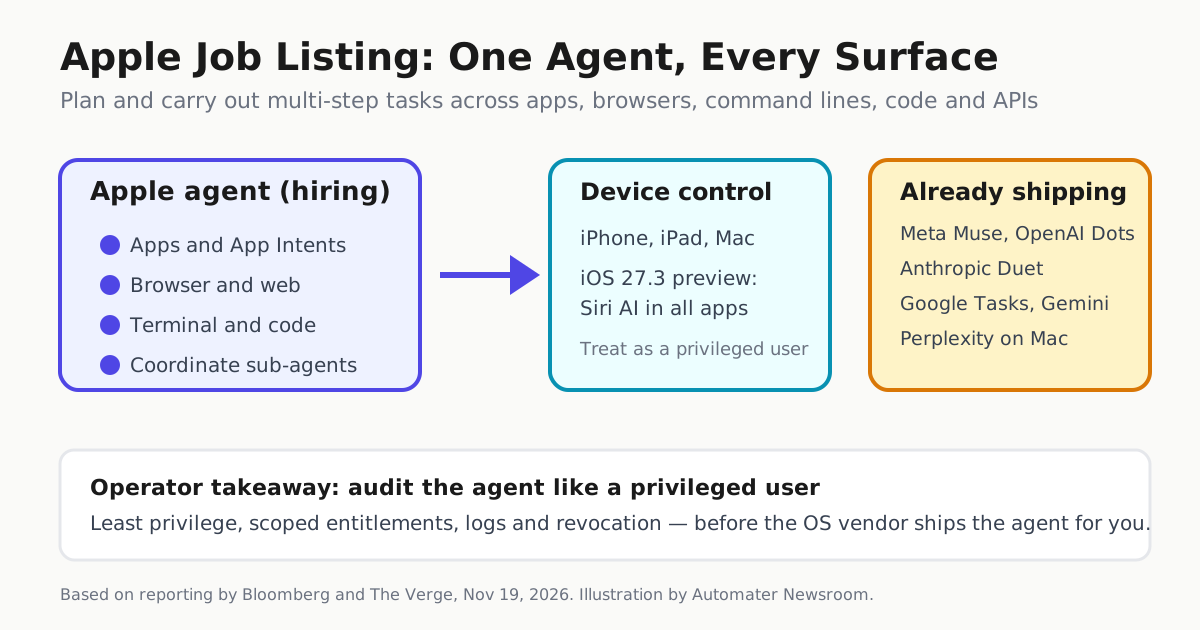
Apple is the last big platform holder without a shipping autonomous agent, and that appears to be changing. Bloomberg reported on Nov. 19 that new Apple job listings describe a “proactive, agentic AI assistant” — a system that writes code, browses the web, controls apps and navigates a device on a user’s behalf.
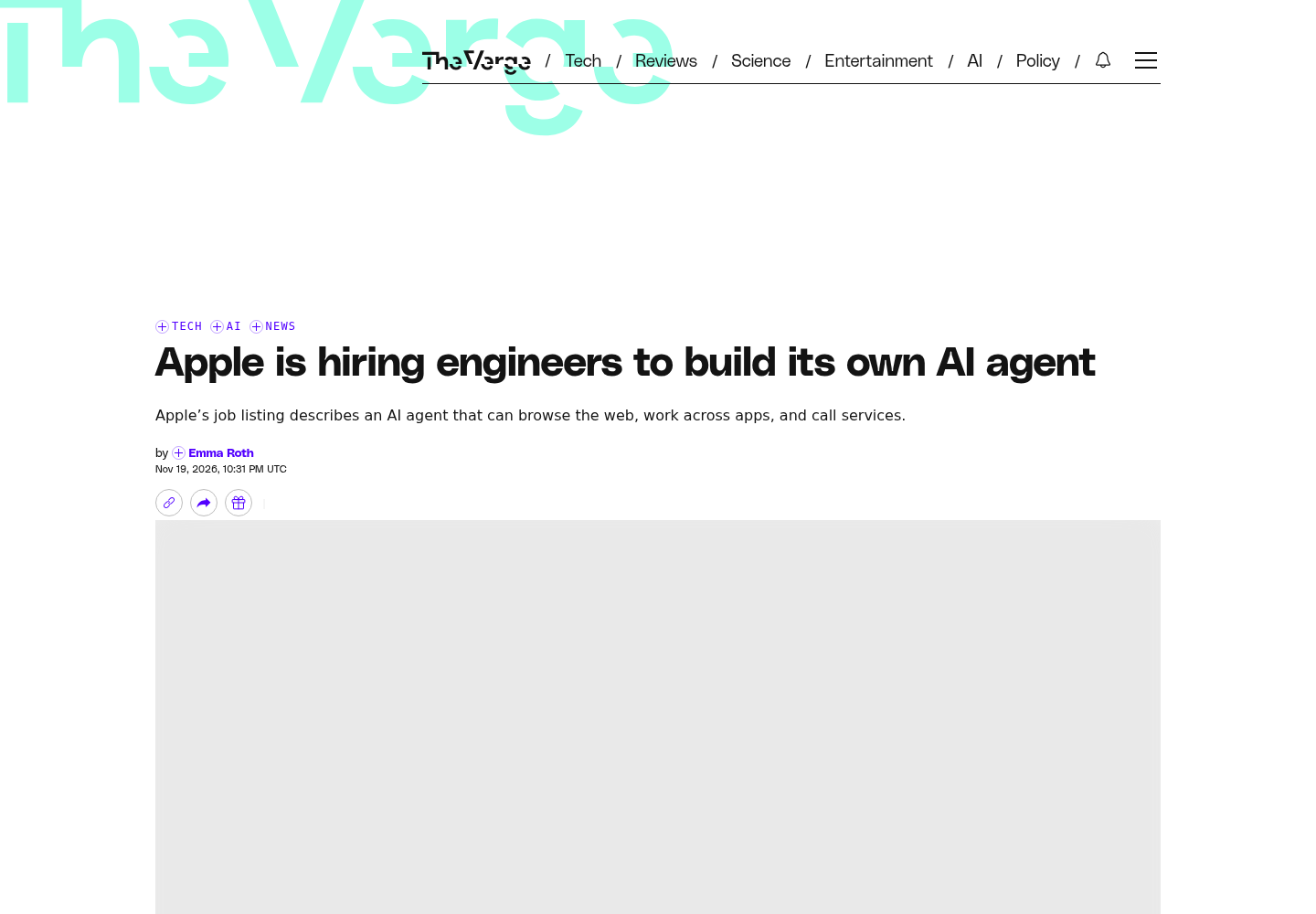
The listing is unusually explicit about scope. As The Verge notes, it says: “People already do their most valuable work by moving fluidly between tools: a browser, a document, a terminal, an editor, a service… These agents plan and carry out multi-step tasks across apps, browsers, command lines, code, and APIs, and they can coordinate specialized sub-agents along the way.” That is computer use, CLI agents and multi-agent orchestration in one job post — the same capability stack the rest of the industry shipped this year.
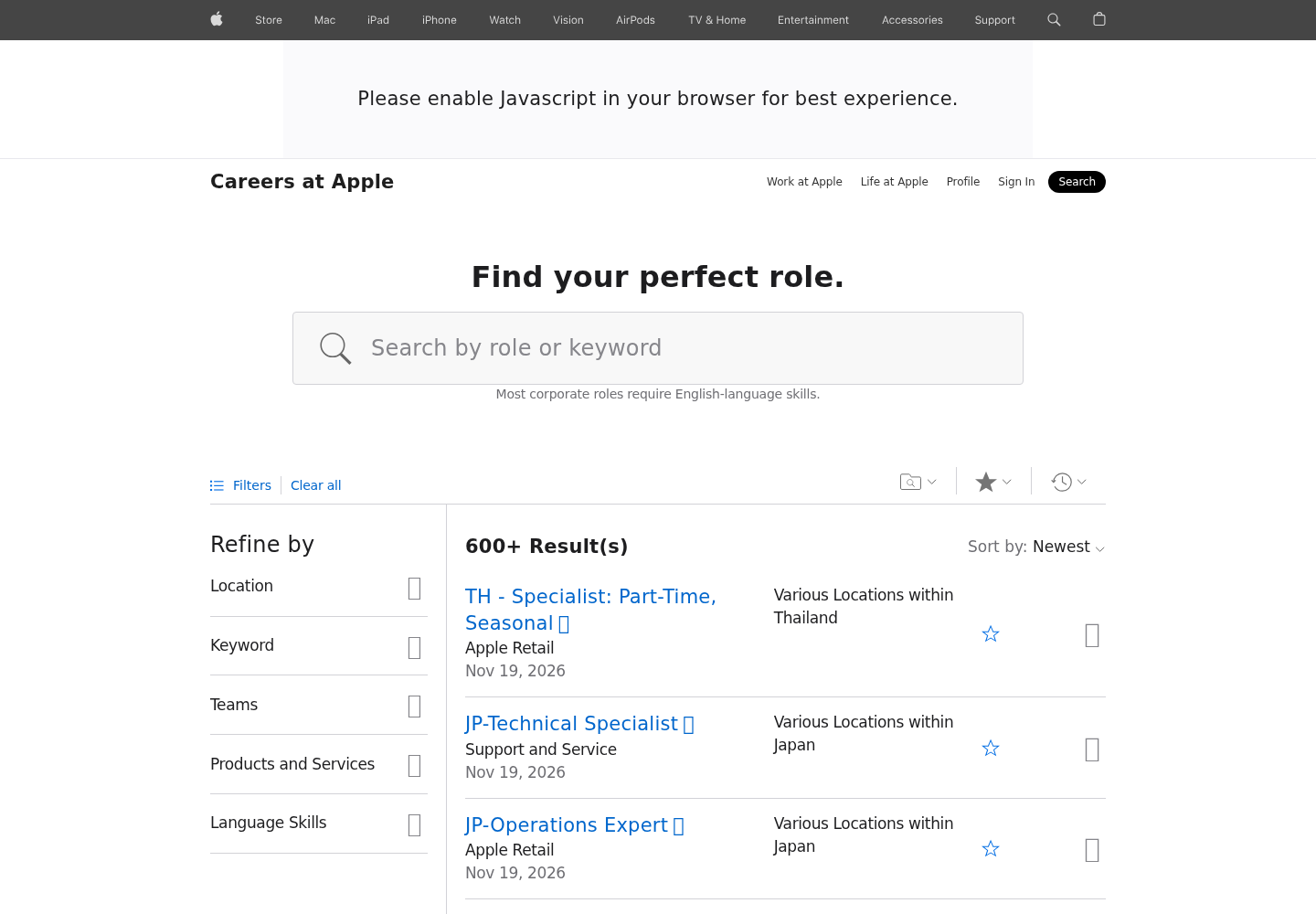
Apple’s careers site lists 600+ openings. Fetched without JavaScript, the search page shows an unfiltered results list rather than a rendered team filter, so the agentic AI listing itself rests on the reporting by Bloomberg and The Verge, both of which link directly to the posting for a senior engineering manager, agentic AI (proactive).
Who Apple is chasing
| Vendor | Agent | Device control today |
|---|---|---|
| Meta | Muse | Yes — Mac app |
| OpenAI | Dots (ChatGPT) | Yes — Mac app |
| Perplexity | Mac app | Yes — Mac app computer control |
| Tasks / Gemini | Just enabled on Mac | |
| Anthropic | Duet | No Mac-app control named; steers Claude Code sessions from phone |
| Apple | — (in hiring) | Siri actions only, so far |
Per The Verge, Muse, ChatGPT and Perplexity can already take control of a computer through their Mac apps, while Google just started letting Gemini do the same. Anthropic’s Duet can monitor, approve and steer Claude Code sessions from a phone. Meta made its task-running Gemini-class move too: Muse even reads Signal messages through OS permissions, as Reuters testing found, and Google made its task-running Gemini agent free in six countries. Apple would be entering late, but with the largest install base of agent-capable endpoints.
What operators should take from it
1. Treat the OS vendor’s agent as a privileged user from day one. An Apple-built agent controlling apps, browsers and the terminal is exactly the identity model operators should already be applying to AI agents: least privilege, scoped entitlements, audit trails. When the OS vendor ships the agent, these questions stop being theoretical for iOS and Mac fleets.
2. Precise tools first, computer use second. The listing’s wording — apps, browsers, command lines, code, APIs — mirrors the desk-job inventory rule: use the most precise tool available (an API, an App Intent, a CLI) before falling back to screen control. Apple’s App Intents framework gives it a structured surface rivals lack, which could make its agent more reliable than screenshot-driven computer use — and more auditable, since intent invocations can be logged.
3. The developer surface is already opening. Apple’s AI-upgraded Siri began rolling out in September, and the iOS 27.3 Developer Preview lets developers integrate Siri AI into “all apps.” A first-party agent that plans multi-step tasks across those same app integrations is a short step from there. Teams shipping iOS apps should treat App Intents coverage as agent-readiness work, not voice-control polish.
4. The blast radius questions arrive with the capability. OpenAI’s GPT-6.1 Terra brought low-cost computer use across Bedrock and Codex — cheap, and everywhere. When every platform defaults to an agent that can click, type and buy, the operating questions become: what does it ask before acting, what does it log, and who can revoke it mid-task? Those are the same questions regulators and insurers are already asking about third-party agents.
Caveats
A job listing is intent, not a product. Apple has not announced the agent, named a model or committed to a ship date; the role could target internal tooling as easily as a consumer feature. Bloomberg’s report also suggests more-limited near-term Siri steps, like rotating and cropping images in Photos or organizing Safari tabs. But the listing’s language — multi-step tasks across apps, browsers, command lines, code and APIs, with coordinated sub-agents — describes the full agent stack, and Apple rarely writes hiring copy for capabilities it doesn’t intend to build.