OpenAI Launches GPT-6.1 Terra with 1M Context and Low-Cost Computer Use Across Bedrock and Codex
OpenAI has released GPT-6.1 Terra, combining 1M-token context, capable computer use, and 3x faster task execution at 50% lower token pricing, available on Amazon Bedrock, Codex, and ChatGPT Work.
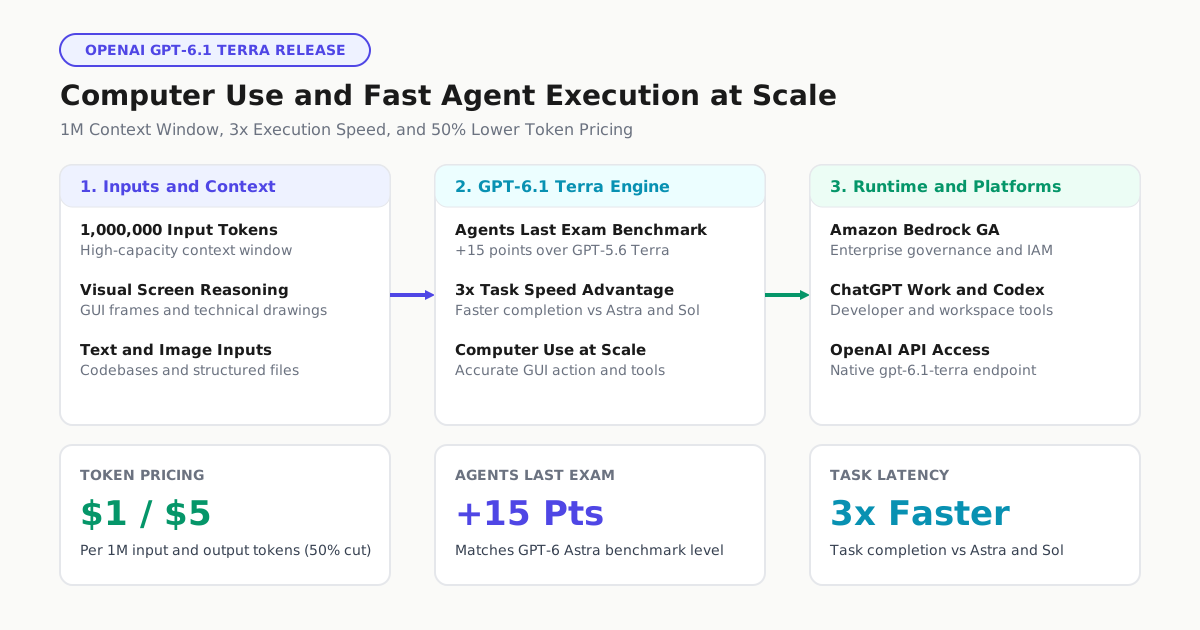
OpenAI has officially launched GPT-6.1 Terra, expanding the GPT-6 family with high-throughput, low-cost agentic execution and autonomous computer use. Engineered to handle continuous multi-step workflows, visual screen reasoning, and long-horizon tool orchestration, the model arrives with day-one availability across the OpenAI API, ChatGPT Work, Codex, and generally available cloud infrastructure on Amazon Bedrock.
Industry reporting compiled on Techmeme highlighted the release as a pivotal milestone in frontier model economics, setting developer pricing at $1.00 per million input tokens and $5.00 per million output tokens. As emphasized in OpenAI’s launch announcement on X, GPT-6.1 Terra is built specifically to interpret what appears on a computer screen, trigger actions across diverse desktop and web applications, and produce clear, natural writing while remaining fast and cost-effective enough to run throughout an entire workday.
Closing the Gap Between Speed and Agent Capability
Historically, developers building computer-use agents have faced an unforgiving trade-off between intelligence and operational latency. Flagship reasoning models could decipher complex user interfaces and plan multi-step actions, but their high per-turn latency and steep token fees made autonomous workflows sluggish and prohibitively expensive. Lighter models ran quickly but frequently lost context or misidentified user interface controls when navigating dense applications.
GPT-6.1 Terra addresses this challenge directly. In OpenAI’s standard Agents’ Last Exam benchmark—which evaluates how effectively autonomous agents navigate software environments to complete professional tasks—GPT-6.1 Terra scored 15 percentage points higher than its predecessor, GPT-5.6 Terra. Furthermore, its task success rate matched the flagship GPT-6 Astra, while completing operational assignments more than three times faster than both GPT-6 Astra and GPT-6.1 Sol.
This combination of parity with top-tier reasoning models and a 3x speed multiplier fundamentally alters how developer platforms can deploy autonomous agents. Long-running sessions in coding assistants and operating system environments often require tens or hundreds of sequential visual inspections and tool invocations. Completing tasks more than three times faster—cutting total task execution time by more than two-thirds—transforms agent execution from an idle waiting game into interactive, near-real-time assistance.
Slashing Operating Expenses for Agent Fleets
Beyond raw execution speed, the economic profile of GPT-6.1 Terra represents a dramatic shift for teams running agent fleets at scale. At $1.00 per million input tokens and $5.00 per million output tokens, Terra cuts standard API pricing by at least 50% compared to GPT-5.6 Terra and GPT-6.1 Sol.
For autonomous coding agents that ingest entire repositories or multi-turn UI interaction histories, input costs dominate total billing. With support for a context window of up to 1 million input tokens, engineering teams can provide deep codebase context, API specifications, and consecutive screen captures without facing exorbitant compute invoices or frequent context truncations.
| Metric or Dimension | GPT-6.1 Terra Specification | Comparison Against Other Models |
|---|---|---|
| Input Token Price | $1.00 per 1M tokens | At least 50% lower than GPT-5.6 Terra and GPT-6.1 Sol |
| Output Token Price | $5.00 per 1M tokens | At least 50% lower than GPT-5.6 Terra and GPT-6.1 Sol |
| Context Window | Up to 1,000,000 input tokens | Multimodal input support for text and images |
| Agents’ Last Exam | Parity with GPT-6 Astra | 15 percentage points higher than GPT-5.6 Terra |
| Task Completion Speed | Over 3x faster completion | Faster task turnaround than GPT-6 Astra and GPT-6.1 Sol |
Enterprise Deployment and Developer Ecosystem Integration
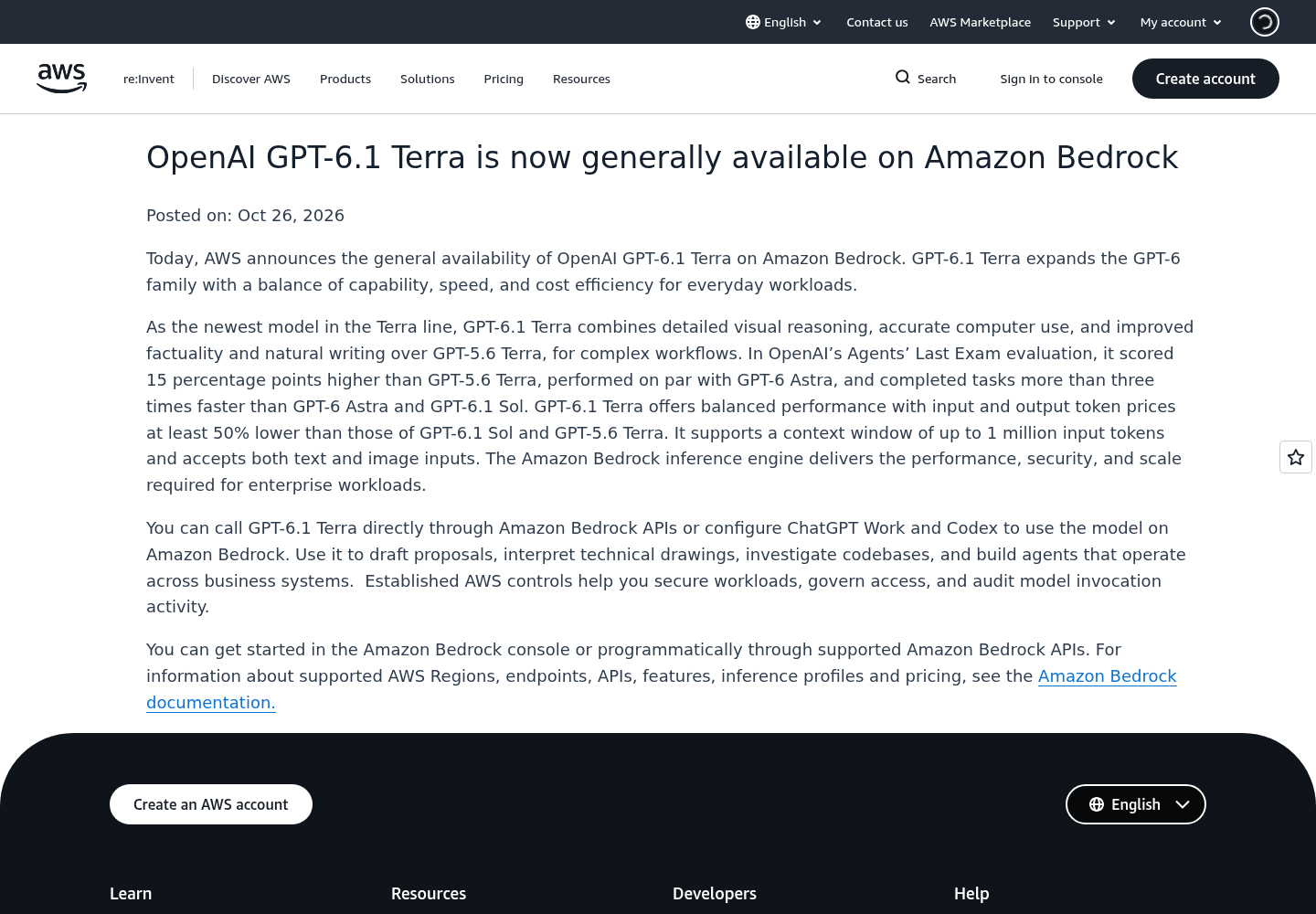
A critical aspect of the launch is immediate multi-cloud and workplace integration. Alongside native OpenAI API access under the identifier gpt-6.1-terra, AWS announced general availability on Amazon Bedrock on the same day. Enterprise teams can invoke GPT-6.1 Terra through existing AWS Bedrock APIs, taking advantage of established cloud governance, Identity and Access Management (IAM) permissions, and compliance guardrails.
This cloud rollout mirrors broader infrastructure developments across enterprise AI platforms. For instance, our previous coverage of Amazon Bedrock Structured Outputs documented how cloud runtimes increasingly enforce strict, schema-valid JSON generation directly at the inference layer. Combining reliable structural validation with GPT-6.1 Terra’s visual screen interpretation enables organizations to safely orchestrate agents across legacy ERP, CRM, and cloud management consoles.
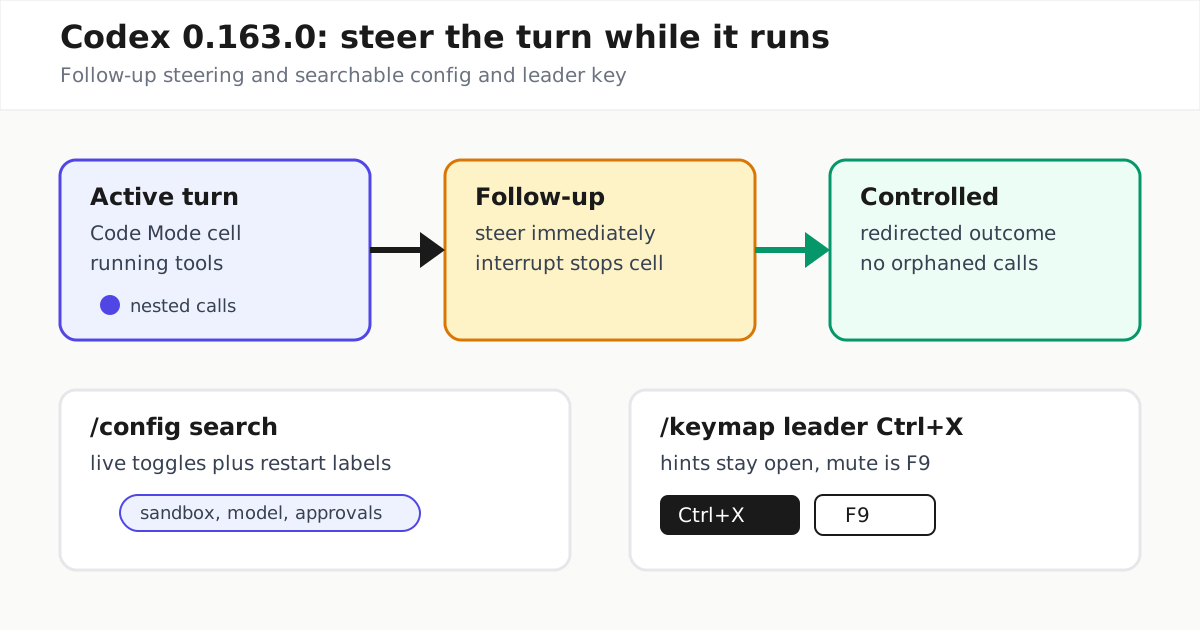
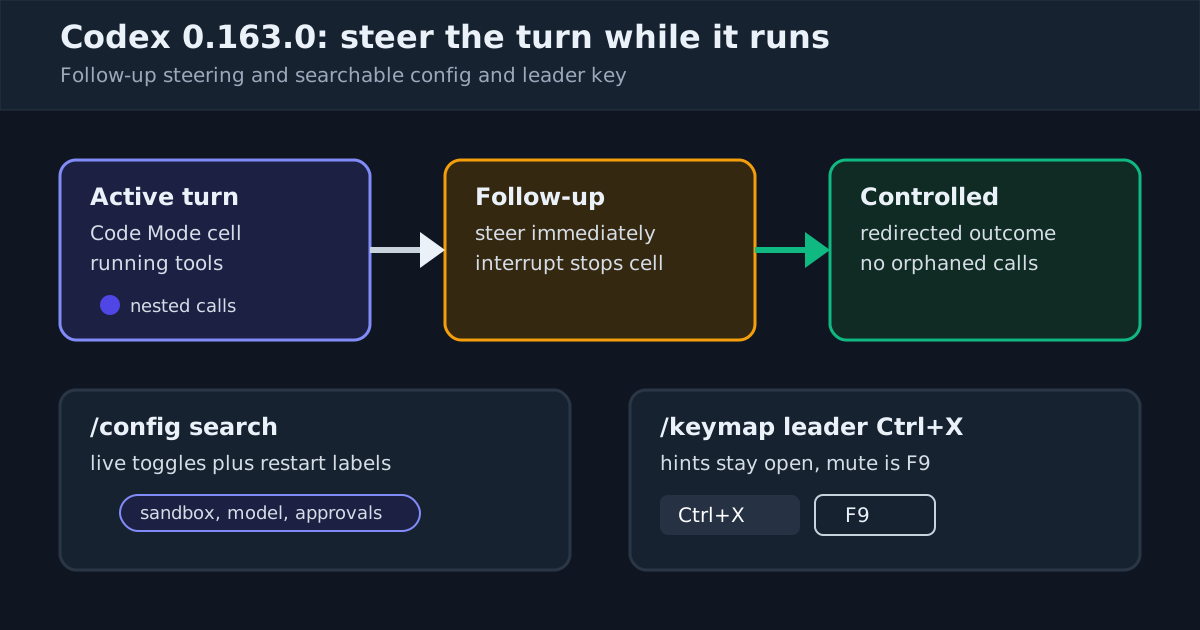
Furthermore, developers can configure ChatGPT Work and Codex to utilize GPT-6.1 Terra on Bedrock or through native endpoints. As seen in recent tooling updates like Codex 0.163.0, modern coding harnesses rely heavily on rapid background iterations and multi-file context tracking. Terra’s balanced latency profile makes it well-suited for high-frequency code steering, automatic test execution, and real-time pull request reviews.
The following illustrative pseudocode demonstrates the general pattern for routing multimodal screen inspections through Amazon Bedrock. Because AWS notes that specific endpoints, inference profiles, model identifiers, and API schemas must be confirmed directly in the Amazon Bedrock documentation, developers should treat runtime parameters such as the model identifier and payload structure as implementation placeholders:
import base64
import json
import boto3

# Illustrative pseudocode: verify model identifiers and request schemas in Bedrock documentation
bedrock = boto3.client("bedrock-runtime", region_name="us-east-1")

def execute_screen_action(image_bytes: bytes, instruction: str) -> dict:
    encoded_image = base64.b64encode(image_bytes).decode("utf-8")
    # Request schemas and model IDs vary by Bedrock provider integration; consult Bedrock docs
    payload = {
        "prompt": instruction,
        "images": [encoded_image],
        "max_tokens": 1024
    }
    response = bedrock.invoke_model(
        modelId="<bedrock-gpt-6-1-terra-model-id-placeholder>",
        contentType="application/json",
        accept="application/json",
        body=json.dumps(payload)
    )
    return json.loads(response["body"].read())
Strategic Action Items for Engineering Leaders
The arrival of GPT-6.1 Terra provides immediate avenues for optimization across development workflows and agent systems:
- Benchmark Secondary Agent Loops: Evaluate high-turn subagents—such as documentation analyzers, codebase exploratory searchers, and CI failure triage bots—against
gpt-6.1-terra. The 3x reduction in task completion time and 50% cost savings can yield substantial throughput gains without sacrificing reasoning quality. - Expand Multimodal Screen Testing: Integrate Terra into end-to-end user interface testing pipelines. The model’s improved visual grounding allows test harnesses to validate visual layouts, verify complex web forms, and execute user journeys with fewer brittle CSS selectors.
- Audit Token Allowances in Codex and ChatGPT Work: Team administrators should update their workspace model policies to take advantage of Terra’s extended allowance efficiency, freeing up premium reasoning budgets for the most complex algorithmic bottlenecks.
Sources
- OpenAI GPT-6.1 Terra is now generally available on Amazon Bedrock - AWS
- Techmeme: OpenAI releases GPT-6.1 Terra, touting “fast and capable computer use at scale” and clearer, more natural writing, priced at $1/1M input and $5/1M output tokens (OpenAI)
- OpenAI on X: "GPT-6.1 Terra: delivering fast and capable computer use at a lower price. GPT-6.1 Terra understands what’s on screen, takes action across apps, writes naturally, and is a more capable model for your whole workday with the efficiency to take on more of it." / X