
Codex 0.163.0 Adds Live Follow-Up Steering, Searchable /config and Leader-Key Map
OpenAI Codex 0.163.0 adds interrupt-and-steer follow-ups, a searchable /config panel with live toggles, a configurable leader key, /daemon restarts, and parallel read-only tools. What changes for daily coding-agent work.
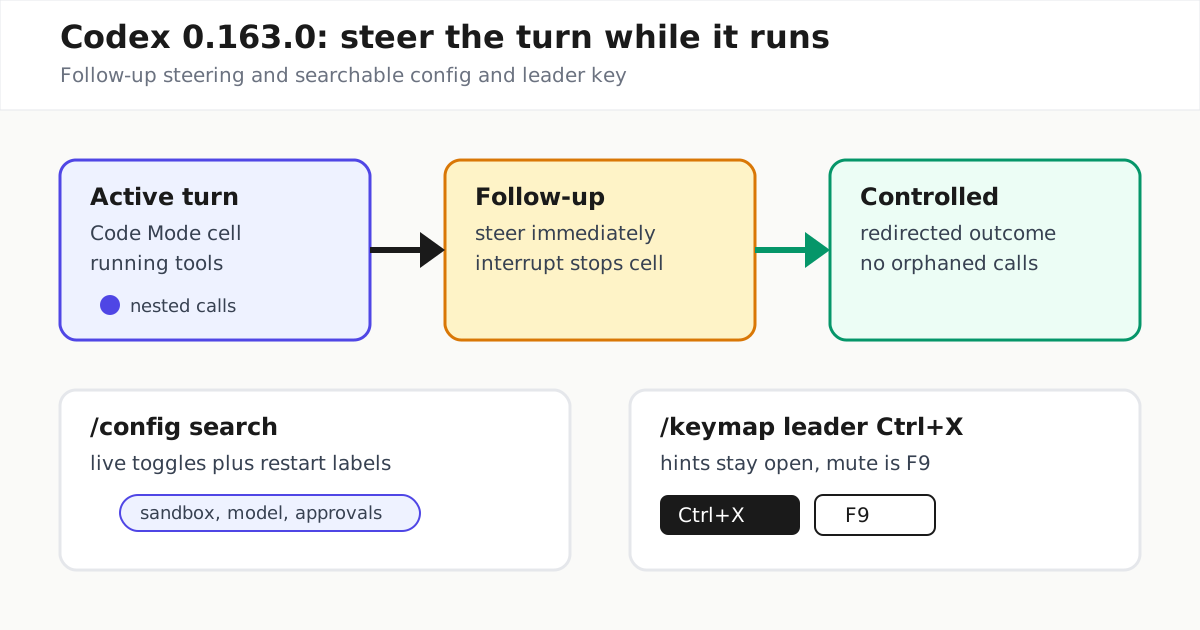
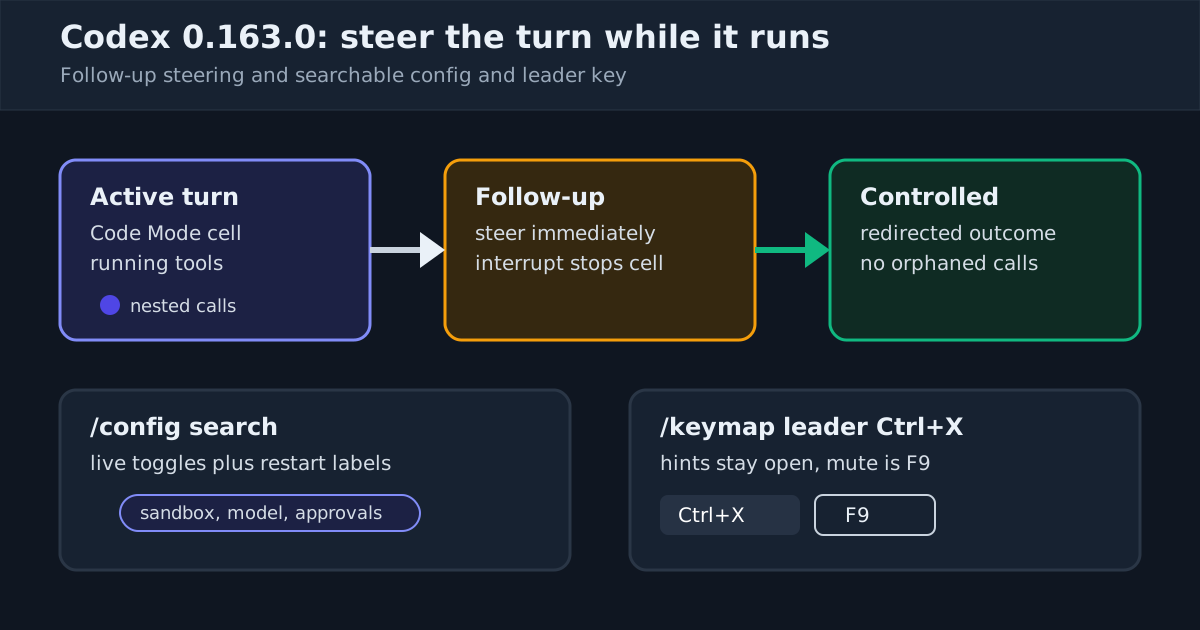
OpenAI shipped Codex 0.163.0 on Oct. 15, and this one changes how you drive long-running turns. You can now send a follow-up while Codex is still responding, search settings in /config instead of guessing keys, and define your own leader key in /keymap.
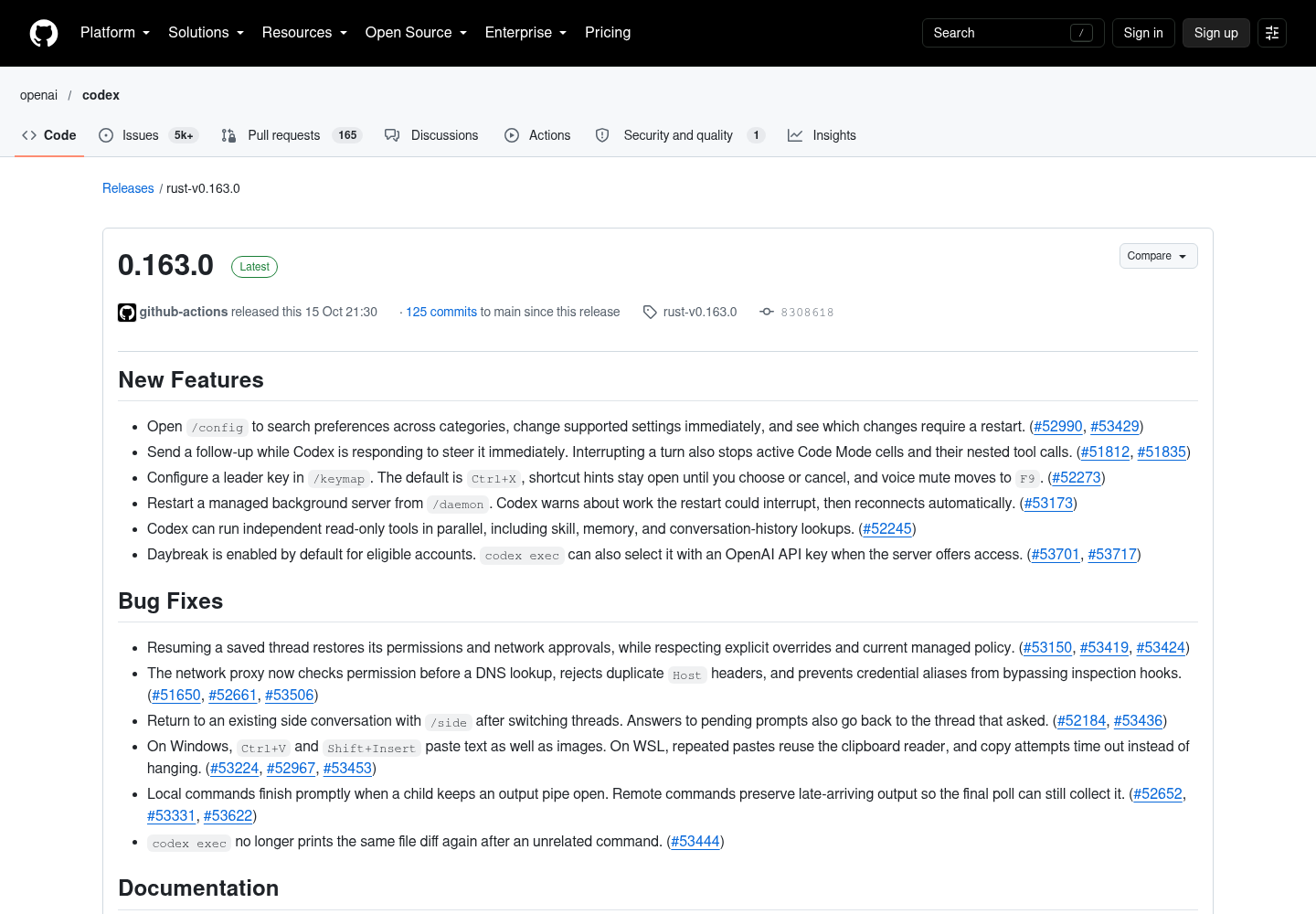
The release list confirms 0.163.0 as Latest, sitting above a string of 0.163.0 alphas and the prior 0.162.1 patch. The Codex repository remains the install and source hub, with npm, Homebrew, and direct tarball downloads. For operators, the headline is control: interrupt cleanly, retune without restarting, and keep background servers alive.
Steer while it works
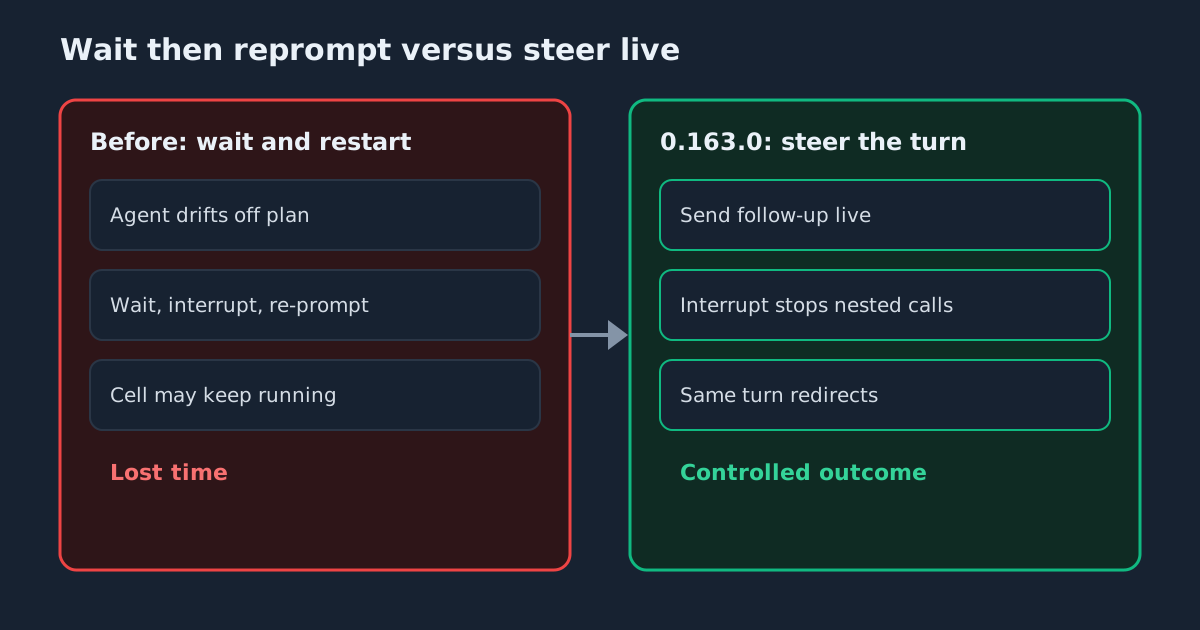
The most consequential change is live steering. Previously, correcting a wandering agent meant waiting, interrupting, then re-prompting and losing momentum. In 0.163.0 you type a follow-up mid-response to redirect it immediately.
Critically, interrupting a turn also stops active Code Mode cells and their nested tool calls. That closes a painful failure mode where the visible turn stopped but a cell kept running shell commands or MCP calls in the background. The release notes trace this to instant-interrupt and code-mode-interruption work, now enabled by default.
What you can do with it:
- Redirect a refactor mid-stream: “stop after the auth module, skip migrations”
- Kill a bad plan early when you see the wrong file list or test command
- Split work without a restart: steer the current turn toward a safe checkpoint, then start the risky part as a new turn
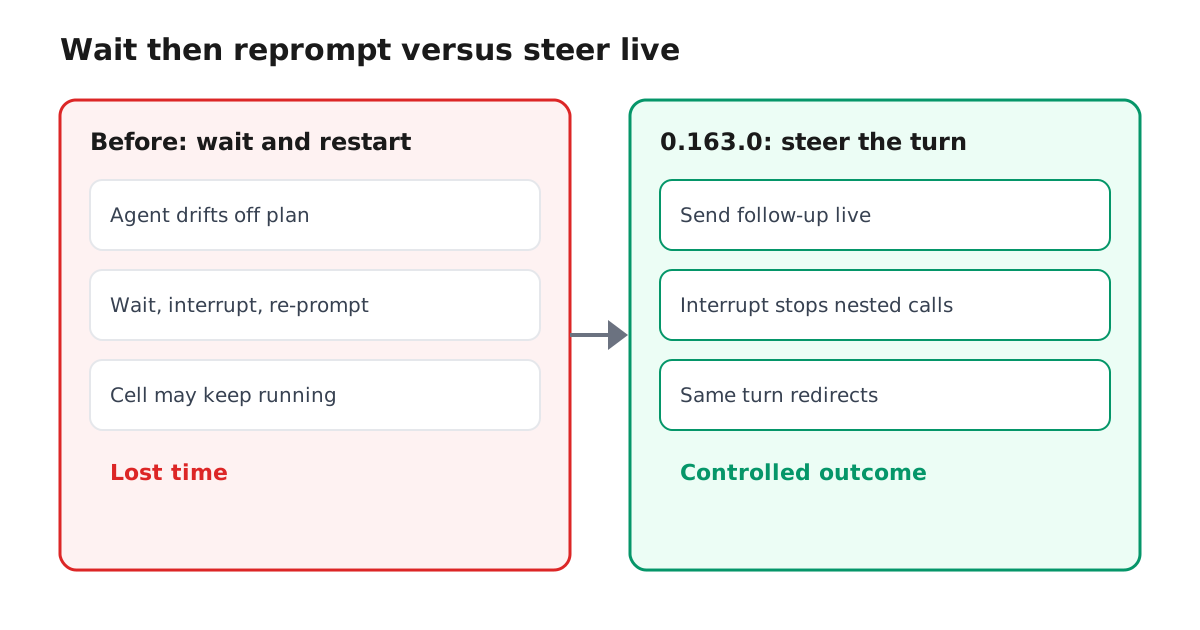
In practice, treat steering as a throttle, not a chat. Short, explicit redirects work best because they replace the pending intent without forcing a full context rebuild.
Searchable /config finally fixes settings discovery
Open /config to search preferences across categories, change supported settings immediately, and see which changes require a restart.
If you run Codex fleets or onboard teammates, this is a support-cost fix. Settings were scattered across config files, flags, and TUI toggles. Now you get one searchable panel, live application for supported keys, and an explicit restart badge for the rest. No more “did that toggle apply” guessing.
Try this workflow after upgrade:
/config      # search for sandbox, model, approvals, voice
# toggle a supported setting -> applies immediately
# settings marked restart-required -> restart Codex once
/keymap     # set a leader key, review shortcut hints
/daemon     # restart a managed background server with warning
The follow-on settings-navigation improvement means plugin toggles keep working while you search and filters survive a refresh. Small, but it makes live triage usable.
Leader key, /daemon restarts, and parallel reads
The new configurable leader key defaults to Ctrl+X. Shortcut hints stay open until you choose or cancel, and voice mute moves to F9. If you live in tmux, screen, or a modal editor, set a leader that does not fight your multiplexer:
/keymap
# set leader to Ctrl+X or your preferred chord
# hints remain visible until you confirm or cancel
# voice mute is now F9
Managed background servers get a safer restart path. Restart from /daemon, and Codex warns about work the restart could interrupt, then reconnects automatically. Use it when a daemon upgrade lands mid-day instead of killing the process from another shell.
Under the hood, Codex can now run independent read-only tools in parallel, including skill, memory, and conversation-history lookups. Expect faster turns that gather context from several stores at once, not a speedup on writes. Daybreak is also enabled by default for eligible accounts, and codex exec can select it with an OpenAI API key when the server offers access.
| If you do this | What 0.163.0 changes | Operator payoff |
|---|---|---|
| Long Code Mode runs | Interrupt stops cells and nested calls | No orphaned commands after you stop a turn |
| Tune approvals, models, sandbox | Searchable /config with live apply and restart labels | One place to verify settings |
| Heavy keyboard use | Configurable leader key, persistent hints | Fewer misfires, portable muscle memory |
| Daemon-backed sessions | Warn-then-restart from /daemon with auto-reconnect | Safe daytime restarts |
| Context-heavy prompts | Parallel skill, memory, and history reads | Lower latency on research turns |
Fixes worth upgrading for
Several bug fixes have direct workflow impact:
- Resuming a saved thread restores its permissions and network approvals, while respecting explicit overrides and current managed policy. Resume is trustworthy again.
- The network proxy now checks permission before DNS lookup, rejects duplicate Host headers, and prevents credential aliases from bypassing inspection hooks. That is a hardening fix for proxied sandboxed sessions.
- Return to an existing side conversation with
/sideafter switching threads, and answers to pending prompts route back to the thread that asked. Multi-thread triage is less lossy. - On Windows,
Ctrl+VandShift+Insertpaste text as well as images. On WSL, repeated pastes reuse the clipboard reader and copy attempts time out instead of hanging. - Local commands finish promptly when a child keeps an output pipe open. Remote commands preserve late-arriving output so the final poll can still collect it.
codex execno longer reprints the same file diff after an unrelated command.
Docs updates cover GPT-6 family migration guidance and Linux sandbox internals with bubblewrap for filesystem isolation and seccomp for syscall filtering. If you maintain agent sandboxes, read the second one before you copy sandbox flags between hosts.
Upgrade notes
Two chores need attention. Codex now uses its standard shell executor and no longer bundles a patched zsh. Configurations using retired shell flags receive a migration notice — do not ignore it if you pinned shell behavior. Linux and macOS packages are smaller thanks to stripped symbols in packaged binaries, with symbols preserved in original build outputs for debugging.
Upgrade path:
npm install -g @openai/codex
# or
brew upgrade --cask codex
codex --version
# then in TUI: /config, /keymap, /daemon to verify
If you pinned 0.162.x for stability, this release is worth testing because interrupt hygiene and permission restore fix resume-and-abort trust. That is the same theme as our prior Codex 0.162.0 managed worktrees and command-center pinning coverage: less lost work across threads and restarts.
Bottom line: update one machine, set your leader key, learn /config search, and use steering on the next long Code Mode run. You will feel the difference the first time you stop the wrong plan before it finishes.