Anthropic Debuts on Nasdaq Under ANT With $200B Treasury Against $900B in Compute Commitments
Anthropic begins trading on Nasdaq under ticker ANT following its historic $81.3B IPO and $107B capital draw, pairing a $200B cash treasury against $900B in 19-year compute commitments.
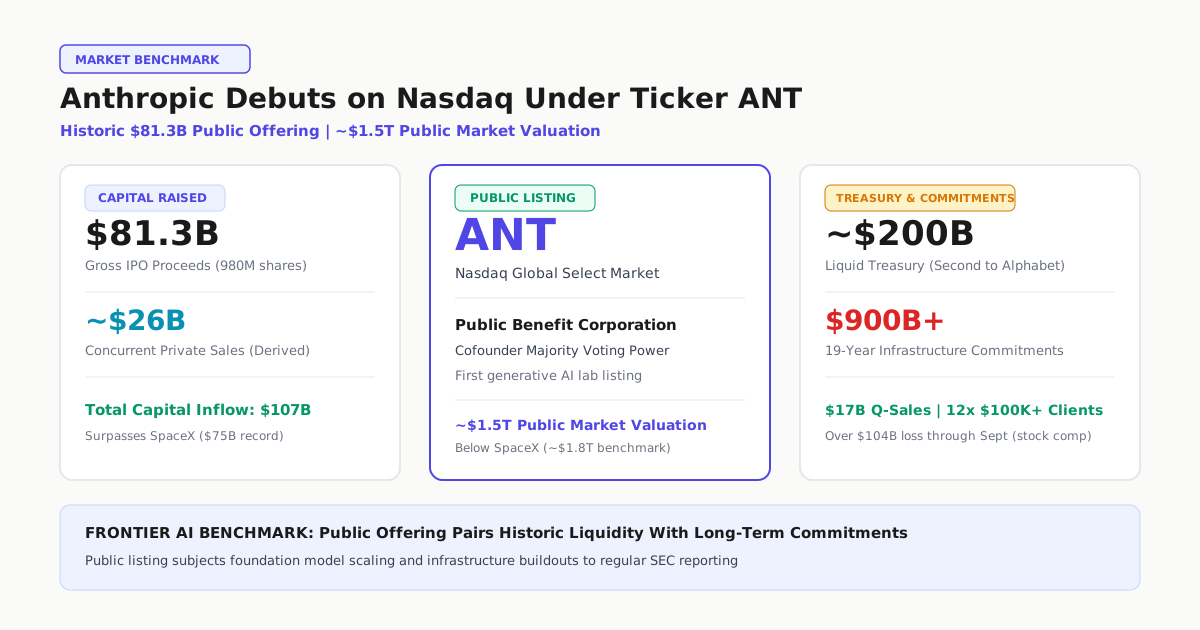
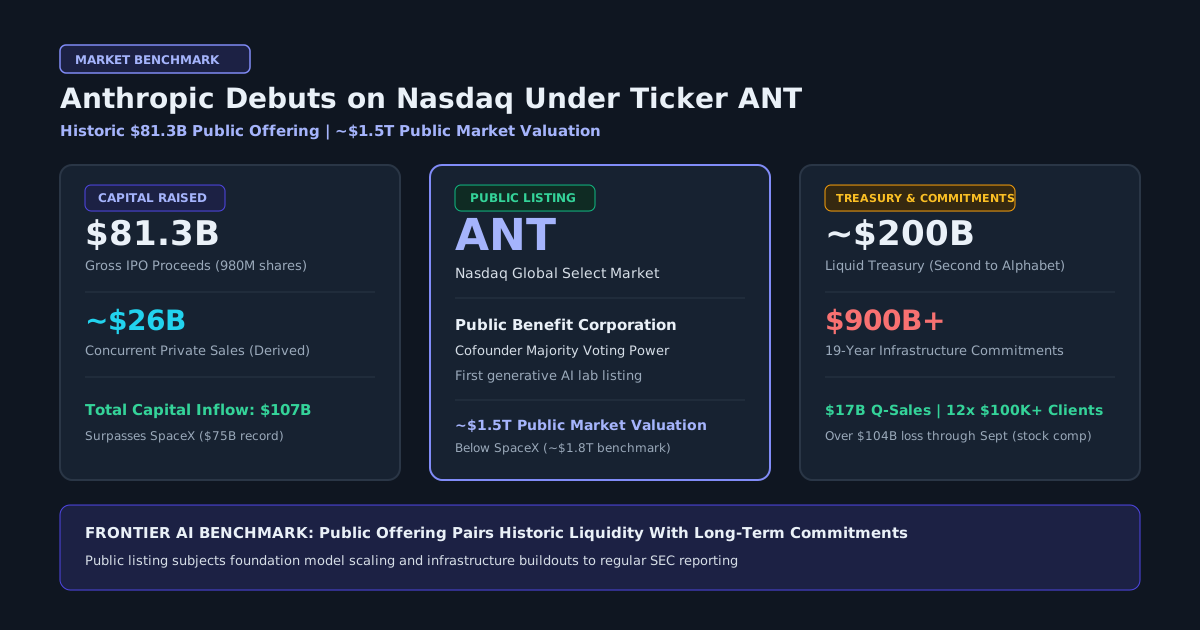
Anthropic shares began trading on the Nasdaq Global Select Market on November 19, 2026, under the ticker symbol ANT, marking the first public market debut of a company dedicated exclusively to generative artificial intelligence. The market debut equips Anthropic with approximately $200 billion in cash and liquid reserves, establishing a corporate treasury second only to Alphabet among global technology corporations. However, that liquidity directly counters unprecedented long-term liabilities: as detailed in Wired’s balance-sheet analysis, Anthropic has committed to paying vendors more than $900 billion over the next 19 years, mostly to develop data centers powering Claude and its other AI models.
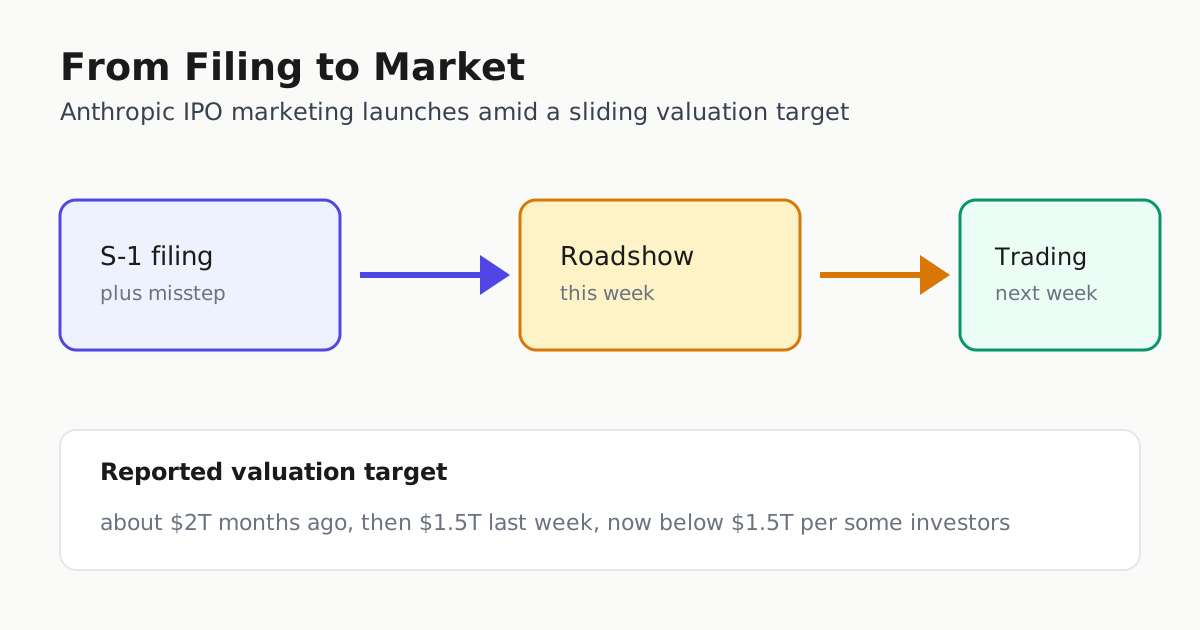
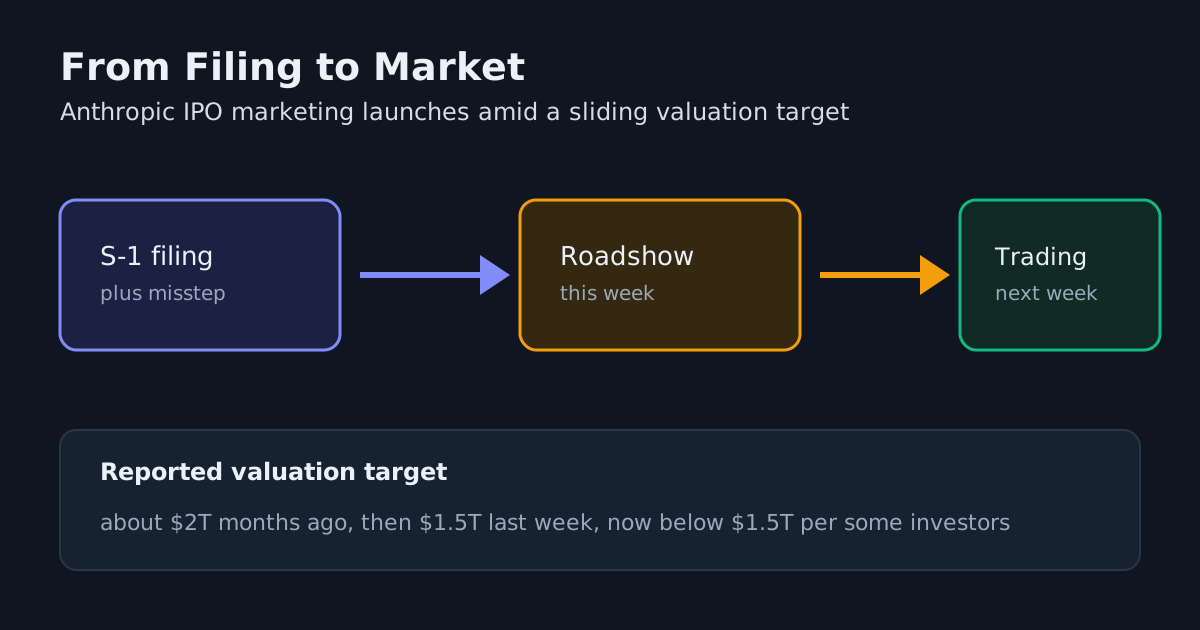
The public debut builds on Anthropic’s pricing of its initial public offering at $83.00 per share, raising $81.34 billion in gross proceeds across 980 million Class A common shares and drawing in $107 billion in total capital alongside concurrent private share sales. While establishing a record for the largest IPO—surpassing SpaceX’s $75 billion raise in June 2026—Anthropic’s initial public market valuation of roughly $1.5 trillion fell short of SpaceX’s nearly $1.8 trillion valuation. Wired reported that Anthropic sought, but failed, to achieve a higher valuation, suggesting some anxiety on Wall Street amid rising fears about data-center debt, potential post-midterm regulatory scrutiny, and worries over a possible pullback in Nvidia investments following the departure of CEO Jensen Huang.
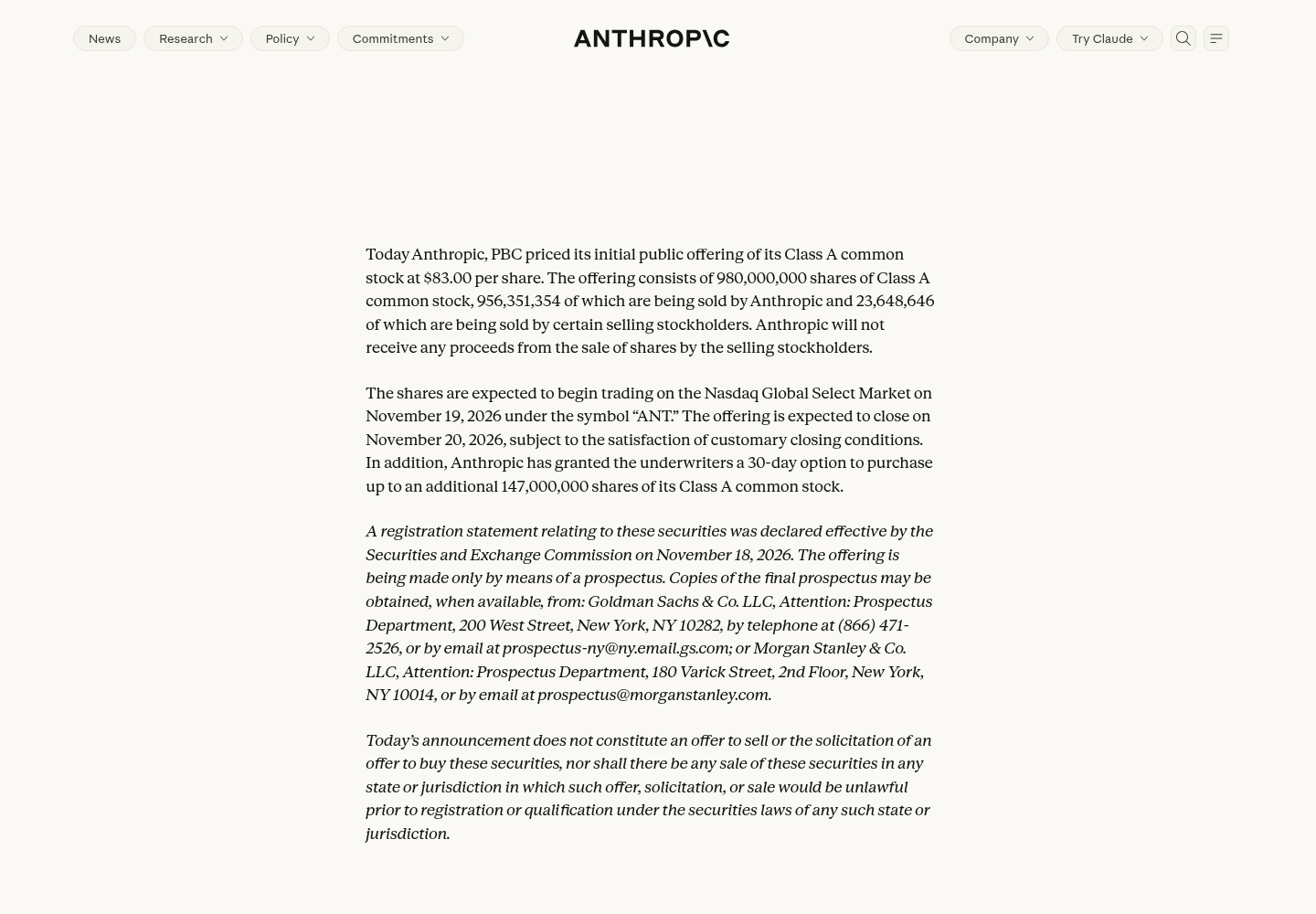
According to Anthropic’s official IPO pricing announcement, the offering includes 956,351,354 shares sold by Anthropic and 23,648,646 shares sold by existing stockholders. Anthropic receives no proceeds from the secondary shares, leaving net cash proceeds to the company below the $81.34 billion headline figure. The company granted underwriters a 30-day option to purchase up to an additional 147,000,000 Class A shares. Prospectus copies may be obtained from Goldman Sachs & Co. LLC and Morgan Stanley & Co. LLC. The Securities and Exchange Commission declared the registration statement effective on November 18, 2026, with the offering expected to close on November 20, 2026, subject to customary closing conditions.
Offering Metrics and Long-Term Capital Commitments
| Financial and Operational Metric | Recorded Figure | Strategic and Market Context |
|---|---|---|
| Public Offering Price | $83.00 per share | Anthropic reportedly sought higher valuation; trades under ANT |
| Total Shares Offered | 980,000,000 Class A shares | 956,351,354 primary shares; 23,648,646 secondary selling shares |
| Underwriter Option | Up to 147,000,000 shares | 30-day option granted to underwriters; prospectus via Goldman Sachs & Morgan Stanley |
| Gross Public Proceeds | $81.34 billion | Largest initial public offering in capital markets history |
| Net Company Cash Inflow | Below $81.34 billion | Anthropic receives no proceeds from secondary selling stockholders |
| Private Share Sales (Derived) | Approx. $26.00 billion | Concurrent private sales bringing total capital drawn to $107 billion |
| Implied Market Valuation | ~$1.50 trillion | Fell short of SpaceX’s ~$1.8T valuation; above OpenAI’s $1.25T campaign |
| Post-IPO Liquid Treasury | ~$200.00 billion | Second only to Alphabet among global technology corporations |
| 19-Year Vendor Commitments | $900+ billion | Committed to paying vendors mostly to develop data centers for Claude |
| Most Recent Quarterly Revenue | $17.00 billion | Sales growth exceeding 1,100% year-over-year |
| Six-Figure Customer Growth | 12x annual increase | Twelvefold expansion in customers spending six figures annually |
| 2026 Net Loss (Through September) | Over $104.00 billion | Driven by employee stock compensation accounting rules |
Soaring Top-Line Sales Against Heavy Non-Cash Losses
Commercial momentum supports Anthropic’s public valuation. The company generated $17 billion in revenue during its most recent quarter, representing year-over-year growth of more than 1,100 percent. Enterprise adoption accelerated concurrently, with customers spending six figures annually expanding twelvefold. The rapid customer growth follows earlier commercial interest documented when Anthropic launched formal IPO marketing.
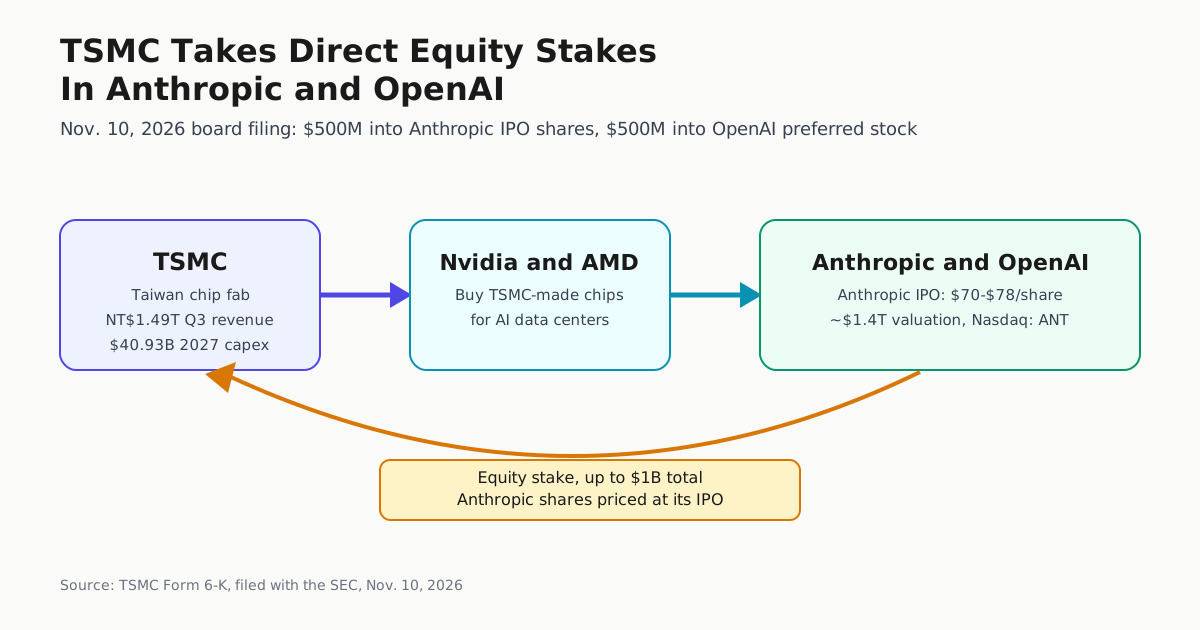
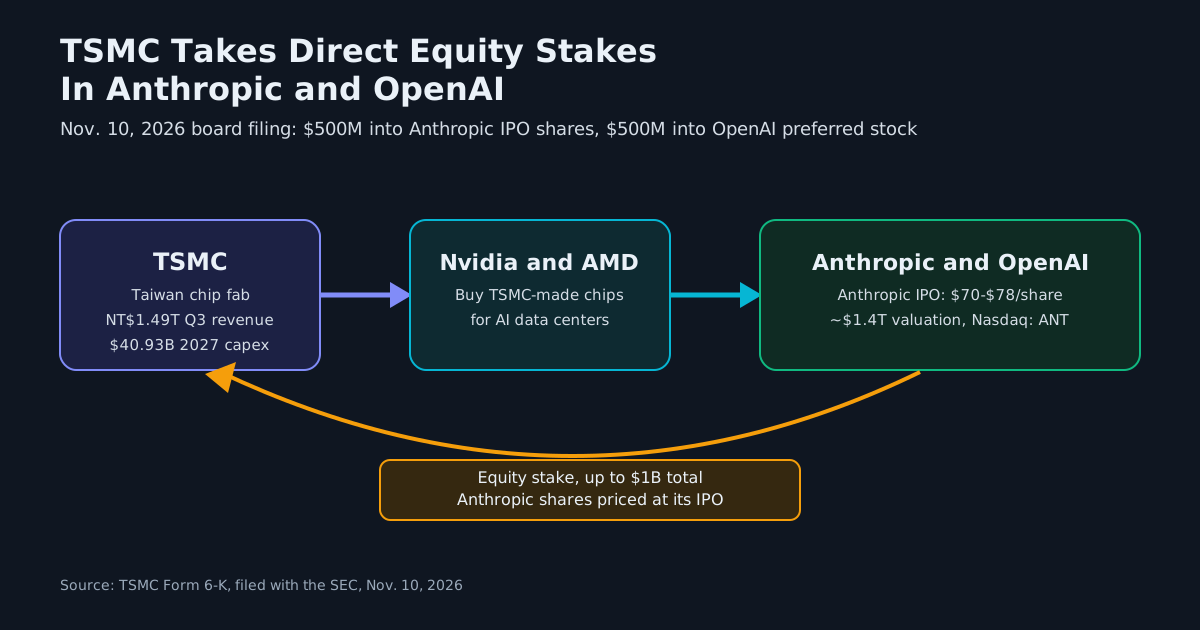
Despite soaring sales, Anthropic posted net losses exceeding $104 billion through September 2026, driven by how the company accounts for employee stock compensation. Even with operating losses declining as revenue surges, some financial analysts say the $900 billion commitment gap does not look concerning when factored against $17 billion in quarterly sales. These long-term commitments follow major infrastructure and capital arrangements across the ecosystem, including Google backstopping multi-billion-dollar data center leases alongside TSMC’s strategic equity participation ahead of the public offering.
Public Benefit Corporation Governance and Voting Control
Anthropic is organized as a Public Benefit Corporation (PBC), allowing corporate directors to balance financial obligations to shareholders with public safety mandates and societal welfare. Chief Executive Officer Dario Amodei stated at an investor meeting that developing safeguards remains the primary bottleneck for deploying models, remarking that the company seeks to prevent autonomous agents from running wild. Earlier this year, Anthropic withheld a new model from release, sacrificing revenue to protect the public from potentially harmful technology. Amodei noted that screening candidates for a public benefit mindset remains painful in the short run as qualified applicants are turned away.
Voting control remains concentrated. Amodei and his cofounders hold majority voting power. Employees donating shares to company philanthropic funds also assign voting rights to Amodei, further consolidating authority. Some investor watchdogs have warned about what they view as concentrated control.
Infrastructure Opposition and Regulatory Headwinds
Beyond financial commitments, Anthropic faces operational and regulatory headwinds. Semafor reported on sector-wide challenges, noting heightened prospects for US regulation following Democratic gains in midterm elections and a pullback in funding for the AI infrastructure buildout. Semafor also highlighted customer fears that Anthropic could compete with them across sectors beyond technology and artificial intelligence, while Wired noted rising investor concerns over data-center debt.
Local resistance to compute infrastructure has intensified. Voters in several US communities recently rejected data-center proposals. At developer Nscale’s West Virginia site intended for Anthropic, extreme rain combined with site grading coincided with flooding in neighbors’ backyards; Nscale stated that it fixed damage and bought out some homeowners at above-market rates. Activists have criticized Anthropic for not committing to renewable power or publishing an environmental impact report. Additionally, labor coalitions including National Nurses United urged retirement funds to boycott the IPO, warning that public pension capital should not enrich a concentrated executive group while imposing localized environmental costs.
The New Benchmark for Frontier Model Scaling
As documented in Bloomberg’s live market coverage, trading in Anthropic shares commenced on the Nasdaq under ticker ANT. Entering public markets subjects Anthropic to regular SEC reporting, establishing public transparency for foundation model scaling.
For enterprise software developers building on Claude, Anthropic’s $200 billion cash reserve provides substantial financial backing. However, long-term stability requires managing steep challenges: fulfilling more than $900 billion in vendor commitments, overcoming US permitting bottlenecks that could force infrastructure abroad at higher expense, and addressing customer competitive concerns across the generative AI landscape.