Walmart Opens Its Storefront to AI Shopping Agents: MCP Gateway, Agent Profiles and Spending Caps
The retail giant announced an MCP Agent Gateway beta, per-agent profiles with spending caps and a formal agent rulebook — the sanctioned on-ramp for AI shopping agents. Here is what agent builders must design for.
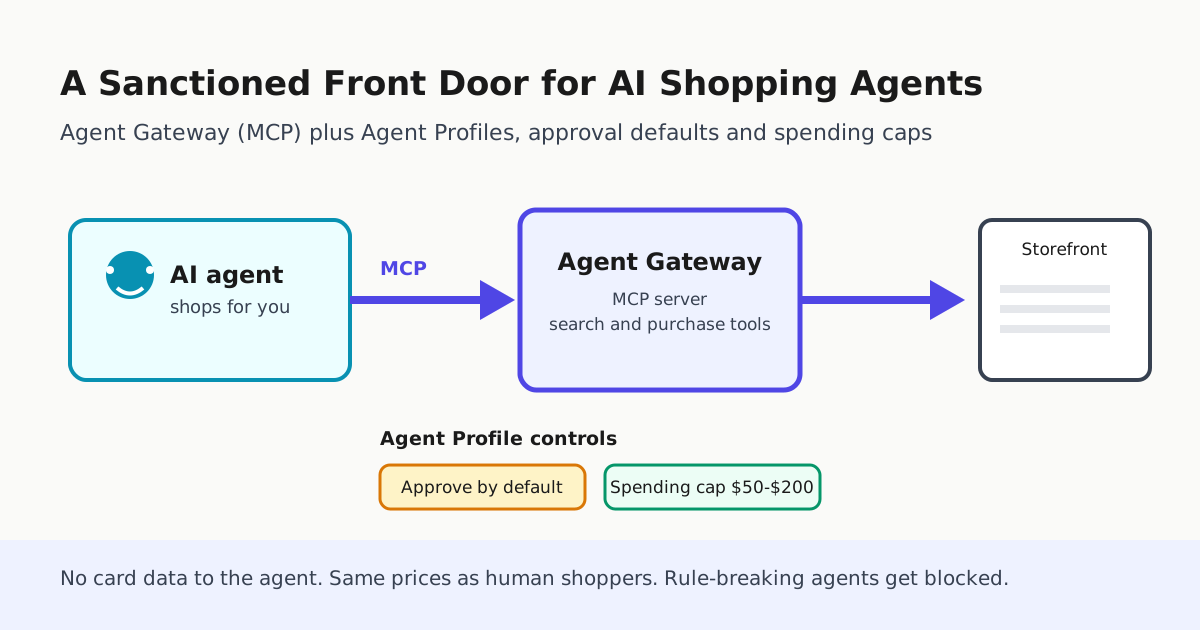
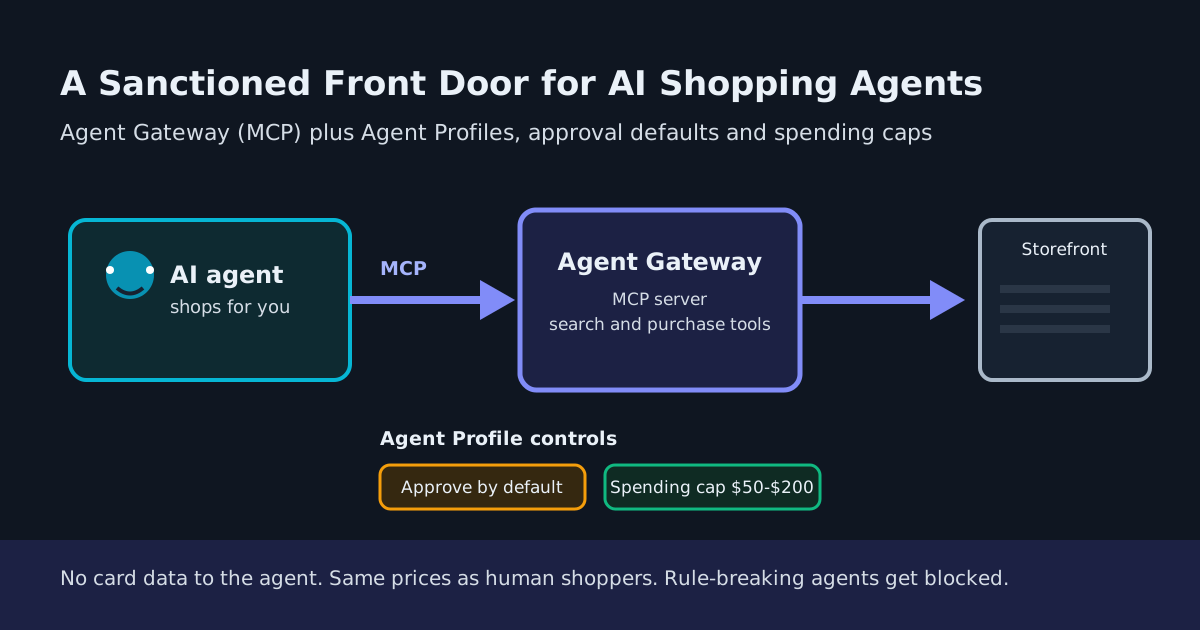
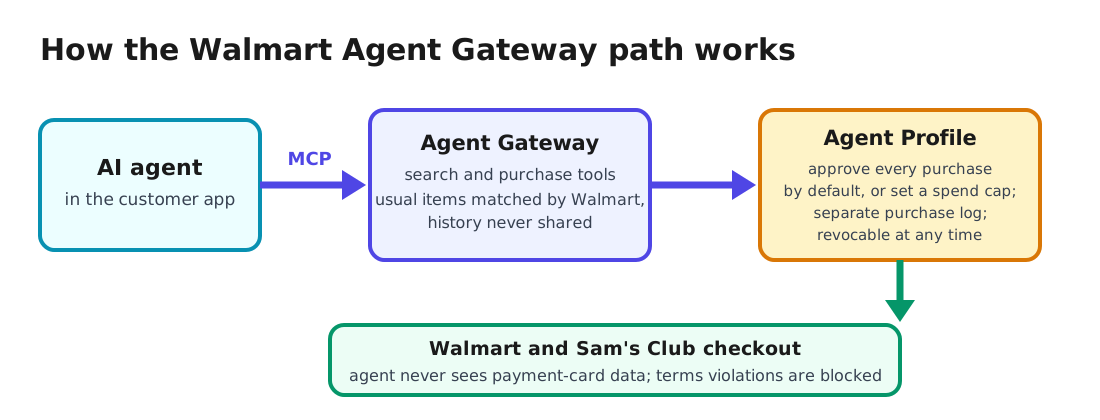
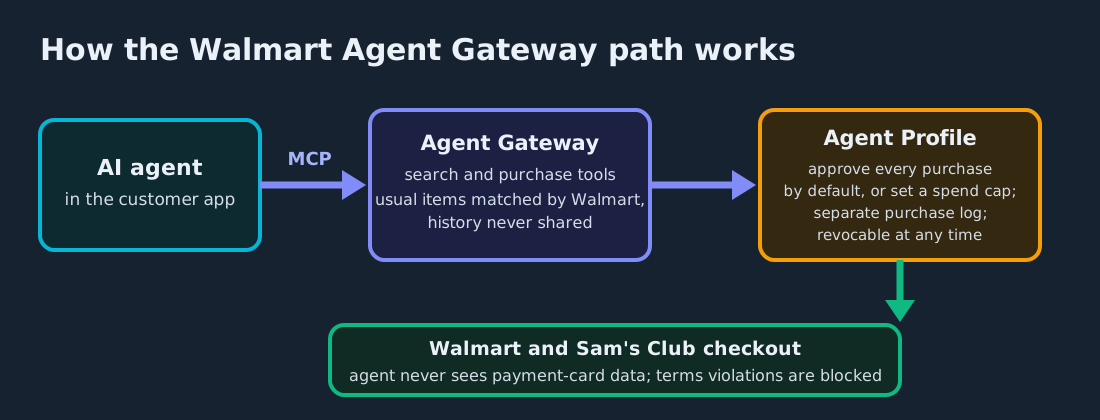
The agentic-commerce divide just got its clearest illustration yet. Shortly after the industry was digesting Amazon blocking AI shopping agents, Walmart ran the other way: the retail giant announced a three-part system — the Walmart Agent Gateway, Agent Profiles, and formal terms for AI agents — that treats MCP as the sanctioned front door for shopping agents at Walmart and Sam’s Club.
What Walmart announced
The Agent Gateway is Walmart’s MCP server. Instead of driving a human-built web UI with a browser — slow, error-prone, and a path where agents may get stuck along the way — approved agents connect over the Model Context Protocol to search inventory and complete purchases. It starts with a beta for companies and developers. Per TechCrunch, CEO John Furner announced the move at the Masters of Scale Summit, and agent support works with any Walmart account — no Walmart+ membership required.
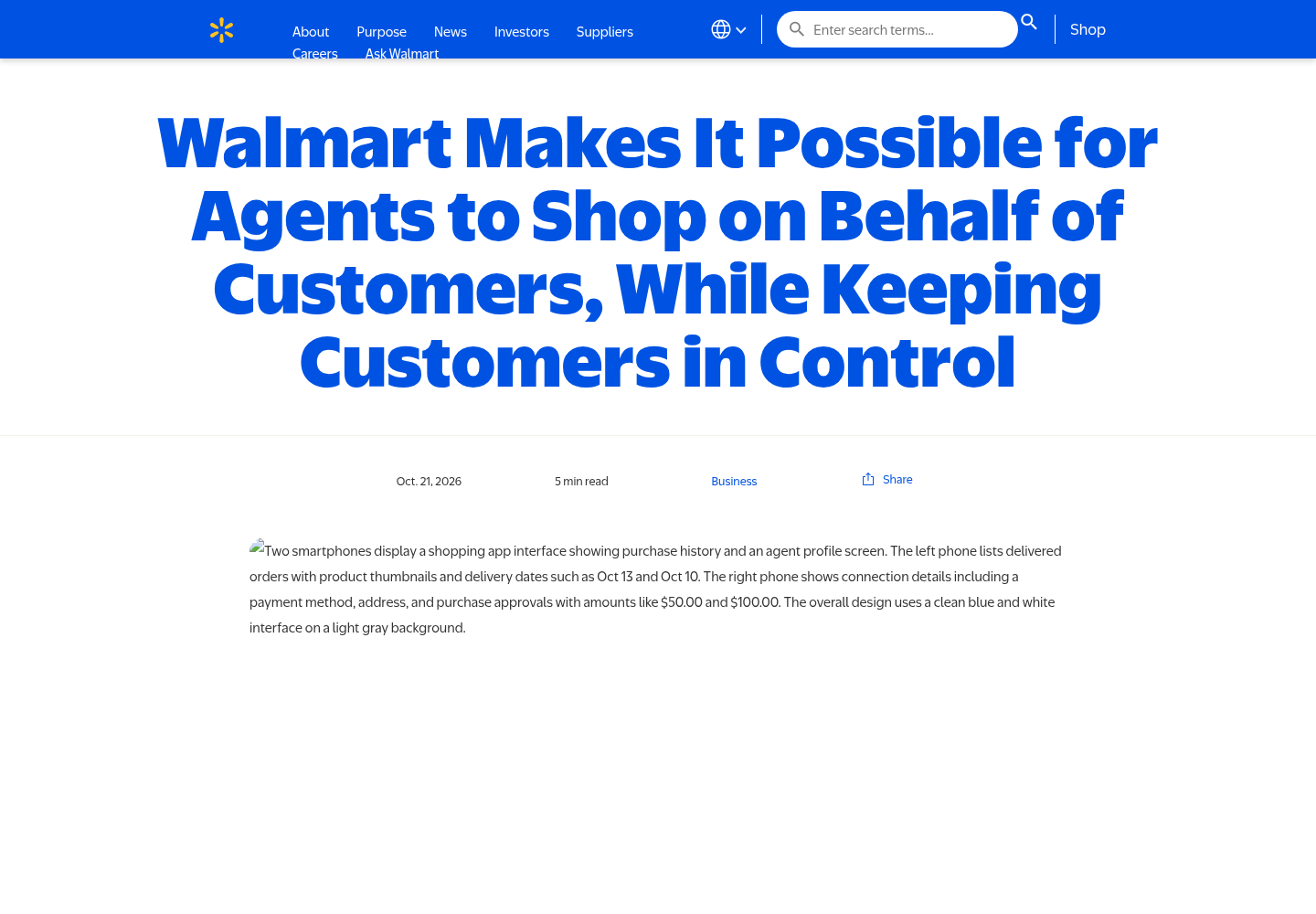
Agent Profiles, rolling out within the next month, give each authorized agent its own profile inside the customer’s account, created automatically on first use through the Gateway. Customers see agent purchases listed separately from their own, and choose an approval mode: require approval for every purchase, or let the agent buy within a customer-set spending cap — $50, $100, $200, your call. Walmart compares it to adding an authorized cardholder: identified transactions, capped spending, revocable at any time.
Terms for AI agents are the rulebook, and they are unusually specific:
| Rule | What it means for builders |
|---|---|
| Purchases require customer approval by default | Your agent cannot assume consent; build for per-purchase approval flows |
| Walmart may require extra approvals even within spending limits | A cap is not a promise of frictionless checkout |
| No actions beyond shopper intent | Scope creep is a terms violation, not a feature |
| Agents never receive payment-card info and cannot change payment methods | Walmart owns the wallet; your agent never touches card data |
| Only task-necessary, customer-allowed data | Data minimization is contractual, not optional |
| Returns process applies, including agent misfires | Misbehavior has a customer-side remedy |
| Violations get blocked from the site | Enforcement is at the retailer edge, not in your app |
Why the design is smarter than a welcome mat
The most interesting piece is the information boundary. The Gateway can shop a customer’s “usuals” — the sourdough bread and the particular milk brand — without handing the agent the underlying purchase history or personal information. Walmart matches the pattern on its side and returns the items. That is a genuinely different architecture from the browser-driving agents Amazon blocked, and it directly addresses the pre-authorization checklist problem for shopping agents: the retailer, not the agent, holds the sensitive context.
Pricing is also pinned: Walmart says agents see the same prices a human sees on Walmart.com, with offers and fees shown before purchase — no agent-specific dynamic pricing, at least on paper.
The operator lesson
Walmart has effectively published the consent contract the agentic-web side has been arguing about: per-agent identity inside the customer account, default-deny purchasing, hard spending caps, payment-data isolation, and edge enforcement. Every one of those is a design constraint for anyone building a commerce agent. Your agent needs an identity that survives Walmart’s per-agent profiling, an approval-handling path that works when Walmart inserts an extra confirmation, and zero assumptions about card data — because it will never see any. This is the agent-as-privileged-user model applied to consumers.
It also completes a fork in the road that operators should track: Cloudflare turned on WebMCP for storefronts, Amazon walled agents out, and Walmart built an approved MCP lane with a rulebook. When a retailer of Walmart’s scale decides the protocol layer — not the browser — is where agents belong, per-agent identity and retailer-side consent stop being edge features and become table stakes.
Caveats
None of this is fully live today. The Gateway starts as a beta for companies and developers, so the practical integration surface (tool schemas, auth flow, rate limits) is still emerging, and Agent Profiles arrive “in the next month.” Walmart already runs conversational commerce integrations with Muse, ChatGPT and Gemini; the new piece is the MCP-native lane with a rulebook. The terms were announced alongside these features, and Walmart’s page itself misnames the protocol (“model text protocol” for Model Context Protocol).
Still, the signal is unambiguous: Walmart’s planned lane for shopping agents is MCP-native, identity-aware, and designed to require approval by default. Build yours to match.