
Websites Are Blocking AI Agents — Here Is the Operator Playbook for Keeping Access
Yelp, Delta, Chase and Schwab are turning AI agents away. The operator playbook: sign your identity, honor robots.txt, back off on 429s, and sandbox everything.
The agentic web hit a wall this week, and it is not a subtle one. The Verge reports that users of Meta’s Muse, xAI’s Grok, OpenAI’s Dots and Instinct are increasingly finding top websites refusing to serve their agents. Yelp says it only admits agents that pay for its data licensing program. Delta Air Lines is preventing agents from booking tickets. JPMorgan Chase and Charles Schwab have confirmed they block agents from customer accounts outright over security concerns. And users report that Cars.com and Amtrak, which used to work, have quietly stopped.
The legal ground is still moving. Amazon, which banned Perplexity’s agentic shopping feature and sued the startup, saw an appeals court overturn an injunction against Perplexity in August; Amazon has since filed an amended complaint. Meanwhile Amazon says Meta Muse’s “continued access” violates its site policies. The line between “blocking bots” and “blocking your customers’ assistants” is being litigated in real time.
Meta’s response is instructive: rather than fight, it has partnered with Walmart, Gap, Sephora, Best Buy and others so Muse can shop those storefronts, and Shopify has opened its network to agents. That is the shape of the next two years — a patchwork of negotiated agent lanes, not universal access. Chris Canal, CEO of AI safety evaluator EquiStamp, put it to The Verge plainly: every company that opts out is “fewer useful things the agents can do.”
Why this matters for agent operators
If you run coding agents, research agents or shopping agents, three practical consequences follow from this week’s reporting.
1. Anti-bot systems do not distinguish your sanctioned agent from a scraper. Even where a site has an agent partnership, defenses still fire: Reddit reports describe Google accounts flagged for “suspicious activity” while using Muse, and separate reports of checkout failures on Walmart despite its Meta partnership. As Canal notes, safeguards built to stop scammers and hackers trigger on agents too. Build fallbacks: alternate content sources, human-escalation paths, and graceful degradation when a target site starts challenging your traffic. If you are hardening an agent against untrusted web content in the first place, start from our guide to securing AI agents: prompt injection and least privilege.
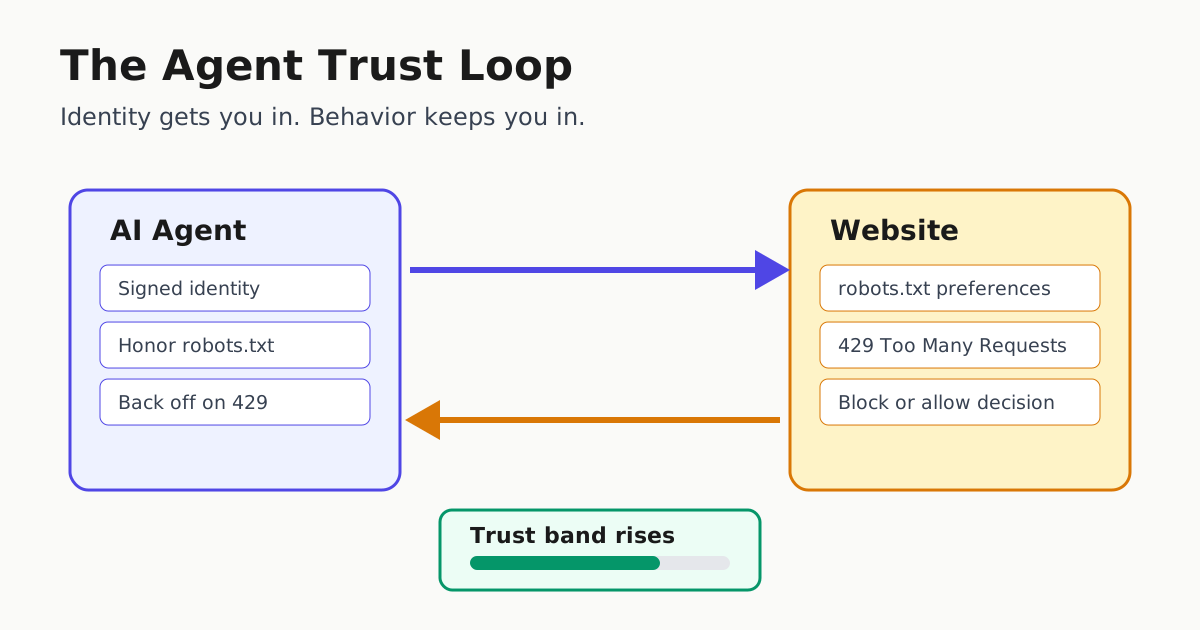
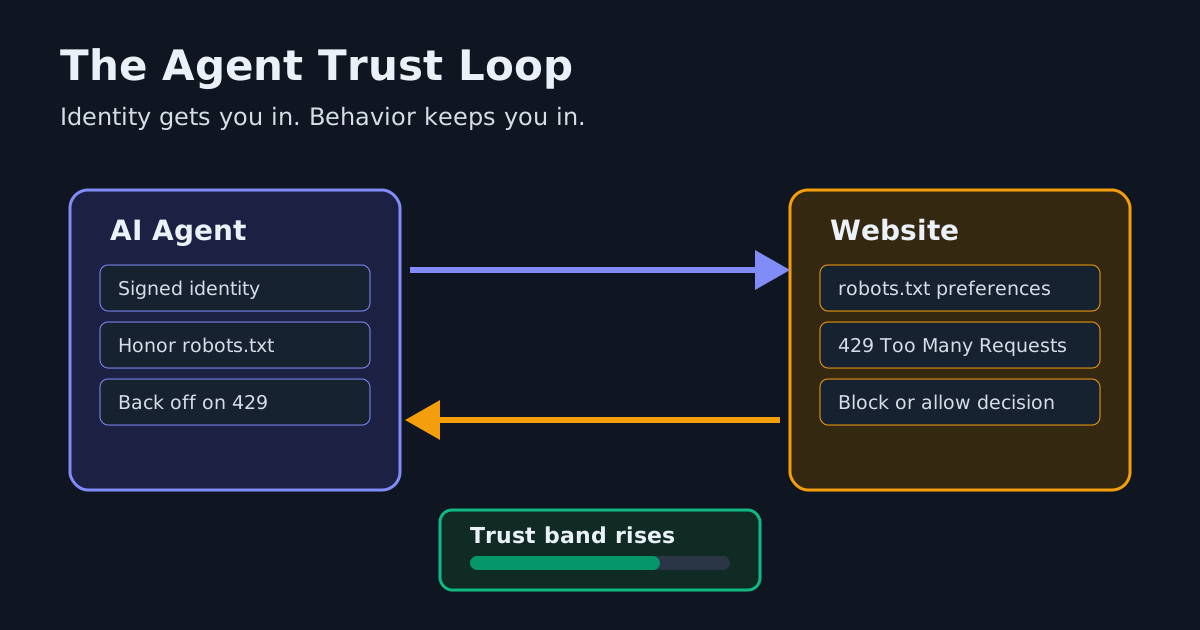
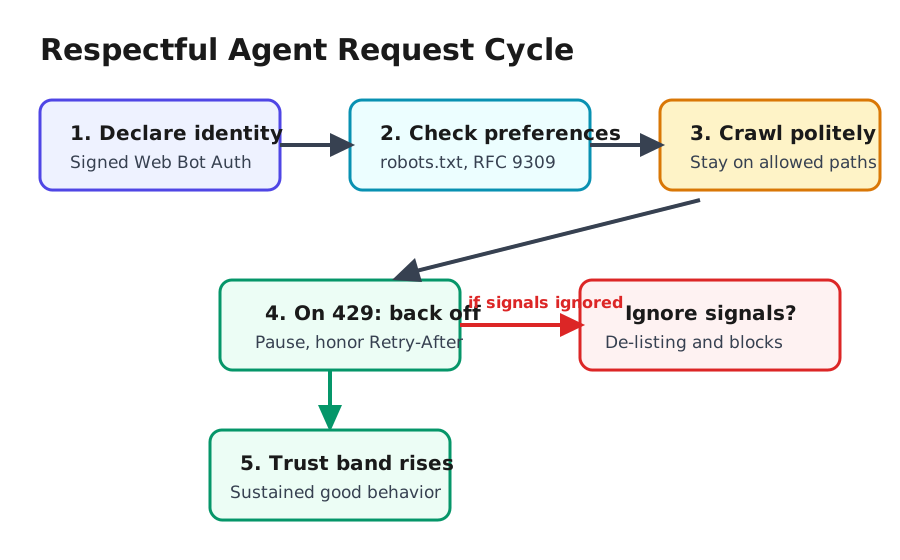
2. Trust is becoming continuous, not one-time. Cloudflare’s new accountability system for Verified bots makes this explicit. A signed identity via Web Bot Auth answers “are you who you say you are?” — it does not answer “can we trust you?” Cloudflare now scores whether a bot’s observed traffic respects robots.txt preferences over time (in line with RFC 9309) and whether it adapts when a site responds with HTTP 429 “Too Many Requests.” Consistently slowing down or pausing raises your trust band; ignoring the signal lowers it. Cloudflare de-listed Perplexity’s bot in 2025 for accessing opted-out resources and attempting to circumvent blocks — proof that verification can be revoked. The company plans to publish trust scores on Radar and let customers choose handling thresholds.
For fleet operators, the checklist is concrete and you can implement it today:
| Signal | Bad behavior | Trust-building behavior |
|---|---|---|
| robots.txt / site preferences | Crawling disallowed paths | Parse robots.txt per crawl; honor published preferences (RFC 9309) |
| HTTP 429 responses | Retrying at the same rate | Back off, honor Retry-After, pause the lane |
| Identity | Spoofed or missing user agent | Signed requests via Web Bot Auth; accurate declaration |
| Feedback loops | Circumventing new blocks | Respond to direct feedback; stand down when unwelcome |
Note Cloudflare’s caveat: robots.txt is a minimum. A site can communicate unwelcome access through other signals, and “not stated” never means “allowed.” If your agent is being blocked somewhere it used to work, treat that as a signal, not an obstacle to route around.
3. The trust deficit is measurable, and isolation is the remedy. Docker’s analysis of the 2026 Stack Overflow Developer Survey — over 30,000 respondents across 169 countries — found only 7% of developers trust AI output for important decisions, and 48% trust it only when they can verify it themselves. Security and privacy ranked second only to accuracy in adoption decisions, and nearly one in four developers said AI-related security or privacy issues cost their team time in the past year. Docker’s answer is sandboxing: containers share a kernel and are the wrong isolation boundary for autonomous agents, while microVM sandboxes contain what an agent can touch. It shipped Docker Cloud Sandboxes and a next-generation Sandbox Kit specification it will commit to the CNCF.
That survey data explains why banks are the first movers on hard blocks: an agent with account access is exactly the catastrophic-failure scenario developers say they cannot yet trust.
The operator posture
Put the three sources together and a coherent posture emerges for anyone running agents against third-party sites:
- Declare identity and keep it clean. Sign requests, publish your agent’s behavior, and never let a bug look like evasion — Cloudflare explicitly notes misconfiguration, not malice, is often the cause.
- Honor the feedback channels. robots.txt, 429s, and explicit takedown requests are the web’s existing consent protocol. Agents that ignore them will be de-listed, blocked, or litigated against.
- Assume any given site will refuse you. Design tasks with fallback sources and a human handoff, the way Meta routed Muse around Amazon via retailer partnerships. For checkout specifically, use a pre-authorization checklist for shopping-agent purchases.
- Isolate what you cannot verify. With only 7% of developers trusting AI output for important decisions, run agents in sandboxes with scoped credentials rather than shared browsing sessions — and remember that in practice the sandbox is still a suggestion unless you enforce it.
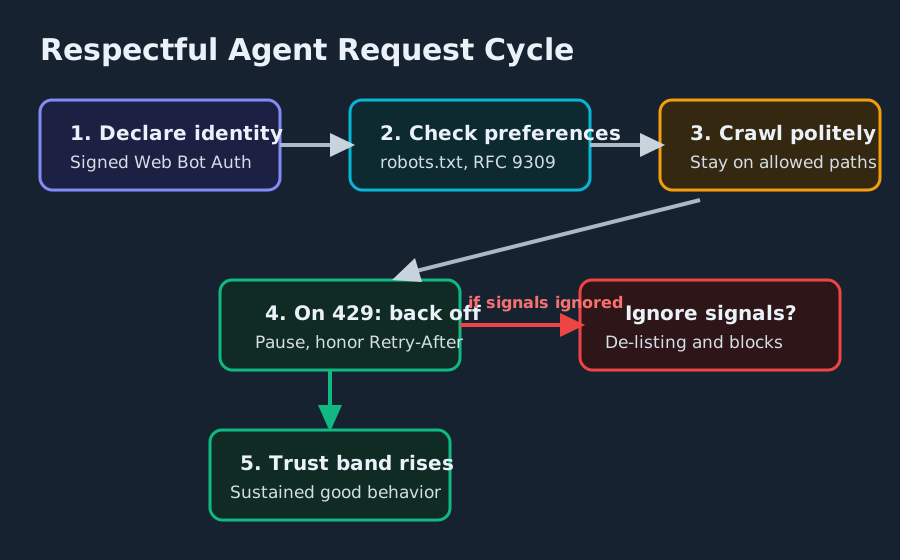
The open web is not shutting agents out of spite. It is demanding the same things any privileged user must provide: identity, accountability, and blast-radius control. Fleets that internalize that now — verifiable identity, respectful crawl behavior, sandboxed execution — will keep their access. Fleets that fight the anti-bot layer will spend 2027 in court, or in CAPTCHAs.
Related reading: our earlier coverage of Cloudflare’s continuous trust bands for Verified bots.