OpenRouter's New Auto Code Router: One Stable Slug for Coding Agents, 74% Lower Cost per Task Than Claude Opus 5.5 on OpenRouter's Five Benchmarks
OpenRouter rebuilt its router and shipped openrouter/auto-code for coding agents: eleven request factors, live price, health and cache signals, a 3x faster routing step than the previous router, and 74% lower cost per task than Claude Opus 5.5 on OpenRouter's own five benchmarks.
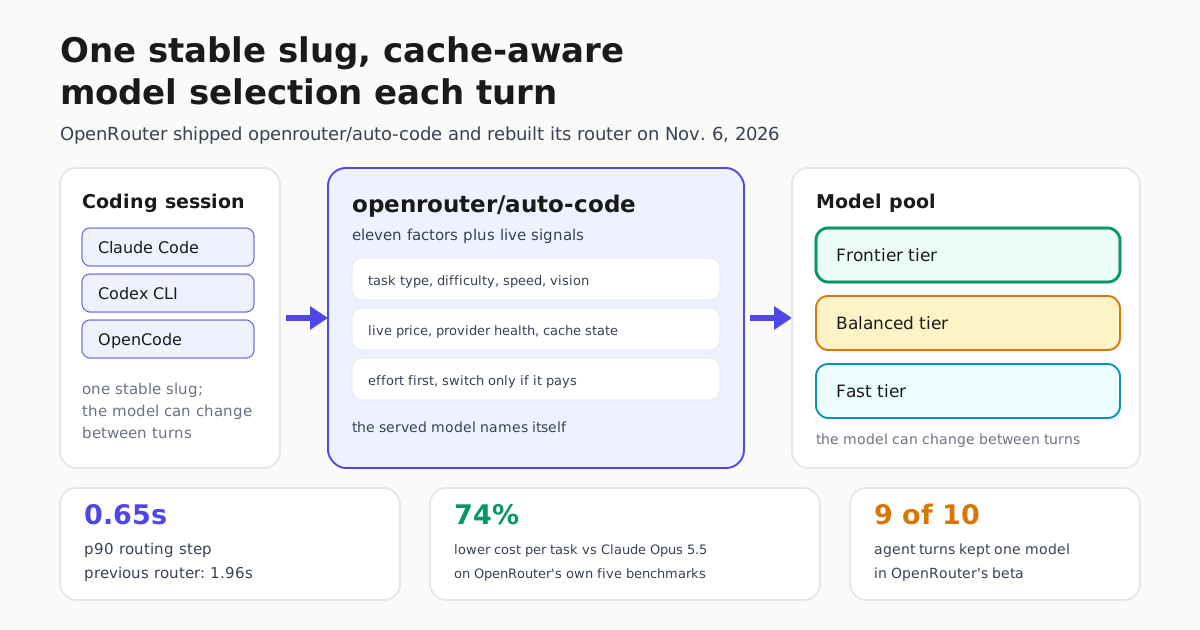
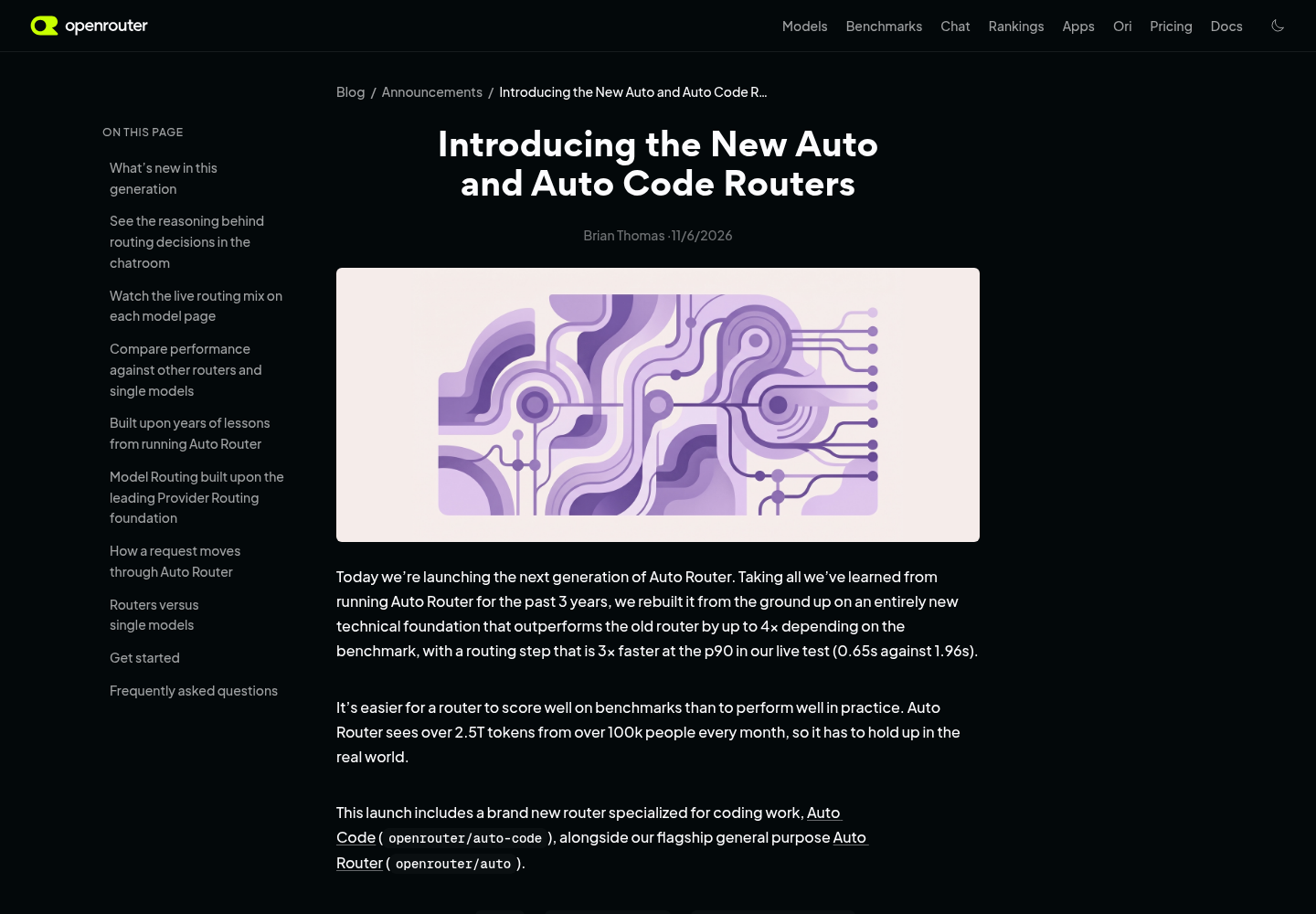
In its Nov. 6 announcement, OpenRouter said it rebuilt its routing engine from the ground up and shipped a second router for coding work: openrouter/auto-code, sitting beside the general-purpose openrouter/auto.
The headline numbers are the vendor’s own; the mechanism is what matters when agents run for hours. The router now scores eleven properties of each request, combines them with live pricing, provider health and cache status, and reaches a decision in 0.65 seconds at p90 instead of 1.96 for the previous router. That 3x gain measures the rebuilt routing step against the old router, not task speed. Across five of its own benchmarks, OpenRouter says Auto Code scores in line with Claude Opus 5.5 while costing 74% less per task. OpenRouter says the rebuild beats the old router by up to 4x depending on the benchmark.
What the new engine weighs
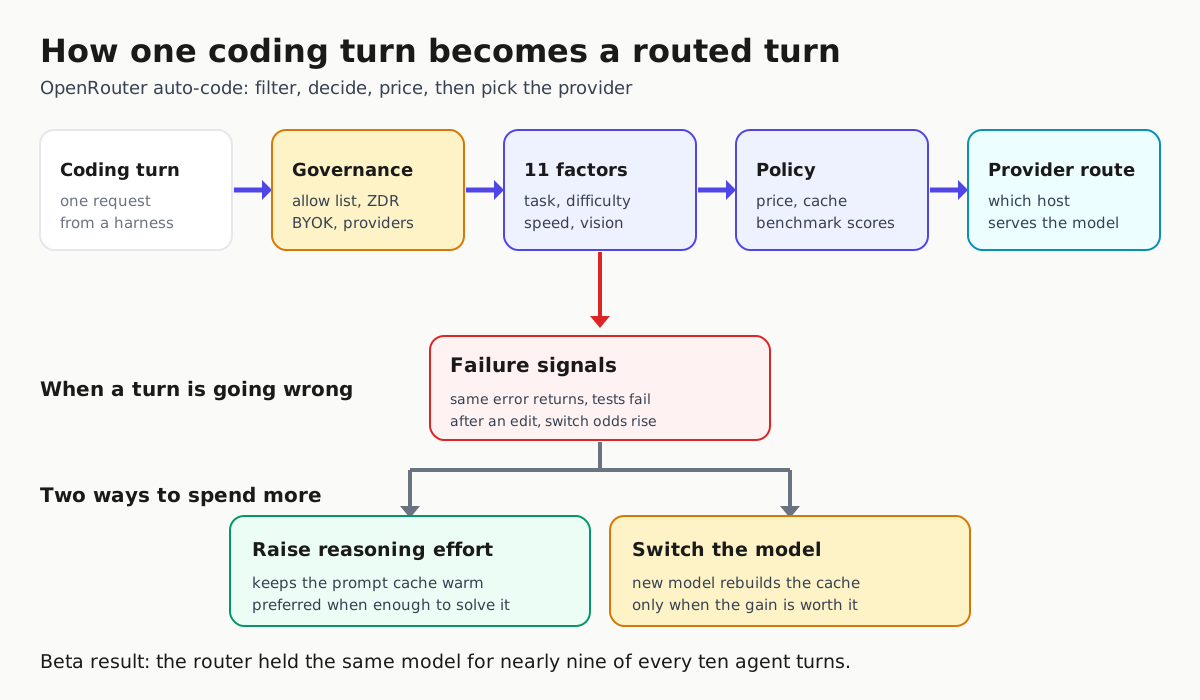
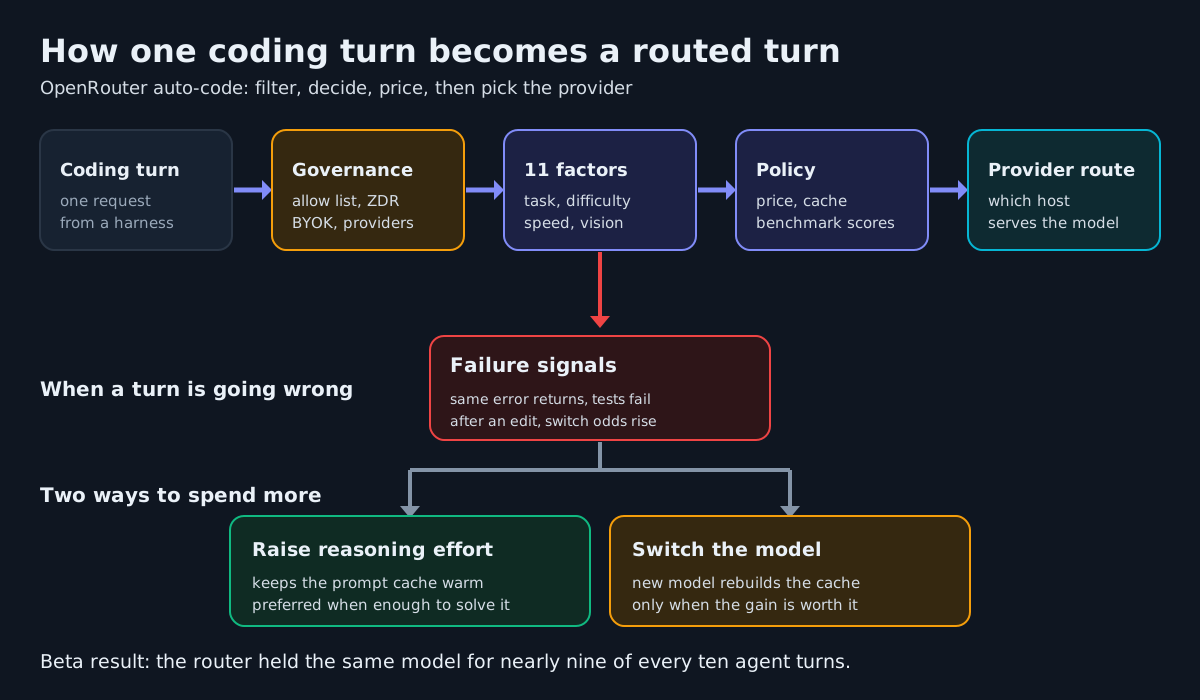
Every request meets governance first: guardrail policies, zero data retention, provider restrictions, allowed and excluded model lists, and BYOK keys narrow the pool before any scoring happens. A fast decision model then rates the request on eleven things, including what kind of task this is, whether the task just changed, how hard it is, whether speed matters, whether it needs vision or knowledge of a codebase, and whether a bigger model, more thinking or a cheaper model would serve it better. A routing policy then weighs live prices, cache status and benchmark performance to choose both the model and the reasoning effort.
| Previous Auto | New Auto | New Auto Code | |
|---|---|---|---|
| Pool | Narrow signals, mostly task type | Governed allow list, ZDR, BYOK | Same governed pool, coding-weighted |
| Routing step | 1.96s at p90 | 0.65s at p90 | 0.65s at p90 |
| Cost tier | Drifted low, dropping exceptional models | Reset closer to a few months back | Starts a tier higher, for coding models |
| Benchmarks | Old generation | Up to 4x the old router | In line with Claude Opus 5.5 on five of OpenRouter’s benchmarks, 74% less per task |
The part that changes daily work: turn by turn behavior
For a coding harness, which model wins one prompt matters less than what happens across many turns of one task.
- It stays put. A model switch costs extra because the new model rebuilds the input token cache, so the router raises reasoning effort first and switches only when the gain is worth the cache it gives up. In beta it held the same model for nearly nine of every ten agent turns.
- It reacts to failure. When a session is going wrong in ways that point at the model, such as the same error coming back or tests failing after an edit, those signals raise the odds of a switch.
- It was tested on production traffic. Through
typesafe/jev-routerandopenrouter/auto-beta, OpenRouter says invalid tool calls were 4x lower than with the previous router and agentic responses were cut off half as often.
Price, and what you can see
There is no router fee: you pay the standard price of whichever model serves the request, and the response’s model field names it. The chatroom shows a routing insights panel explaining why a model was chosen, the same analysis is available through the API when you enable router metadata, and each router’s model page now shows which models it picks most often, split by session type and by difficulty. openrouter/auto-beta is the release channel where routing changes land before they graduate to openrouter/auto.
One default moved. This generation deliberately sits at a higher price than the drifted-low default of recent months, in order to bring exceptional models back into the pool. If you want the cheaper profile, set cost_tier to low.
curl https://openrouter.ai/api/v1/chat/completions \
  -H "Authorization: Bearer $OPENROUTER_API_KEY" \
  -H "Content-Type: application/json" \
  -d '{
    "model": "openrouter/auto-code",
    "messages": [{"role": "user", "content": "Add a retry with backoff to fetchUser in api/users.ts"}]
  }'
Four things to do on Monday
- Point one lane at the slug and leave it there. A single stable model string, the same pattern Vercel ships as virtual models, removes the per-prompt picker from your config and from your reading of the bill.
- Budget per completed task, not per token. Cost per completed task beats price per million tokens is the accounting a router like this fits. With the served model named in every response, a fleet can price a finished job instead of a token stream.
- Log the served model. Because the model can change underneath the session, the record of who actually answered is the evidence.
- Verify the endpoint, not the model name.
That last point has independent support. Artificial Analysis’s Endpoint Accuracy Index v1.1 scores each serverless endpoint as a percentage of a self-hosted reference deployment of the same weights, across tool calling, scientific reasoning and long-context recall. Across more than 100 endpoints, nearly one in four scores below that reference. For GLM-5.3 Flash, 16 of 22 endpoints were statistically in line with the reference and one scored above it at 104.2, yet two endpoints capped near 32K output tokens cut off about half of HLE-250 responses and scored 22% and 29% against 55% for the reference, while two endpoints that produced about 30% fewer reasoning tokens scored 48%. For Muse Spark Open, three of five endpoints matched the reference at 99.5 to 99.9, and the other two lost accuracy on tool calling alone, scoring 50% and 51% on BFCL-500 against 59%.
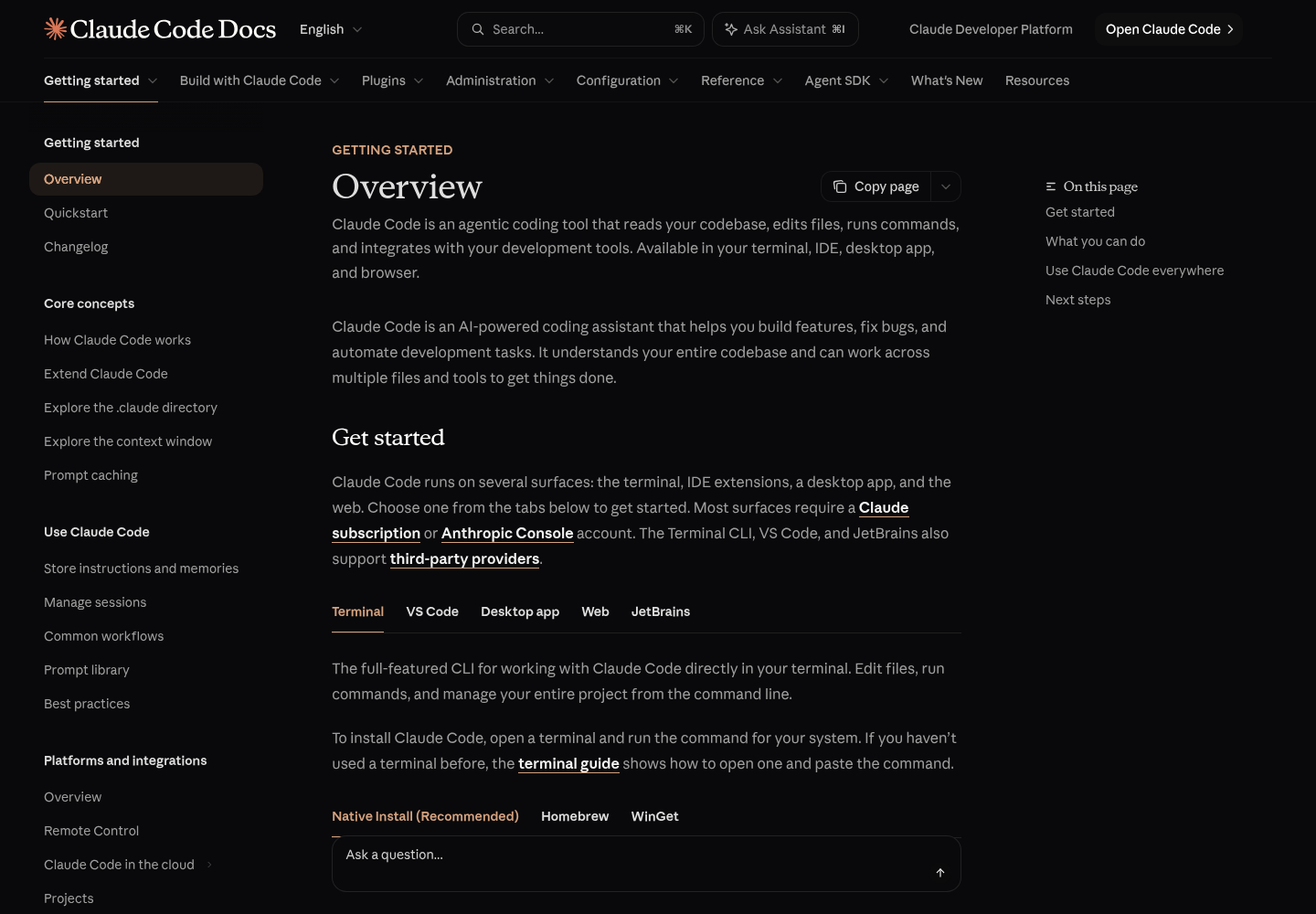
If your harness is Claude Code, start with what Anthropic documents: its overview states that the Terminal CLI, VS Code and JetBrains surfaces also support third-party providers. That page does not specify the request protocol a third-party endpoint must speak, so check your own provider settings before pointing a lane at the slug.
Two cautions
The 74% figure is OpenRouter’s own benchmark against Claude Opus 5.5 across five benchmarks, and OpenRouter itself says no router beats the single best frontier model at every point on the cost and quality curve. A router trades a little peak performance for steadier cost and quality over time. And the eleven factors stay inside the engine: outside it you get the reasoning panel and the served-model field, a narrower window than routers you can inspect end to end.
What changes for an operator is not which model wins a turn. It is that one slug can be held stable for a whole task, that the model can move underneath you when the work starts failing, and that the bill can be read per finished job instead of per token.
Sources
- Introducing the New Auto and Auto Code Routers on OpenRouter
- Artificial Analysis on X: "Launching Artificial Analysis Endpoint Accuracy Index v1.1: a minor version upgrade alongside expanded coverage for GLM-5.3 Flash and Muse Spark Open. Across the 100+ serverless endpoints we benchmarked, nearly 1 in 4 score below the reference Providers trade off accurac…
- Overview - Claude Code Docs