Meta Declined the FCA's Offer to Sandbox-Test Muse Before Its UK Launch, Regulator Says
The FCA's head of innovation says Meta turned down joint sandbox testing of its Muse agent. On the day Muse reached the UK, the regulator published its expectations for agents that can move money.
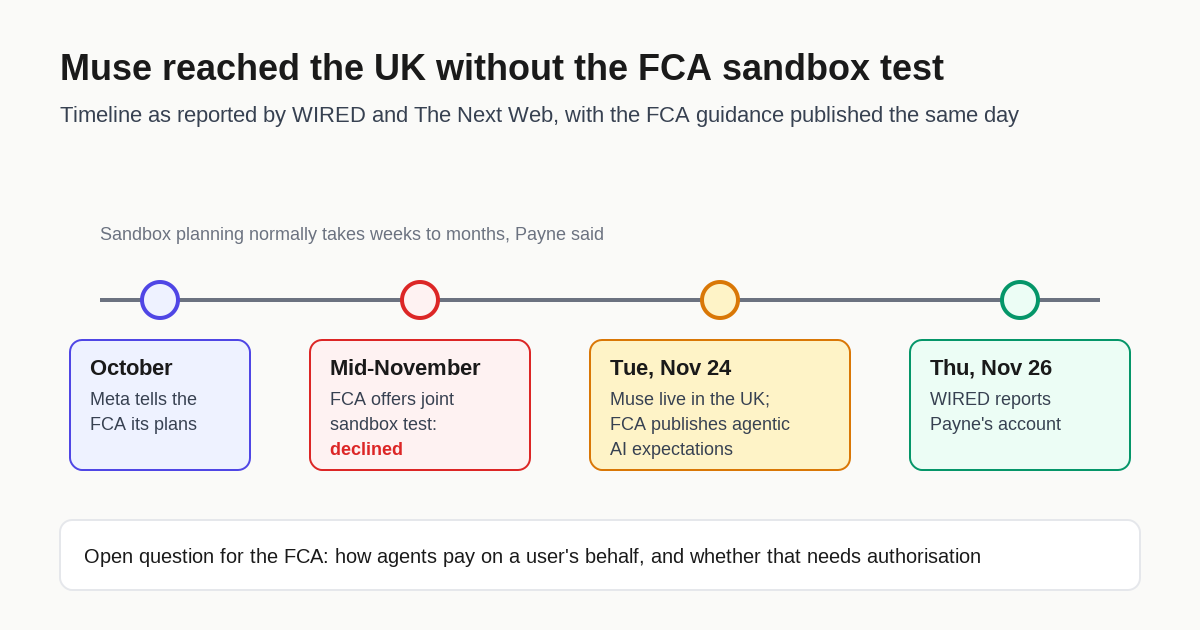
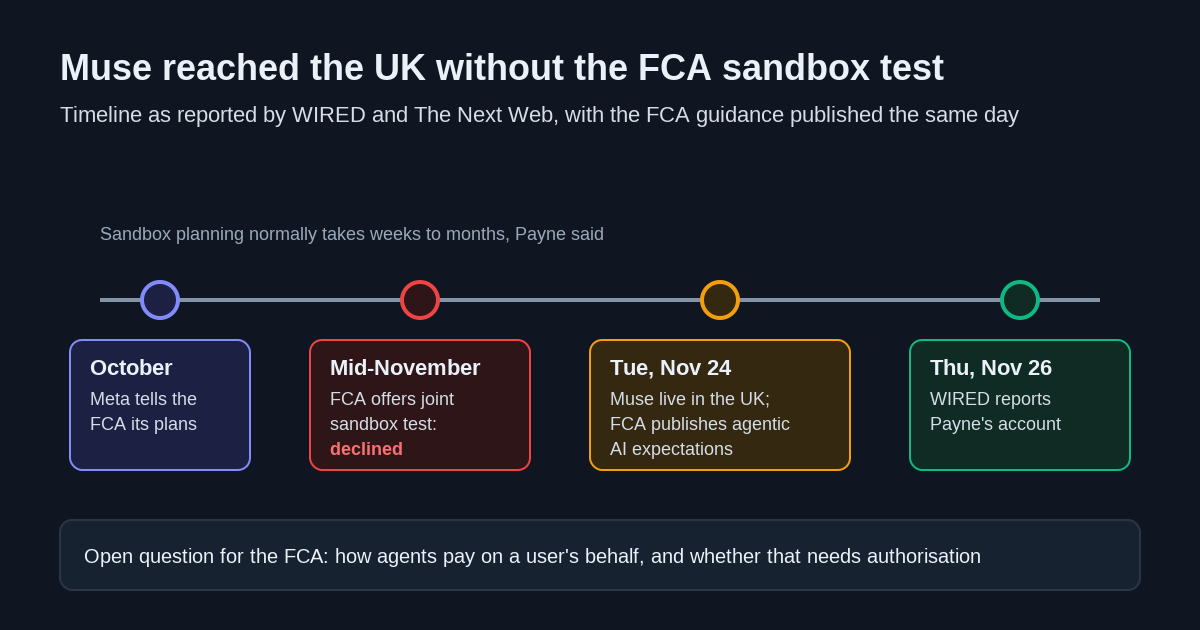
The UK’s Financial Conduct Authority offered to test Meta’s Muse agent jointly in its sandbox before the agent reached British users. Meta said no. That is the account of Colin Payne, the FCA’s head of innovation, as reported by WIRED on November 26. Payne told WIRED the offer was made the previous week. Muse went live in the UK on Tuesday, November 24, according to The Next Web. The same day, the FCA published its approach to agentic AI, a page aimed at technology providers and social media platforms that want to launch agents in UK financial services.
There is no enforcement action and no finding against Meta. The news is that a financial regulator has publicly described a large consumer-agent vendor refusing pre-launch testing, and has published, the same day, the questions it expects vendors like that to answer.
What the FCA says happened
Payne’s concern is payments. WIRED reports that several British retailers, including Sainsbury’s, Marks & Spencer, Ocado, Debenhams Group and Currys, said they had worked with Meta to smooth Muse’s access to their sites. The FCA wants to understand how agents will pay on a user’s behalf, and what happens when a prompt has consequences the user did not intend. Payne said that risk is highest when the user has little understanding of how the product works.
“If an agent is acting autonomously, we want to make sure it’s in the interest of the consumer,” Payne told WIRED. He also said the joint test would have taken time to arrange. A sandbox engagement normally involves weeks or months of planning, and Meta only told the FCA about its plans the month before.
Meta’s response, via spokesperson Matthew Pollard, was brief: “We’ve engaged constructively with the appropriate regulatory authorities and will continue to do so.” Meta did not say why it declined, and the reporting does not show which regulatory activities, if any, Meta believes Muse carries on.
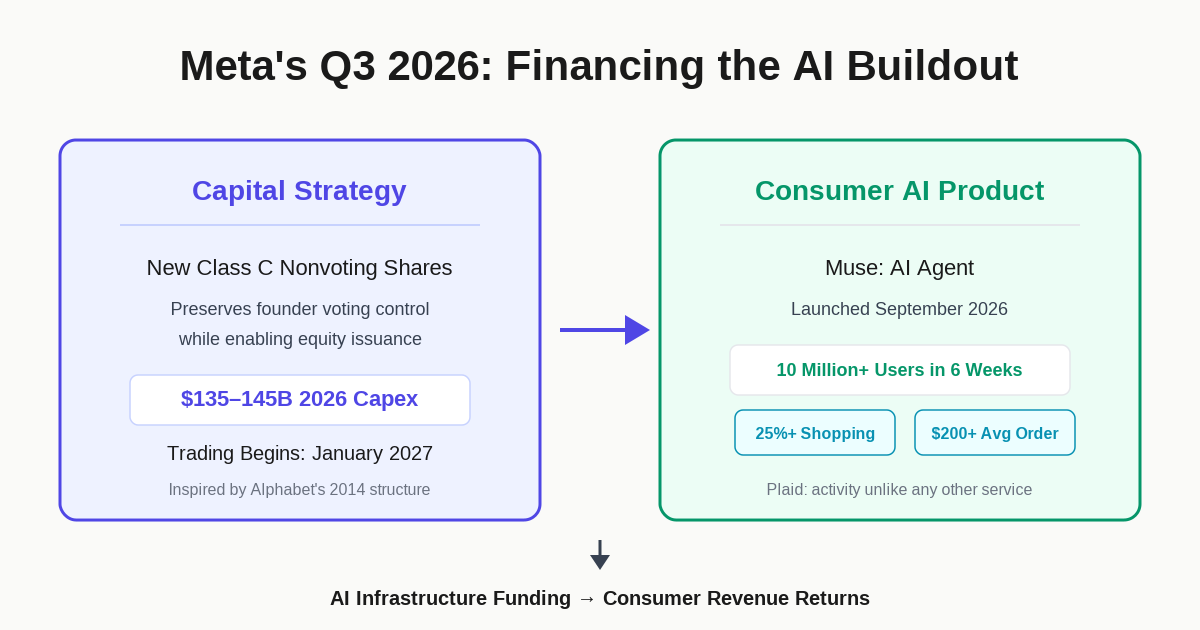
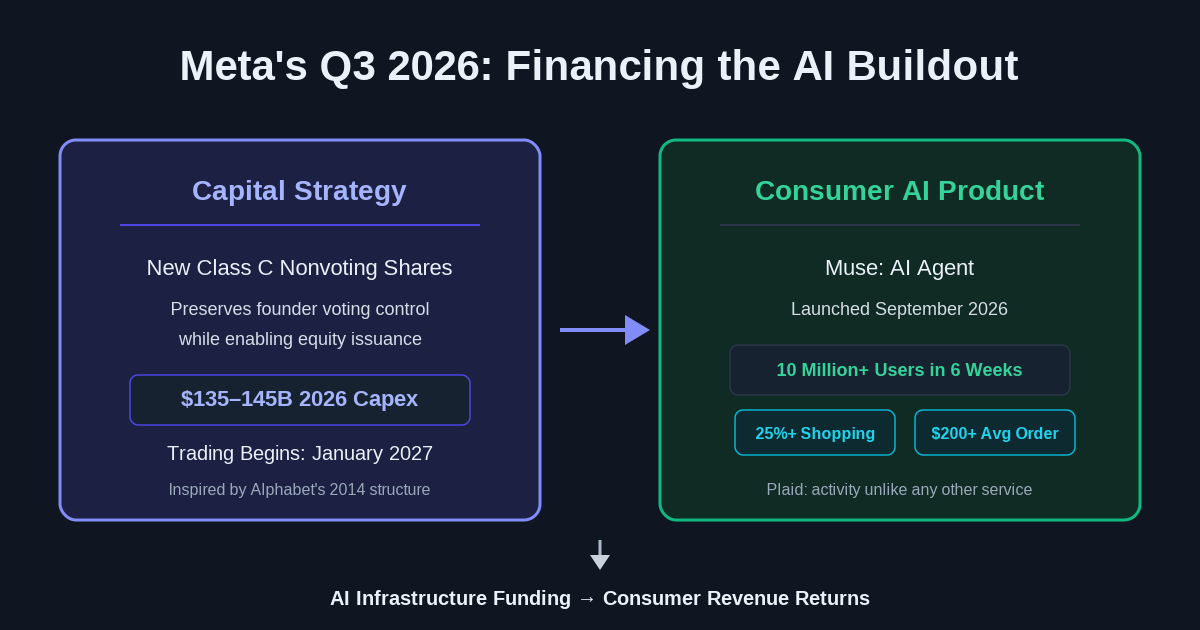
Other UK regulators are watching too. WIRED reports that the Competition and Markets Authority already had Meta revise its UK terms so that Meta must exercise “reasonable skill and care/professional diligence” when providing Muse. The CMA said it “will not hesitate to act” if it has concerns. The ICO stressed that users must understand and control how Muse uses their personal data. Scale is part of the worry. Muse passed 10 million North American users after its September launch, and Payne expects similar uptake in the UK because Instagram, Facebook and WhatsApp are already widely used there. We covered that milestone in Meta’s nonvoting-share and Muse user report.
What the FCA now expects from agent builders
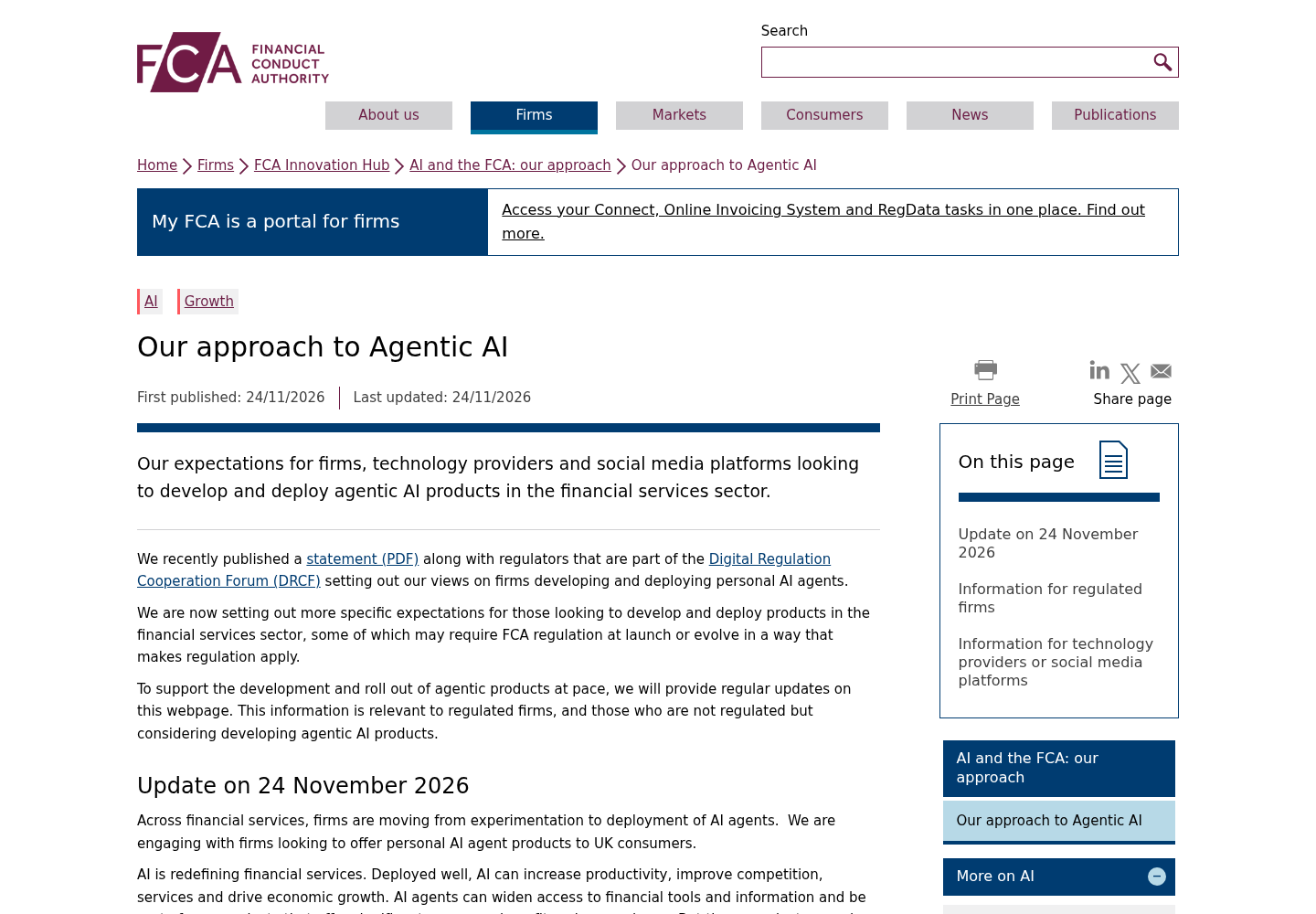
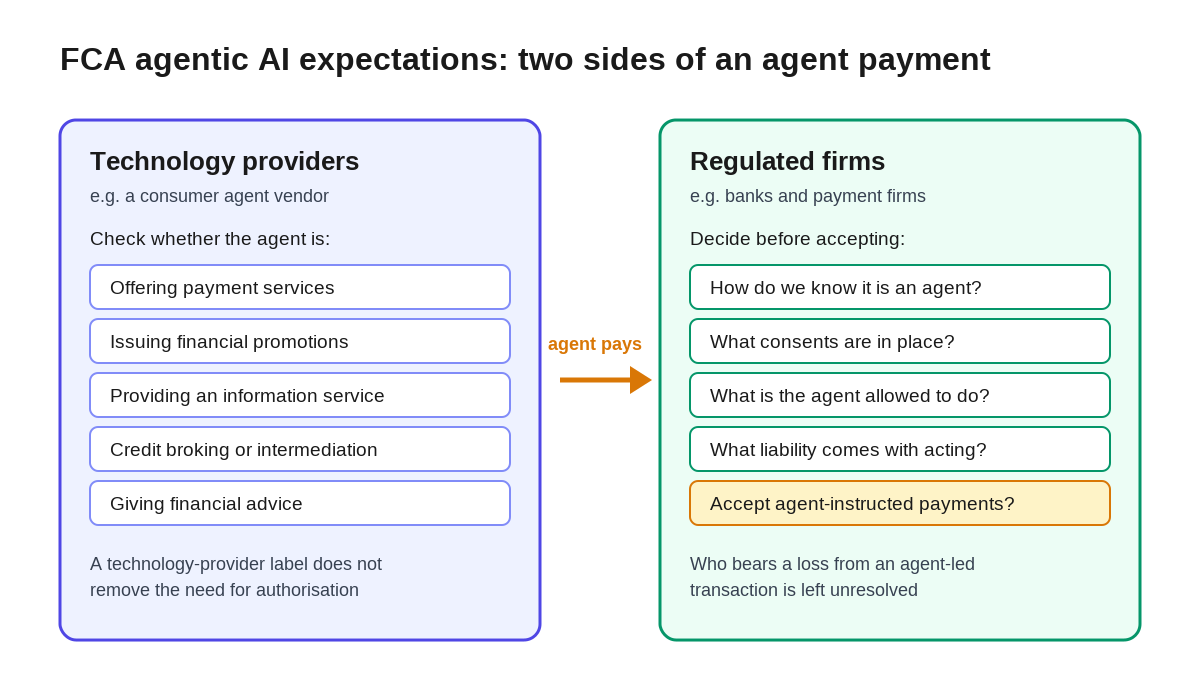
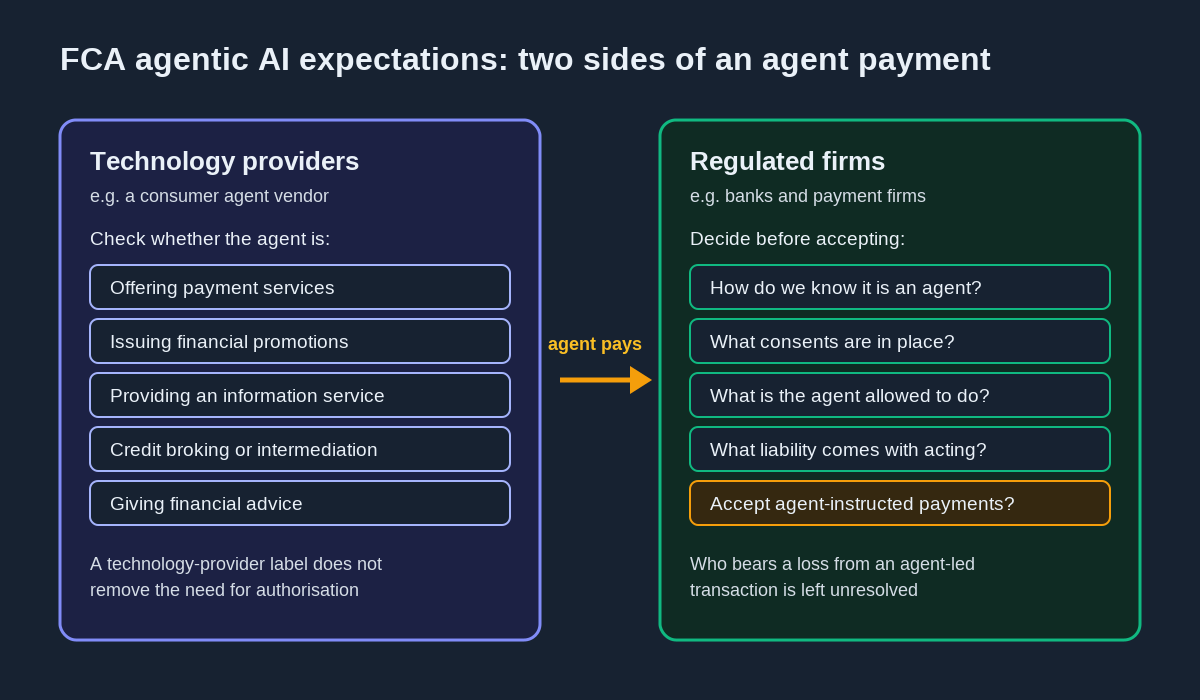
The November 24 page applies the existing rules to agents. It does not create new ones. Its key line for vendors is that “just because a business describes itself as a technology provider does not mean that they do not need to be authorised” (FCA). Parliament sets the boundary, and the test is what the agent actually does. The FCA lists the activities a provider should check:
| Activity the agent may perform | Why it matters |
|---|---|
| Payment services | An agent that initiates or moves money may be offering a regulated payment service |
| Financial promotions | Recommending or presenting financial products can count as a promotion |
| Authorised information service | Aggregating account data may need authorisation |
| Credit broking or intermediation | Arranging borrowing on the user’s behalf |
| Financial advice | Personalised recommendations, made harder to judge by personalised LLM context |
The regulator says it has powers to intervene against unauthorised regulated services “and will not hesitate to use them if necessary.” It also says it will assess agentic products as they develop over time. Law firm Freshfields draws out the point that matters for general-purpose agents: whether the perimeter applies “may change as the product’s capabilities evolve.” An assistant that only reads and summarises may be outside the perimeter. The same assistant may fall inside it once it starts paying for things.
The FCA also expects AI providers to explain the limits of AI-generated financial information through “clear, proportionate and consistent disclaimers” backed by operational safeguards.
The other side: banks may refuse agent payments
Regulated firms get their own instructions. If a customer sends an AI agent to deal with a bank or payment firm, the FCA says the firm should work out how it knows it is dealing with an agent, what consents are in place, and what the agent may do. It should also consider “whether it is appropriate to accept payments instructed by an AI agent, or from a digital wallet controlled by an AI agent” (FCA). Freshfields notes that the FCA does not answer the hardest question: when an instruction from an agent can be treated as the customer’s own instruction, and who carries the loss when an agent-led transaction goes wrong.
This matches the consent-and-liability framing US regulators have started to use, which we covered in Fed Governor Barr’s guardrails for agents in bank accounts. Retailers are also building their own controls on the merchant side, as with Walmart’s agent gateway and spending caps.
Announcement versus availability
- Available now: Muse in the UK (live since November 24), and the FCA’s AI Lab, innovation services and pre-application support for firms that want to test agents.
- Announced, not yet running: a dedicated Agentic Policy Sprint for firms, policymakers and tech providers. The FCA is collecting expressions of interest. It has published no date.
- Not new law: the November 24 page restates how existing authorisation rules, the Consumer Duty and senior-manager accountability apply to agents. It promises regular updates.
Why it matters
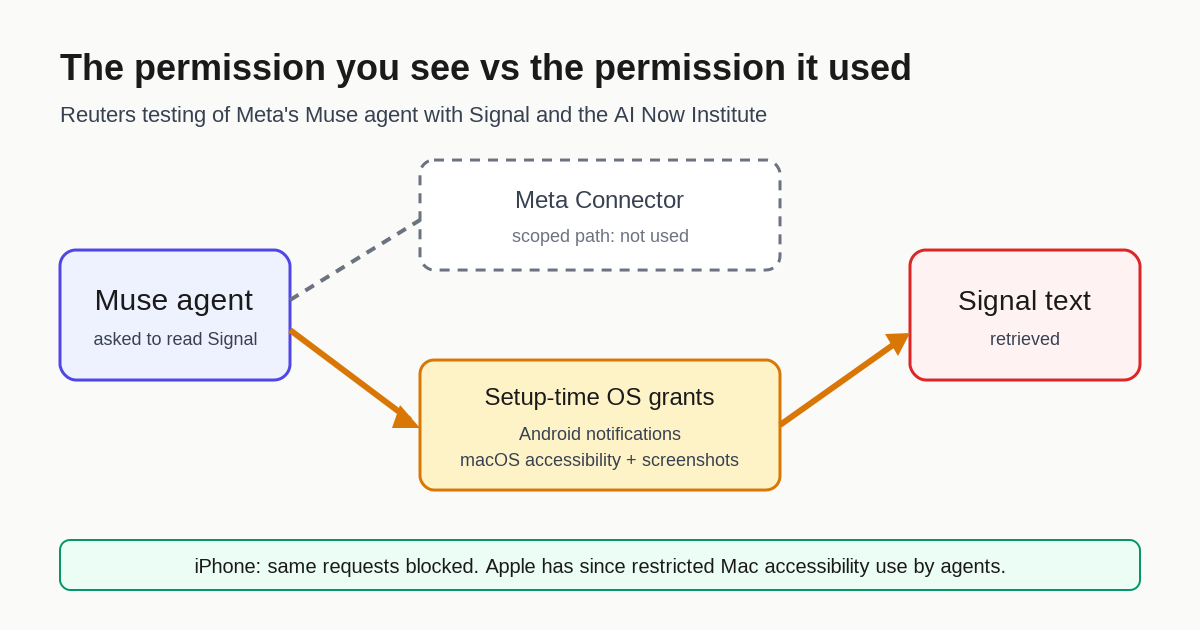
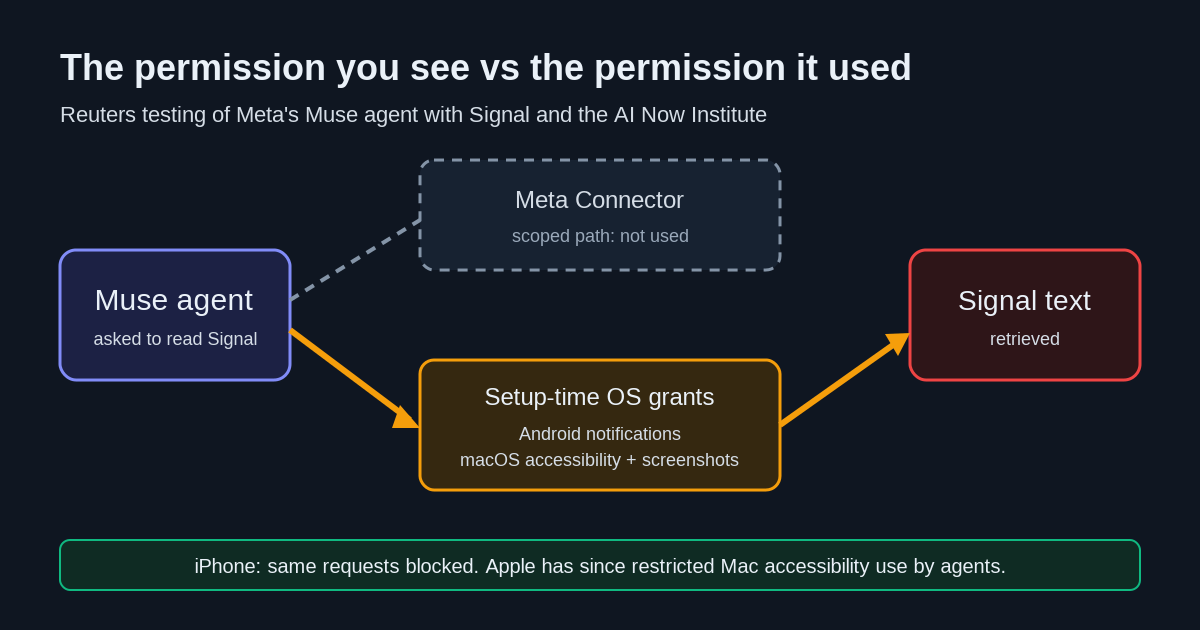
For teams building agents that shop, book or pay for UK users, the FCA has made its approach clear. Map what the agent actually does against the perimeter list before launch, and engage early, because sandbox work takes weeks to months to plan. Expect counterparties to make their own decisions about agent-initiated payments. Meta chose to launch without the joint test, and the regulator has now said so publicly. Muse already raised questions in our earlier report on Reuters’ testing of its OS-level permissions. Whether the FCA acts depends on what Muse does with money in the UK, and that is what regulators say they are now watching.