Meta Ships Muse Wonder, Its First Frontier Model, Matching Fable 5.1 and GPT-6 Astra on Benchmarks
Meta's Superintelligence Lab released Muse Wonder and Wonder Full, its first frontier-class models, claiming benchmark parity with Anthropic and OpenAI while emphasizing long-term active memory for coding agents.
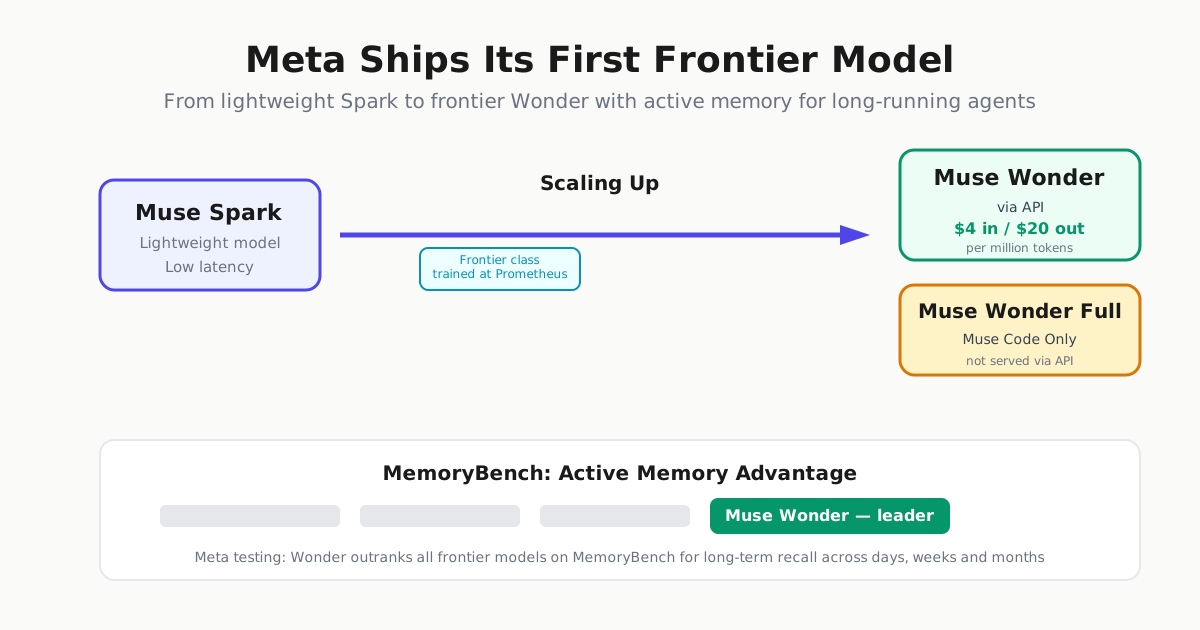
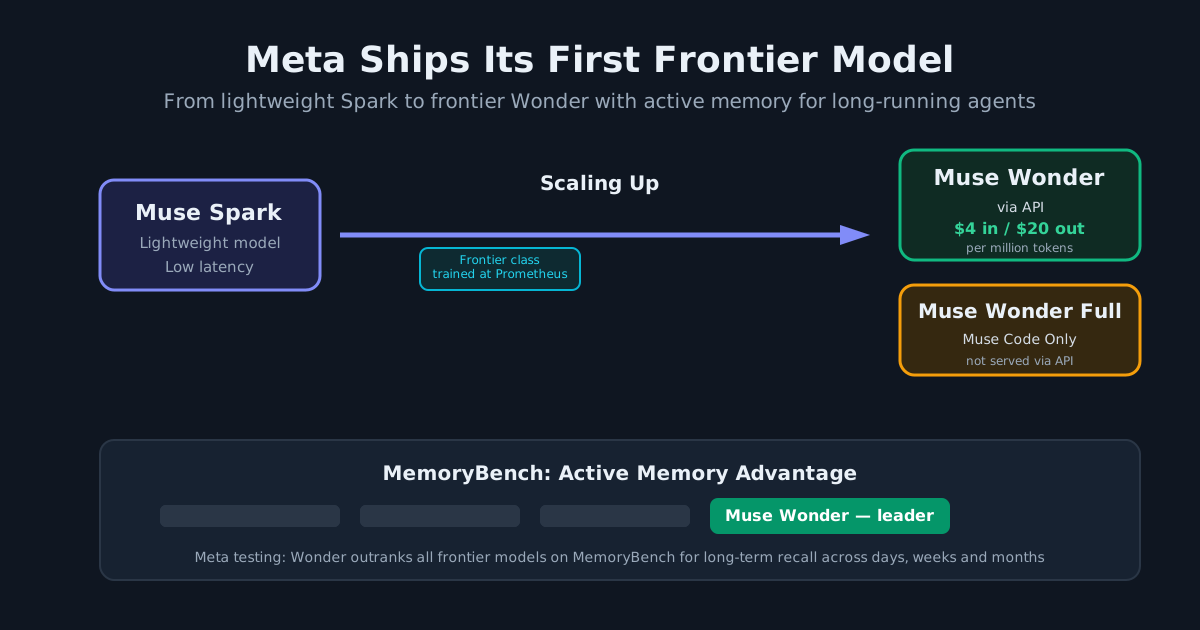
Meta shipped its first frontier-class AI models on Monday, releasing Muse Wonder and Muse Wonder Full through the Superintelligence Lab. The launch puts Meta in direct competition with Anthropic’s Claude Fable 5.1 and OpenAI’s GPT-6 Astra on benchmarks while carving out a distinct position on long-term memory for coding agents.
What shipped. Muse Wonder is the larger, more capable successor to Muse Spark, Meta’s lightweight model that prioritized low latency for quick responses. According to internal testing in the model card, Wonder and Wonder Full achieve comparable scores to Fable 5.1 and GPT-6 Astra, with particular strength on complex coding tasks. The Verge reports the models “go toe-to-toe with the industry’s best,” noting the results come from Meta’s own internal testing on several industry benchmarks. This is Meta’s first frontier release since Scale AI founder Alexandr Wang restructured the company’s AI division in August of last year — until now Meta had shipped only the lightweight Spark and the Muse agent.
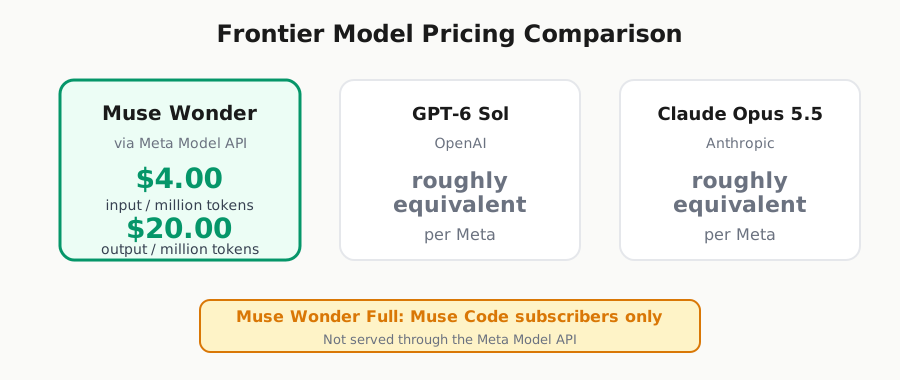
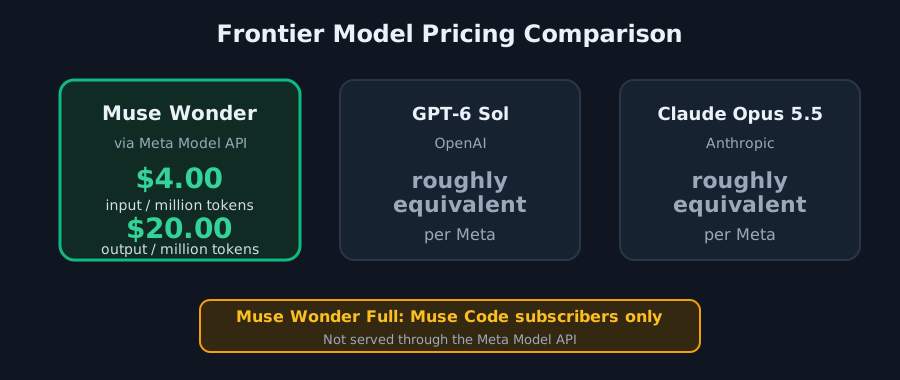
Pricing lands at the frontier tier. Wonder costs $4 per million input tokens and $20 per million output tokens through the Meta Model API — roughly equivalent to GPT-6 Sol or Claude Opus 5.5 according to Meta’s own published pricing. Wonder Full takes a different distribution path: it is exclusive to Muse Code subscribers and will not be served through the API at all. Both models will power the Muse agent, starting with subscribers.
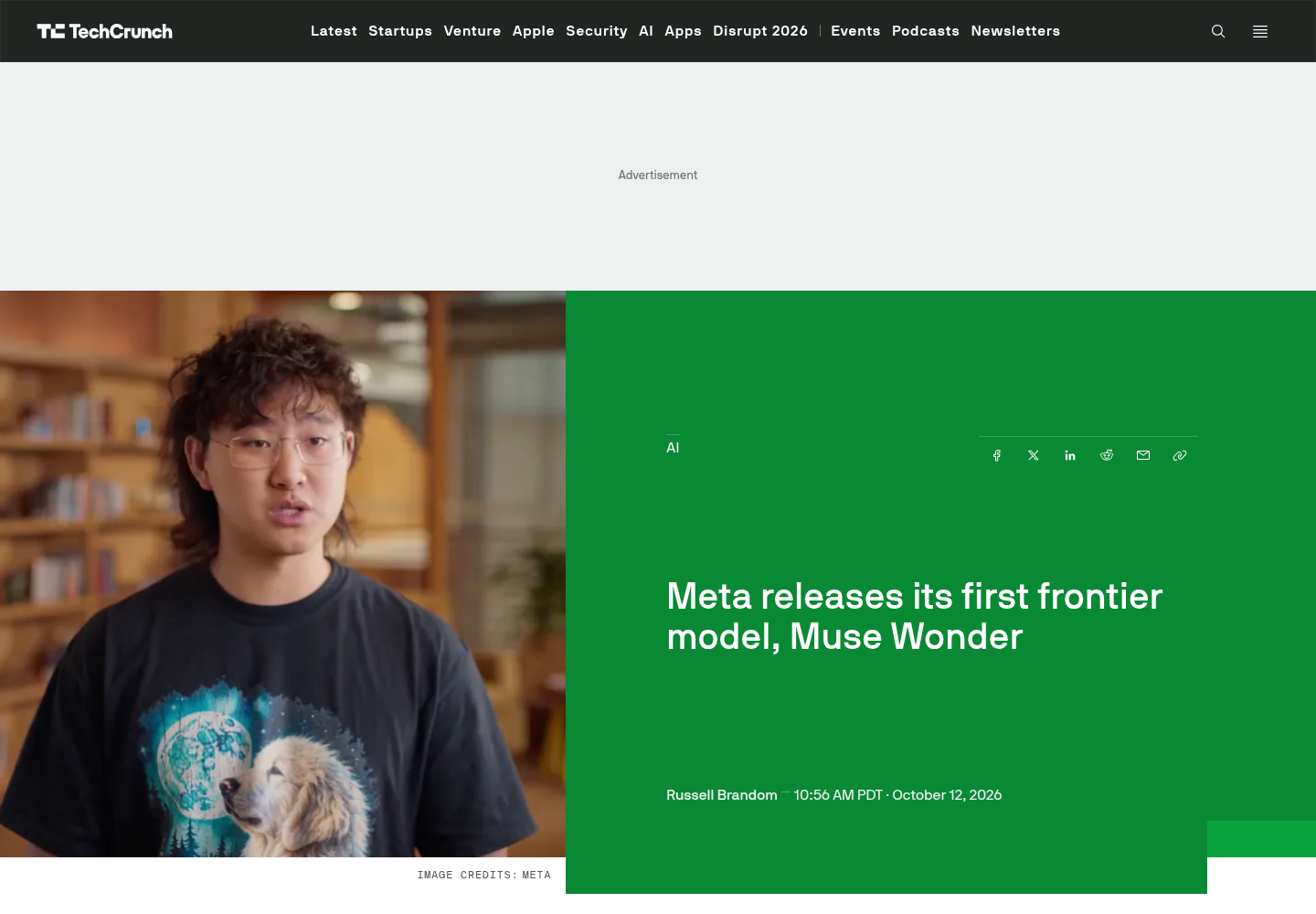
Active memory as the differentiator. Meta placed unusual emphasis on the models’ ability to retain and synthesize user-provided information over extended periods, a capability it calls “active memory.” The company highlighted MemoryBench, a benchmark for continual learning and memory construction. In Meta’s testing, Muse Wonder scores higher on MemoryBench than Fable, Opus, or Astra. “We put a tremendous amount of effort into making sure your model can remember what’s important to you over days, weeks, months, and beyond,” said research scientist Kavya Kopparapu in a launch video.
Infrastructure and investment. The models were trained at Meta’s Prometheus data center in central Ohio, which came online earlier this year. The launch follows Meta’s $14.3 billion investment in Scale AI. CEO Mark Zuckerberg told the Financial Times the company had reached the AI “frontier” and vowed to spend more. Muse is now the most downloaded app in the US, prompting OpenAI to unveil a competing agent tool. Zuckerberg also used the launch to reject calls to slow AI development, underscoring the split among tech executives over AI safety.
What it means for agent operators. For teams running coding agents and model routing, Wonder adds a new frontier option from a major lab at competitive — but not discounted — pricing. The active memory emphasis matters for long-running agent sessions: if Wonder can hold context across days and weeks, it could reduce the compaction and context-loss problems that plague unattended coding lanes. Recent experience with long-running agent sessions shows that compaction degrades task coherence as sessions stretch past a few hours, and a model designed to retain user-specific context could keep unattended overnight lanes on task without requiring frequent context refreshes that burn quota and reset progress. Operators already routing between Claude and GPT models now have a third frontier lane to benchmark against their own task-completion metrics, not just published scores.
The Wonder Full exclusivity to Muse Code subscribers signals Meta is building a vertical stack — proprietary model, proprietary agent, proprietary terminal — a path Anthropic and OpenAI already pursued with Claude Code and Codex respectively. For teams unwilling to subscribe to Muse Code, the API-only Wonder at $4/$20 per million tokens becomes the practical evaluation surface. Fleet operators should profile Wonder against their own coding workloads rather than assuming that Meta’s published benchmark parity with Fable 5.1 and GPT-6 Astra will translate directly to completed-task throughput in their specific agent lanes. Whether Wonder’s benchmark claims translate to real agent throughput on coding workloads remains an open question, but the arrival of a third credible frontier model with a distinct memory architecture gives fleet operators a new lane to profile. The active memory capability in particular deserves testing: if Wonder can genuinely reduce the context-rebuilding overhead that dominates long-running agent costs, it could shift the effective cost-per-completed-task calculation even without a list-price advantage.