Meta Creates Nonvoting Shares to Fund AI as Muse Passes 10 Million Users
Meta creates nonvoting Class C shares to fund AI with trading starting in 2027; Muse passes 10 million users with shopping as top use case and $200+ average purchases.
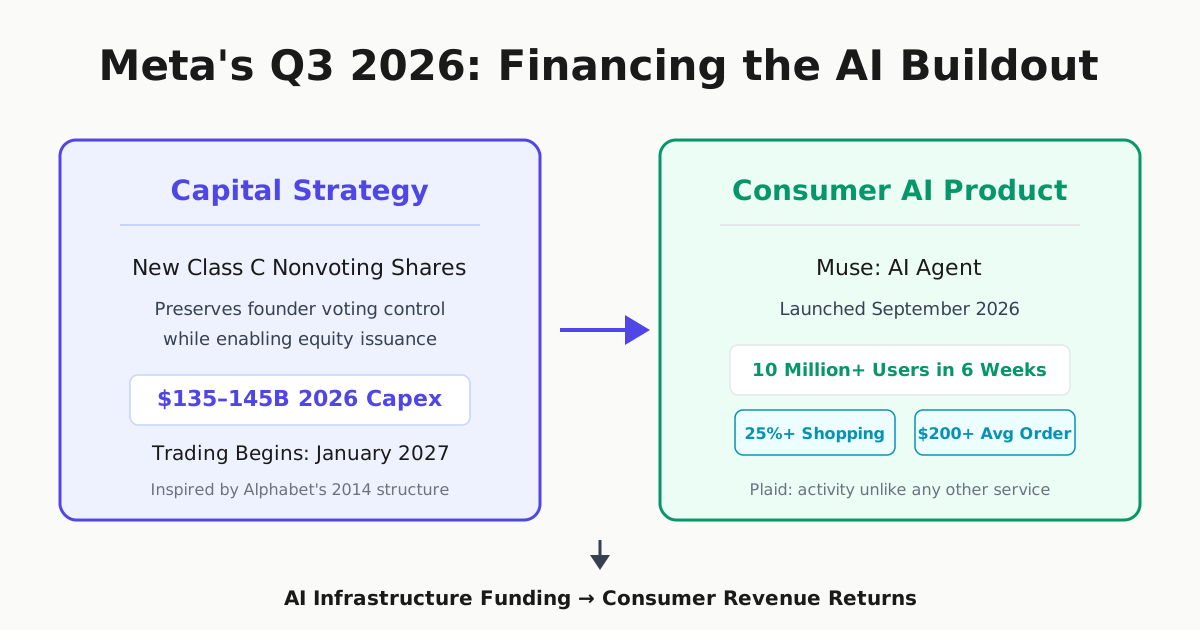
Meta disclosed during its Q3 2026 earnings on Wednesday that it will create a new class of nonvoting shares to finance its expanding AI ambitions, as reported by The Verge, while its AI agent Muse reached 10 million users within six weeks of launch with shopping emerging as the dominant — and surprisingly lucrative — use case, according to earnings call coverage.
A new share class for the AI bill
Meta announced the establishment of Class C common stock, a nonvoting share class whose trading will begin in 2027, with the Wall Street Journal reporting an effective date of January 2027. The structure allows the company to issue new equity for acquisitions, compensation, and infrastructure without diluting Mark Zuckerberg’s voting control. CFO Susan Li said the new shares would “expand our funding tools and give us flexibility to invest behind the unprecedented momentum we’re seeing across every part of our business driven by AI.”
The mechanism mirrors Alphabet’s 2014 introduction of nonvoting shares alongside super-voting stock, which preserved founder control while enabling the company to issue $85 billion in new shares for AI investments earlier this year. Semafor first reported the plan and noted that big tech companies have historically balanced share issuance with buybacks, but as AI capital demands have surged, they have paused repurchases and become net issuers of shares — a shift that risks diluting insider stakes unless structured carefully.
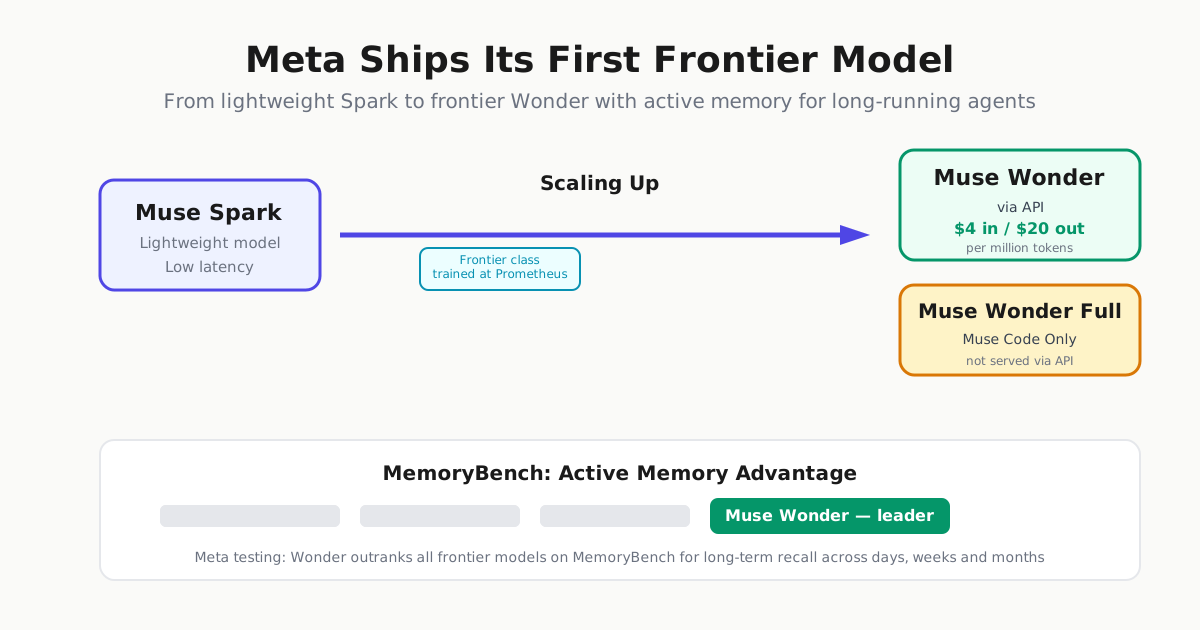
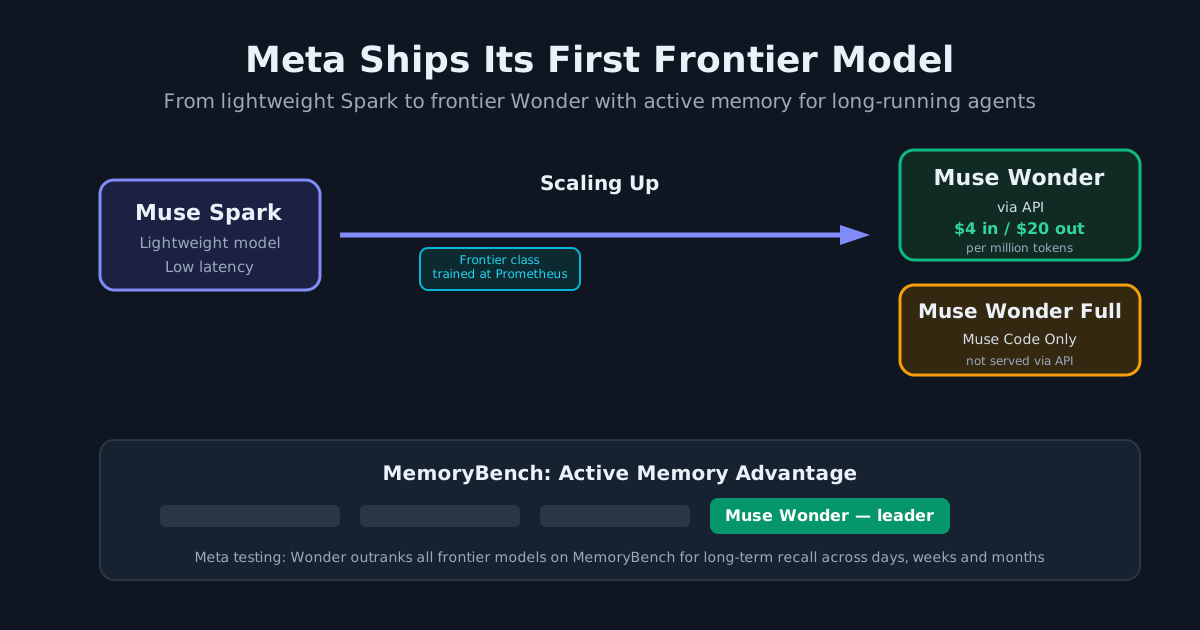
Meta’s capital spending forecast underscores the scale. The company narrowed its 2026 capex estimate to $135 billion to $145 billion, tightening from a previous $130 billion to $145 billion range. The spending funds sprawling data centers, frontier models like Muse Wonder, and the escalating talent war for AI researchers.
Muse finds a revenue lane
On the same call, CEO Mark Zuckerberg revealed that Muse has been adopted by more than 10 million users since its September launch, confirming earlier estimates from market intelligence firm Sensor Tower, as covered by TechCrunch. Approximately 25% of users who set up Muse now use it daily.
The standout metric is commerce. Over a quarter of Muse’s engaged users are shopping through the agent, with an average purchase size above $200. Zuckerberg said Plaid, whose financial connector links Muse to users’ bank accounts, “told us that they hadn’t seen activity like they’re seeing with their connector on any other service before.” Earnings call reporting noted that transaction volumes were so far above expectations that Meta and Stripe had to raise credit limits during the first week.
| Muse Metric | Figure |
|---|---|
| Total users | 10 million+ (6 weeks) |
| Daily active users | ~25% of setup users |
| Users shopping via Muse | >25% of engaged users |
| Average purchase size | $200+ |
| Revenue per user (family of apps) | “Several hundreds of dollars annually” |
| Projected compute efficiency gain | >10x in next year |
Analyst Nick Grous noted that Muse’s $200+ average order value is roughly four times Amazon’s typical $50 basket, suggesting agentic commerce may function as a high-value channel rather than a volume play. Zuckerberg said Muse users already bring Meta “several hundreds of dollars” annually each across its family of apps, and he expects Muse itself to eventually earn even more per user, primarily through fees on shopping transactions. Power users who want access to the most advanced models will also pay subscription fees.
The compute math
Running an AI agent for millions of users is expensive. Zuckerberg acknowledged Muse is “very compute-intensive to run” but projected a more than 10x improvement in cost efficiency over the next year, which would “enable it to be profitable once the revenue lines are at scale.” Meta is building capacity to serve more than a billion people over the next few years.
Zuckerberg also previewed a “Muse network” concept — turning the agent from what he called a “single-player game” into one where “your Muses can work with your friends’ and your families’ [Muses],” and where shopping means “talking to their agent” rather than navigating a website. Beyond commerce, popular uses include email and calendar management, which Zuckerberg said reflects user trust in Muse’s security architecture, including the “Muse Secure VM” for data protection.
What it means
The twin announcements paint a clear picture: Meta is betting the company on AI and structuring its balance sheet to match. The nonvoting share class is designed for sustained, multi-year capital deployment at a scale where even the largest tech companies struggle to self-fund through operating cash flow — a dynamic also visible in OpenAI’s pursuit of a ~$30 billion round ahead of Anthropic’s expected IPO.
Meanwhile, Muse’s early commerce metrics offer the first concrete evidence that consumer AI agents can generate real revenue at scale. With 10 million users within six weeks of launch and average transactions above $200, Muse is shaping up as Meta’s answer to the question every AI lab faces: how do you pay for the infrastructure when the bill runs into the hundreds of billions?
Sources
- Meta to create a new class of shares to fund AI push | The Verge
- Meta says Muse has over 10M users, with shopping a top activity | TechCrunch
- Meta plans nonvoting shares, eyeing more stock sales to fund its AI dreams | Semafor
- Techmeme: Mark Zuckerberg says Muse has drawn 10M+ users since its launch and 25%+ of users are making purchases through the app, with an average purchase size of $200+ (Business Insider)