
Meta Walks Back Terms Language That Experts Read as a License to Scrape News Sites for AI Training
Meta stripped the Commercial Terms clause experts read as a license to scrape news sites for AI training, narrowing it to ads and business products days before it was scheduled to take effect.
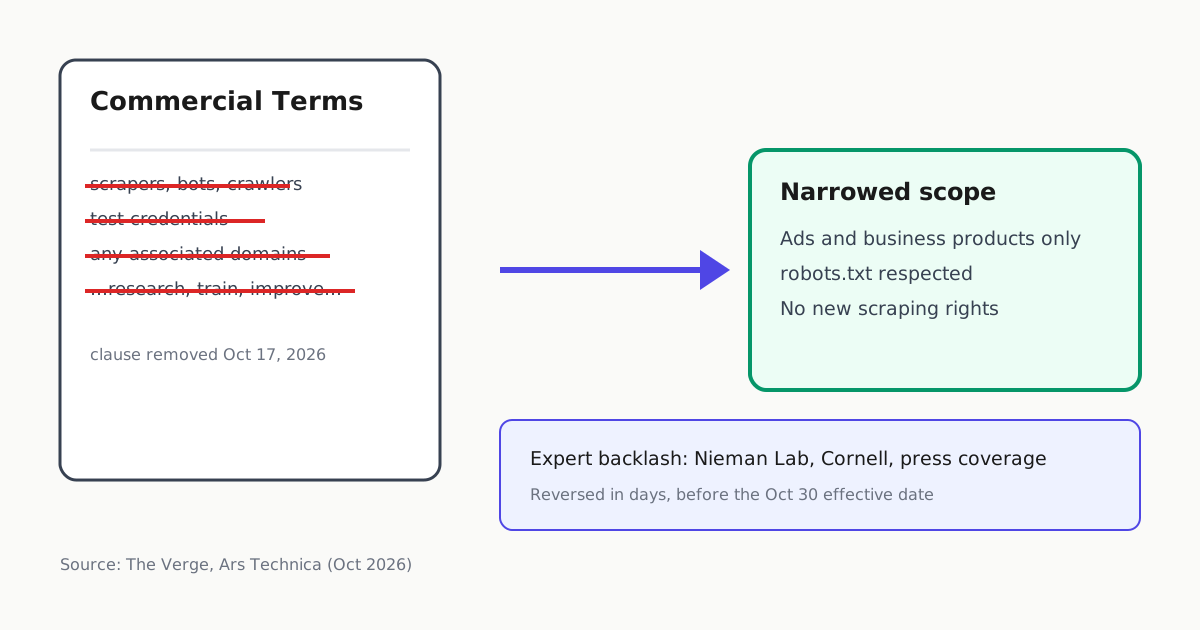
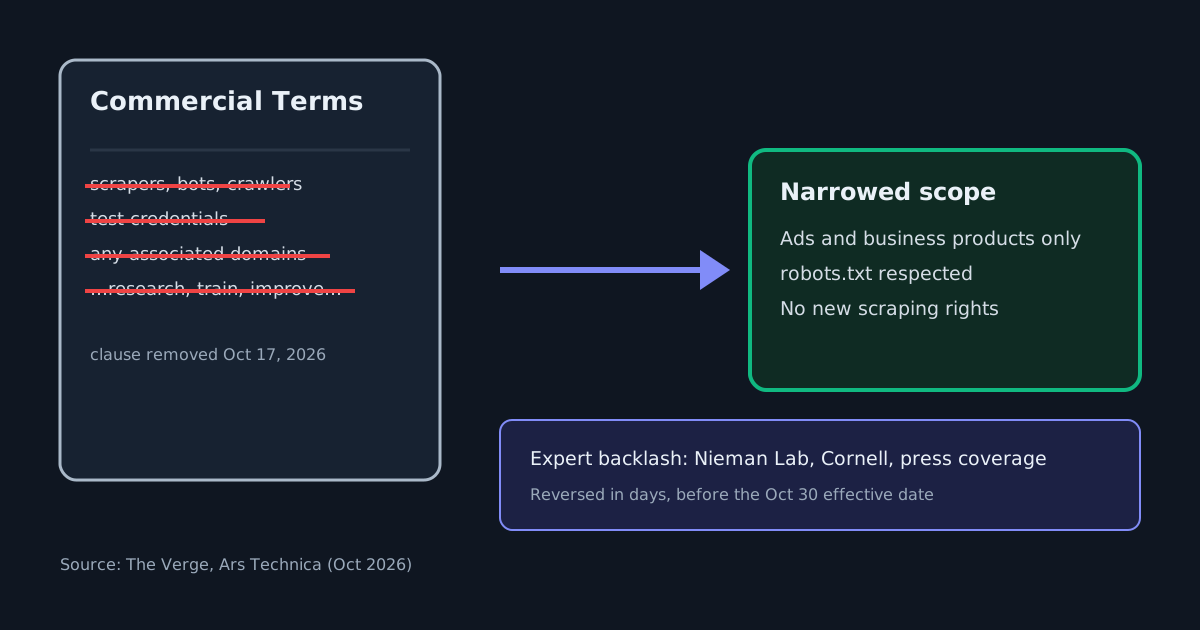
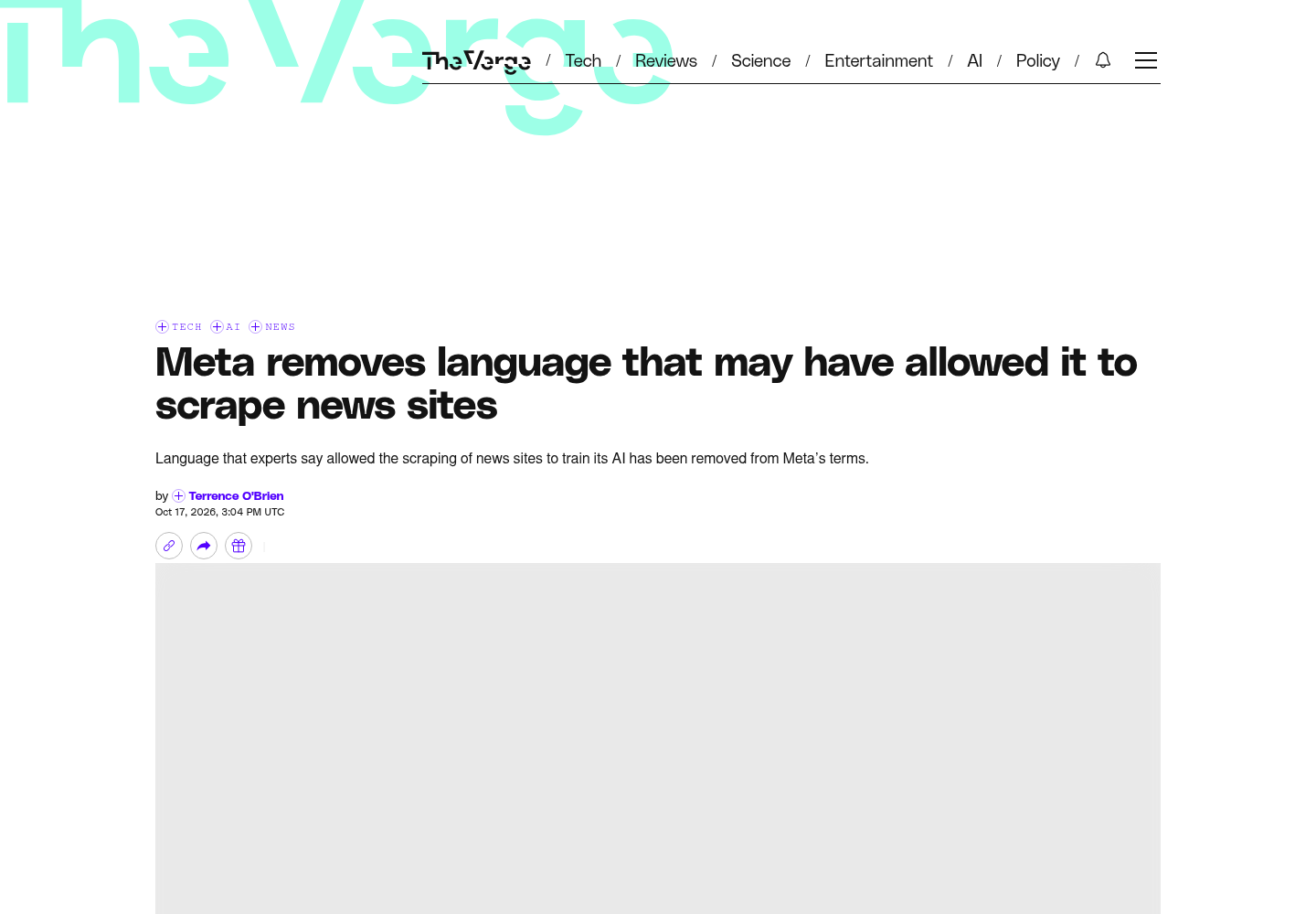
Meta has walked back the most contested piece of its pending Commercial Terms. As The Verge reported on October 17, the clause that legal experts read as a license to scrape websites “associated with” business accounts — including news sites — has been removed from the terms page entirely, days before the update was scheduled to take effect on October 30.
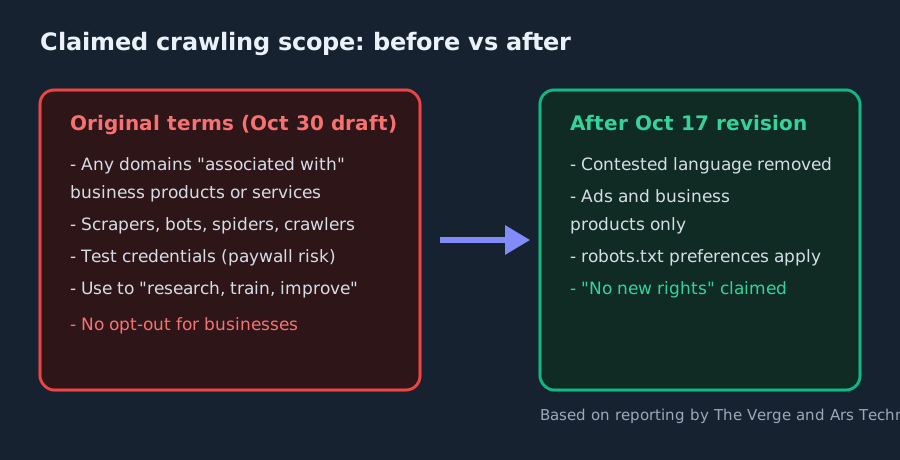
The removed passage stated that Meta “may use any content from such domains, web pages, or URLs to provide, develop, improve, research, train, and maintain the integrity of” its products. In a follow-up statement to The Verge, spokesperson Daniel Roberts said: “We’ve heard you and want to clarify: the crawling terms we consolidated only applied to our ads and business products, and we’ve clarified that in the terms themselves… This is not about scraping news sites, and these updates don’t give us new rights that supersede those preferences.”
The retreat closes — for now — a week in which Meta’s attempt to “streamline” its commercial terms looked to legal experts like a sweeping new data right.
What the original terms said
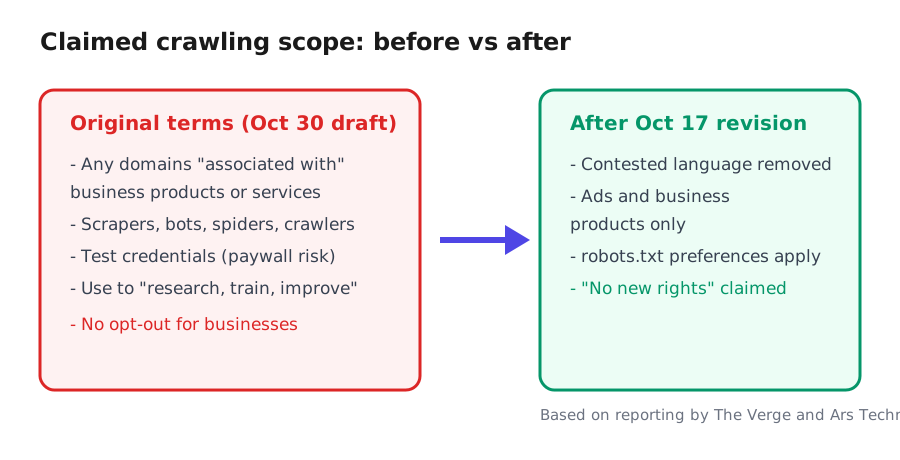
As Ars Technica documented, the update would have required business account holders to let Meta use “automated software (such as web scrapers, bots, robots, spiders, crawlers, and user agents)” — and, notably, to “create test credentials” — to access, index, cache, analyze, collect, retrieve or crawl domains associated with their products or services. There was no opt-out; the terms suggested businesses stop using Meta services rather than accept the crawling.
Two details alarmed publishers and lawyers. First, “test credentials” is machinery for getting past logins and paywalls, language Ars found no precedent for outside a narrow e-commerce seller agreement. Second, the word “train” appeared in a terms-of-service document whose stated purpose was merely to consolidate scattered policies. James Grimmelmann, a professor of digital and information law at Cornell, told Nieman Lab the terms could let Meta “train AI on any content from their sites” and even deploy that content in competition with publishers — access that attorney Matt Topic noted “would likely cost many millions of dollars in a licensing market.”
The stakes are concrete: virtually every news organization operates at least one Meta business account, and publishers are already in court with OpenAI over whether unlicensed AI training is fair use. Meta’s terms could have functioned as a contractual shortcut around that fight regardless of how courts rule.
A walk-back under pressure
Meta’s first response was denial. Communications VP Andy Stone posted that “there is no change to how Meta uses web crawlers” and that the update existed to pull accurate product information from third-party sites for ad recommendations, as aggregated by Techmeme alongside coverage from Ars Technica, The Register, ZDNET, Nieman Lab and others. The News/Media Alliance issued a statement, and the backlash was broad enough that Meta moved from denial to deletion within days.
That sequence matters. Meta first framed the new language as harmless consolidation, then narrowed the terms themselves once experts documented that the wording was broader than any prior policy. Ars Technica reported the consolidated terms were scheduled to kick in on October 30; the Oct 17 edit strips the contested clause while the rest of the update proceeds, and Meta says robots.txt preferences continue to apply.
Why this matters beyond Meta
For anyone operating websites, the episode is a case study in how AI training rights get negotiated through terms of service rather than licensing deals. A clause buried in a business-account contract nearly became a claim to content across the open web — and was reversed only by public expert pressure, not by any change in law.
For AI operators and crawler maintainers, the signal is equally direct: consent boundaries around scraping are now a live reputational and legal battlefield, and ambiguous contractual language will be read against you. It is part of the same broader fight over who decides when an automated crawler may enter: Cloudflare and OpenAI’s discovery pilot for the agentic web is one attempt to make crawler permissions explicit, and sites that sell through Meta’s ecosystem already face attribution plumbing like the Conversions API that binds business accounts to Meta’s surfaces. Meta spent a week learning that a phrase like “associated with your products or services” is not plumbing; it is a rights grab in waiting — even as the company’s broader AI product push continues with releases like Muse Spark Open.
Whether it stays reversed is the open question Ars flagged: if courts affirm fair use for AI training, publishers fear a future terms update could try the same move again with stronger legal footing. For now, the web’s crawl preferences remain governed by robots.txt, and Meta’s quiet claw-back is the second draft of a fight that is not finished.
Timeline of the terms dispute
| Date | Event |
|---|---|
| On or before Oct 15, 2026 | Meta announces Commercial Terms “streamlining,” scheduled for Oct 30, including scraping and “test credentials” language |
| Oct 15–16 | Nieman Lab and legal experts warn the terms could permit scraping news sites for AI training with no opt-out |
| Oct 16–17 | Meta spokespeople deny any change to crawler behavior; News/Media Alliance and wide press coverage follow |
| Oct 17, 2026 | Meta removes the contested language from the Commercial Terms and says it applied only to ads and business products |
A diagram of how the walk-back narrowed the claimed scope:
Sources
- Meta removes language that may have allowed it to scrape news sites | The Verge
- Techmeme: Meta removes ToS language that suggested it could scrape websites “associated with” business accounts, saying it applied only to “ads and business products” (Terrence O'Brien/The Verge)
- Meta may use sweeping new commercial TOS to avoid millions in AI licensing fees - Ars Technica