Cursor Cloud Agents Now Build Interactive Canvases You Share as a Link
Cursor's October 16 update lets cloud agents build interactive canvases teammates open from a link, puts an Environments API into beta, and raises cloud environments to 300 repositories with 5x faster loads.
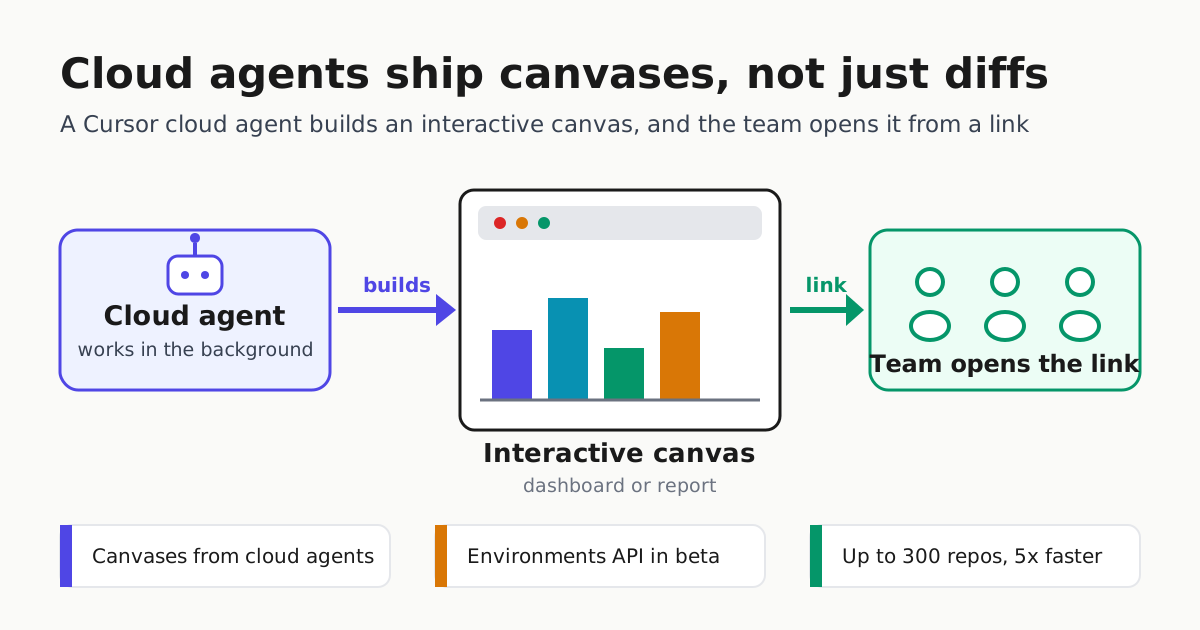
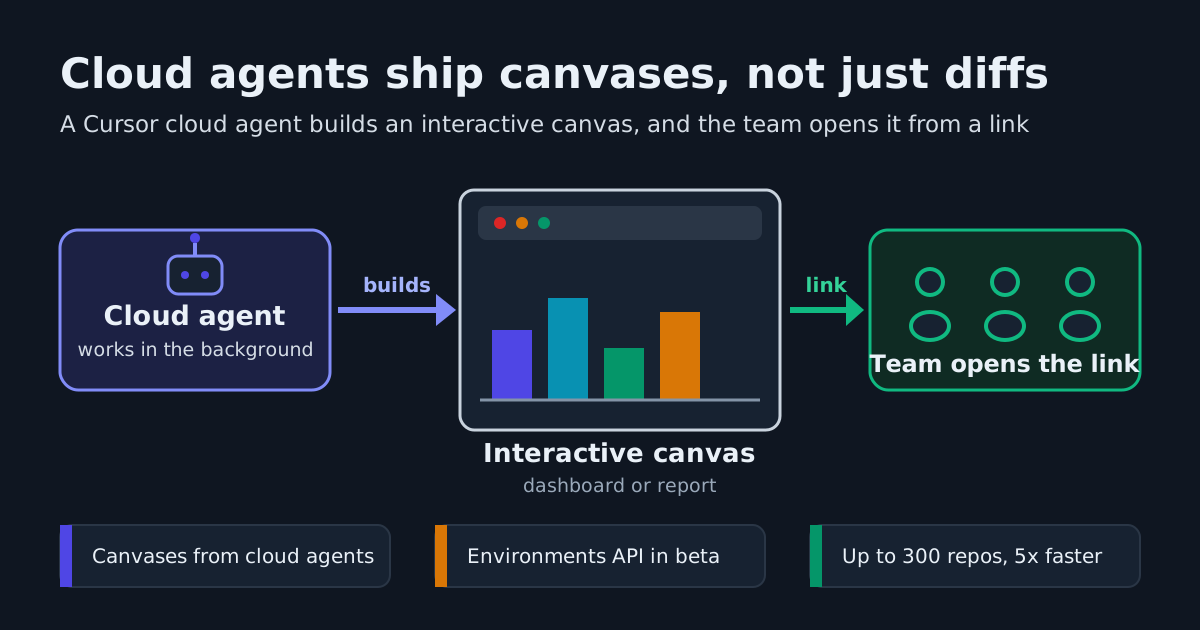
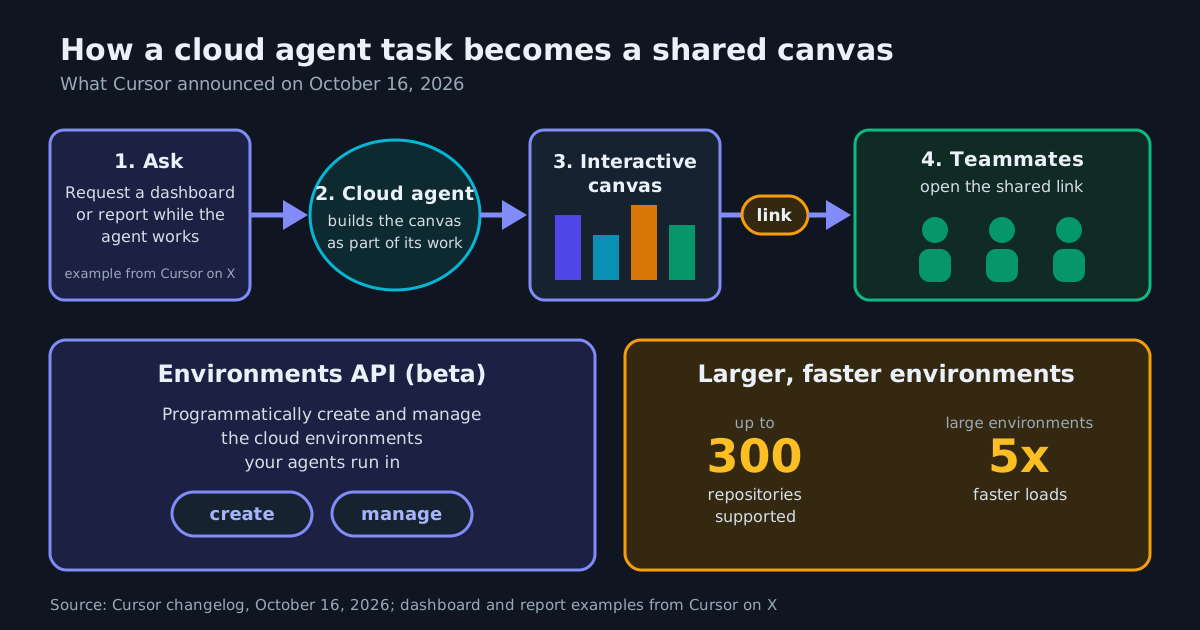
Cursor’s cloud agents can now build interactive canvases while they work, and you hand a finished canvas to teammates by sending them a link. The feature leads the company’s October 16 changelog entry, which also puts an Environments API into beta and enlarges the cloud environments those agents run in.
What shipped on October 16
Three changes landed in one entry:
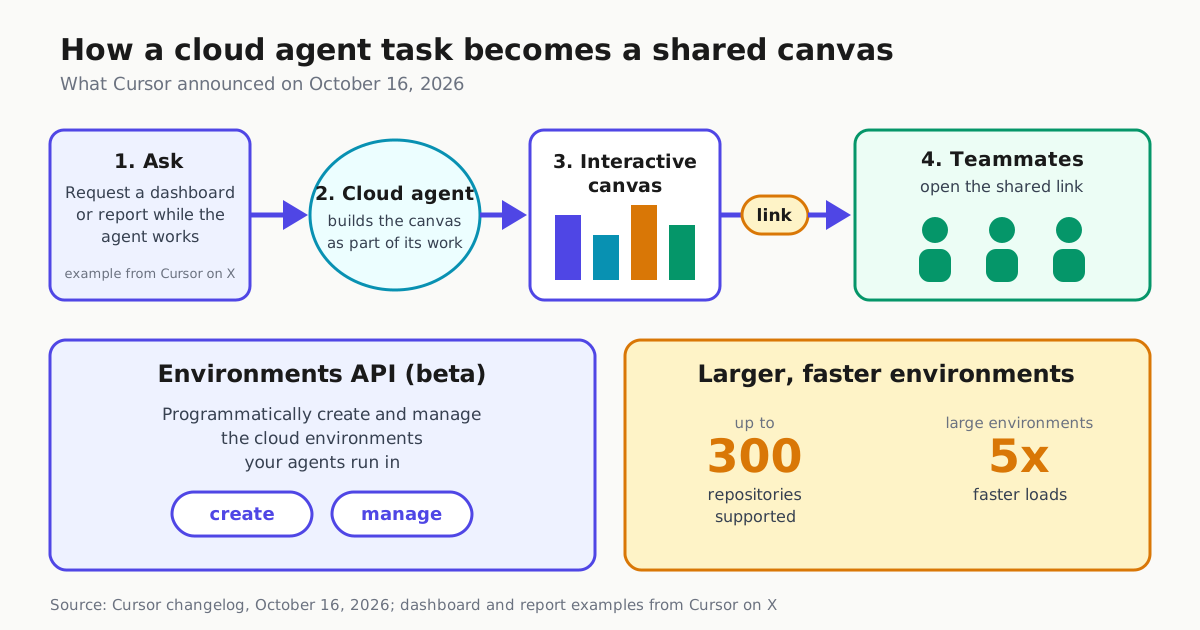
- Canvases from cloud agents. A cloud agent can build an interactive canvas “as part of their work,” and a finished canvas is shared with the team “by sending its link.” The link is the delivery mechanism the announcement names.
- Environments API, now in beta. The API exists to “programmatically create and manage the cloud environments your agents run in.” What “manage” covers beyond creation is not specified in the entry.
- Larger, faster environments. Cloud agent environments now support up to 300 repositories, and large environments load 5x faster.
Cursor’s announcement on X fills in the workflow the changelog implies: “Ask for a dashboard or report while the agent works, then share the finished canvas with your team as a link.” The post went out on the evening of October 16 and showed about 30.9K views when fetched.
| Change | What it does | Status |
|---|---|---|
| Canvases from cloud agents | Cloud agents build interactive canvases during their work; the finished canvas is shared by link | Shipped |
| Environments API | Programmatically create and manage the cloud environments agents run in | Beta |
| Environment scale | Up to 300 repositories per environment; large environments load 5x faster | Shipped |
Why it matters: agent output built for the audience, not the repo
A coding agent’s deliverable has usually been a diff, a pull request, or a log. You can read all three in a browser, but they are artifacts of the development loop: they show what changed in the code, and they make the reader do the work of translating a change into what it means. A canvas inverts that. It is an interactive page — the dashboard or report itself — that a product manager, a support lead, or an executive opens from a link. The value is the form and the audience: the output is interactive, and it is aimed at the team that asked the question rather than only at the engineers who review the code.
It also changes where review happens. If an agent’s dashboard becomes the artifact of record for a task, the reviewer’s job shifts from reading a diff to interrogating a canvas: checking what data went in, what the agent chose to show, and whether the picture matches the work. That is a different skill, and a different checkpoint, than the merge-gate discipline most multi-agent fleets run today.
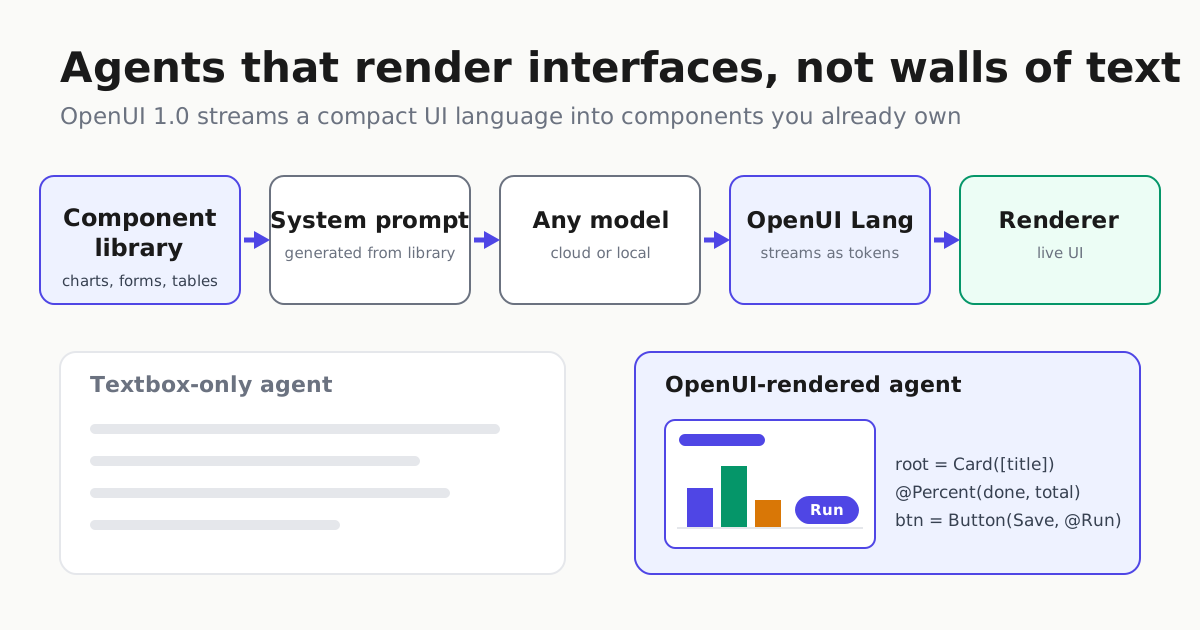
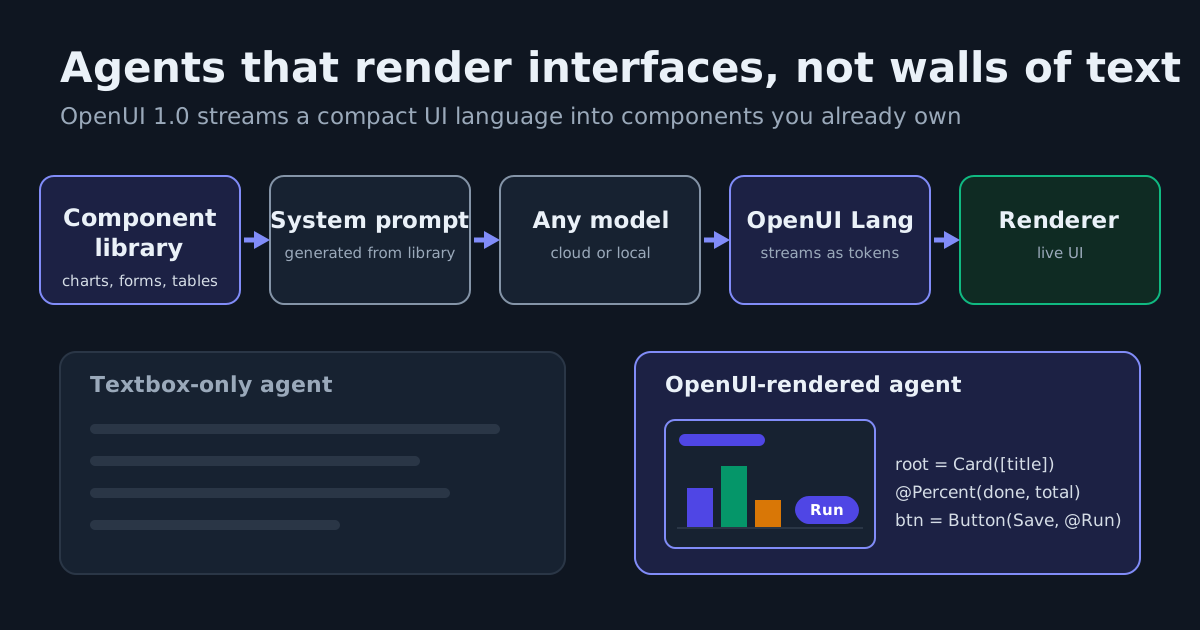
The shift has parallels across the ecosystem. OpenUI 1.0 shipped an MIT-licensed runtime so agent apps render interfaces instead of text; Cursor’s announcement puts the artifact inside its hosted agent product and makes the link the delivery. It is the same pull behind cowork tools and autonomous workspaces: when agents work in the background, the surface they leave behind starts to matter as much as the code.
The quiet half: environments driven from code
The Environments API may matter more over time than the canvases. The changelog gives it one sentence — “programmatically create and manage the cloud environments your agents run in” — and leaves the surface undocumented. What that sentence permits is scripting: if the API exposes environment definitions, they could live in version control next to the work, and standing up a lane for a new service could become an API call rather than a click-through. Those are possibilities to test against the API’s documentation, not shipped guarantees; the announcement does not describe tearing environments down, importing definitions, or what the endpoints are.
The scale numbers are the enabler. An environment that spans up to 300 repositories can cover a real dependency graph instead of a curated subset, and 5x faster loads on large environments make that span usable day to day.
None of this is isolated. The changelog index shows the line Cursor has been building all fall: Projects with coordinator agents on September 10; Rollouts and Security Review bots on September 23; iOS remote control of local agents on October 6; and the Origin app marketplace, open to public submissions, on October 13. Canvases are the output side of that stack; the Environments API is the control side. Anyone tracking who owns the coordinator in Cursor Projects should read the API as the next piece of the same question.
What to verify before you rely on it
- Link governance. The entry says to share a canvas by sending its link but does not describe who can open one or how access is revoked. Before a canvas carries internal data, check the sharing model in your own tenant.
- Beta semantics. The Environments API is explicitly beta. Expect the surface to change, and pin anything you build against it.
- Canvas scope. Cursor’s text confirms interactive canvases built during agent work, with dashboards and reports as the named examples on X. Live data bindings, recipient editing, and permissions are not described in the announcement; treat them as unknown rather than implied.
The immediate move is small: next time a cloud agent task produces a report-shaped answer, ask for a canvas and send the link. The structural move is bigger: put the Environments API on your infrastructure roadmap now, while its shape is still settling.