ChatGPT and Codex Move to One Shared Token Allowance in December: What Draws It Down and the Three Documented Ways Out
OpenAI will pool one token allowance across ChatGPT and Codex on Plus, Pro and Business from December. What the Help Center documents, and how to prepare.
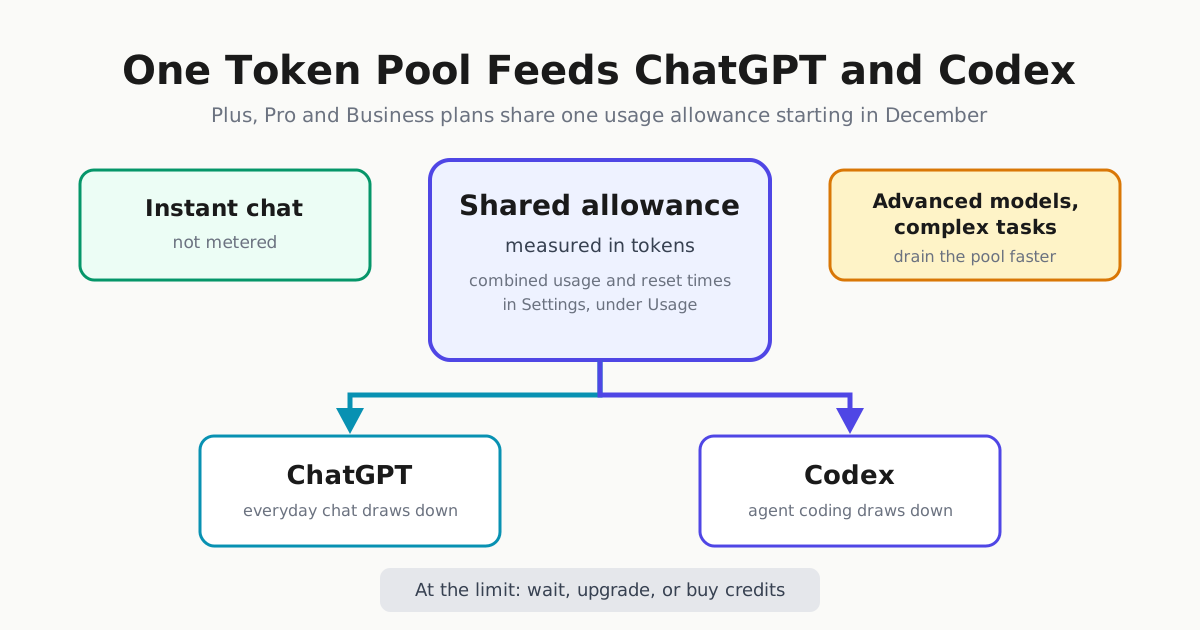
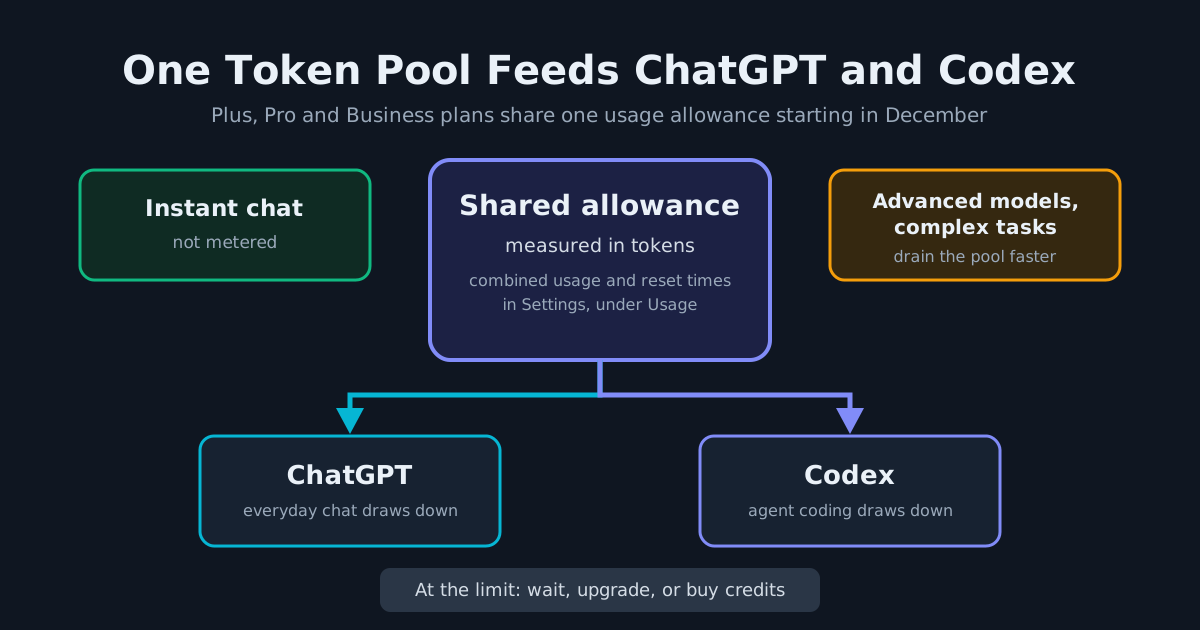
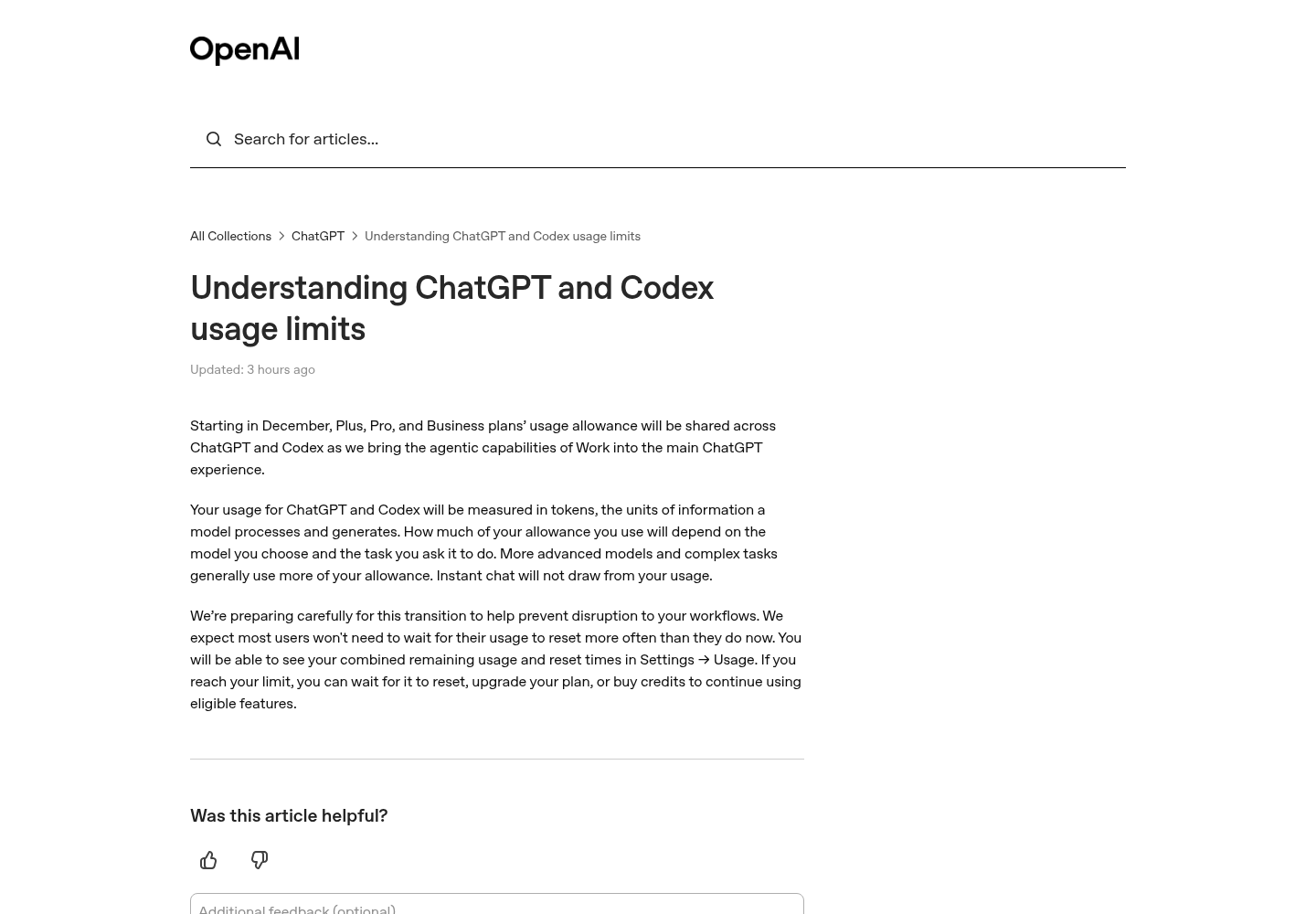
Starting in December, one balance will pay for both your ChatGPT chats and your Codex agent runs. OpenAI confirmed the change on its Help Center page Understanding ChatGPT and Codex usage limits, which showed an Updated stamp of October 31, 2026 when captured during reporting. The framing matters: the shared allowance arrives “as we bring the agentic capabilities of Work into the main ChatGPT experience.”
For developers and teams who run Codex on Plus, Pro or Business, the consequence is direct. Coding tokens and chat tokens come out of the same allowance, so a heavy afternoon of agent work competes with every ordinary question asked in the chat window. OpenAI published no allowance numbers, so the only reliable capacity-planning input is your own measured burn.
What the page actually documents
The Help Center article is short, and every mechanic worth planning around is in it:
- One shared allowance. “Starting in December, Plus, Pro, and Business plans’ usage allowance will be shared across ChatGPT and Codex.”
- Tokens are the unit. Usage “will be measured in tokens, the units of information a model processes and generates.”
- Burn varies by model and task. “More advanced models and complex tasks generally use more of your allowance.”
- Instant chat is exempt. “Instant chat will not draw from your usage.”
- One dashboard. Combined remaining usage and reset times will appear in Settings, under Usage.
- Three options at the limit. Wait for the reset, upgrade your plan, or buy credits to continue using eligible features.
OpenAI also sets an expectation: “We expect most users won’t need to wait for their usage to reset more often than they do now.” Treat that as a forecast, not a guarantee. It ships with no token figures, no per-plan sizes and no reset cadences.
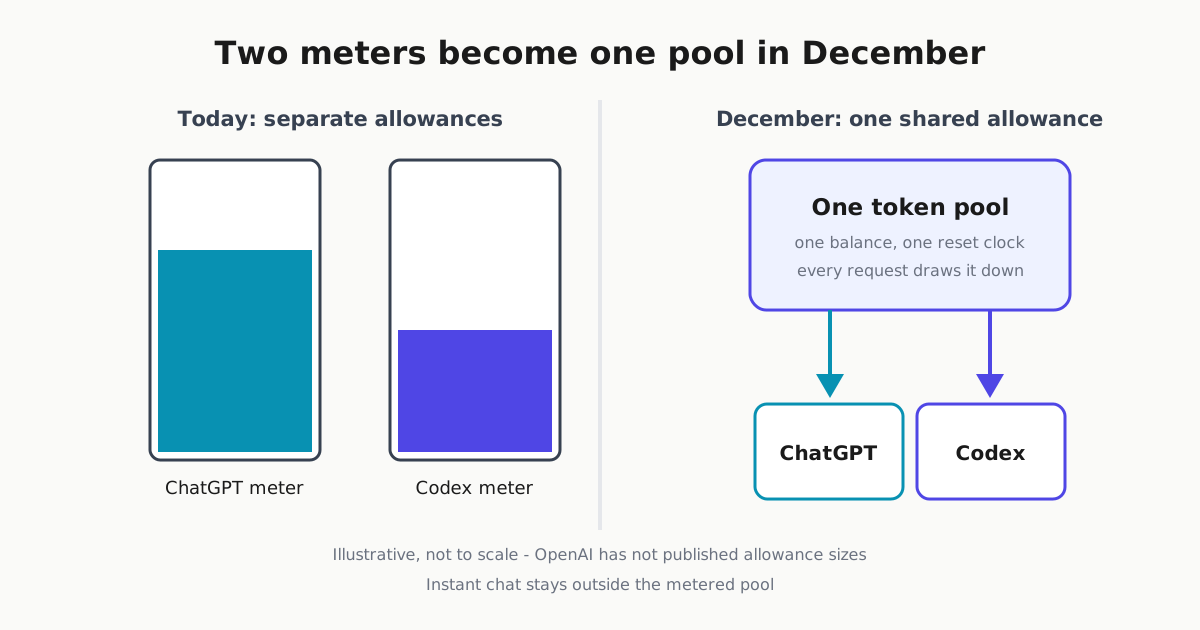
Two meters become one
Before December, a plan effectively carries two budgets: one for chat, one for coding. From December, both draw on a single token pool with one reset clock, and Instant chat stays outside the meter.
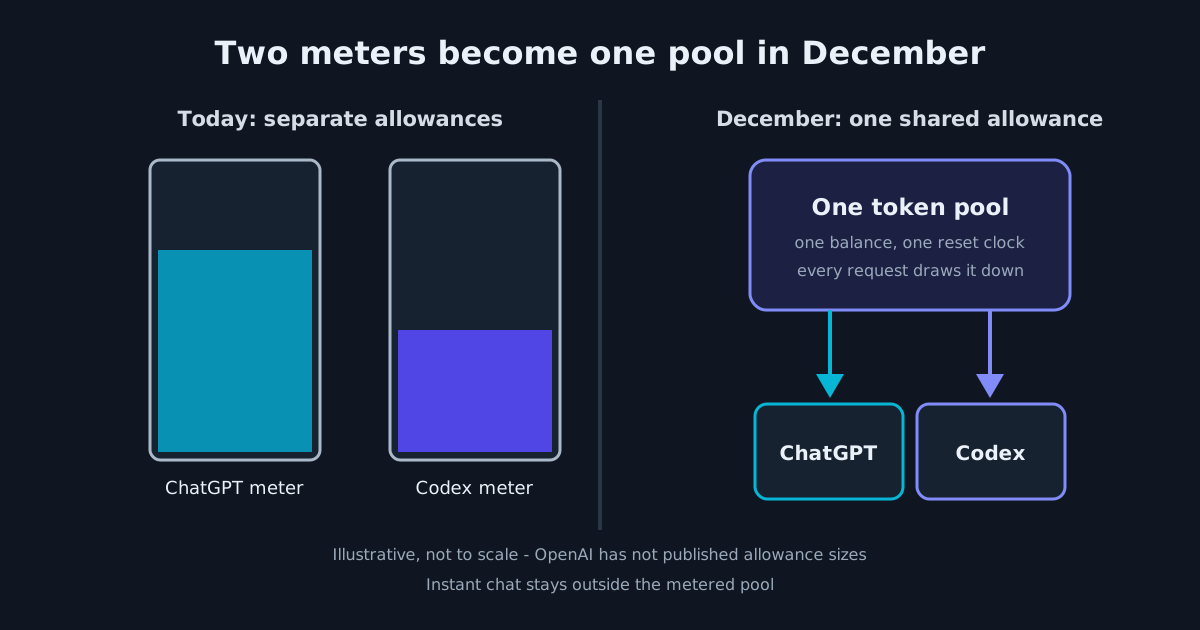
The operational change is not what Codex can do. It is who else drinks from the same meter: the number in Settings now moves whether the spend came from an agent refactor or a lunchtime brainstorm. If you already run several lanes against one login, the parallel-sessions usage discipline now applies across chat and coding at once.
What draws the shared pool down
| Input | What OpenAI says | Planning consequence |
|---|---|---|
| Model choice | Advanced models “generally use more of your allowance” | Reserve heavier models for work that needs them |
| Task complexity | Complex tasks “generally use more” | Long agent runs with many tool calls are the expensive shape of work |
| Instant chat | “will not draw from your usage” | Anything that qualifies is free headroom after the merge |
| Visibility | Combined usage and reset times in Settings, under Usage | Check it before launching overnight or batch agent jobs |
The three documented ways past the limit
| Option | Documented behavior | Tradeoff |
|---|---|---|
| Wait for reset | Reset times are visible in Settings, under Usage | Free, but idle time lands mid-flight |
| Upgrade plan | Listed as an option at the limit | Immediate relief at a higher fixed cost |
| Buy credits | “buy credits to continue using eligible features” | Variable cost, and only eligible features continue |
Credits now have a documented destination
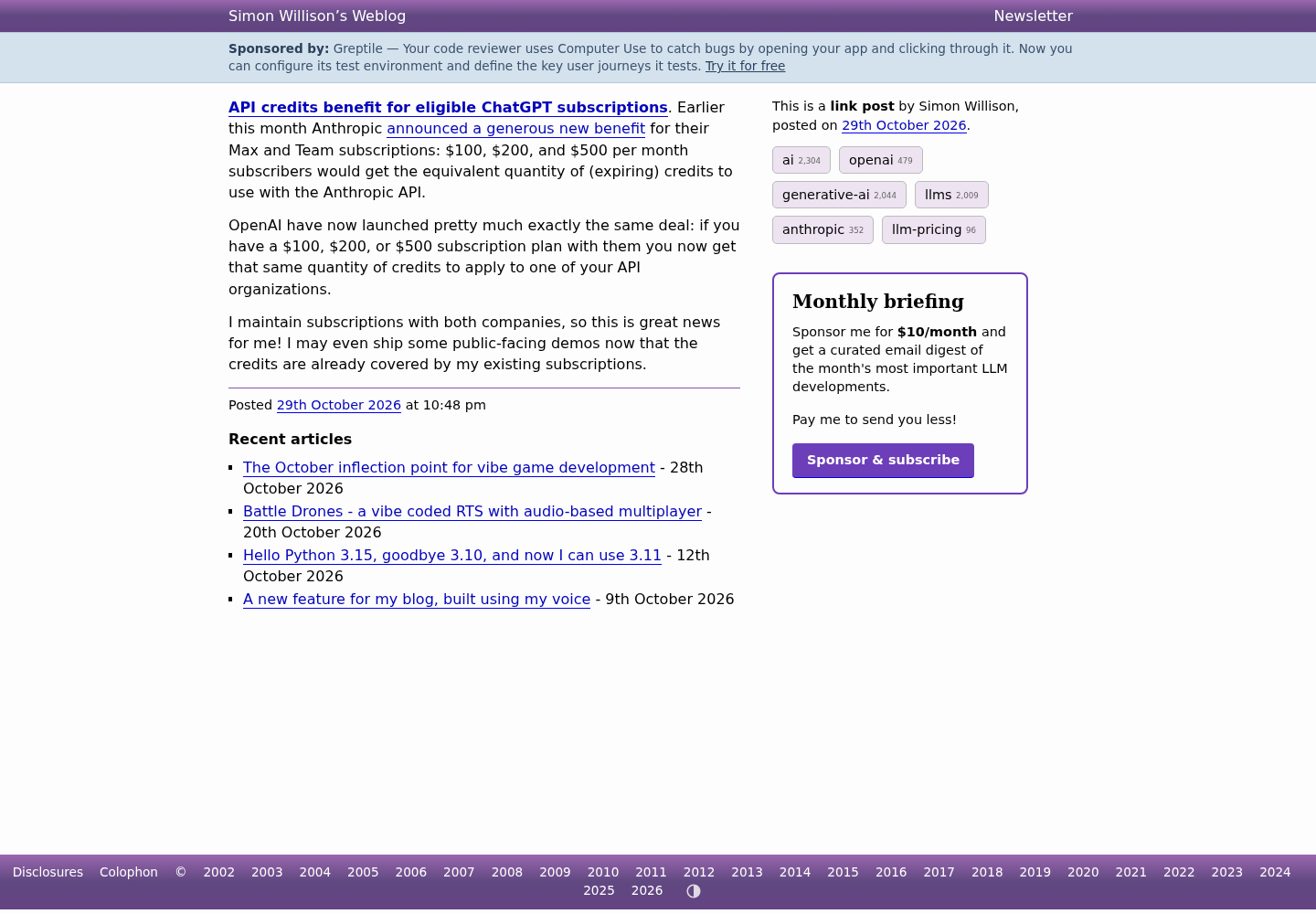
The third option gained concrete backing two days before the announcement. On October 29, Simon Willison documented that OpenAI launched an API credits benefit for eligible ChatGPT subscriptions, matching Anthropic’s earlier move: subscribers on the $100, $200 and $500 plans receive that same quantity of credits to apply to one of their API organizations. Willison’s takeaway — that he “may even ship some public-facing demos now that the credits are already covered” — sketches the post-December shape: a subscription allowance for interactive work, credits for overflow.
Do not over-join those dots. The Help Center page does not say what credits cost in December, which features they unlock, or whether the subscription credits benefit applies to Codex overflow at all. The credits-versus-tokens meter distinction is worth writing down before your first overflow.
Resets and the multi-account chatter
One adjacent signal worth watching without over-reading: on October 31, the practitioner posting as Tibo (@thsottiaux) on X noted that switching between multiple ChatGPT accounts is now easy on mobile and coming to desktop, teasing “resets… banked… do with this what you may.” That post is commentary, not documentation. Nothing in it verifies how banked resets or multiple accounts will interact with the December pool, and OpenAI’s page mentions neither. Keep the reset-ledger habit, and do not plan December capacity around social hints.
What to do before December
- Baseline November. Record how much of your month goes to Codex versus chat. OpenAI publishes no numbers, so your own split is the only before-and-after comparison you will get.
- Sort your chat traffic. Instant chat is excluded from the allowance, so anything that can live there is free capacity after the merge.
- Re-run your tier math. Instead of a chat budget plus a coding budget there is one pool. Measure a representative week of both, then check whether the combined load fits your tier — the ChatGPT Pro Codex tier-picker method still applies, fed with combined demand.
- Choose the overflow policy in advance. Decide now whether the answer to a drained pool is wait, upgrade or credits.
- Confirm pool scope after cutover. The page does not say whether the Business allowance is measured per member or across a workspace. Check Settings in December before making capacity promises to a team.
Nothing here changes what Codex can do. It changes what agent work costs against your plan, and it puts that cost on the same meter as everything else — which is why a baseline, a traffic sort and a pre-chosen overflow policy belong in your November, not your December.
Sources
- Understanding ChatGPT and Codex usage limits | OpenAI Help Center
- Tibo on X: "Day 26/ You can now easily switch between multiple accounts on mobile, and coming soon to desktop too. Next two days will be resets… banked… do with this what you may 👀. https://t.co/iQxsqbuk0f" / X
- API credits benefit for eligible ChatGPT subscriptions