Nvidia Stops Shipping Licensed AI Chips to China and Guides to Zero China Data Center Revenue
In its first earnings since Jensen Huang resigned, Nvidia's Q4 outlook assumes no China data center compute revenue, and interim CEO Colette Kress said licensed Hopper shipments to China have stopped.
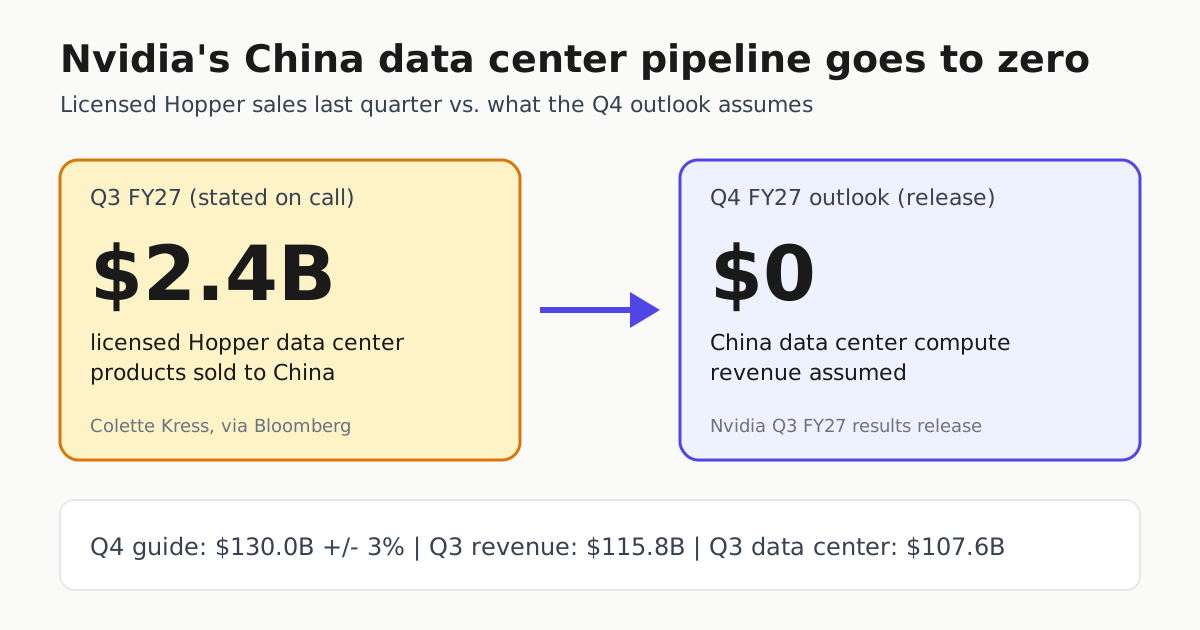
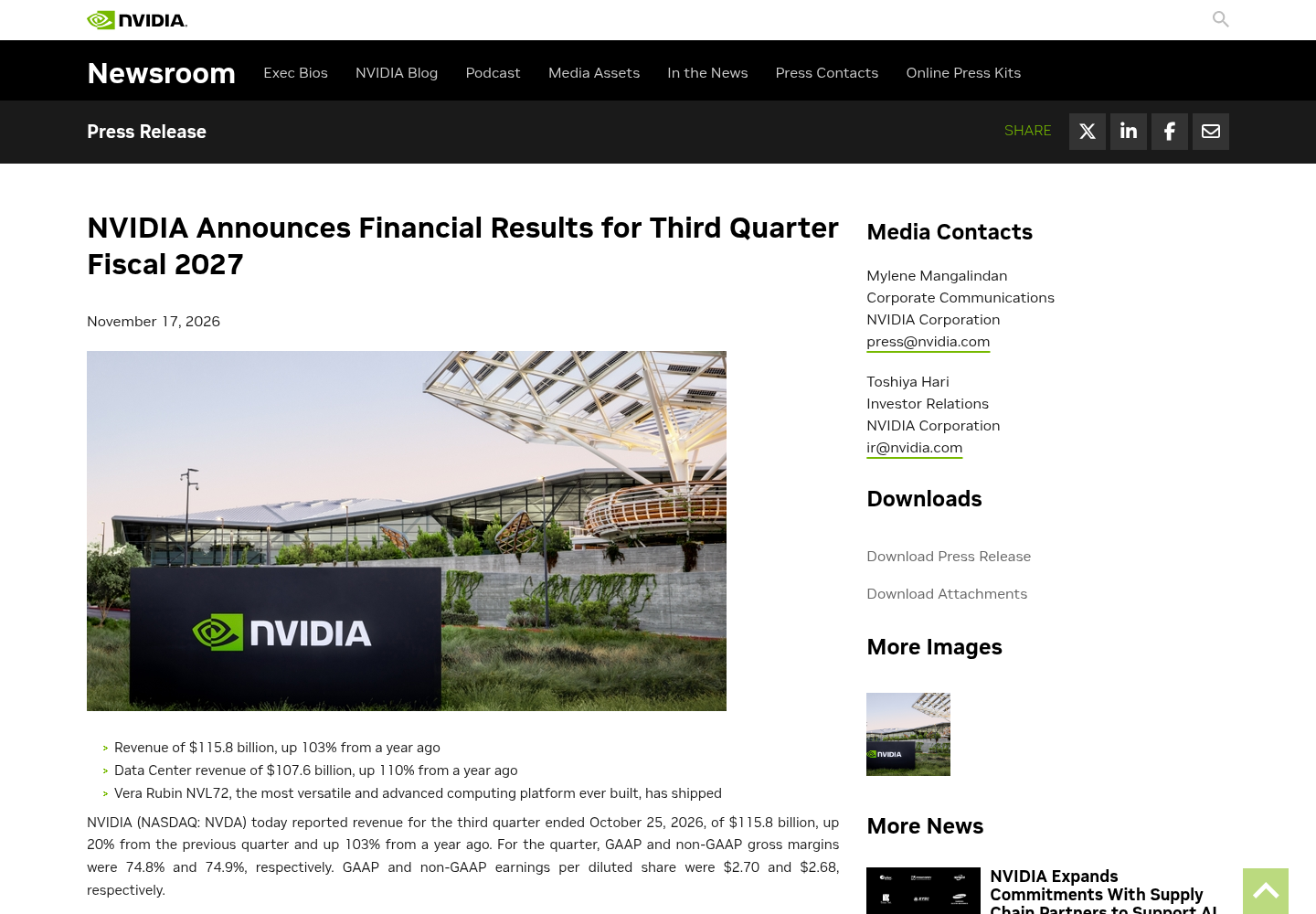
Nvidia’s first earnings report since Jensen Huang resigned set records, but the line that matters most for the AI supply chain is about China. The company’s official third-quarter fiscal 2027 release guides fourth-quarter revenue to $130.0 billion, plus or minus 3%, and states: “NVIDIA is not assuming any Data Center compute revenue from China in its outlook.” The same wording appears in the press release exhibit filed with the SEC.
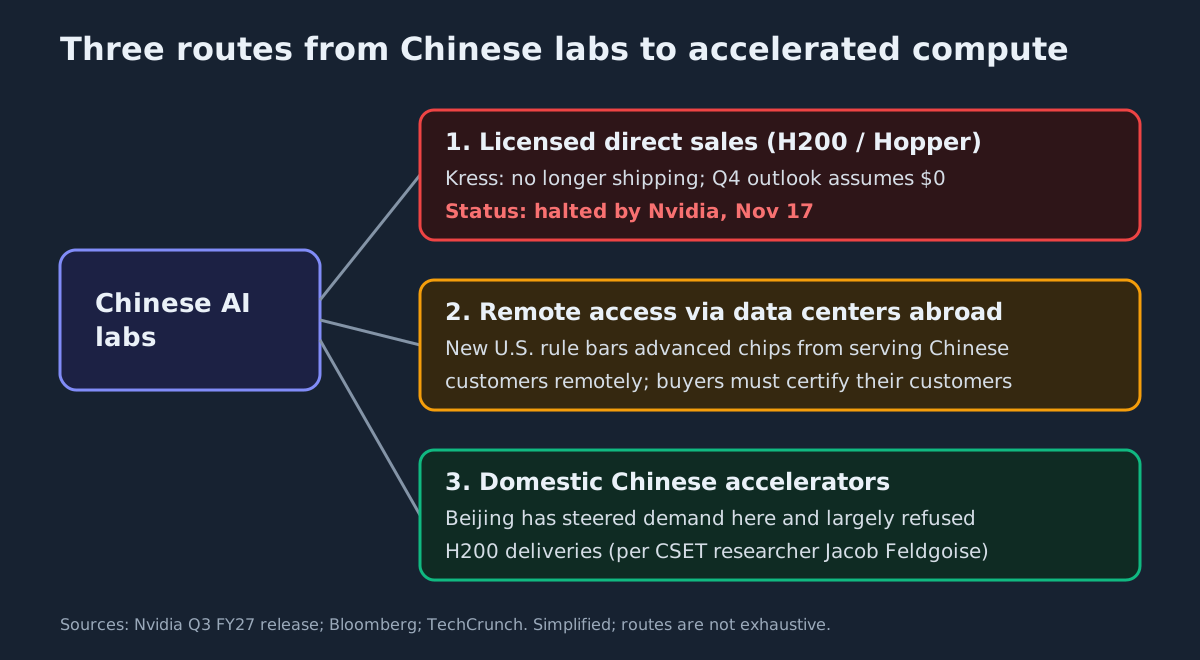
On the analyst call, interim CEO Colette Kress went further. Nvidia sold $2.4 billion of licensed Hopper data center products to China in the quarter, she said, but “guidance does not have any licensed Hopper data center products included, and we are no longer shipping licensed Hopper data center products to China,” Bloomberg reported.
The sources say different things, so the distinction matters. The zero-China assumption is a written forecast in a document Nvidia filed with regulators. The shipping halt comes from Kress’s spoken remarks on the call, as reported by Bloomberg and TechCrunch. The release does not say “no longer shipping,” and none of the sources says whether the halt is permanent.
What the numbers show
| Q3 FY27 (reported) | Q4 FY27 (outlook) | |
|---|---|---|
| Total revenue | $115.8B | $130.0B ± 3% (includes an extra week) |
| Data Center revenue | $107.6B | Not broken out |
| Licensed Hopper data center sales to China | About $2.4B (Kress, on the call) | $0 assumed |
In our calculation, $2.4 billion is about 2.2% of last quarter’s data center revenue. That is too small to change Nvidia’s growth story, and the company is not presenting it that way. TechCrunch’s earnings coverage notes that Q3 revenue beat Nvidia’s own $108 billion guidance. Kress also said Nvidia is raising its fiscal 2028 outlook to about 75% year-over-year growth, up from 70%. A one-quarter loss of China revenue matters less here than what it says about policy: the world’s main AI accelerator supplier now plans as though China has no data center compute business for it.
The end of the H200 pathway
The stopped shipments were the product of an unusual arrangement. TechCrunch reports that Huang and President Donald Trump brokered the H200 deal. The chips went through the U.S. so the government could collect a 25% tariff. China hawks opposed the deal because it gave Chinese labs compute. Huang defended it publicly, saying that conceding the Chinese market would be “a disservice to our country.”
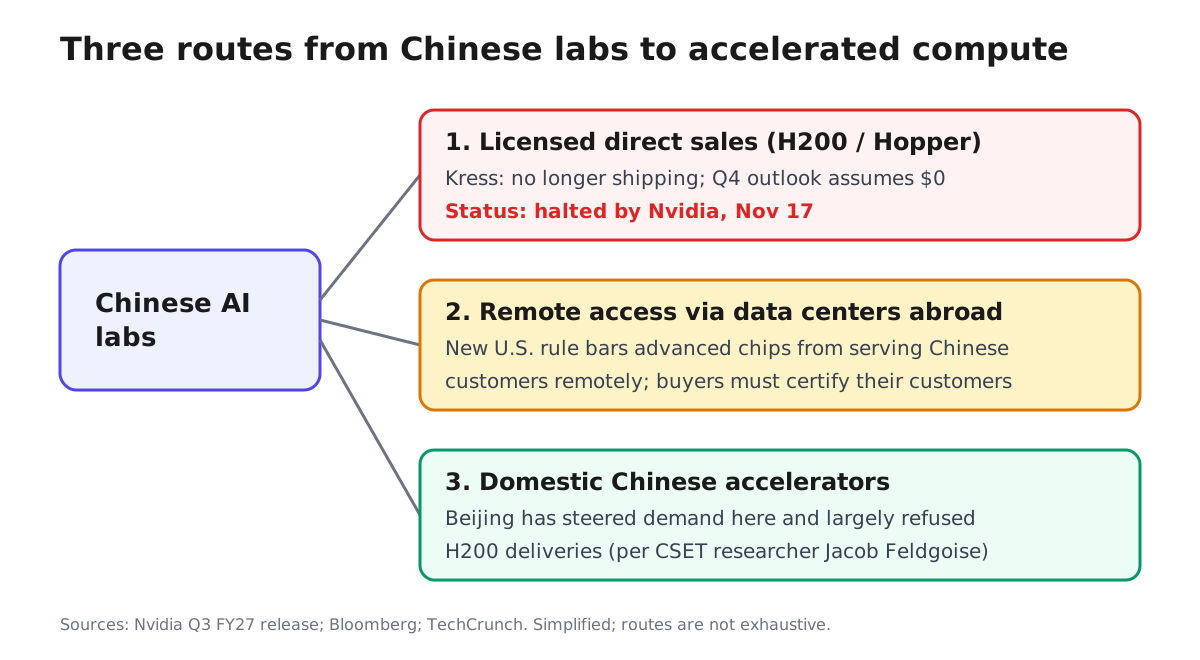
The channel was already shrinking. Jacob Feldgoise of Georgetown’s Center for Security and Emerging Technology told TechCrunch that China had largely refused delivery of H200s because Beijing prefers to build demand for domestic chips. Kress’s statement ends Nvidia’s side of a trade that Beijing had already been holding back.
The decision also came with two other changes. On the same day, Nvidia’s board set up a national security and export control oversight committee. A day earlier, new U.S. rules barred advanced American chips from foreign data centers that serve Chinese customers remotely. TechCrunch cites a Jefferies forecast that those rules could cut $44 billion to $62 billion from Nvidia’s data center revenue next year. Kress said the backlog for chips such as Vera Rubin means the rules will have no impact on top-line revenue. Investors will be able to check that claim against the next few quarters.
Why it matters beyond Nvidia’s results
For Chinese labs, both outside routes are narrowing at once. TechCrunch reports that all of China’s leading AI models show evidence of training on Grace Blackwell chips, which cannot be exported to China. That training may have happened in data centers outside China. Under the new rules, export control attorney Dan Fisher-Owens told TechCrunch, large training data centers that want to buy Nvidia chips will have to certify that they are not serving Chinese customers. With licensed direct sales stopped and offshore rental restricted, domestic accelerators become the main remaining option.
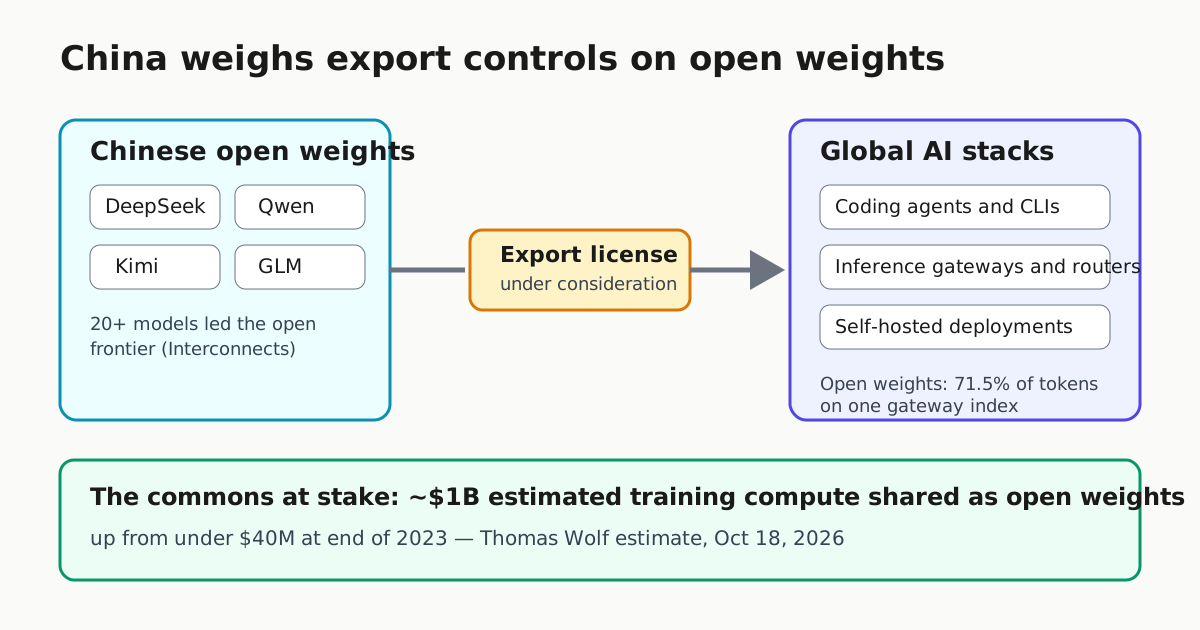
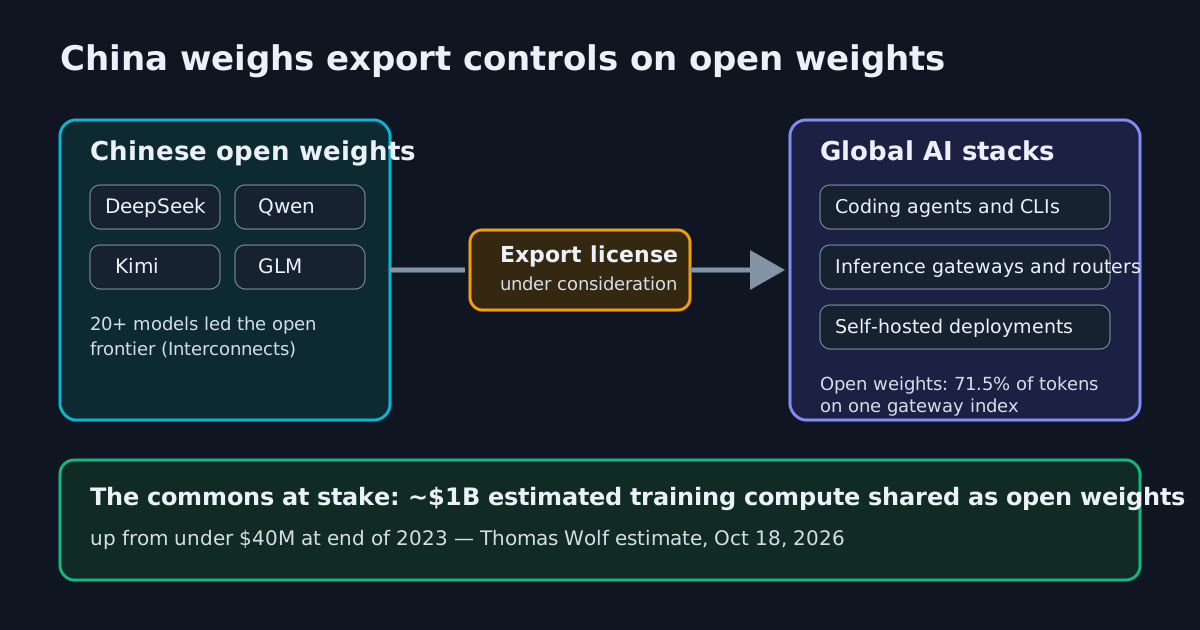
For users of Chinese open-weight models, compute is now the main variable to watch. Nothing in this evidence shows that any model release has slowed. But the open-weight models many teams rely on depend on compute that has just become harder to get. That is a risk to factor into planning, not a reason to switch now. Our earlier look at what China’s own export-control debate means for the open-weight commons covers the other side of this pressure.
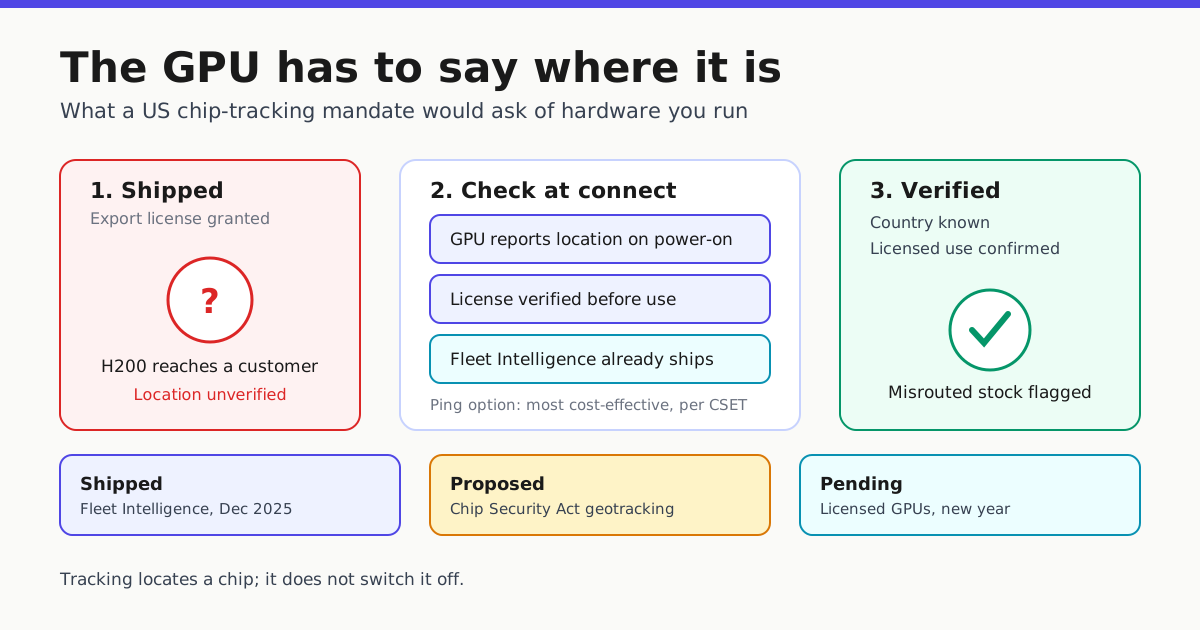
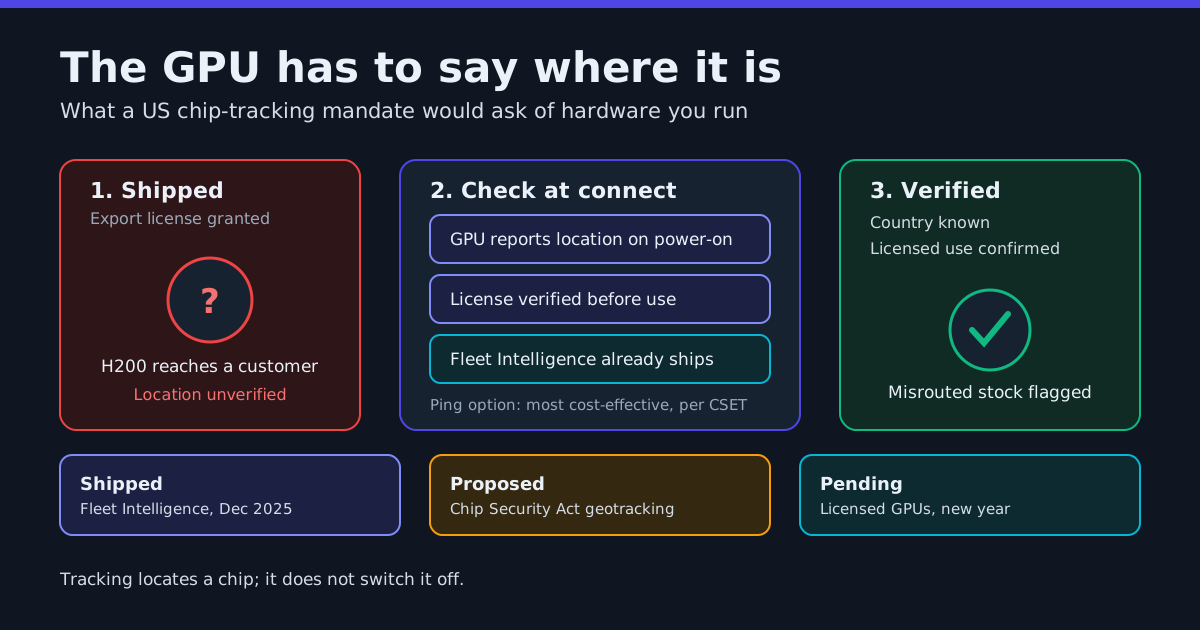
For data center operators and GPU buyers outside China, compliance is now part of sales. TechCrunch says Nvidia could lose potential customers in Singapore, Malaysia, Thailand and Indonesia. Operators that cannot certify their customer base may turn to other chips. This adds to the tracking and attestation pressure we covered in Congress’s inquiry into chip location.
Nvidia’s strategy after Huang
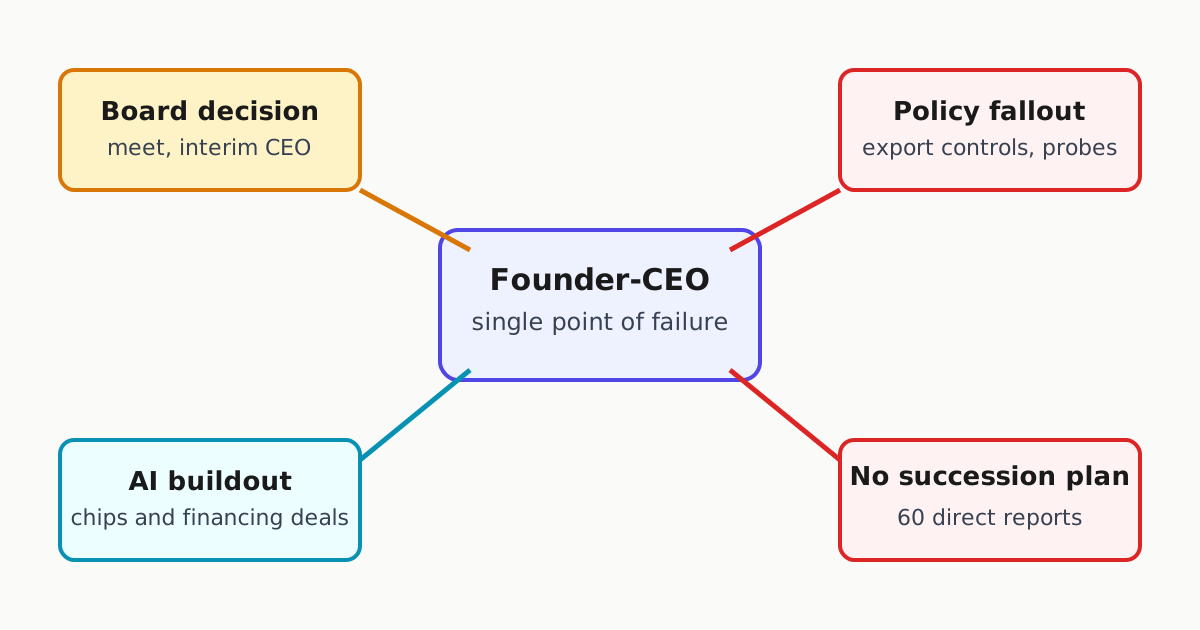
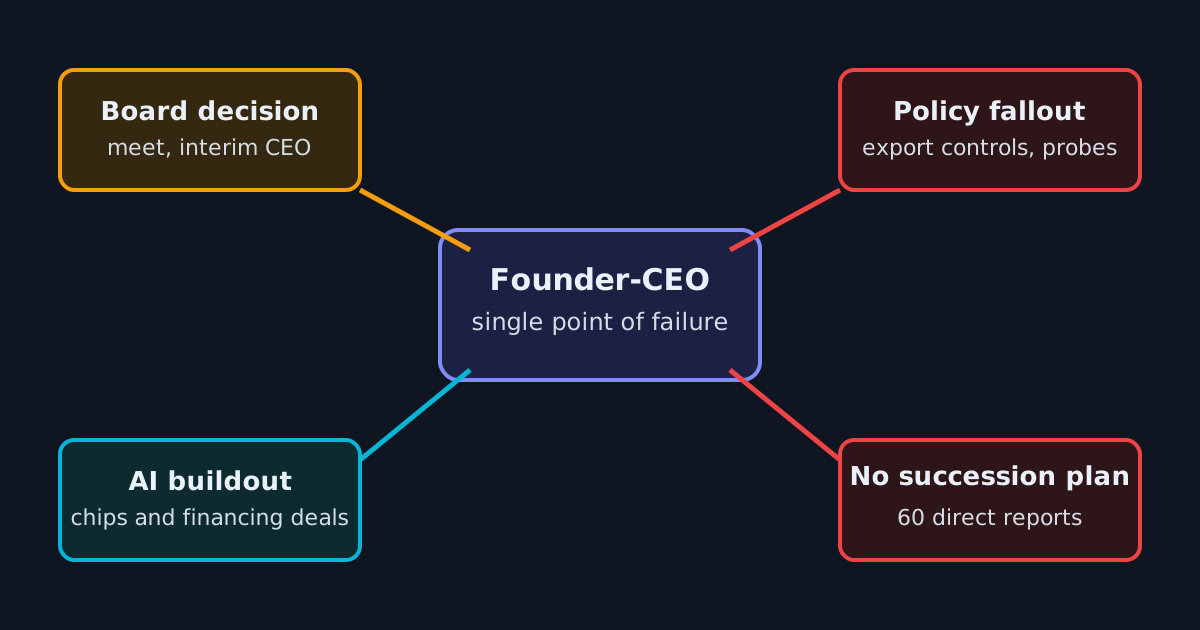
The Verge reports that board chair Harvey Jones opened the call by saying the board “does not intend to reinstate Huang as CEO” and would not take questions about his resignation or the investigation. Much of the rest of the release reads as continuity: Vera Rubin NVL72 shipping, a pending agreement to acquire Hugging Face, and a $227.3 billion buyback authorization remaining. On China, however, the company has moved away from the position Huang argued for in public. Combined with the new board committee, the earnings show an interim leadership that treats export-control exposure as a risk to reduce rather than a market to defend. (Background on the leadership change.)
What remains unconfirmed
- Permanence. Nvidia has not said in writing whether the halt is a lasting policy or a pause linked to licensing or the new rules.
- Scope. The outlook excludes China data center compute revenue. The release does not address other product lines, such as edge computing, sold in China.
- The 10-Q. The release refers to a forthcoming quarterly report on Form 10-Q, which may give more detail on China exposure and the new remote-access rules.
Until then, the confirmed facts are Nvidia’s zero-China outlook and Kress’s statement on the call that licensed Hopper shipments have stopped.
Sources
- NVIDIA Announces Financial Results for Third Quarter Fiscal 2027 | NVIDIA Newsroom
- Document
- Nvidia is abandoning China after Jensen Huang's ouster | TechCrunch
- Interim Nvidia CEO Says It’s No Longer Sending AI Chips to China - Bloomberg
- Nvidia’s Q3 earnings hit the mark, without mentioning the whole Jensen Huang thing | The Verge
- Nvidia promises that revenue will keep soaring — for now | TechCrunch