
Databricks Demonstrates Lakebase Branching Databases for Agentic Coding Workflows
Databricks shows how Lakebase can give every coding agent and pull request an isolated Postgres branch, changing how teams delegate schema changes, tests, previews and data-heavy fixes.
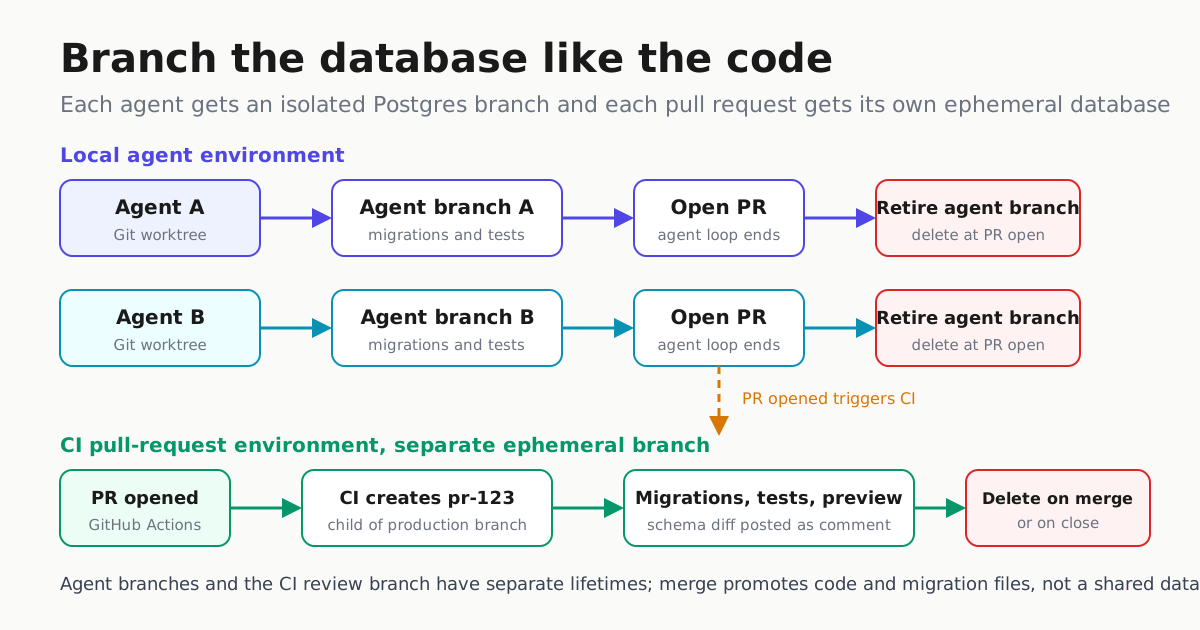
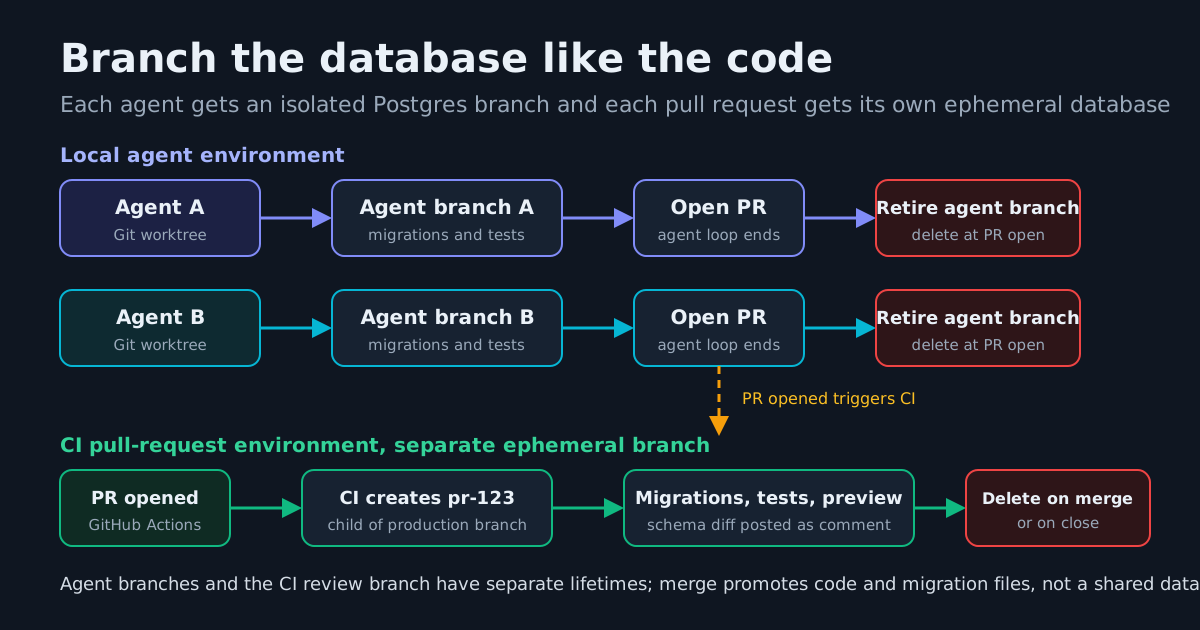
The database is becoming the missing branchable artifact in agentic software development. Code has Git branches, agents have worktrees, hooks and subagents, but a shared development database can still make parallel agents collide on schema changes, seed data and test state. In a new workflow post, Databricks lays out how Lakebase branching fits that gap: a Postgres environment that branches like code, scales down when idle and gives each agent or pull request an isolated database.
The Databricks blog post identifies the database as the overlooked bottleneck when multiple coding agents run in parallel. A single shared development or staging database lets agents conflict on schema changes, interfere with each other’s data or fall back to mocks that do not reflect real-world data. Branching is Databricks’ response: the company states that Lakebase can create a full database branch in under a second, regardless of database size, using copy-on-write storage, with idle branches that scale to zero. Those stated capabilities support the post’s real subject: an end-to-end development loop where every agent and every pull request gets its own isolated database.
The timing is notable: the Databricks blog index lists the Lakebase and Agentic SDLC article on October 8, 2026. The index’s featured Lakebase Search post is dated September 28, 2026, while a separate Lakebase post about loading terabytes of data into Lakebase Postgres is also dated October 8. The Lakebase product page describes the broader service as serverless Postgres for applications and AI agents, with autoscaling, scale-to-zero compute, instant recovery and database branching.
Why this matters for coding agents
Parallel agents need more than separate source directories. They also need a safe place to inspect schemas, apply migrations, create fixtures, run tests and validate assumptions against realistic data.
Databricks’ proposed loop combines two familiar ideas:
| Layer | Isolation mechanism | What the agent gets |
|---|---|---|
| Code | Git worktree | A separate checkout and branch |
| Database | Lakebase branch | A separate Postgres environment |
| Review | Pull request and CI | Migrations, preview app and schema diff |
In the published example, a Claude Code session starts with a command such as claude -worktree feature-123. Git creates a worktree, a post-checkout hook creates a Lakebase branch automatically, and the agent receives both its own code directory and its own database. Repository instruction files such as AGENTS.md or CLAUDE.md can tell the agent when to create a pull request and retire the temporary environment.
The practical effect: teams can delegate more database work to agents without letting every agent touch the same shared schema.
The important difference from Git branches
Lakebase branches are not merged back into the parent database the way Git branches are merged into main. Databricks says the parent and child can diverge independently, making data reconciliation impractical.
Instead, schema changes are stored as migrations in the repository and promoted with tools readers may already use, including Drizzle, Flyway, Liquibase or Alembic. That distinction matters: the branch is where the change is exercised, but the migration file remains the reviewable source of truth.
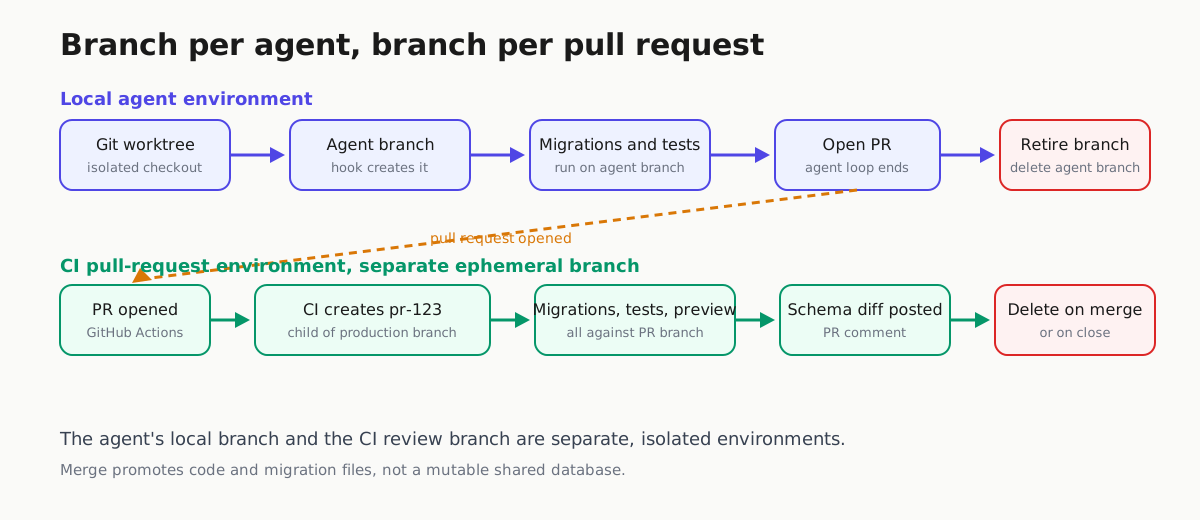
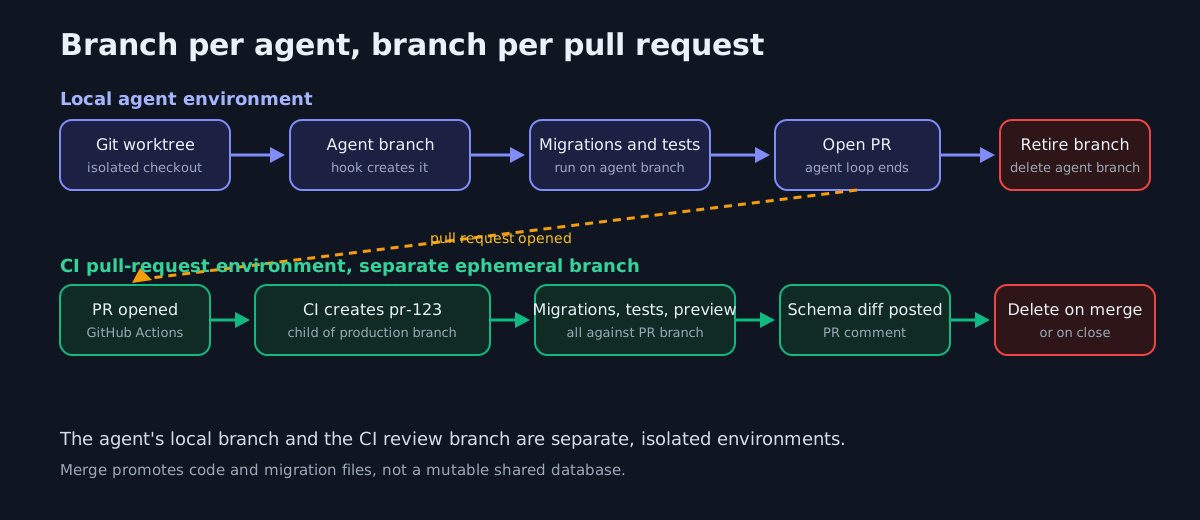
Databricks describes two separate database environments, and keeping them distinct is the key to the workflow:
A local branch per agent:
- An agent starts in a Git worktree for a feature branch.
- A post-checkout hook creates a matching Lakebase branch.
- The agent edits application code and adds a schema migration.
- The migration runs and tests run against the isolated agent branch, not the shared development database.
- The agent opens a pull request.
- The worktree and the agent’s database branch are retired once the pull request exists.
A separate ephemeral branch per pull request:
- CI calls the Lakebase CLI to create a branch such as
pr-123, as a child of the production branch. - The migration tool applies the proposed schema change to that PR branch.
- Automated tests run against it and a preview app is pointed at the branch’s connection string.
- A schema-diff comment shows reviewers which tables, columns or indexes changed.
- When the pull request is merged or closed, CI deletes the temporary PR branch.
What the pull-request branch buys reviewers
Because the PR branch starts from production, the schema migration can be applied and tested before anything reaches production. Reviewers get a concrete database artifact to inspect instead of trusting an agent’s summary, and automated tests get a real Postgres target that is separate from the live production database.
One caveat: the sources do not specify what permissions the CI identity holds. Branch isolation alone does not restrict credentials, so treat least-privilege CI access — scoping and verifying what the CI identity can touch — as a separate step teams own and audit, not something the branching model guarantees.
The same pattern can support safer operations work:
- Reproduce a production bug from a point-in-time branch.
- Test a destructive or expensive schema migration before production.
- Validate application behavior against production-derived data.
- Use masking through Unity Catalog when sensitive data must not be exposed.
- Retire the investigation branch after the fix is proven.
What readers can do now
You do not need to adopt Lakebase to benefit from the design. The transferable workflow is to treat database state as an agent input that needs isolation, versioning and review.
A practical checklist:
- Give every parallel agent a disposable database target, not a shared schema.
- Generate database environments from the same event that creates the code worktree.
- Retire the agent’s local database branch when its pull request opens; let CI build a fresh branch for review.
- Keep schema changes in migration files that humans can review.
- Run migrations and tests against an isolated branch before merge.
- Post a schema diff, row-count signal or migration summary with the pull request.
- Delete the branch and credentials when the task finishes, and audit what the CI identity can touch.
- Mask or synthesize sensitive data before agents can read it.
If you are already using spec-driven development, database branching fits naturally after the coding phase: the spec defines intent, the agent proposes code and migrations, CI proves the change against an isolated database, and humans approve the final contract. For unattended work, the same evidence belongs in your agent merge gates.
The caveat is architectural. Lakebase is a Databricks-managed Postgres service, so the exact branch-per-agent automation depends on that platform. But the broader lesson is portable: once agents can create isolated database environments as cheaply as Git branches, schema migrations, seed setup, bug reproduction and data-heavy features become agent-addressable tasks with reviewable evidence instead of hand-run DBA operations.