Qwen Code v0.28.3 Puts Managed Agents in GitHub and Teams, Wakes Them Privately on CI Failures, and Suspends Idle Sessions
Qwen Code v0.28.3 adds GitHub and Teams managed channels, private PR-watch wakes on CI failure and idle session suspension. What to switch on, off and measure.
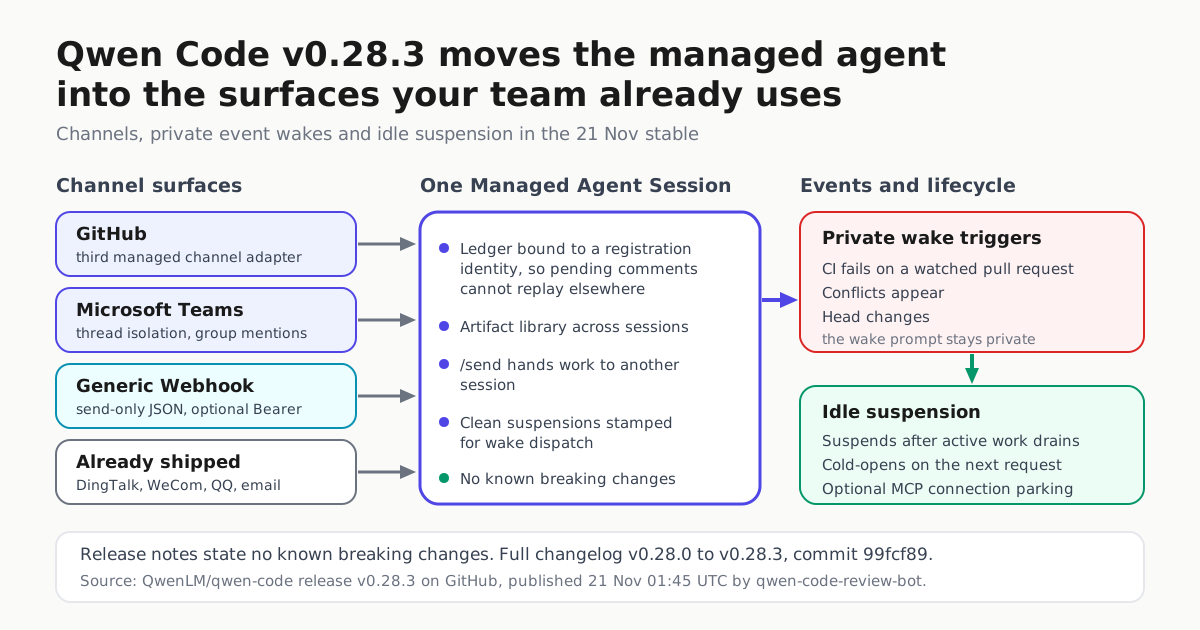
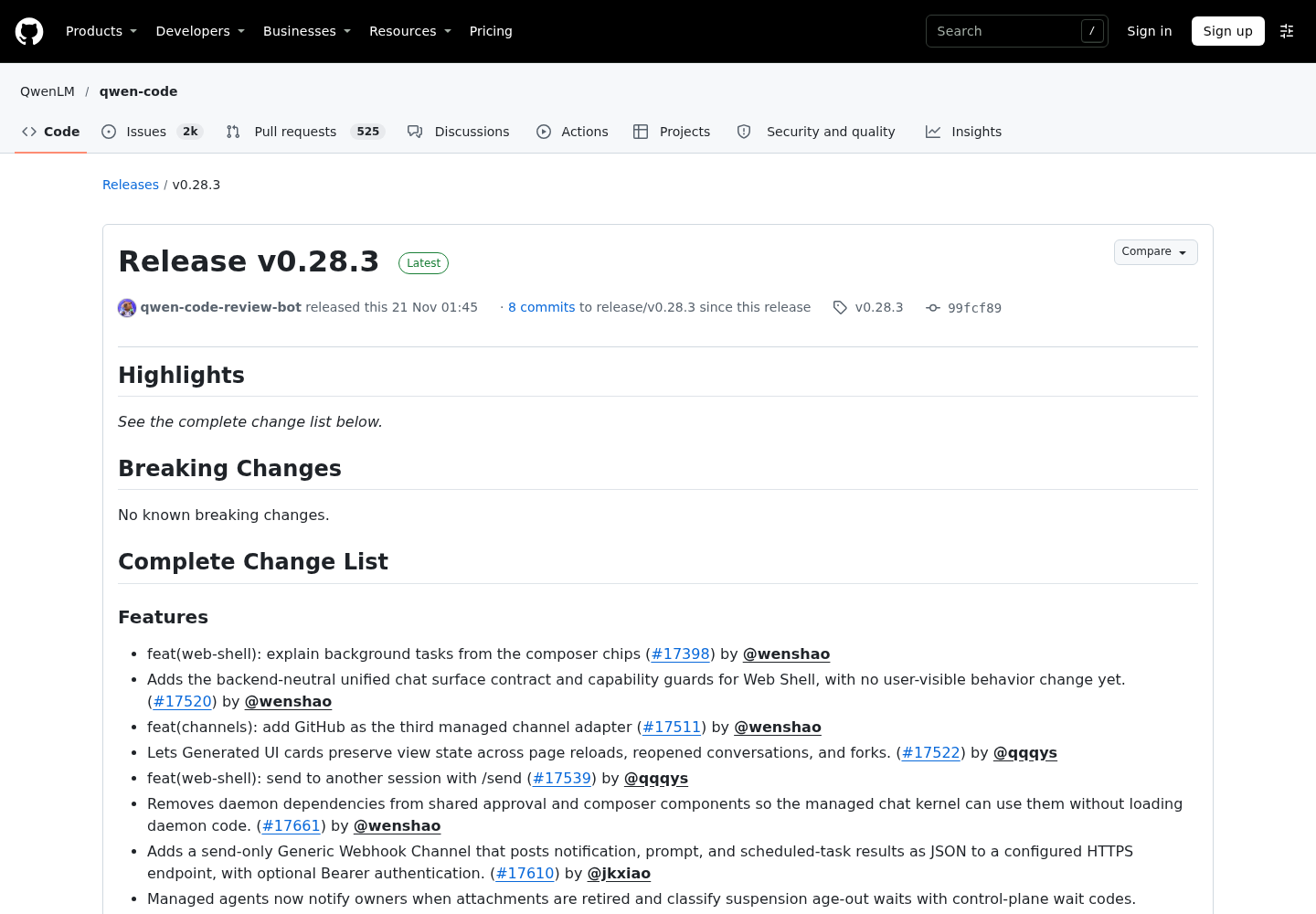
Qwen Code v0.28.3 is the Latest stable release on GitHub, published 21 Nov at 01:45 UTC by qwen-code-review-bot from commit 99fcf89, with a full changelog running from v0.28.0. The notes carry no curated summary — the Highlights section reads “See the complete change list below” — so operators have to find the consequential lines among roughly 50 feature entries themselves. Three of them change how a managed coding agent is reached, woken and held.
Three new surfaces, and only two of them listen
| Surface | Direction | What the notes say | PRs |
|---|---|---|---|
| GitHub | managed channel adapter | “add GitHub as the third managed channel adapter” | #17511 |
| Microsoft Teams | channel extension | personal chats, group mentions, thread isolation, createTeamsIngress host webhook setup |
#15620 |
| Generic Webhook | send-only | posts notification, prompt and scheduled-task results as JSON to a configured HTTPS endpoint, optional Bearer authentication | #17610, #17405 |
The asymmetry matters. The Generic Webhook channel cannot receive: it delivers notification, prompt and scheduled-task results, and the Web Shell Channel editor now exposes endpoint URL, optional Bearer token, and local or private receiver options for it. The workflow it enables is one-way — an agent finishes, your own service gets a JSON POST — so you still need GitHub, Teams or DingTalk inbound to start work.
Teams is the thinner story. The official Qwen Code documentation overview links to channel guides for Telegram, Weixin, DingTalk, WeCom, Feishu, QQ bot, GitHub, GitLab, email and channel plugins, with no Teams page in the captured navigation. The extension ships as code plus a createTeamsIngress host webhook setup, so budget for building the host side yourself.
The ledger follows the registration, not the app
Two entries are easy to skip. “Binds the managed GitHub adapter ledger to its registration identity so pending comments are not replayed under a different registration” (#17775), with the same treatment for the DingTalk ledger (#17742) and the email ledger (#17925). Queued messages now belong to one registration of a bot app, so rotating a registration cannot replay pending items into a different session and run them twice.
The companion entry is a limit rather than a feature: shortened inbound messages from the WeCom, DingTalk and GitHub adapters now carry a truncation notice while staying inside character and byte limits (#17726). Keep large payloads in files the agent can read, not in channel text.
Private wakes: pick one watcher, not two
“Wakes the Managed Session bound to a watched pull request with private prompts when CI fails, conflicts appear, or the head changes, without posting publicly” (#17665) is the highest-leverage line in the release. Clean suspensions are stamped for wake dispatch (#17908), bilingual design notes record Phase 3 control-plane wake scheduling and Runtime-owned background observation (#17805), and PR watch deep links can now be served before authentication (#17119).
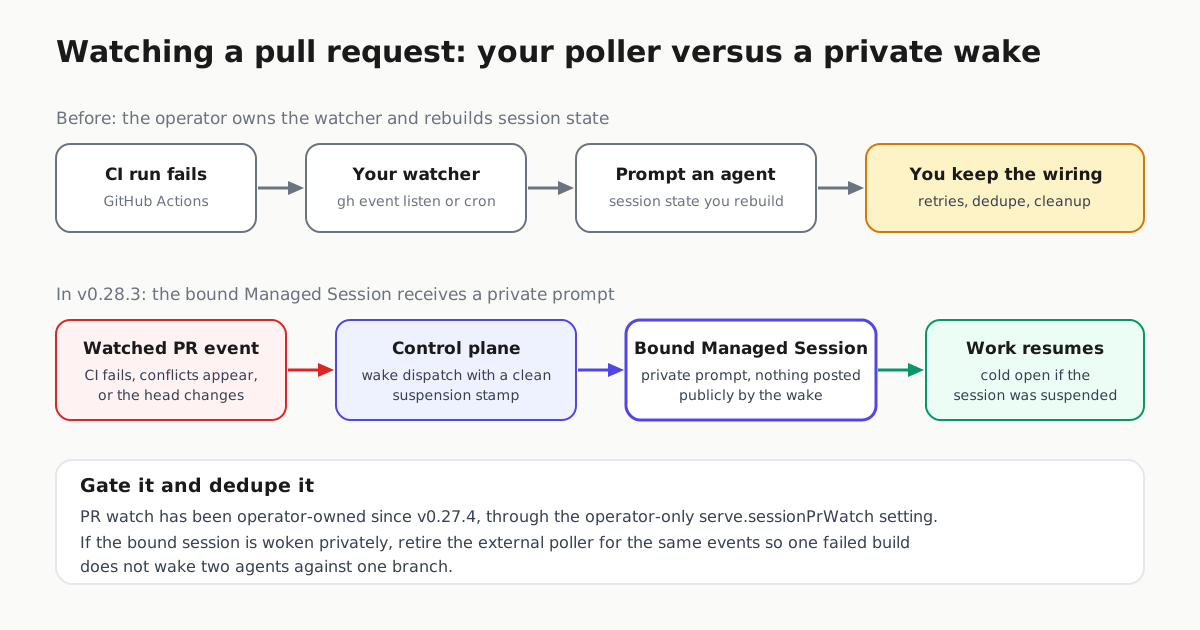
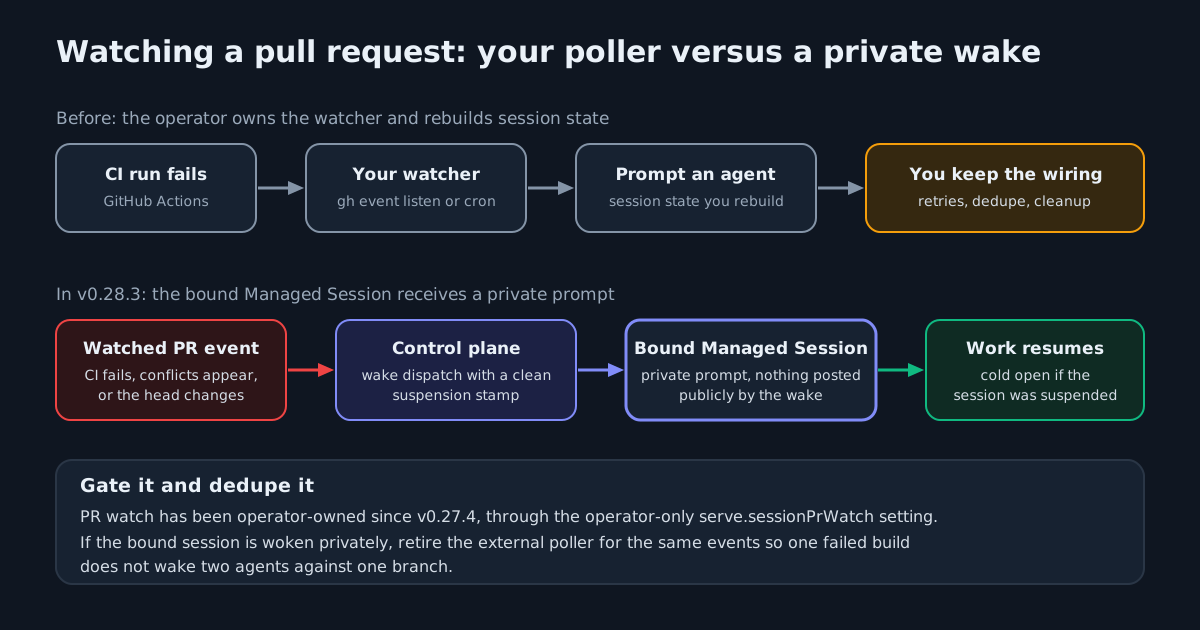
None of this switches on for everybody. The releases index shows v0.27.4 making PR watch operator-owned through the operator-only serve.sessionPrWatch setting while retiring GitHub channel state-transition delivery (#17214). An operator turns it on — and should turn something else off. If the bound session is now woken privately on CI failure, retire the external poller you built for the same events, the pattern covered in gh event listen for coding agents. Two wake paths on one failed build means two agents editing one branch.
Idle suspension, cold opens and one opt-in key
“Hosted Harness now suspends idle managed-agent sessions after active work drains and cold-opens them on the next request” (#17690) follows a stateless-harness design proposal (#17527) that first appeared in the 20 November nightly, alongside the GitHub adapter, the Teams extension, PR-watch injection and MCP parking.
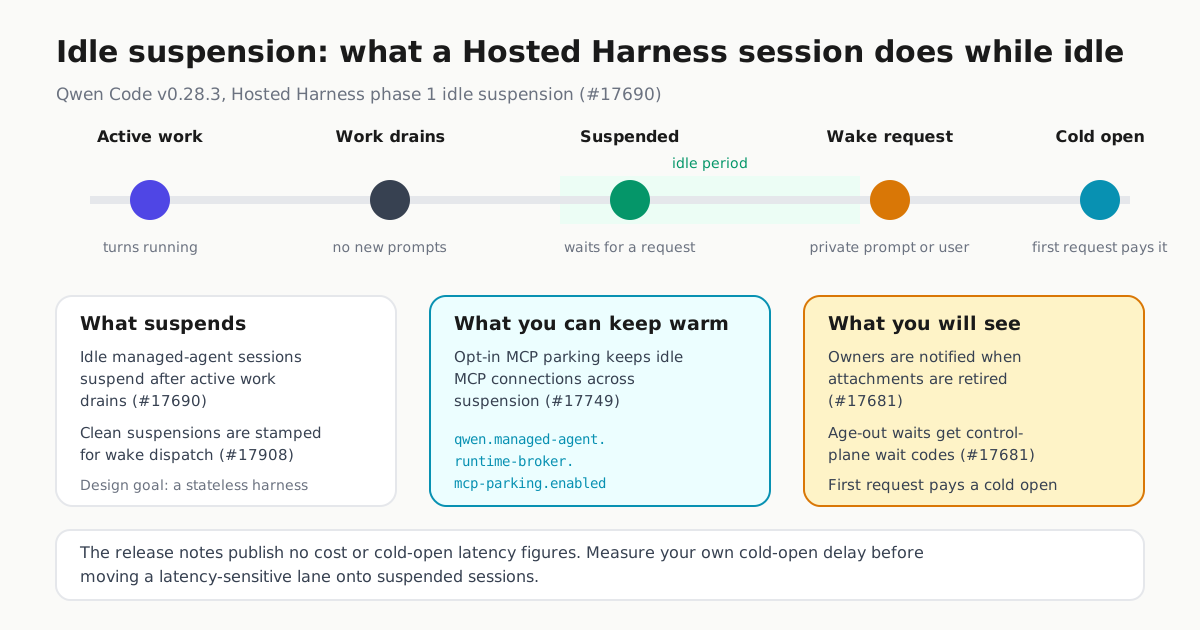
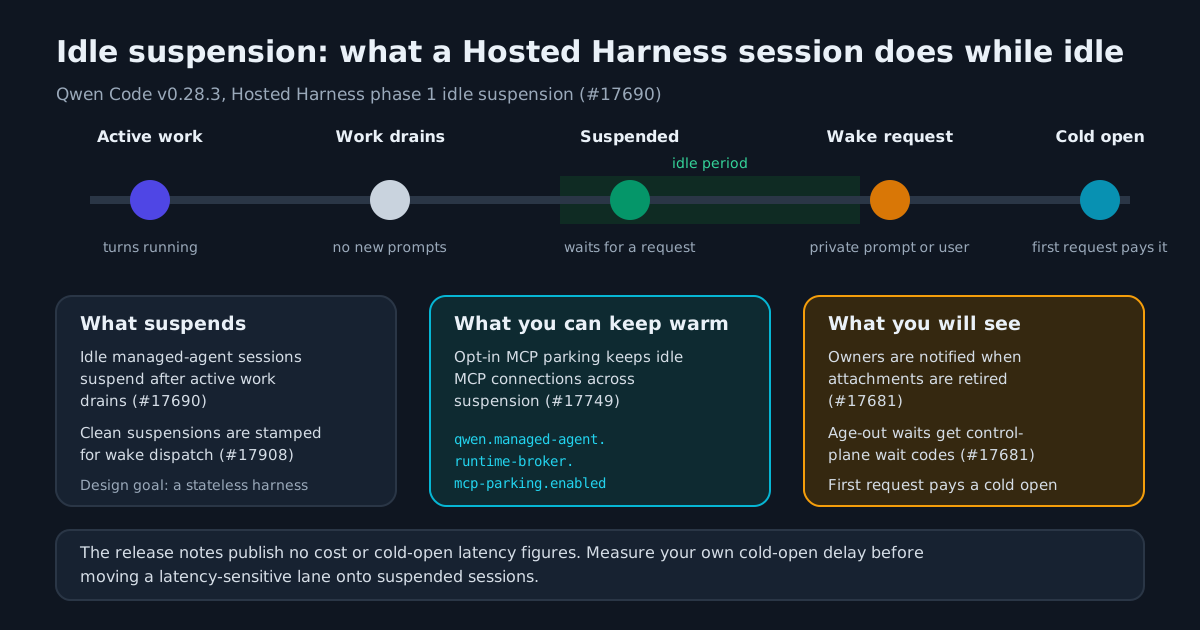
Three consequences follow from the notes. The first request after an idle period pays a cold open, and nothing in the release quantifies it. One opt-in setting keeps idle MCP connections across suspension so reopened sessions reuse them:
qwen.managed-agent.runtime-broker.mcp-parking.enabled
The notes name the key (#17749) but not where to set it, so check the managed-agent configuration reference before enabling it. Third, owners are notified when attachments are retired and suspension age-out waits are classified with control-plane wait codes (#17681) — a long-idle session can lose an attachment and say so instead of stalling silently.
Smaller changes worth a canary
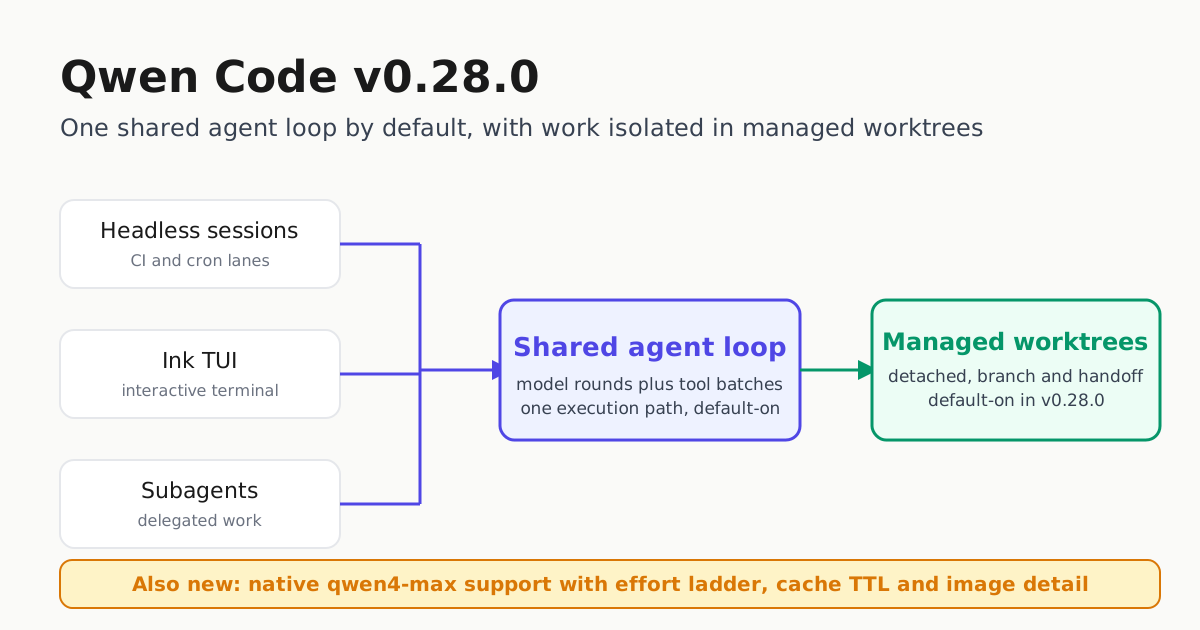
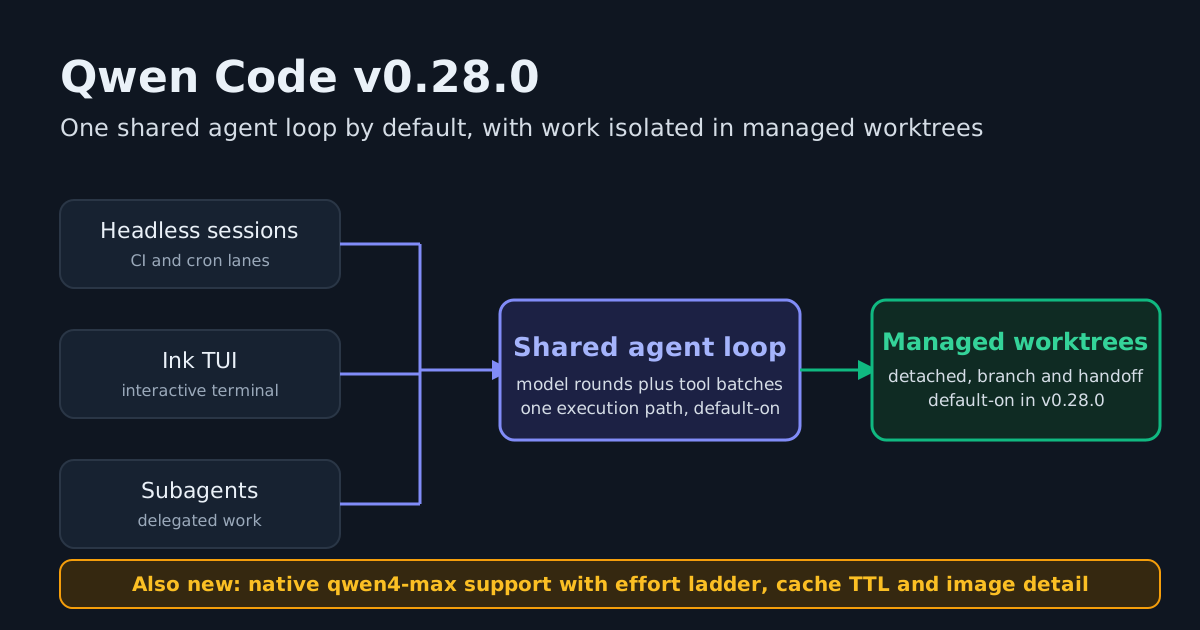
- ACP sessions (#17744) and OpenTUI (#17745) now run on the shared agent loop by default. That is a default flip; canary it like any unpinned CLI upgrade.
- Opt-in skipping of models exhausted by capacity errors for the rest of the turn, re-probed on the next turn (#17377).
- Opt-in native screen-reader presentation for the CLI, with keyboard navigation and semantic history, while Ink stays default (#17500).
- Background workflows in headless mode (#17809), and
/sendhands work to another Web Shell session (#17539). - Docs now state that new sessions start in Auto Mode, with Ask Permissions Mode reached by setting or
--approval-mode default(#17799). Channel-triggered work inherits that mode. - Vendor-measured only: startup chunk indexing cut median workspace-ready time by 41.16% in one measured sandbox (#17720), and one recorded Web Shell case improved key-to-editor delay by up to 1,706 ms (#17788).
Upgrading and verifying the archive
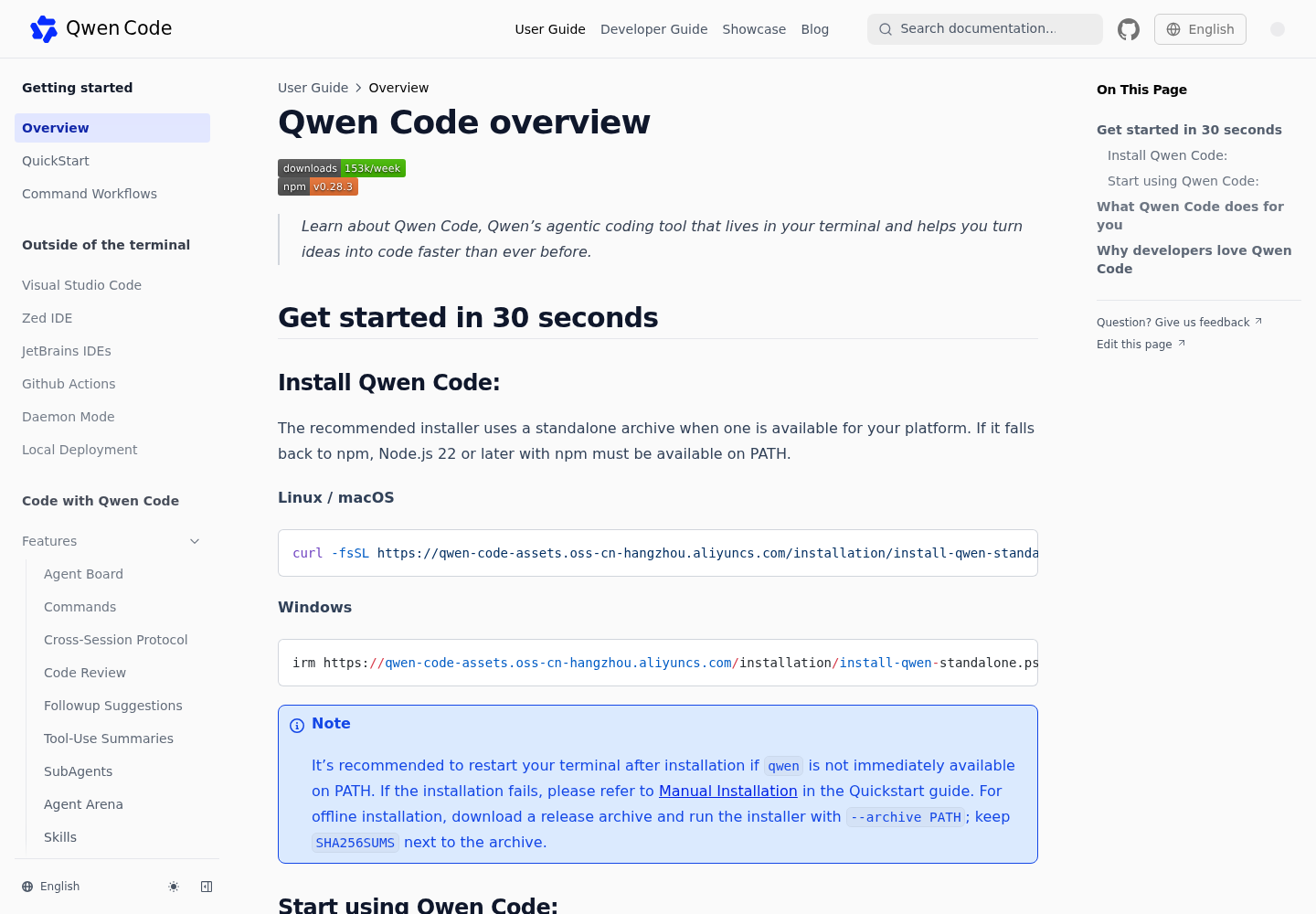
The documentation recommends the standalone installer, and for offline installs a release archive passed to the installer with --archive PATH while keeping SHA256SUMS beside it. The releases index publishes 14 assets for v0.28.3 with per-file digests:
shasum -a 256 qwen-code-linux-x64.tar.gz
# 4058d50847d01d864eb37b856711dbaee7e7deed7ad9278565b692e5773e0fae
What the notes do not establish
- Whether the GitHub and Teams adapters work for hosted users without operator setup.
- Any dollar or latency figure for suspension; the notes describe a cold open and stop there.
- Teams operator documentation, or a published location for the MCP parking key.
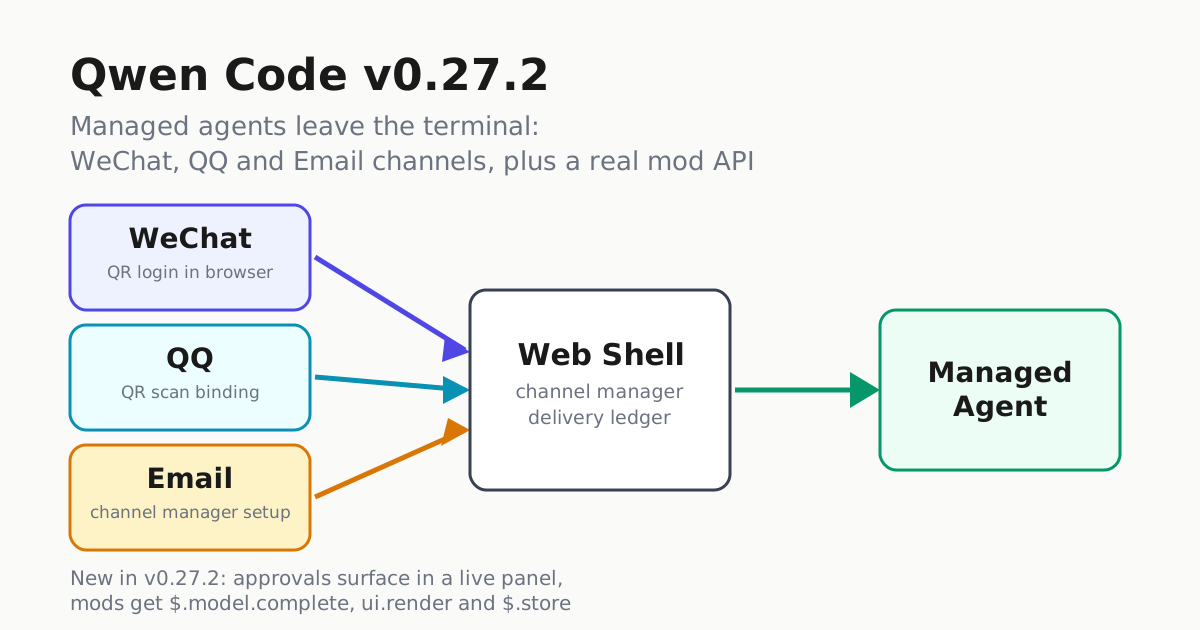
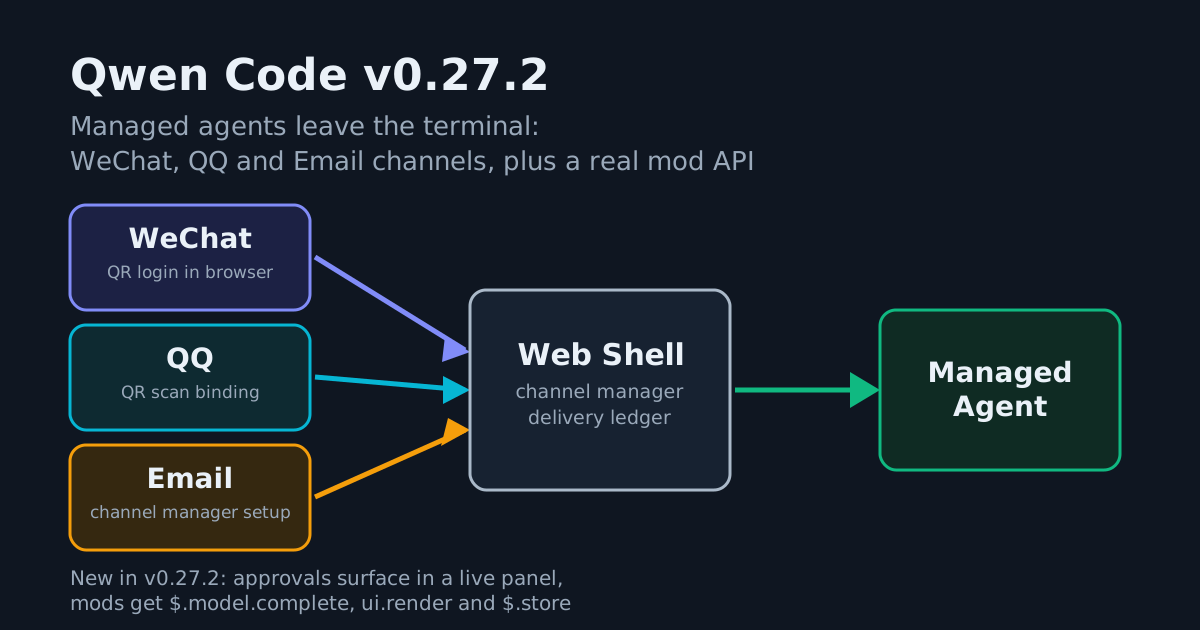
Bottom line: v0.28.3 consolidates what the 20 November nightly carried, and its shape is clear. The managed agent becomes reachable where the team already talks, becomes event-driven on the pull request it is bound to, and stops holding a runtime while idle. After v0.28.0’s shared agent loop and managed worktrees and v0.27.2’s WeChat, QQ and email channels, this is the release where the channel story reaches GitHub and Teams.