Qwen Code v0.27.2 Puts Managed Agents in WeChat, QQ and Email, and Gives Mods a Real Model API
Qwen Code v0.27.2 lets operators bind WeChat, QQ and Email accounts to Web Shell with in-browser QR login, and hands mod authors $.model.complete, ui.render and $.store — while pending approvals finally surface in the live panel.
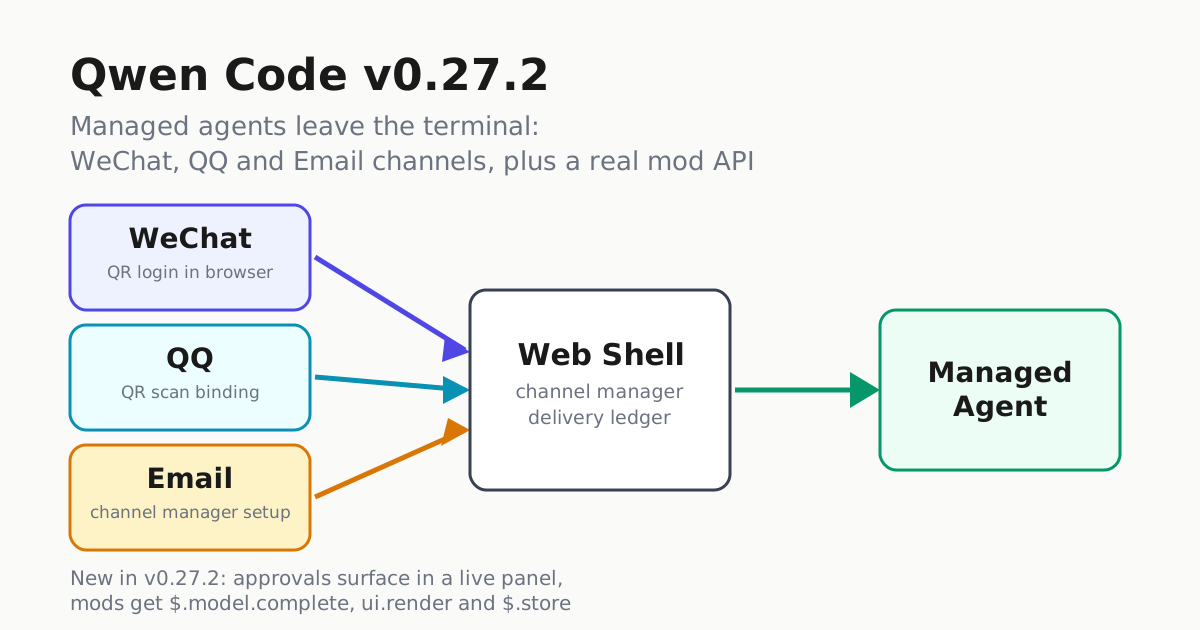
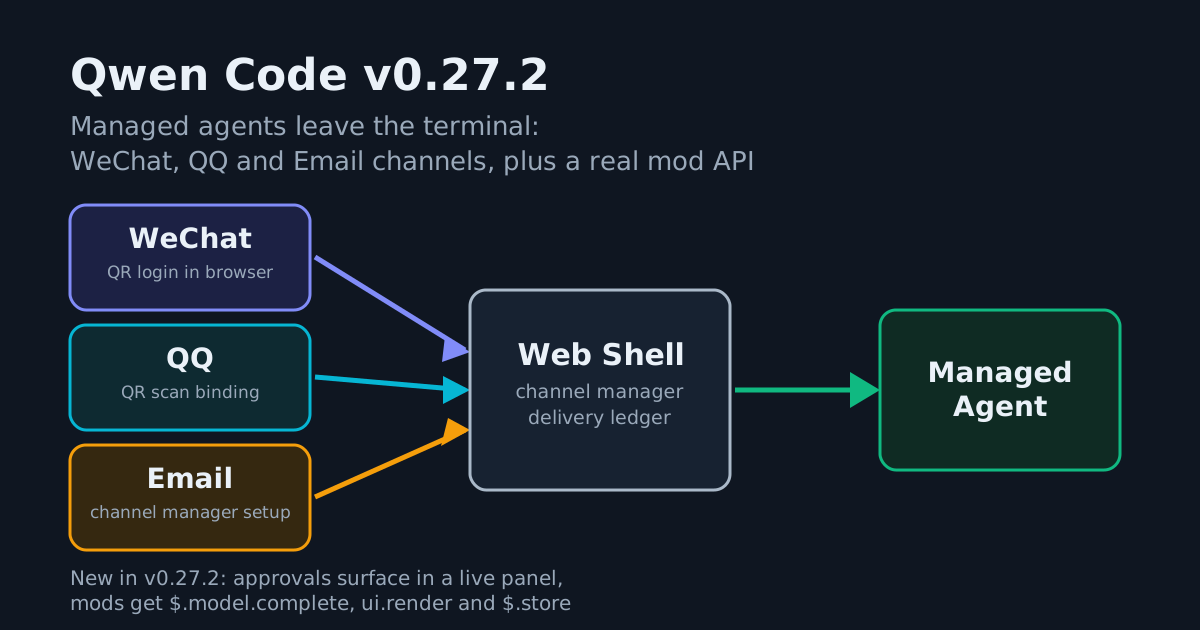
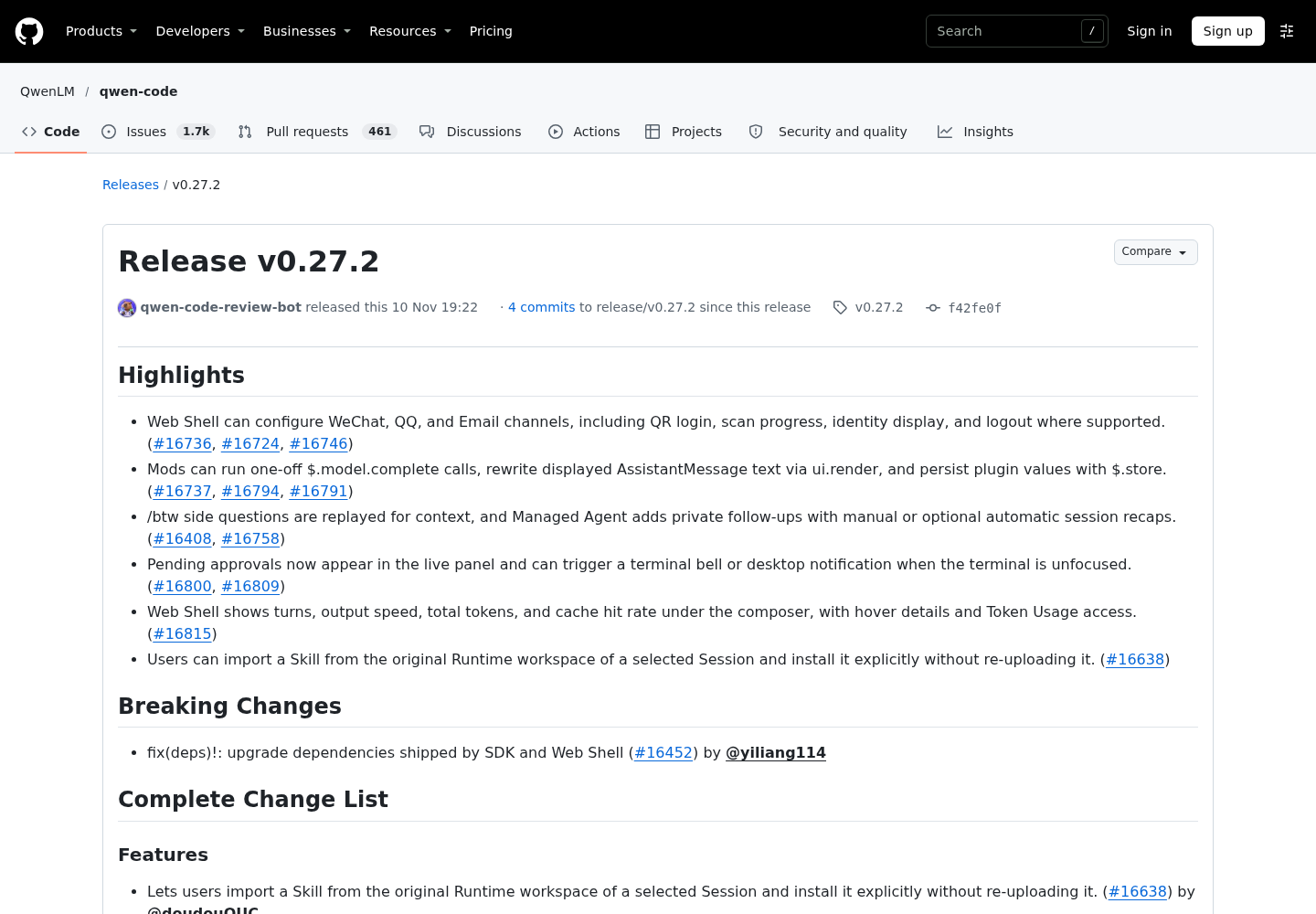
Qwen Code shipped v0.27.2 on November 10 at 19:22 UTC, and the headline change is about where a managed agent can live, not what version number it wears. Web Shell — the browser-hosted face of the Qwen Code managed agent runtime — can now bind WeChat, QQ and Email accounts through a channel manager that includes in-browser QR login, live scan progress, identity display, logout and expired-code refresh where the platform supports it. For teams that coordinate in chat apps and inboxes rather than terminals, an agent can now be reached and steered from the tool they already live in.
What the new channels actually change
Qwen Code already had a channel concept — the project documentation lists integrations from Telegram and Feishu to GitHub and email. What v0.27.2 adds is the practical binding surface for three of the most-used coordination surfaces in Chinese and regional team workflows: WeChat with its in-browser QR flow, QQ with an optional QR-login management contract, and Email configured directly from the channel manager. The release also adds a segments array to the public channel delivery resource, so multi-segment deliveries keep per-segment receipts, and a delivery ledger that records each segment separately.
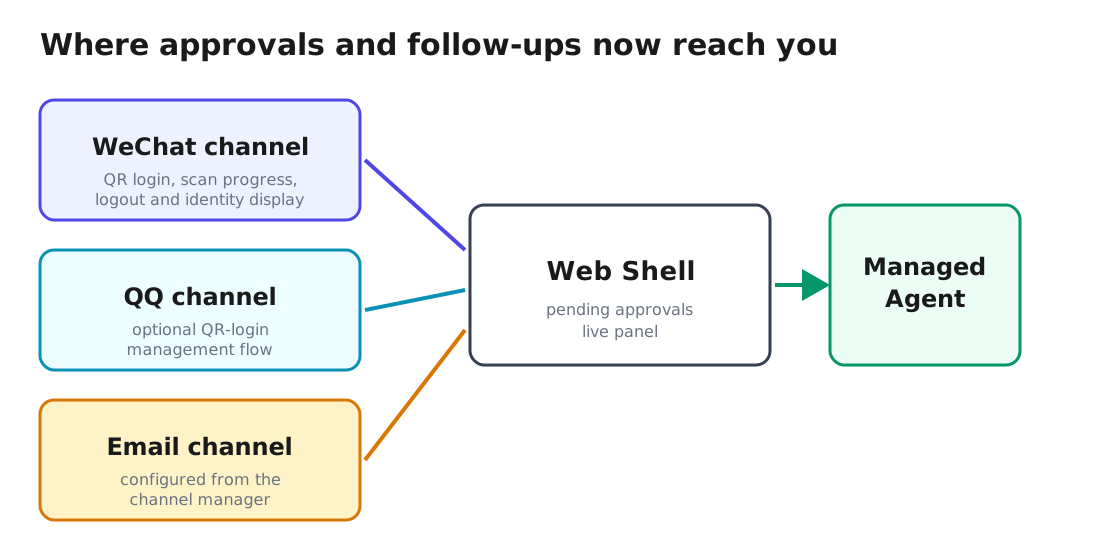
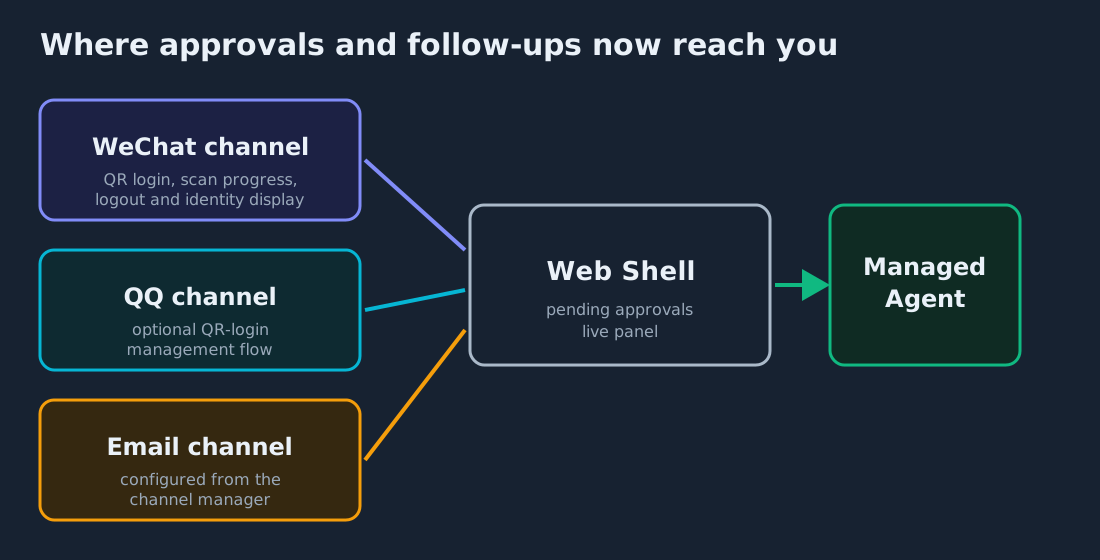
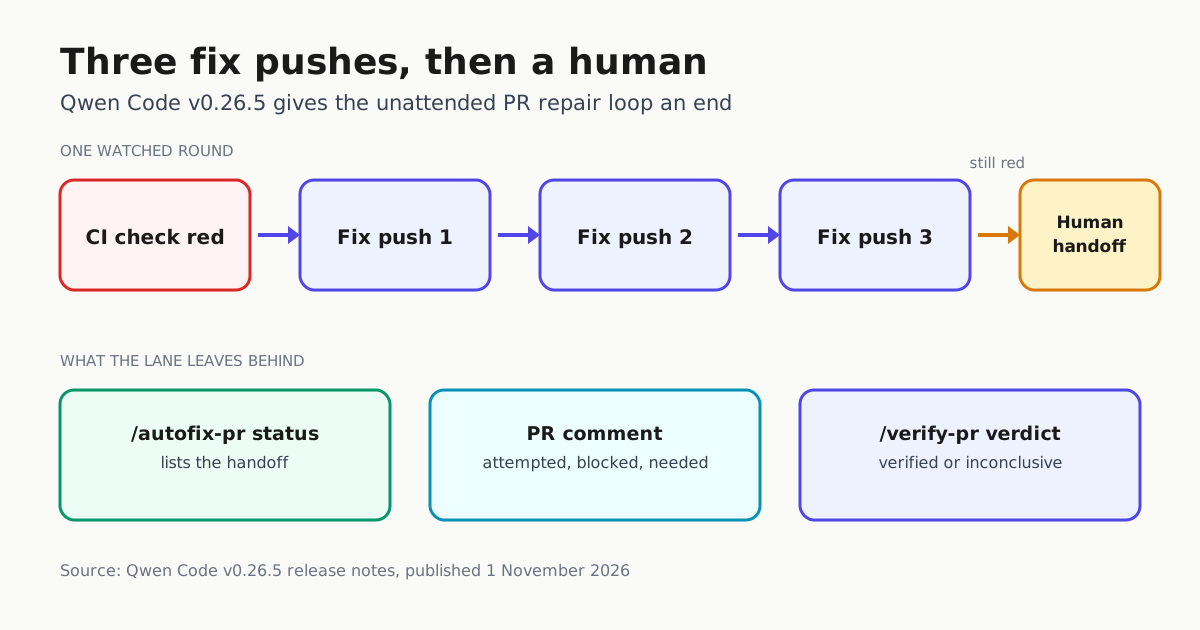
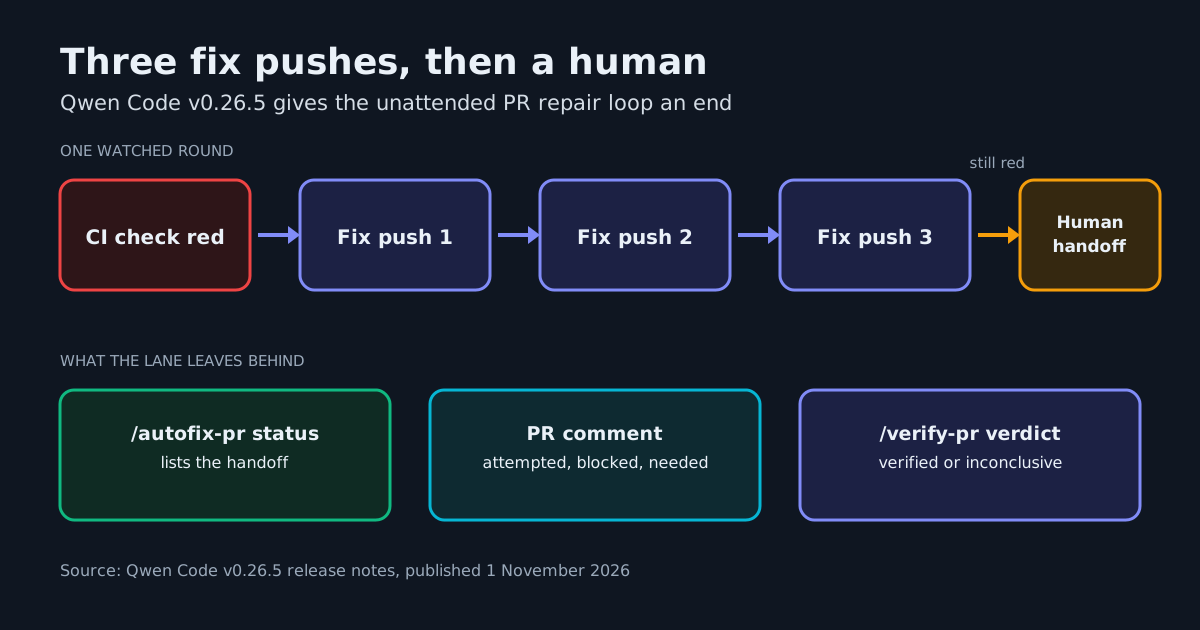
For an operator running a managed agent fleet, the consequence is that approvals and follow-ups stop requiring a terminal window. Pending approvals now appear in the live panel, and when the terminal is unfocused they can trigger a terminal bell or desktop notification honoring general.terminalBell and general.notificationMode. The GitHub channel also gains requireBoundWatch, so review or verify bindings only receive PR events while an active /autofix-pr or /verify-pr watch is held — cutting noise for exactly the fleets that run many watched repos.
Mods get a real model and UI API
The second consequential change is for extension authors. Qwen Code’s mod system gains three primitives that turn mods from prompt decorations into real plugins:
| New primitive | What it does |
|---|---|
$.model.complete(request, {signal}) |
Runs a one-off text completion through the session client, without tools, history or an added system prompt |
ui.render on the AssistantMessage render site |
Rewrites displayed model reply text in the Ink terminal without changing stored or copied text |
$.store |
Persists each plugin’s values between sessions |
That combination — call the model, reshape the reply surface, keep state — is the minimum viable API surface for a plugin ecosystem. It also pairs with a workflow change: users can now import a Skill from the original Runtime workspace of a selected Session and install it explicitly, without re-uploading it, so a good prompt or skill built in one session can be promoted into a reusable asset.
Context and follow-ups get cheaper
Two smaller changes compound the operational value. /btw side questions are now part of the session itself: the last 20 answered side questions are replayed into context, so a follow-up can reference earlier answers instead of the operator restating them. Managed Agent adds private BTW follow-ups and manual — or optional, off-by-default automatic — session recaps, with Web Shell panels using persisted results.
Under the composer, Web Shell now shows turns, output speed, total tokens and cache hit rate, with hover details and a Token Usage panel. That matters for cost management on a shared fleet, because cache hit rate is the difference between a cheap run and an expensive one. Self-hosted autofix runs also get a 240-minute agent budget, addressing premature timeouts on long unattended fix rounds.
One breaking change to budget for
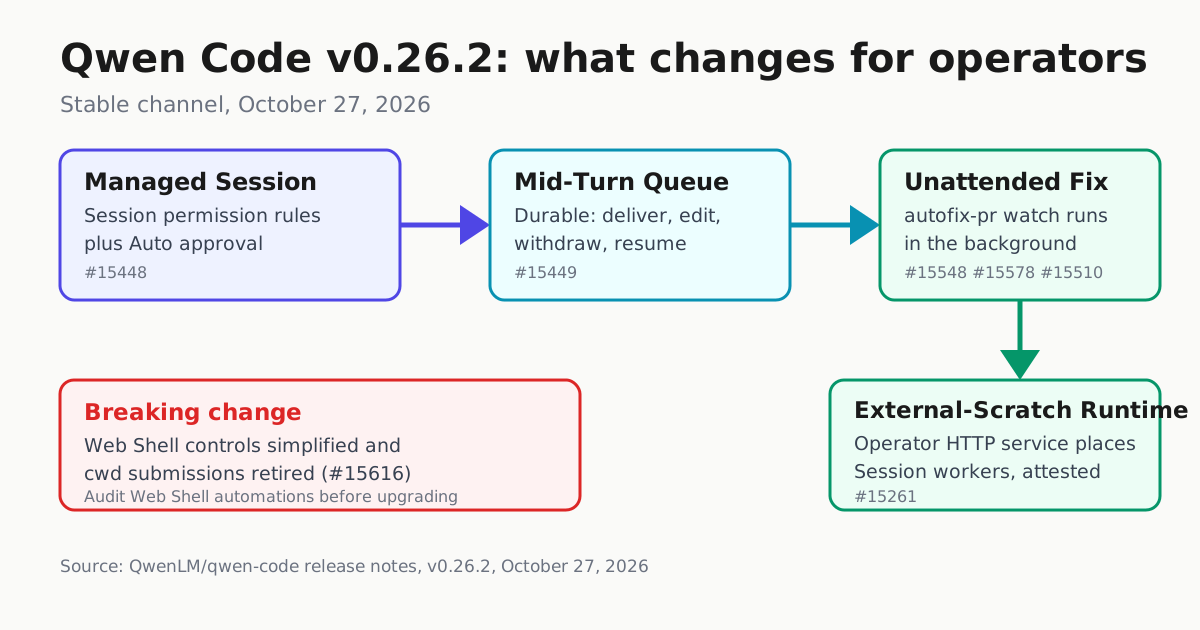
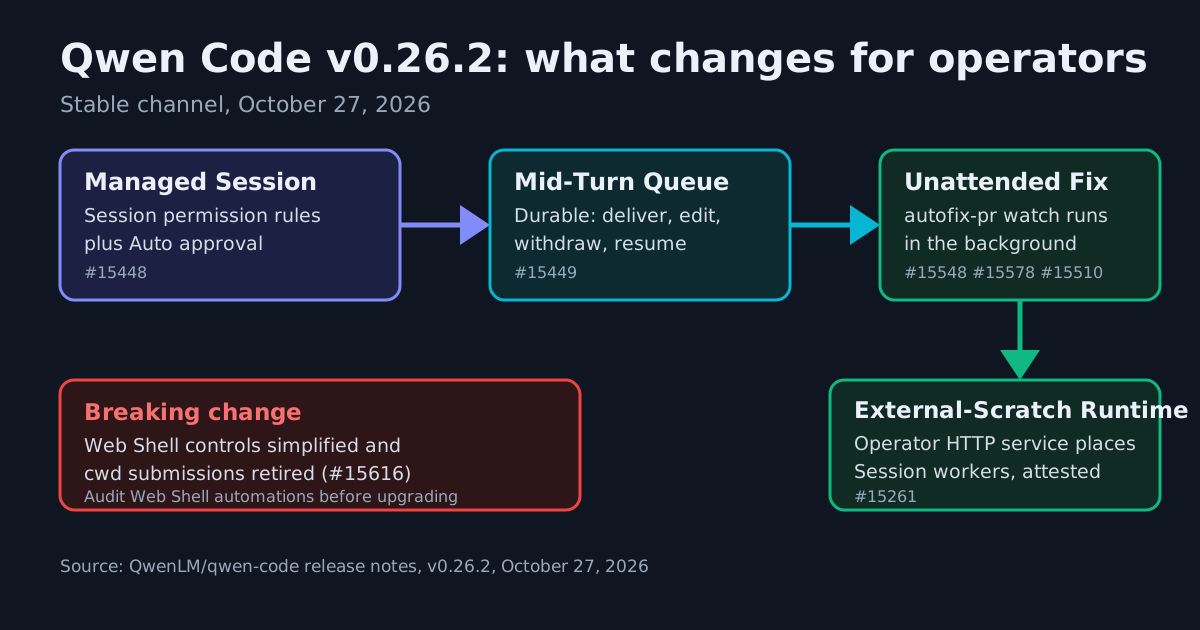
The release is not all additive: fix(deps)! upgrades dependencies shipped by the SDK and Web Shell, flagged as a breaking change by the maintainers. Teams pinning the Qwen Code SDK or embedding Web Shell should test before rolling this out across a fleet.
Why this is worth an operator’s attention
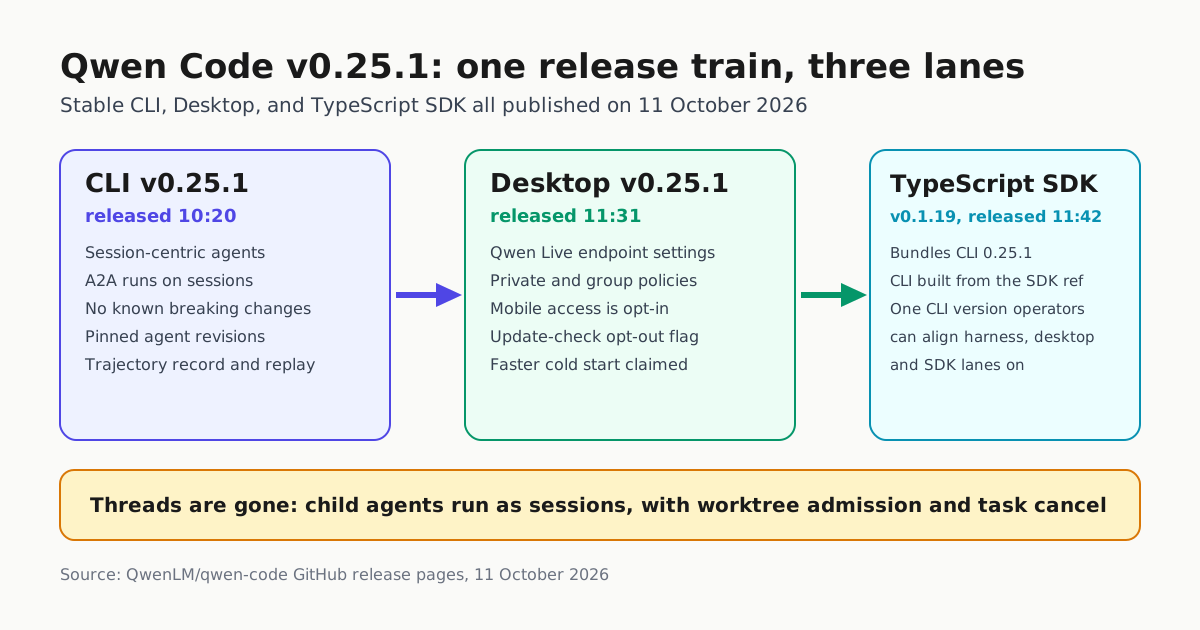
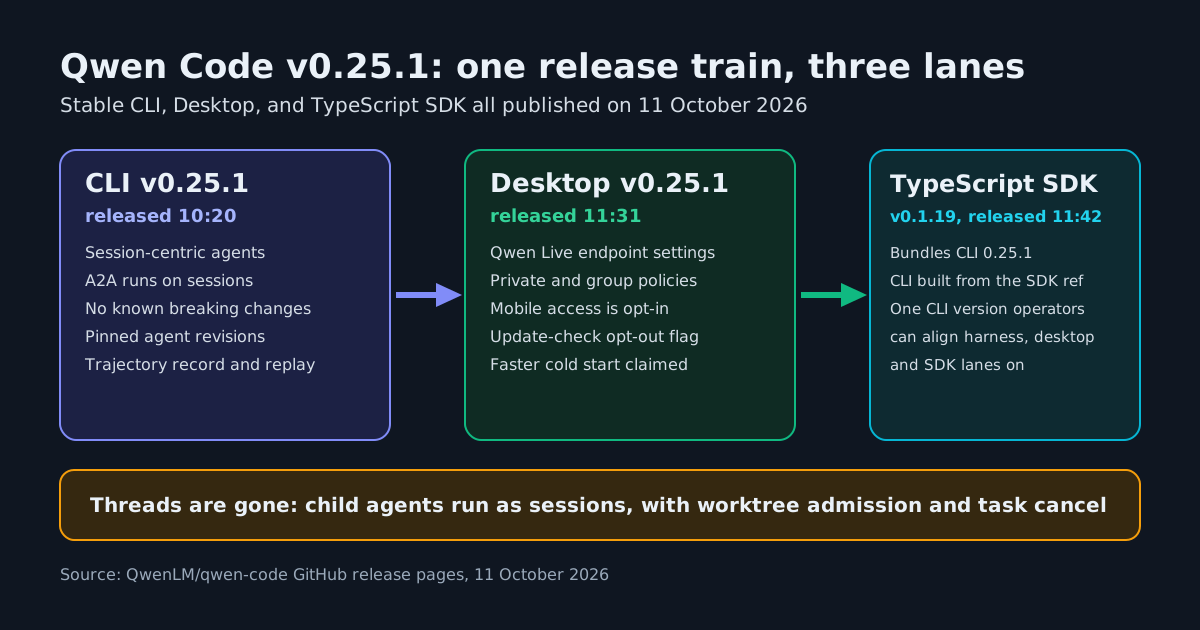
Version churn is not news; channel reach and a plugin API are. Teams already running Qwen Code’s managed agent can now route approvals through WeChat, QQ or email without standing up a separate notification bridge, and mod authors can build persistent, model-backed extensions with an explicit contract. The 0.27.x line has moved quickly — v0.27.0 shipped child-question handling on November 7 — and this release is the first where the managed agent stops assuming its operator is watching a terminal. For broader context on governing agents that live in chat surfaces, see IM channel allowlists for digital employees, and for the earlier milestone in this line, Qwen Code v0.26.8’s subscription sign-in.