LangChain Rebuilds LangSmith Around a Single Agent Record: One Owner, One ID, Typed Evaluation
LangSmith now centers every agent in one record with a named owner, immutable ID and type, unifying tracing, evals and governance across any runtime.
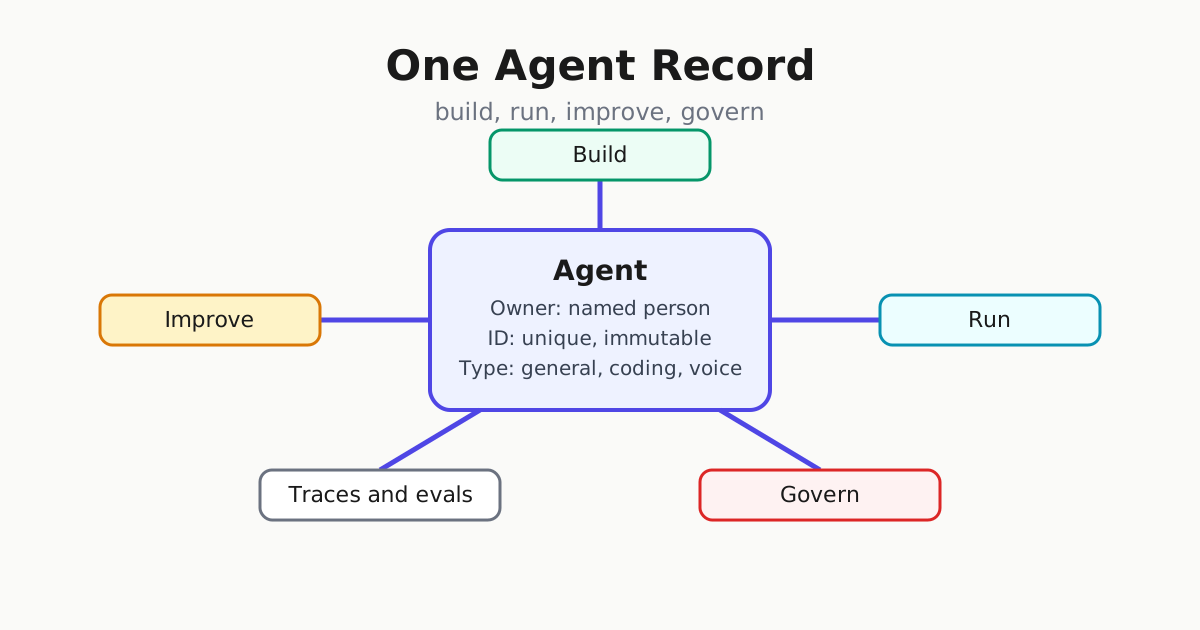
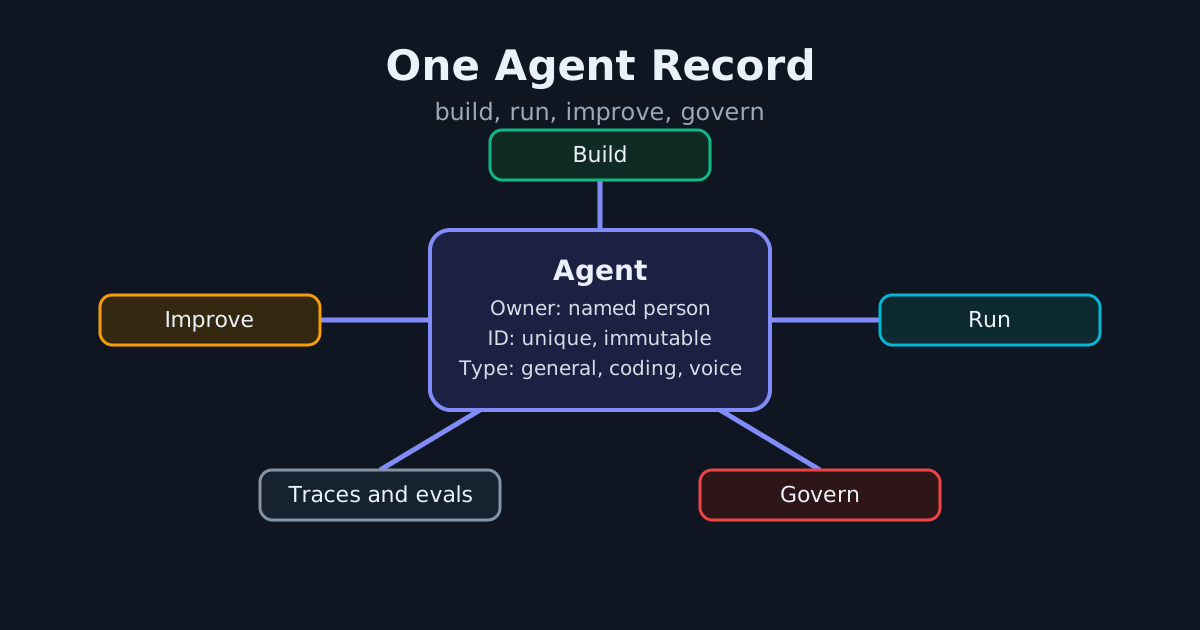
LangChain has rebuilt LangSmith around one object: the agent. In a Nov. 16 announcement, Sam Crowder describes a reorganization of the entire product around a single agent record that connects building, running, improving and governing agents — regardless of which framework they were built with or which runtime hosts them.
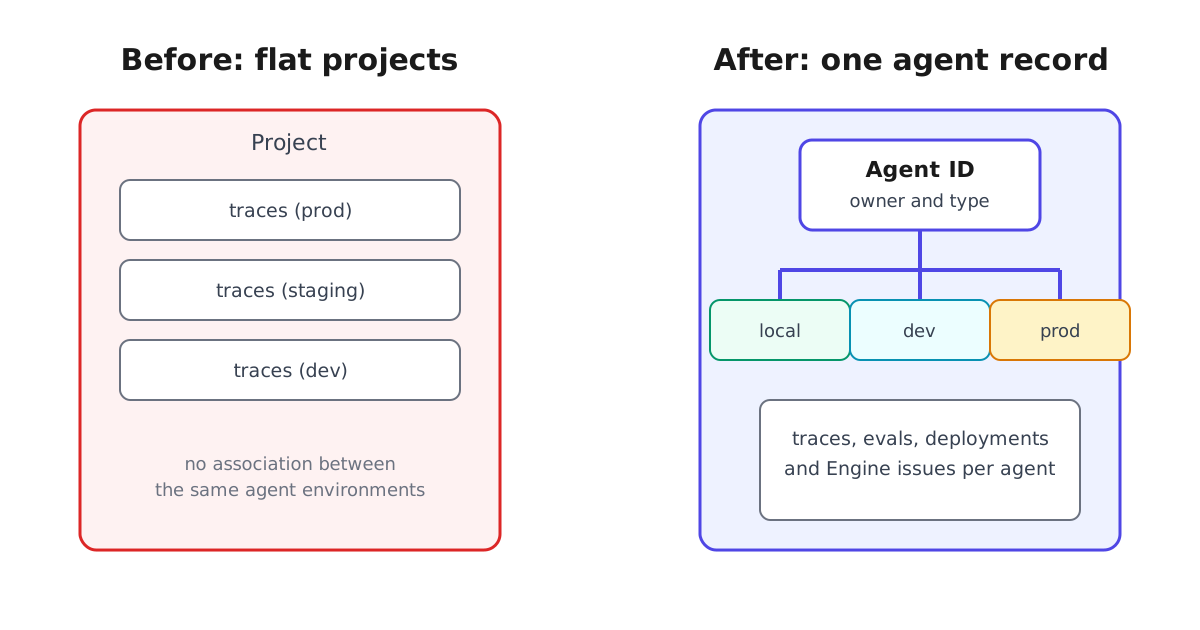
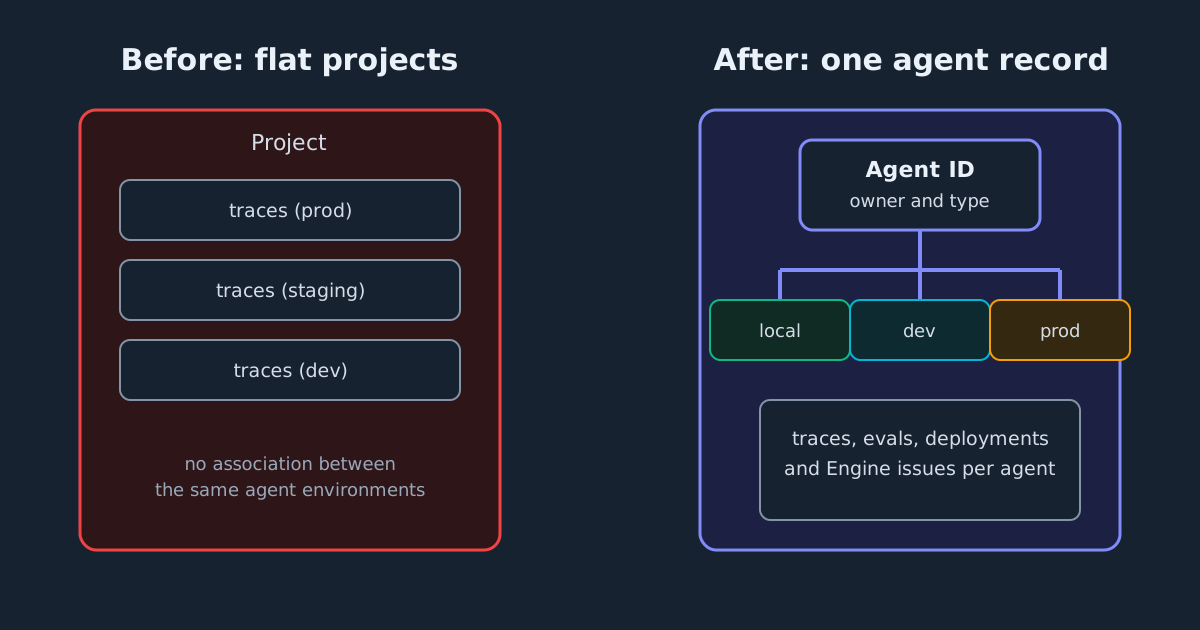
The change matters because agent sprawl has become a data problem, not just a tooling problem. LangSmith’s previous model used a flat project hierarchy: traces sent to the platform had no association with a particular agent, and traces from the same agent in different environments were unrelated to each other. Now one agent record groups environments and traces beneath it, so local, dev, staging and production sit under the same agent ID and comparing performance after a change is straightforward.
The agent record
Every registered agent carries three properties:
| Property | What it is | Why it matters |
|---|---|---|
| Owner | A named person responsible for the agent | Gives cost spikes and failures someone to contact |
| ID | A globally unique, immutable identifier | Lets security and platform tooling audit the agent over time |
| Type | What kind of agent it is | Determines its dashboard, data connections and evaluation criteria |
Opening an agent record puts its traces, evals, Agent Server deployments and Engine issues one click away. LangSmith remains composable: if you already run an agent on another platform, you can connect it to LangSmith for improvement and governance without changing anything else.
The diagram below contrasts the two data models: on the left, the old flat project where traces from the same agent in different environments had no association; on the right, the new agent record grouping every environment and its traces, evals and deployments under a single agent ID.
Agent types change how evaluation works
The most consequential piece is typed evaluation. A coding agent is judged by whether its code gets merged; a customer-support agent is judged by latency. Agent types bake those distinctions into the architecture. The general-purpose type surfaces recent activity, monitoring, common models and tools, and failures flagged by Engine. The coding type surfaces merged PRs and token cost, and can connect a GitHub repo to track downstream outcomes of agent usage.
Because dashboards are opinionated, every agent of a given type is measured the same way — when three people run coding agents, their numbers are comparable. Voice is on the horizon, with latency and audio quality as default metrics. For teams that have struggled to standardize evals across developers, this is the practical payoff: consistent data without custom views.
Governance for agents you did not build
LangChain’s argument is that platform teams are accountable for agents from three directions: custom agents built by engineering, vendor-platform agents adopted by business units (ServiceNow, Glean), and coding or productivity agents employees pick up on their own. Standardizing everyone on one platform is not realistic, so LangSmith accepts any agent that emits traces over OpenTelemetry Protocol (OTLP) — including agents hosted by labs and hyperscalers. Connected agents are registered alongside internally built ones and measured the same way, with cost and quality metrics rolling up per agent across every environment.
On the roadmap, identity is the notable item: every agent already has an immutable ID, and LangChain plans to let teams register agents in their identity provider so security staff can manage and audit them like any other identity. That direction matches how we have covered treating agents as privileged users — as an operational requirement rather than a nice-to-have.
Why now
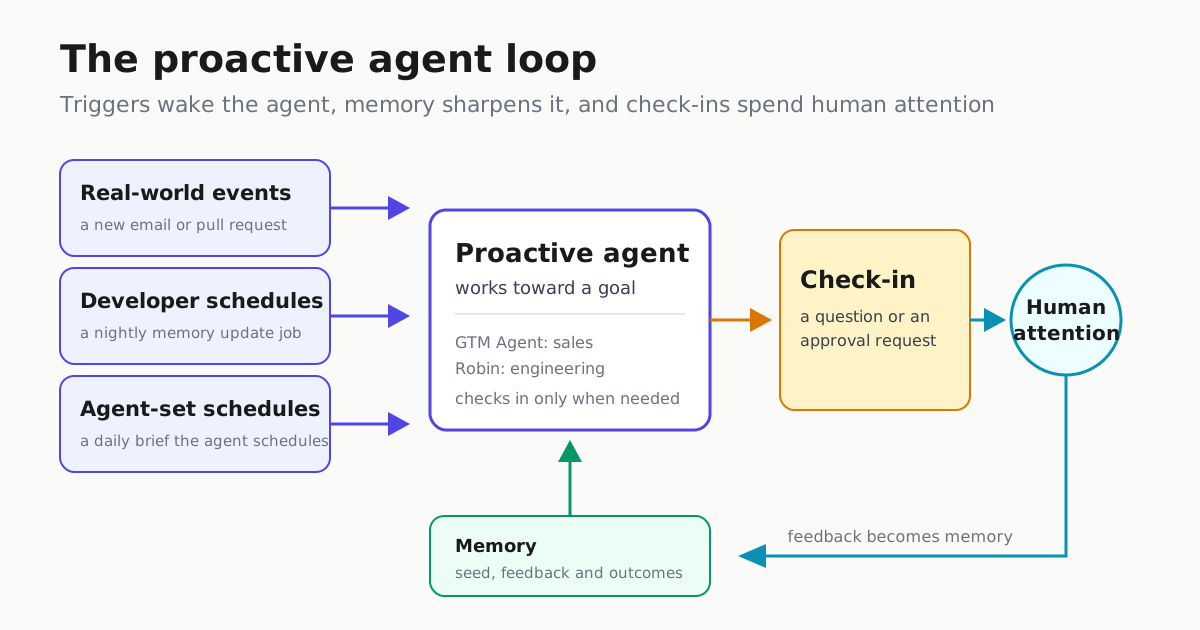
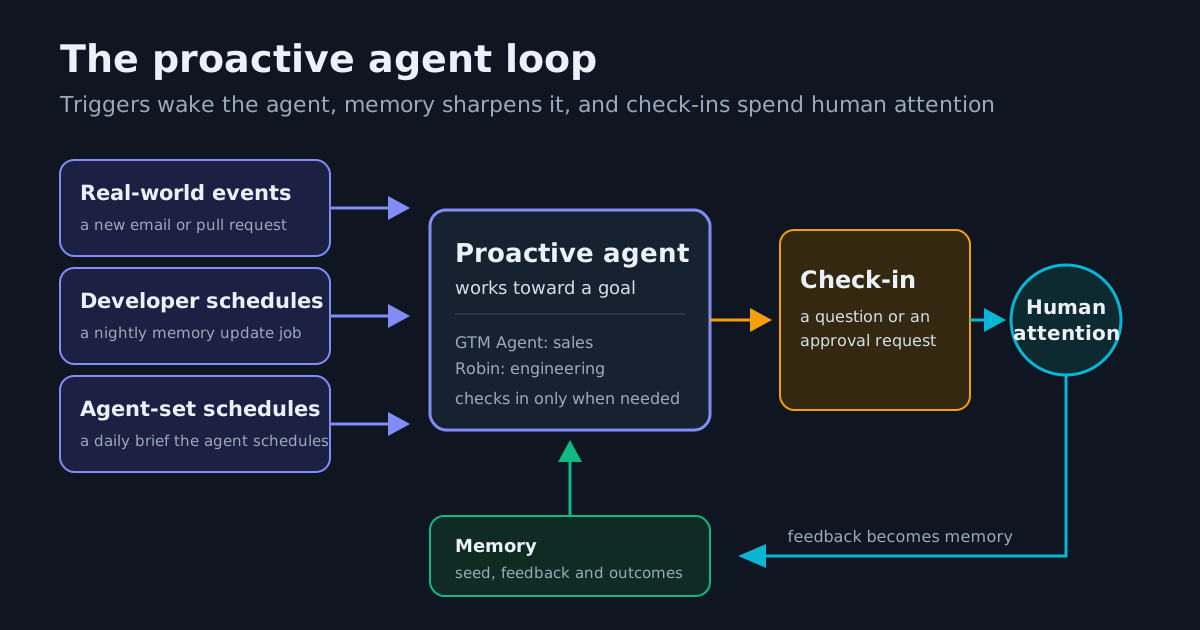
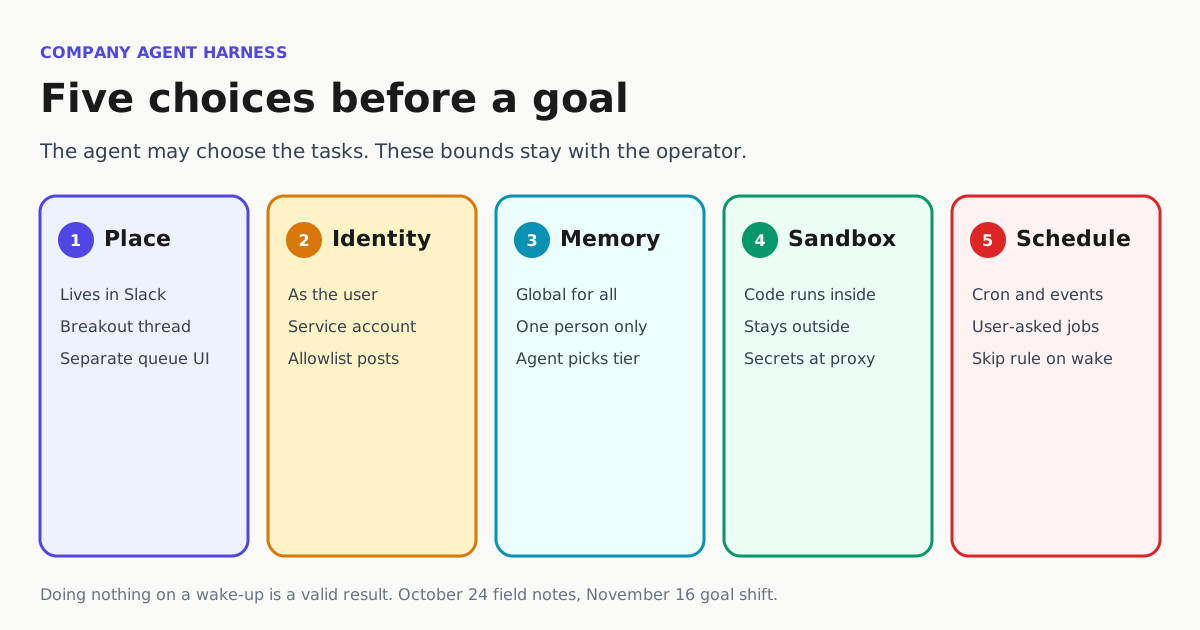
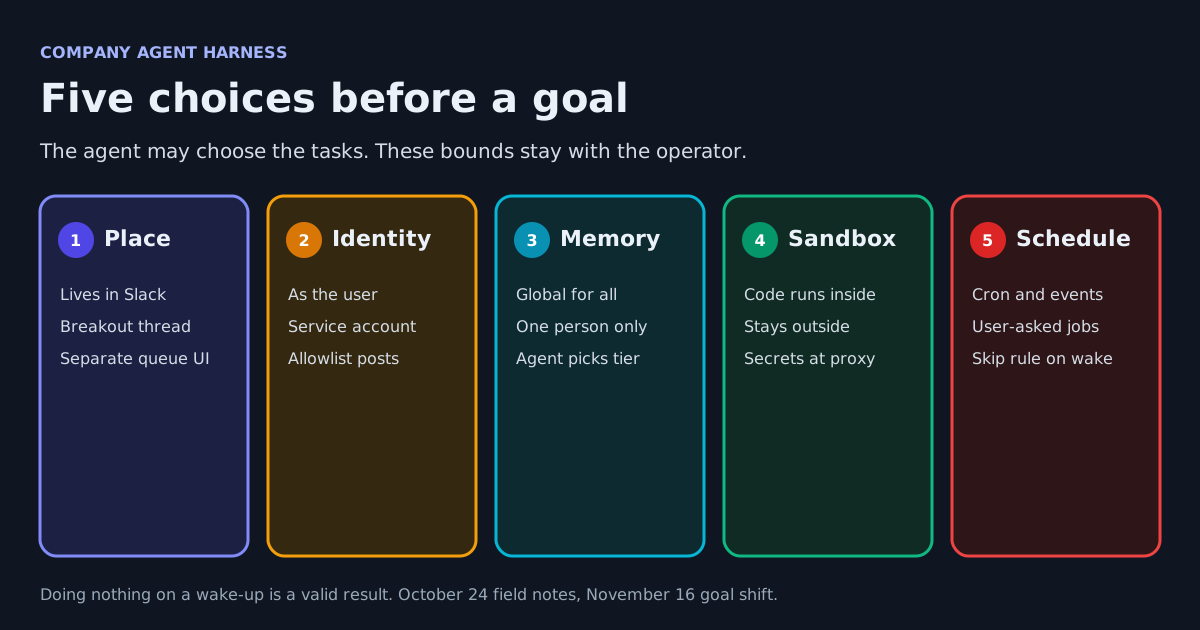
Two recent posts from Harrison Chase explain the pressure behind the redesign. In “From tasks to goals”, he argues agents are shifting from bounded assignments to ongoing responsibilities — which changes what they do, what they need, and how teams build and interact with them. In “New context engineering challenges in late 2026”, he describes convergence on a common agent architecture and the new problems raised by proactive, always-on, goal-oriented agents.
Goal-oriented agents run longer, call unpredictable tools and keep working after the requester walks away. That is exactly the regime where a flat trace hierarchy fails and where named ownership, stable IDs and typed evaluation become the difference between a governable fleet and a cost line nobody can explain.
What operators should do
- Inventory first. Before connecting anything, list which agents exist, who owns each and what they cost. The agent record model only helps if the owner field is real.
- Pick types deliberately. Type determines evaluation criteria and dashboards; a miscoded agent gets measured by the wrong yardstick from day one.
- Connect external agents over OTLP. If vendor-platform agents dominate your spend, registration gives you the same cost and quality rollups as internal ones.
- Plan the identity step. If agent IDs will eventually live in your IdP, start naming conventions now rather than retrofitting.
The announcement itself, shown below, lays out the rebuild in LangChain’s own words:
The new LangSmith is available globally in cloud, BYOC and self-hosted environments. It arrives a week after the company’s Series C announcement, which introduced the LangSmith Agent Platform — this post is the data-model detail behind that headline. For anyone evaluating agent evals as a practice, the typed-record approach is worth studying even if you never adopt the product.