Managed Deep Agents in Public Beta: Memory, Cron, and Identity Are Project Files
LangChain's November 2, 2026 update describes Managed Deep Agents in public beta on LangSmith Cloud: a project folder, mda deploy, and files for memory, cron, Slack, sandbox, and per-user OAuth. Harrison Chase's same-day essay lists the judgment calls those files leave open.
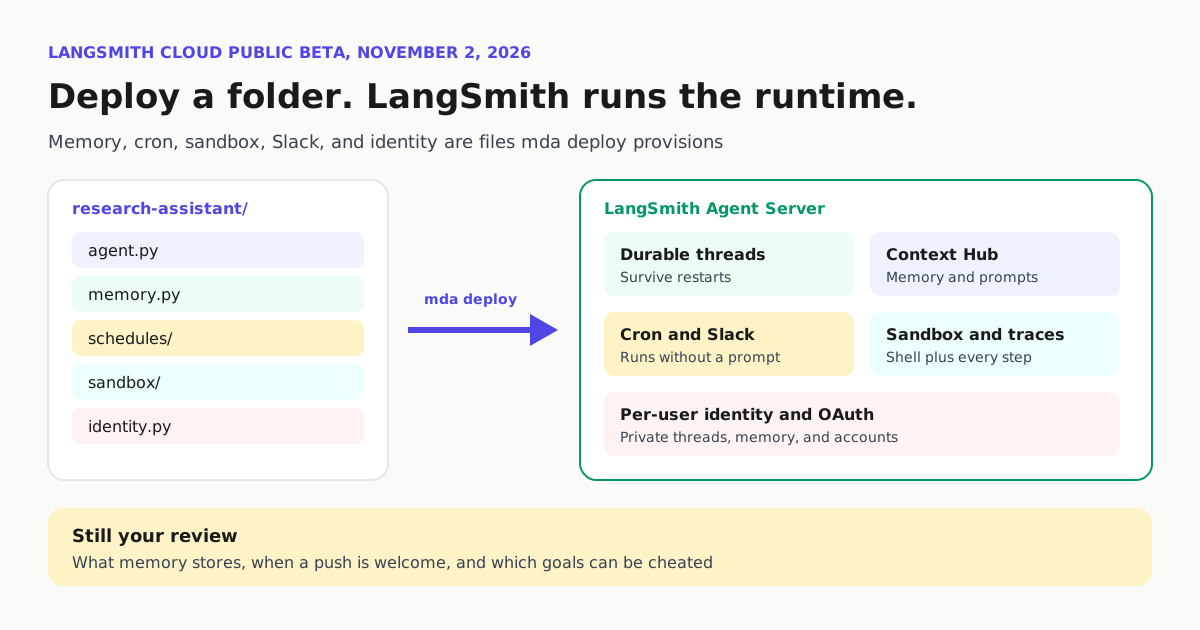
LangChain updated Introducing Managed Deep Agents on November 2, 2026. The page now describes the product in public beta on LangSmith Cloud. The post first ran on May 13, 2026, when the private beta opened. A deep agent is a Python folder. mda dev runs it locally. mda deploy ships it to LangSmith, which runs the open-source Deep Agents harness and the production runtime. Durable memory, sandboxes, and schedules are files you add.
The October 29 browser release, including the sign-in handoff, is already covered in Managed Deep Agents v0.10, along with background-subagent delivery. The November 2 page is the project layout around that runtime: which file turns on which service, how traces feed instruction edits, and which judgments stay with the team. The same day, Harrison Chase published New context engineering challenges in late 2026.
The folder you ship
The only required file is agent.py. define_deep_agent takes a name, a model, and tools. The quickstart uses openai:gpt-5.5 and a built-in web_search tool. instructions.md holds the system prompt. skills/ holds playbooks loaded when a task needs them. tools/ holds Python functions imported into agent.py, and tools/mcp.py adds remote MCP servers.
from managed_deepagents import define_deep_agent

agent = define_deep_agent(
    name="research-assistant",
    model="openai:gpt-5.5",
    tools=[{"type": "web_search"}],
)
mda dev starts a local Agent Server and opens LangSmith Studio for chat and traces. mda deploy ships the folder and adds the model provider key. The documented setup is uvx --from managed-deepagents mda init, then uv sync, uv run mda dev, and uv run mda deploy. The managed-deep-agents skill walks a coding agent through those steps.
Deployments serve the Agent Server API, for threads, streamed runs, and your own frontend, plus MCP at /mcp so Claude Code can call the agent as a tool. LangChain says GTM Agent, Open SWE, and Content Studio run on this stack, and that Content Studio’s code shrank by about 80 percent.
Files that become services
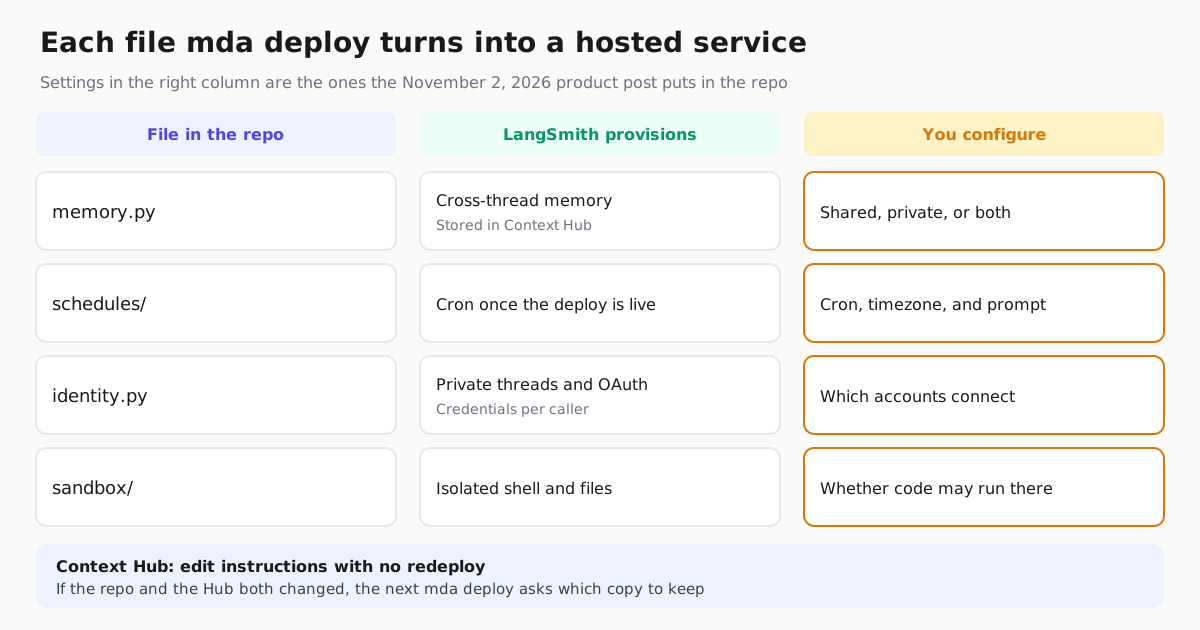
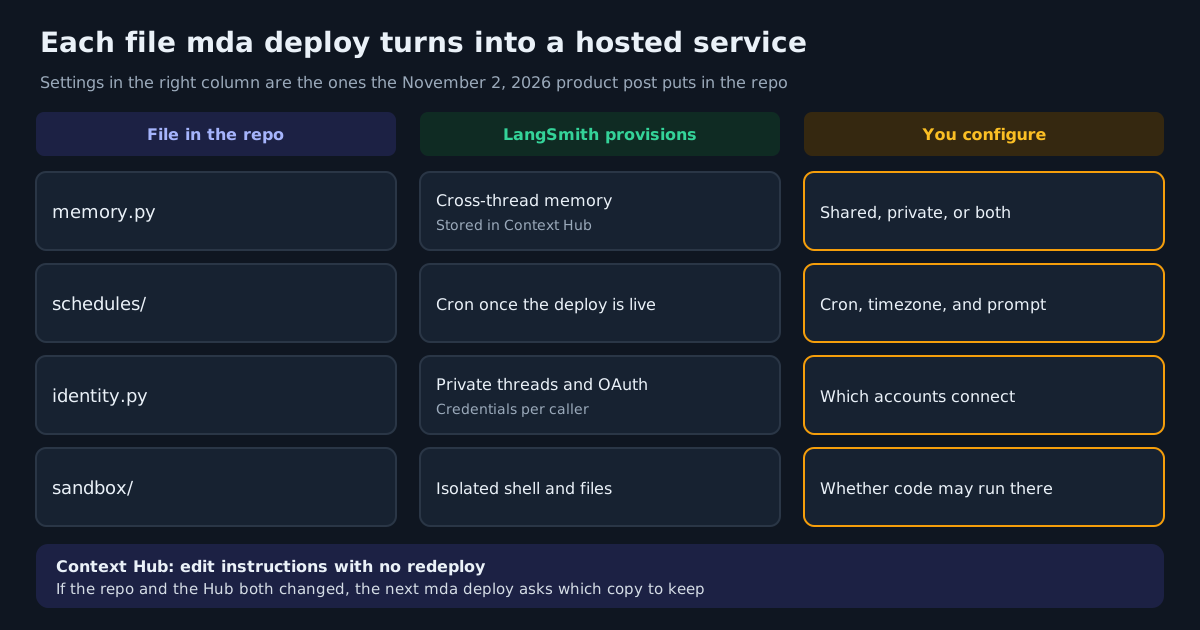
The harness already has a filesystem, planning, and subagents. The post says proactive or multiplayer use needs a production process: threads that survive restarts, a safe place to run generated code, memory across conversations, a record of actions, and cron. Agent Server covers durable threads and streaming. mda deploy provisions the rest from files. Without memory.py, memory stays inside the current thread.
| File | Provisioned on deploy | You configure |
|---|---|---|
memory.py |
Cross-thread memory in Context Hub | Shared layer, private layer, or both |
schedules/ |
A cron run once the deployment is live | Cron, timezone, and prompt |
channels/slack.py |
Slack starts runs and receives replies. HTTP webhooks can start runs | Which channel file wakes the agent |
sandbox/ |
Isolated filesystem and shell | Whether the agent gets that shell |
identity.py and connections |
Per-caller threads, memory, credentials, and OAuth | Which callers and accounts connect |
define_schedule takes cron, a timezone, and a prompt. The example runs at 08:00 on weekdays, America/Los_Angeles, with the prompt “Write the daily digest.” Async subagents are declared on the agent and run in the background while the conversation continues. mda evals init -i builds a Harbor workspace under evals/. Parallel powers built-in web search with no separate account or API key, per the post. interrupt_on pauses selected tool calls for a person.
Browser use is a browser.py file. define_browser sets thread or user scope and an idle timeout. Sydney Runkle’s October 29 browser post specifies browser_snapshot, browser_run, browser_screenshot, and browser_handoff, plus a localhost bridge into the agent sandbox. The handoff is the path where a person signs in and clicks Hand back.
Jobs teams are running
The post names six public-beta patterns. Slack alerts become sandbox investigations and thread reports, and some agents open a pull request. Issue-tracker webhooks start a build-and-verify loop or a browser pass on a preview. Teams also deploy one assistant per internal job, a customer-facing agent on the Agent Server API with per-user memory, one agent per project, and cron-driven sales or product agents. The support sketch answers Slack and sweeps stale tickets every night, each behavior as a file.
Edit from traces
Deploy syncs instructions.md and skills/ into LangSmith Context Hub. Edits in the Hub change behavior with no redeploy. If the Hub changed after the last deploy, the CLI asks which copy to keep.
The agent also writes durable memory into Context Hub. memory.py chooses a shared layer, a private layer, or both. Traces in LangSmith show tool calls and intermediate steps. LangSmith Engine reads them, surfaces recurring failures, and, when connected to the Hub repository, can propose instruction and skill fixes. Use a real trace to accept or reject a proposed prompt edit before the next deploy.
Open problems on the same files
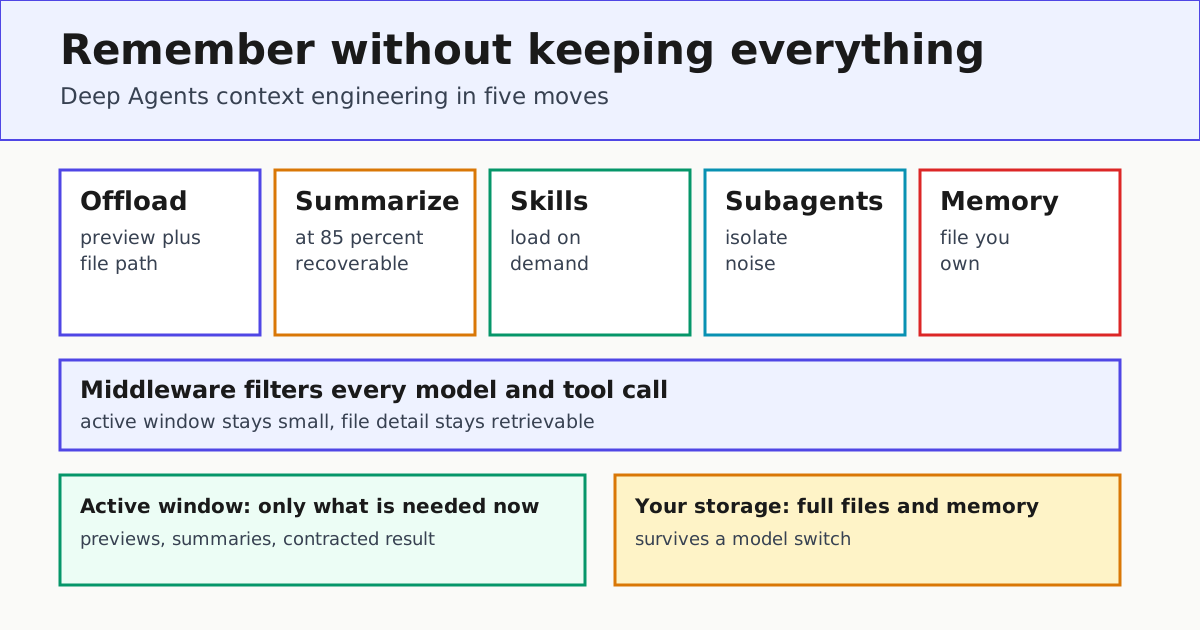
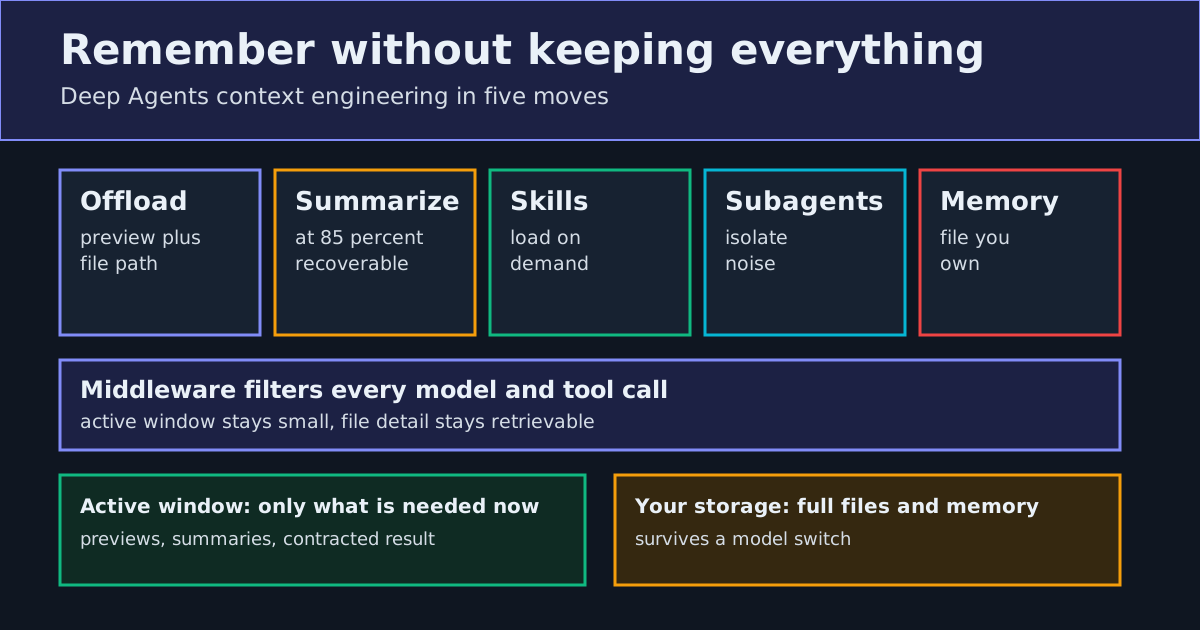
Chase writes that a model loop, tools, and a sandbox are now the common shape, and that summarizing threads, offloading tool results, skills, tool search, subagents, and the shell are established context practice. Deep Agents context engineering is the harness guide for that layer.
He says the live question is proactive, always-on, goal-oriented agents, and that LangChain and the industry lack general solutions. The gaps sit on the files above. A cron run can fire, or an agent can wake on an event feed or a heartbeat, and still be unwelcome. memory.py sets who can read a layer. What to store remains open, since empty memory and very detailed memory both fail. Async subagents keep long work off the live turn. He asks how the facing agent learns that work finished when it is busy, idle, or waiting on approval. He cites agents like Hone for goal tracking, and he warns that an order to get rid of all bugs can be met by deleting the codebase. The product’s interrupt_on pauses selected tool calls. A person still has to name a goal that a shortcut cannot satisfy. On browsers, he says images and the DOM are both large, so browser context is a harder problem than a shell.
What to run this week
create_deep_agent is the compiled agent you host, including backend, store, checkpointer, and server. define_deep_agent is the managed definition. Move from Deep Agents is LangChain’s conversion guide, and the Deep Agents SDK keeps the same harness on your infrastructure.
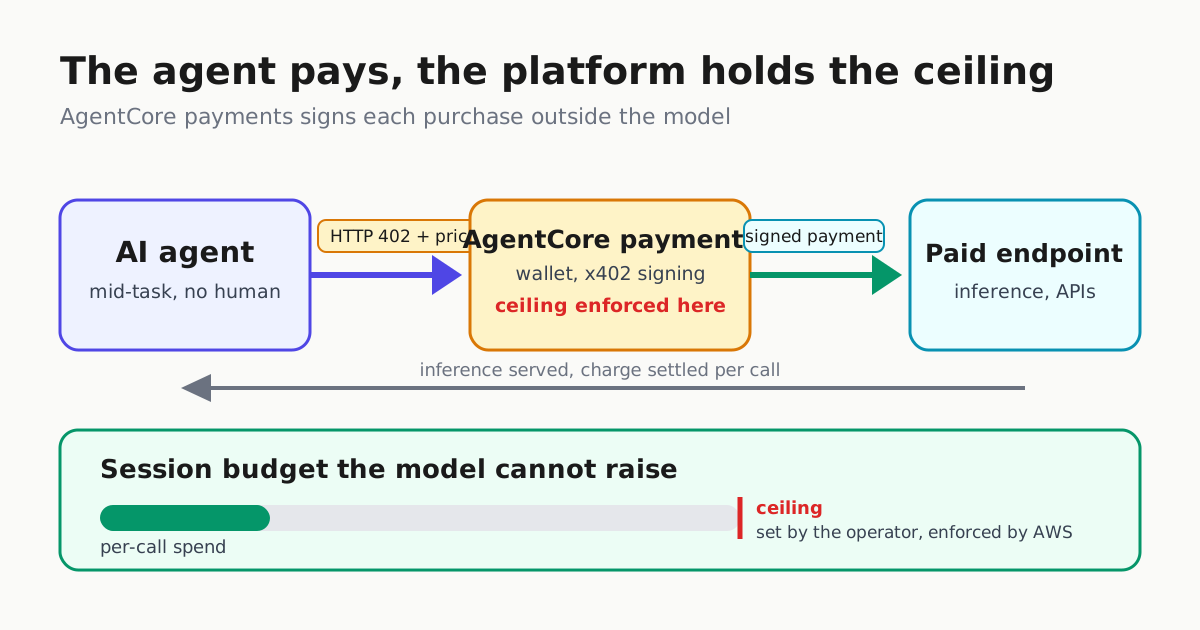
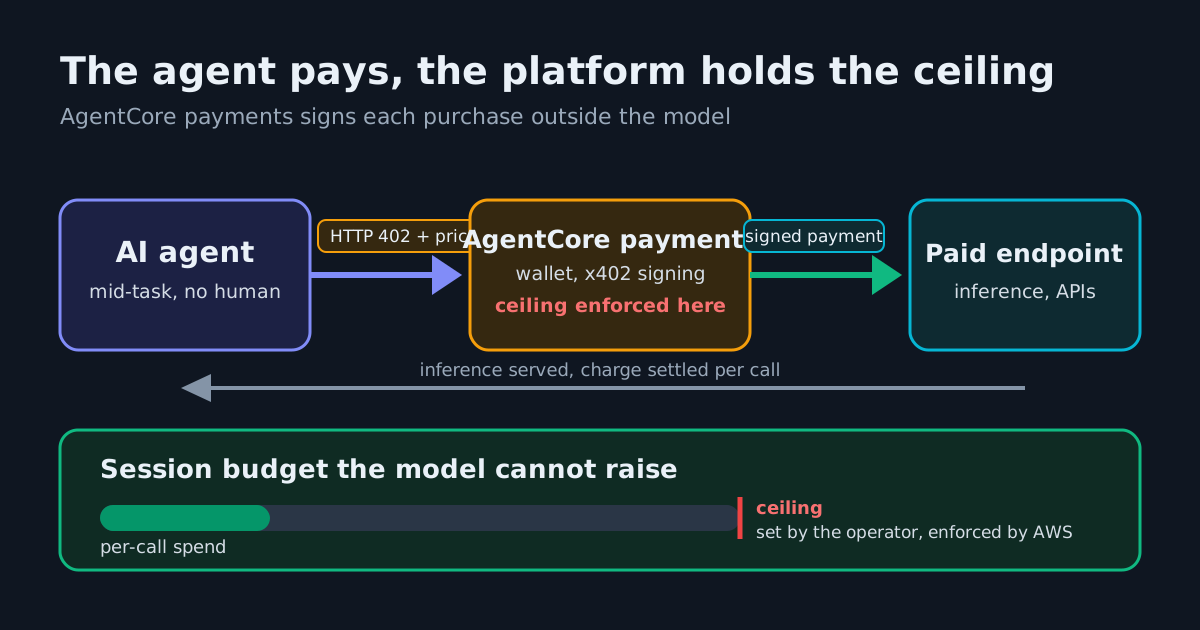
Deploy the quickstart, read one Studio trace, then add one file you already run by hand, such as the weekday digest. Add identity before a second user so threads, memory, and credentials stay per caller, with OAuth on each person’s accounts. Set interrupt_on for spend, production writes, and outbound messages. When Engine proposes a Hub edit, decide which copy wins. Login walls use the October handoff. Foundry browser automation is a separate managed browser that has already reached general availability.
Public beta is the status LangChain prints for this layout on LangSmith Cloud. The 80 percent figure belongs to Content Studio. Ship a file that removes a service you can name, and review memory, notifications, and goals on every unattended run.