LangChain's GTM Agent Shows How Templates, Business Context and a Stop Rule Improve Sales Documents
LangChain details an artifact-generation workflow built around account context, leadership-owned templates and visual review, including a stopping rule that cut one one-pager run from 18 minutes to seven.
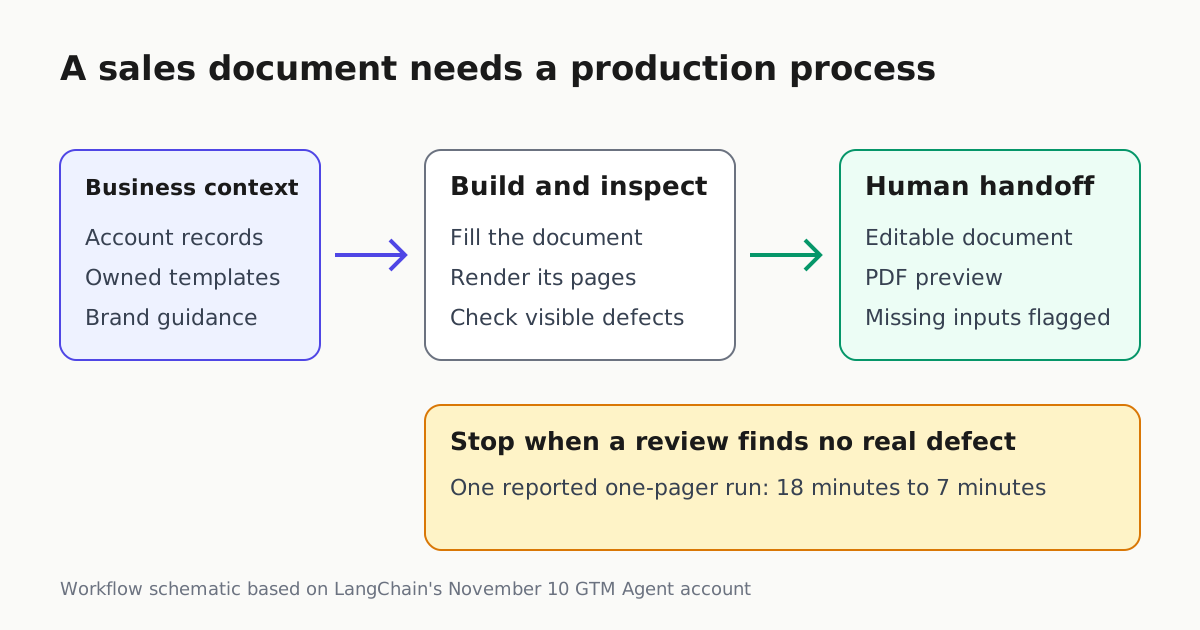
LangChain’s sales-document agent offers a useful implementation lesson for teams building business agents: reliable deliverables require an explicit production process around the model. In a November 10 account of its GTM Agent, the company describes how account records, leadership-owned templates, rendering tools and human feedback turn requests into editable sales collateral.
For developers automating proposals, account plans or onboarding documents, the consequential detail is the quality-control loop—and its stopping condition. LangChain says an early agent sometimes reviewed already acceptable pages dozens of times. A rule to stop once a review found no real defect reduced one one-pager run from 18 minutes to seven. That is a concrete example of improving a document agent by changing its workflow.
The document starts with the account
The workflow begins when a representative requests an artifact in Slack, or when the agent suggests one during meeting preparation. Before building anything, it resolves the account in Salesforce and reads its Google Drive folder. If required information—such as success criteria or an economic buyer—is missing, it asks the representative.
A tool then copies a leadership-owned template into the sandbox. The agent fills it using python-pptx and a brand kit built into the sandbox image. LibreOffice converts the file to PDF; the pages are rasterized so the agent can inspect their appearance, fix defects and render again.
The finished file becomes a native Google Slides, Docs or Sheets document in the account folder. The representative receives a PDF preview and a link in Slack, with remaining human edits flagged. This preserves an editable handoff rather than making a generated document the final authority.
The shared folder also connects successive runs: representatives add notes and edit documents, and the agent reads that material before creating the next artifact. Leadership can update the shared templates without requiring each representative to rebuild their own version.
Encode standards, then bound the review
LangChain separates sales-process skills and instructions from application code. Those materials describe document requirements and sales-stage rules. Brand assets and style guidance are built into the sandbox image, with changes handled through reviewed pull requests.
For another team, the practical starting point is one recurring document with an accountable owner. Capture its required inputs, approved template and acceptance criteria before expanding the catalog. The case study supports treating those materials as maintained product inputs: LangChain describes weekly meetings with artifact owners and feedback channels for representatives.
The stopping rule deserves its own acceptance test. A reviewer needs a concrete definition of a defect, and a successful review needs to terminate the loop. Our existing guide to checkable completion promises and iteration caps addresses the related problem of giving long-running agents an observable finish line.
Keep business context retrievable
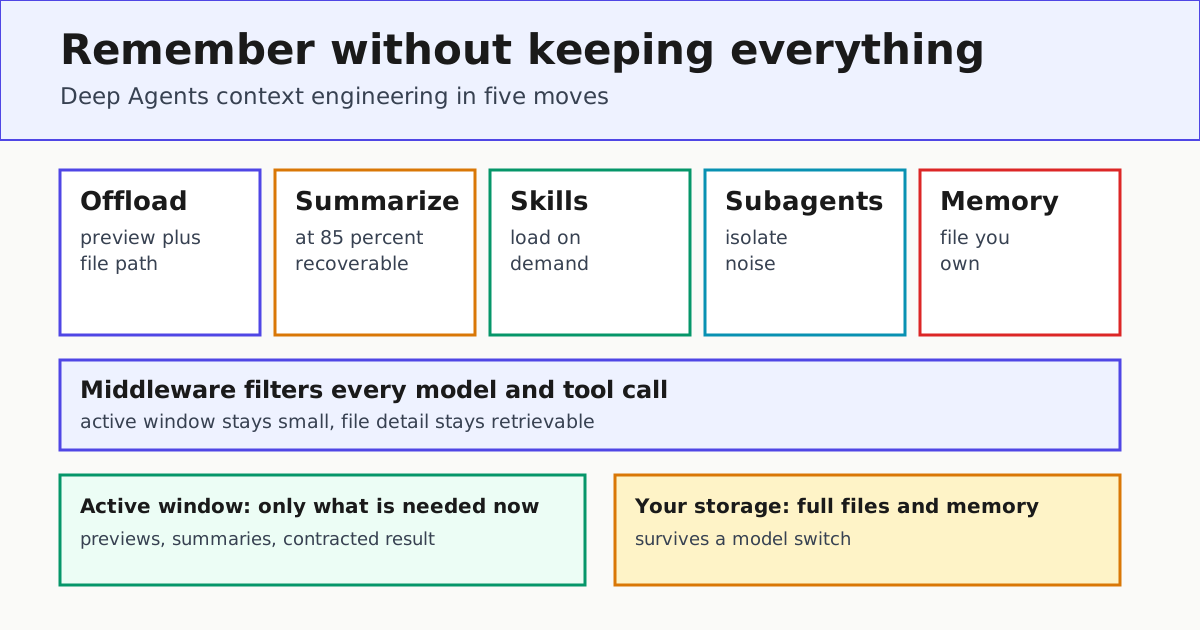
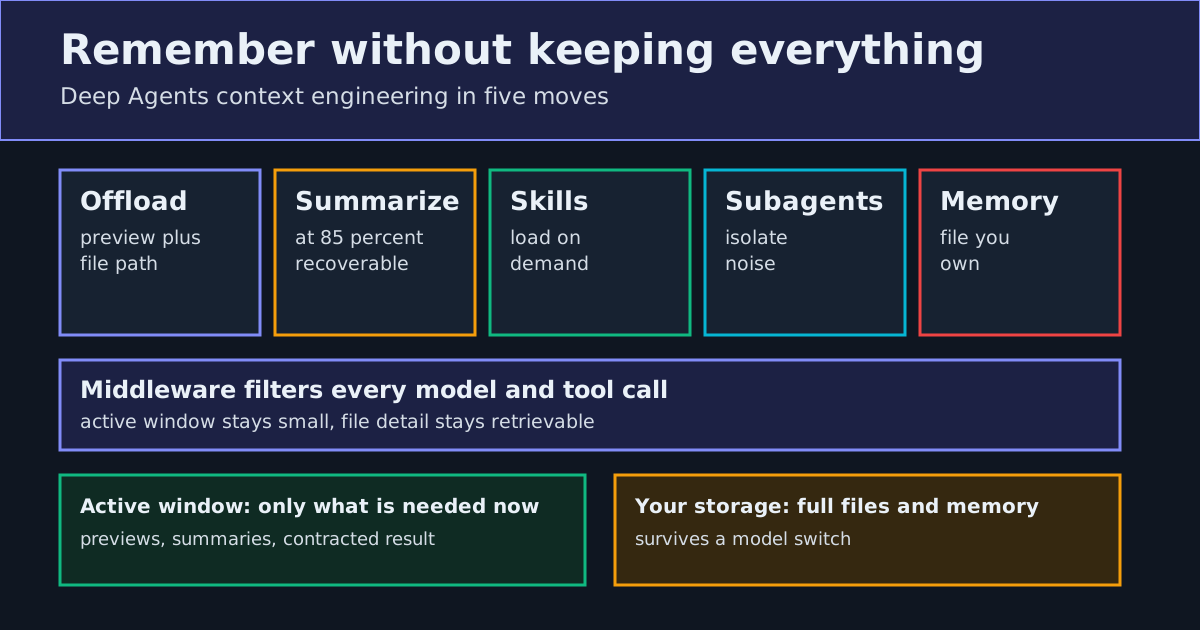
Document workflows accumulate transcripts, account data and intermediate drafts. LangChain’s earlier Deep Agents context-engineering guide, published October 14, explains the supporting architecture: offload large results to files, summarize older conversation history while retaining recoverable originals, and load specialized skills when needed. These are background mechanisms, not new capabilities announced by the GTM post.
A separate August case study of Stripe’s Kai describes a similar division of responsibilities: Deep Agents supplies common execution primitives, while Stripe adds its internal infrastructure and team-owned skills. It also reports difficulties selecting among large skill catalogs. Together, the examples suggest that adding more company knowledge requires deliberate retrieval and selection, rather than putting every instruction into every model call.
Measure use, not just generation
LangChain reports 1,540 generated artifacts over 12 weeks. It says deals where representatives sent an artifact advanced to a later stage 47% of the time, compared with 16% for matched deals without one. These are vendor-reported observational results; the supplied account does not establish that the artifacts caused the difference.
The more transferable measurement approach follows artifacts beyond creation: how many are shared externally, how much representative time they save, and which deals they touch. A team adopting this pattern can track those outcomes alongside review time and human corrections. Generating a polished file is only the first milestone; producing something a representative actually uses is the stronger test.