Google Workspace launches MCP servers and CLI, with new rules for AI agents in February
Google’s official Workspace tools add confirmation for sensitive actions such as sending email and changing Drive sharing. For teams migrating from direct REST calls, February brings a new access requirement and April brings Scaled Tier billing.
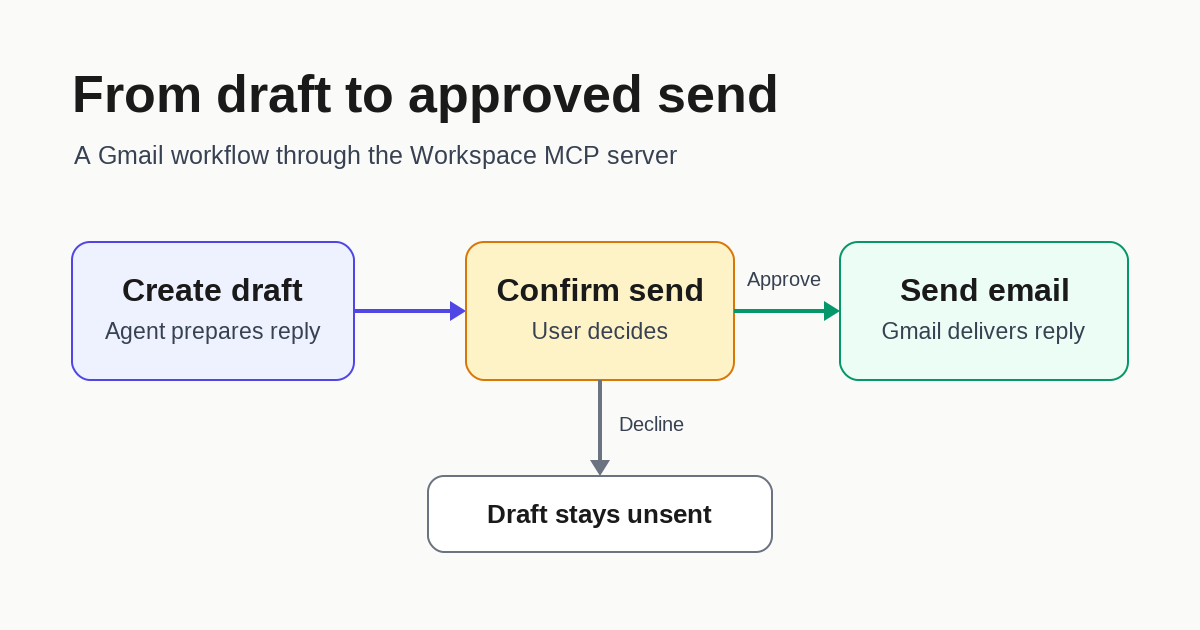
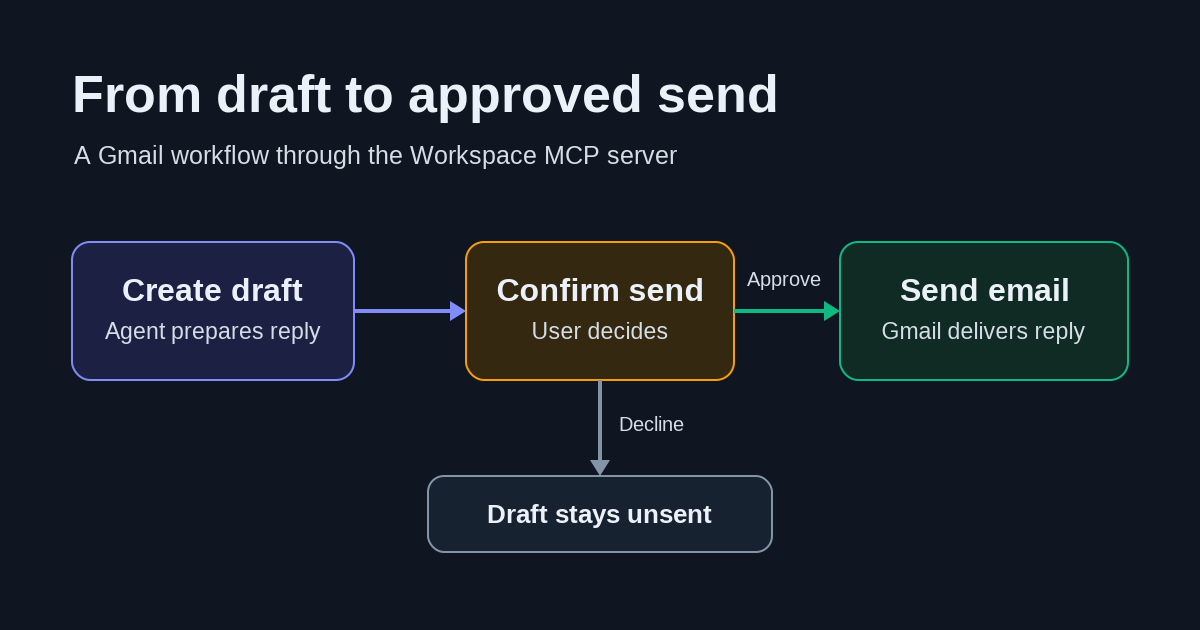
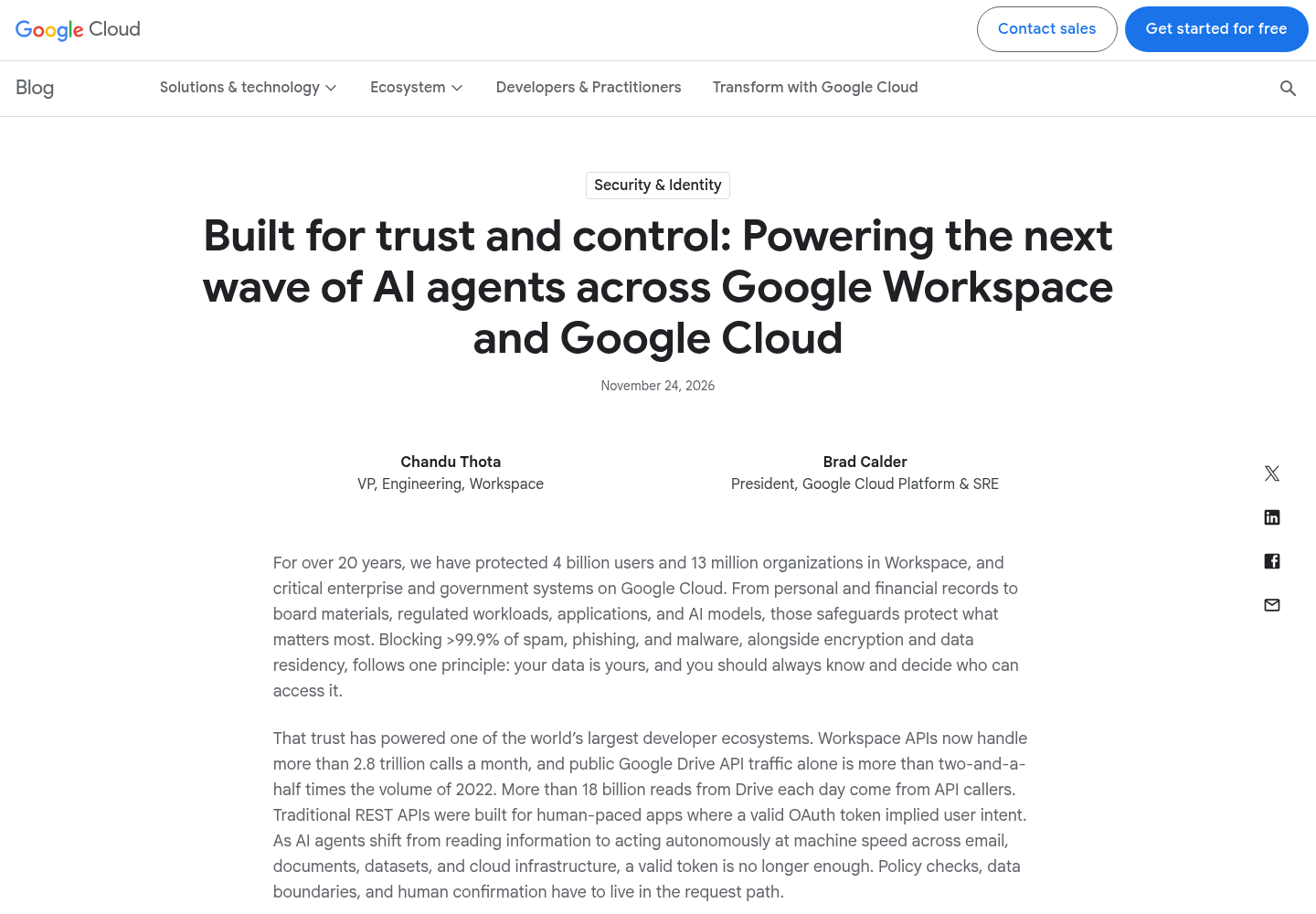
Google made its Workspace Model Context Protocol (MCP) servers and Workspace CLI generally available on November 24, 2026. For developers who connect agents to Gmail, Drive, or Calendar, the launch changes what happens between an agent proposing an action and Workspace carrying it out. Google says both interfaces enforce explicit user confirmation for sensitive actions such as sending email, changing Drive sharing permissions, and making bulk edits. The same announcement sets February 1, 2027, as the start of technical enforcement for Google’s new agent access requirement. Google Cloud announcement
February changes the access route. April changes the bill.
The Workspace AI Tools Addendum requires covered AI-driven tools to use a Google MCP. Google’s launch announcement names the Workspace MCP servers and the Workspace CLI as the supported interfaces for agents and says traditional apps can continue using existing REST APIs. Google’s quota guide sets February 1 as the addendum’s effective date and says agents that continue calling Workspace REST APIs directly will be limited to Standard Tier quotas regardless of their selected tier. The documented quota consequence gives teams a concrete migration date without implying a blanket shutdown of Workspace REST APIs. Workspace AI Tools Addendum · Google’s quota and rollout guide
April 1, 2027, is the separate billing milestone. The Standard Tier for generally available Workspace MCP servers includes up to 5,000 requests per day, per project, per product, with per-minute limits and no billing account required. Some MCP tool calls count as multiple requests because they make multiple underlying API calls. On the Scaled Tier, Google says successful Gmail, Calendar, and Drive MCP requests will be billable from the first request once billing begins. Teams sizing a migration should measure the request volume of a complete workflow, including any searches and follow-up reads it triggers. Counting only the tool calls shown in a chat transcript can understate quota use. Google’s quota and rollout guide
Build around the point where a person needs to act
The remote MCP servers give compatible hosts a standard interface for tasks such as searching mail, retrieving files, and creating drafts. Google documents setup for Antigravity and Claude and requires user-delegated OAuth clients connecting to the servers to be marked for AI-powered agent use. The Workspace CLI gives local agents and terminal workflows structured JSON output and scoped OAuth sign-in. For a team that already exposes Workspace operations to an agent through its own REST wrapper, the migration starts with mapping the operations that wrapper actually exposes and checking which official tools cover them. Google’s MCP configuration guide · Google Cloud announcement
Consider a support assistant that searches a thread and prepares a reply. The agent can create the Gmail draft for review. If the workflow also calls for sending, the host needs a way to surface the confirmation and distinguish a saved draft from a sent message. A useful acceptance test checks the mailbox after a declined confirmation and checks that the agent reports the draft accurately. The same test applies to a proposed Drive sharing change. Verify the file’s permissions after a decline and check what the user sees when approval is unavailable in an unattended run. Google Cloud announcement · Automater’s consent-state test matrix
The addendum also makes the migration a data-retention task. It limits processing of Workspace user data to active, user-authorized tasks, caps retention of defined Google Technical Information at 30 days, and bars retention of covered user data and Google Technical Information after disconnection or revocation. It also prohibits using either category to build evaluation datasets or train models. A team that stores Workspace-derived embeddings or copies mail into an evaluation pipeline should trace those outputs alongside its API calls. A connector migration can change how the agent gets the data while leaving its downstream storage paths in place. Workspace AI Tools Addendum