GitHub Copilot Supports Server-to-Server Authentication: SDK Agents Get Workload-Owned Identity
GitHub's new public preview lets Copilot SDK services and agents authenticate as a GitHub App installation instead of a signed-in user, with org-owned billing, policy enforcement, audit fields and a same-day s2s token incident worth monitoring.
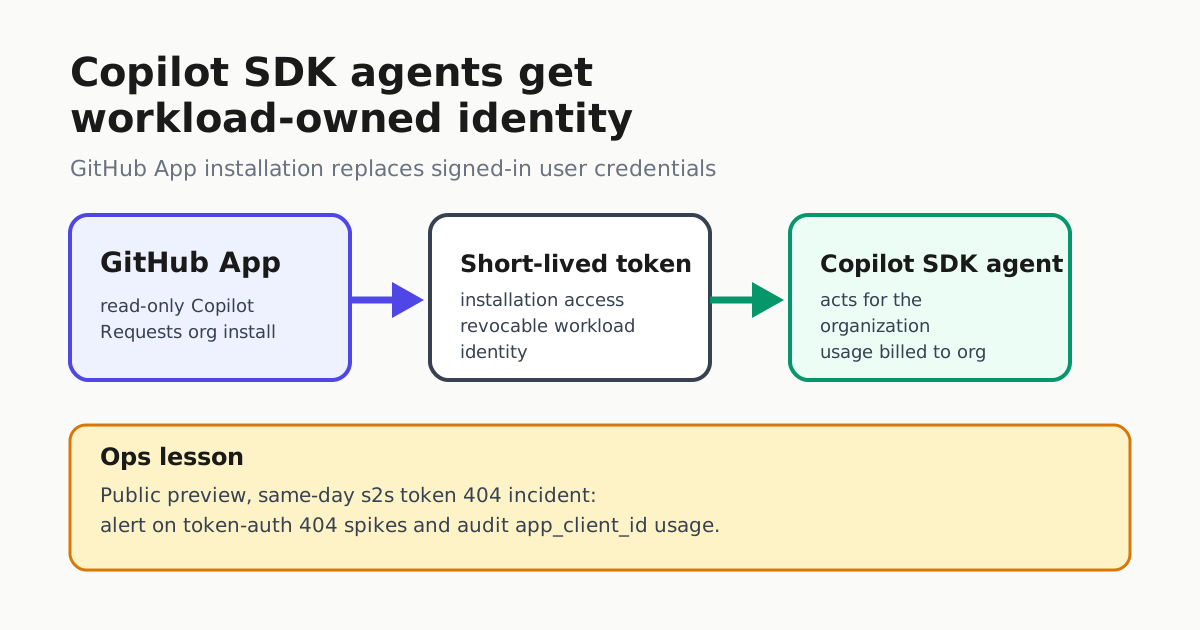
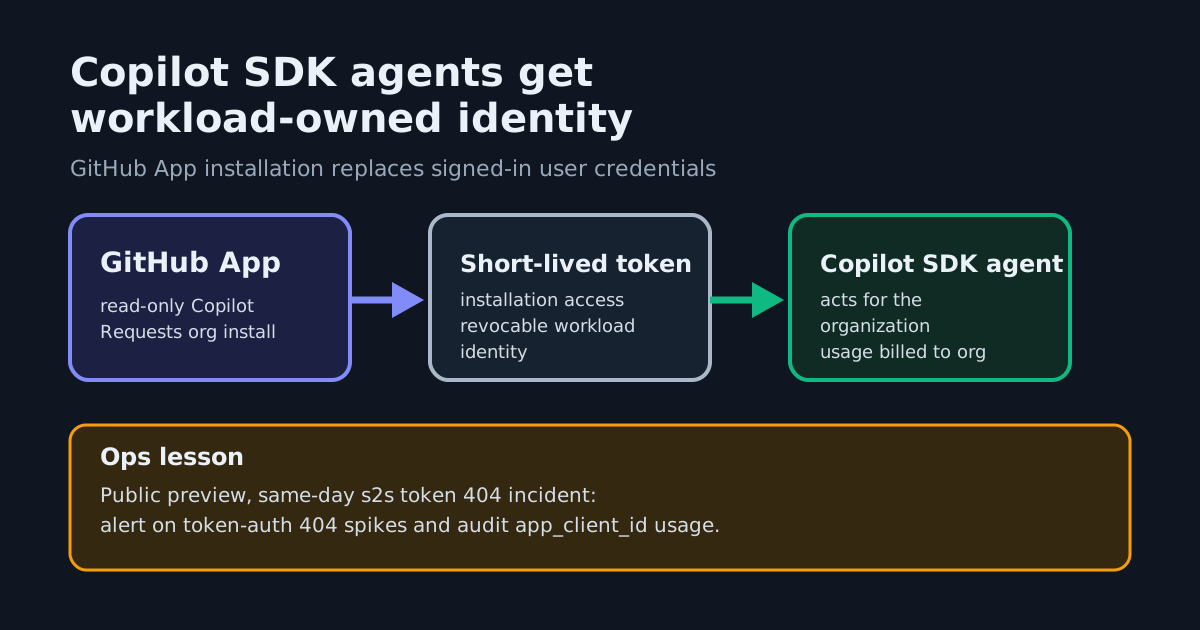
GitHub has opened a public preview for server-to-server authentication in GitHub Copilot, aimed at the exact problem that makes production agents fragile: tying automated Copilot usage to a human user’s login. In the announcement, GitHub says services and agents built with the GitHub Copilot SDK can now make requests on behalf of an organization using a workload-owned identity from a GitHub App installed on that organization, rather than relying on a signed-in user’s credentials.
What changed
The new model is deliberately narrow and operational. A developer grants a GitHub App the read-only Copilot Requests organization permission, installs the app on an organization, and passes a short-lived installation access token to the Copilot SDK. Usage is attributed and billed to the organization that owns the installation, and the organization’s model policies, budgets and spending controls still apply.
That matters because the previous pattern pushed teams toward one of two bad options: run Copilot SDK agents under a personal account and inherit that person’s departure, offboarding and credential-rotation risk, or build around shared credentials that are hard to scope and audit. GitHub’s preview moves Copilot SDK agents closer to the service-principal pattern that security teams already want for unattended workloads; see our agent service principal SSO guide for the broader identity design.
Organization owners get concrete controls rather than a vague trust boundary. GitHub says owners can review which apps have access, identify app-attributed usage in AI usage CSV exports through the app_client_id field, and stop an app’s access by suspending or uninstalling it. Those are the pieces that turn “an agent used Copilot” from an anecdote into an auditable line item.
The setup shape
| Step | Operator action | Why it matters |
|---|---|---|
| 1 | Create or choose a GitHub App and grant read-only Copilot Requests org permission | Limits the app to the Copilot surface instead of broad repo or org power |
| 2 | Install the app on the target organization | Makes the org the owner of usage, billing and policy context |
| 3 | Issue a short-lived installation access token and pass it to the Copilot SDK | Replaces durable user credentials with revocable workload identity |
| 4 | Audit app_client_id in AI usage CSV reports |
Separates human Copilot usage from app-attributed agent spend |
| 5 | Suspend or uninstall the app to cut access | Gives owners a kill switch that does not depend on one employee’s account |
The public preview status should stay in the headline of any rollout plan. Preview means the permission model, SDK surface and operational edge cases can still move; teams should validate token lifetime, retry behavior and audit exports before letting an unattended fleet depend on it.
A cautionary same-day incident
The timing is also a reminder that s2s auth is now a production dependency. On the same day as the changelog, GitHub’s status page documented an incident, “Elevated 404s for GitHub App s2s tokens in git/API”. Between 06:55 and 08:01 UTC on October 27, API and git requests authenticated with GitHub App server-to-server tokens saw elevated failures; authenticated git operations mistakenly returned 404 for 1.24% of requests on average and 2.49% at peak. GitHub attributed the failure window to a MySQL migration that overlapped a cleanup job deleting about 59 million installation-record rows, causing gh-ost replication delays and a read cutover that exposed the stale installation data.
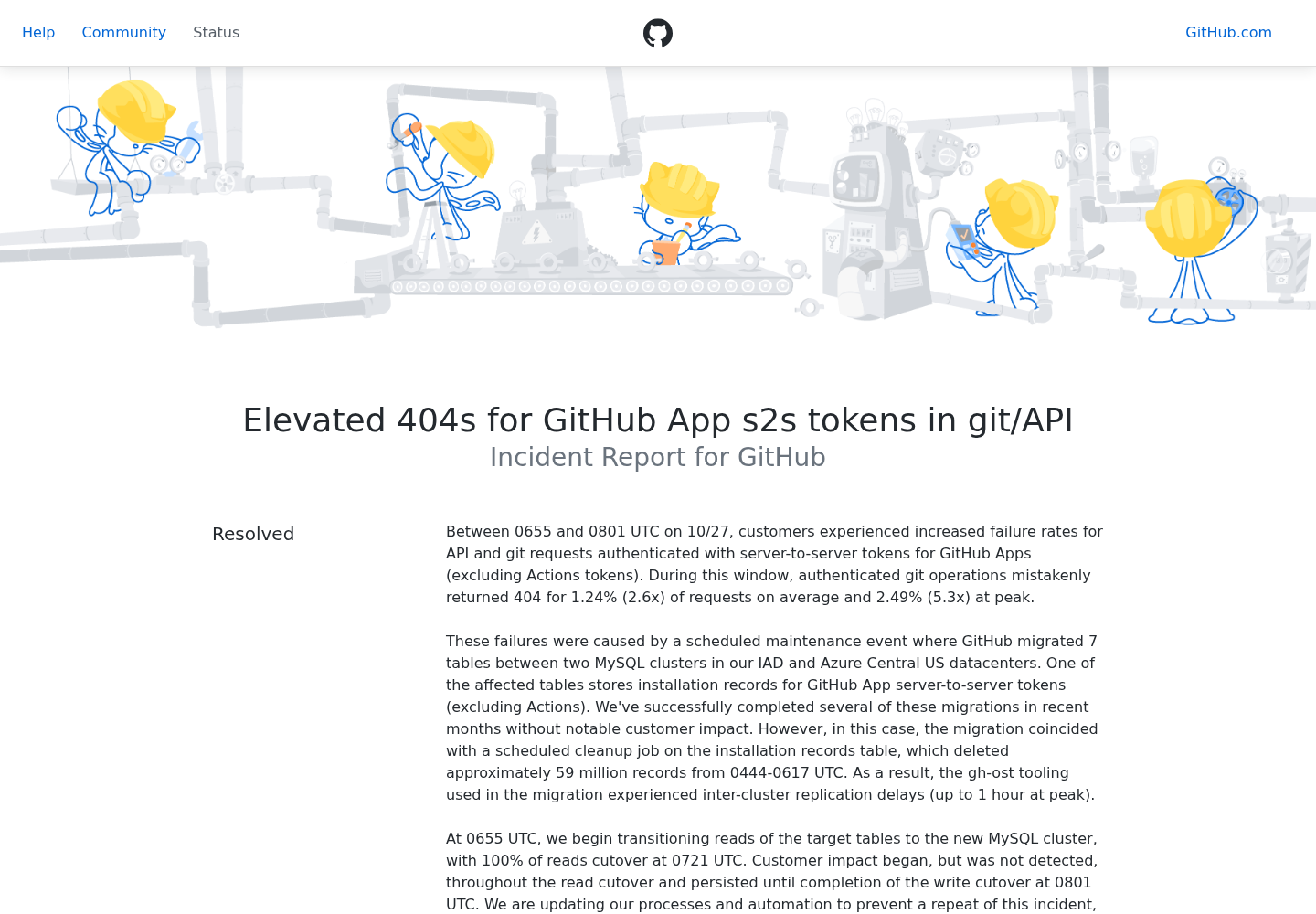
404 is the dangerous flavor here because it can look like “repository missing” or “permission denied” in agent logs. For teams adopting Copilot s2s auth, the practical response is to treat token-authenticated 404 spikes as a first-class alert: retry only with backoff and a distinct error classification, page on sustained rates above your normal baseline, and keep a fallback path for critical git operations. Do not let an agent interpret a transient platform-side token failure as a definitive absence of access.
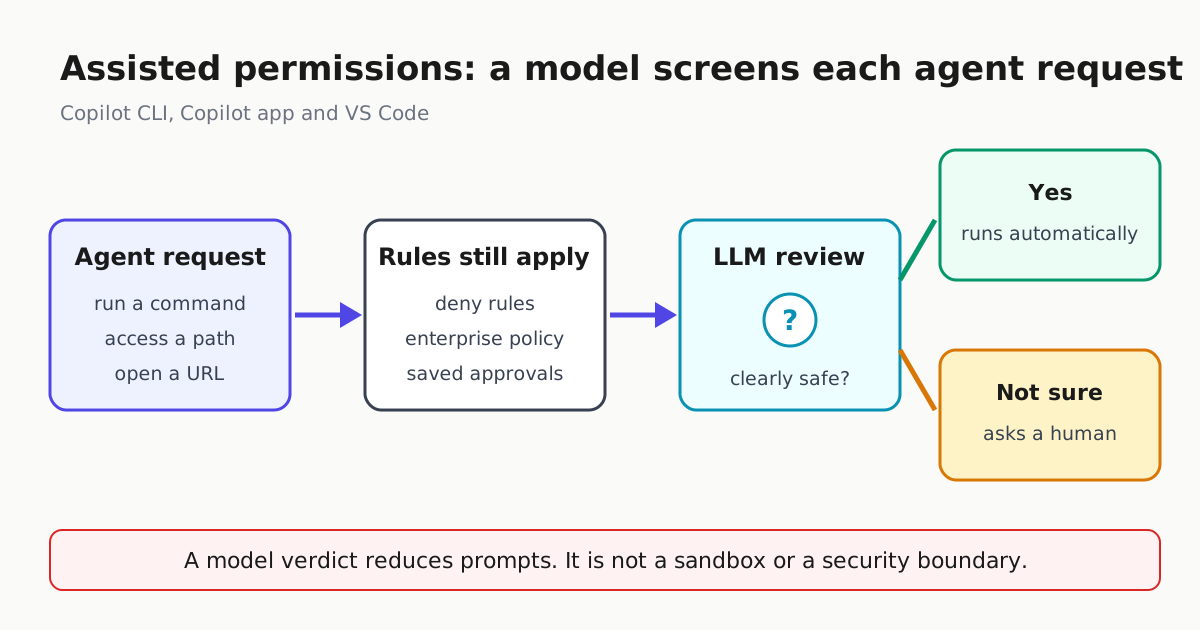
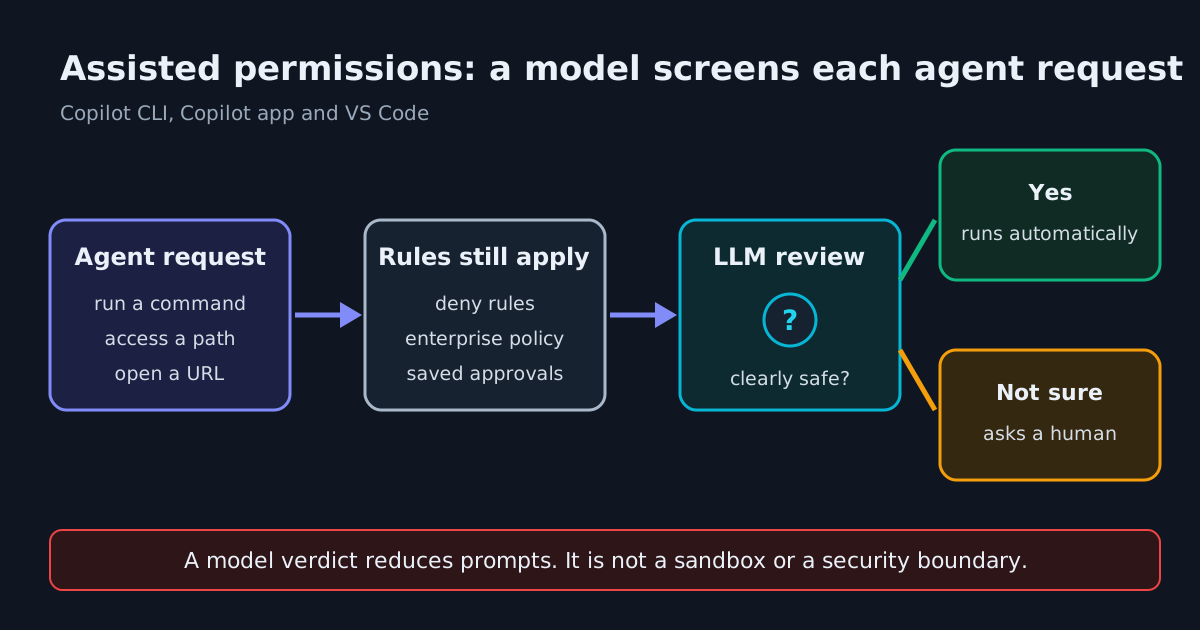
This also sits next to GitHub’s recent move to make Copilot assisted permissions generally available, where a model evaluates whether command, path and URL requests are clearly safe enough to proceed. The two changes complement each other: assisted permissions govern what an agent may try inside a session, while s2s authentication governs which workload identity the SDK presents when it acts. We covered the GA permission model separately in GitHub Copilot assisted permissions is GA.
Who should care
- Platform teams running Copilot SDK agents in CI, schedulers or services get an identity model that survives employee churn and can be scoped to read-only Copilot Requests.
- FinOps and org owners get billing attribution to the owning installation and an
app_client_idfield for separating agent spend from human IDE usage. - Security reviewers should still treat preview as preview: prove token issuance, revocation, CSV attribution and failure-mode alerting before production rollout, and watch s2s 404 windows as an operational risk, not a theoretical one.
The bottom line: this is not a cosmetic auth option. It moves Copilot SDK agents away from user-bound credentials and toward org-owned, revocable, auditable workload identity, with a fresh incident showing why the monitoring has to be part of the design.