
Claude Code Review Goes GA for Team and Enterprise: Per-Repo Quick, Standard and Deep Levels, Faster Runs, and Credits That Skip Data-Residency Orgs
Anthropic's Claude Code Review left research preview for Team and Enterprise plans. The GitHub App runs a find-verify-rank-post pipeline that never builds code or merges PRs, with per-repo review levels, reported 6-10 minute runs, and enterprise credits that exclude data-residency orgs.
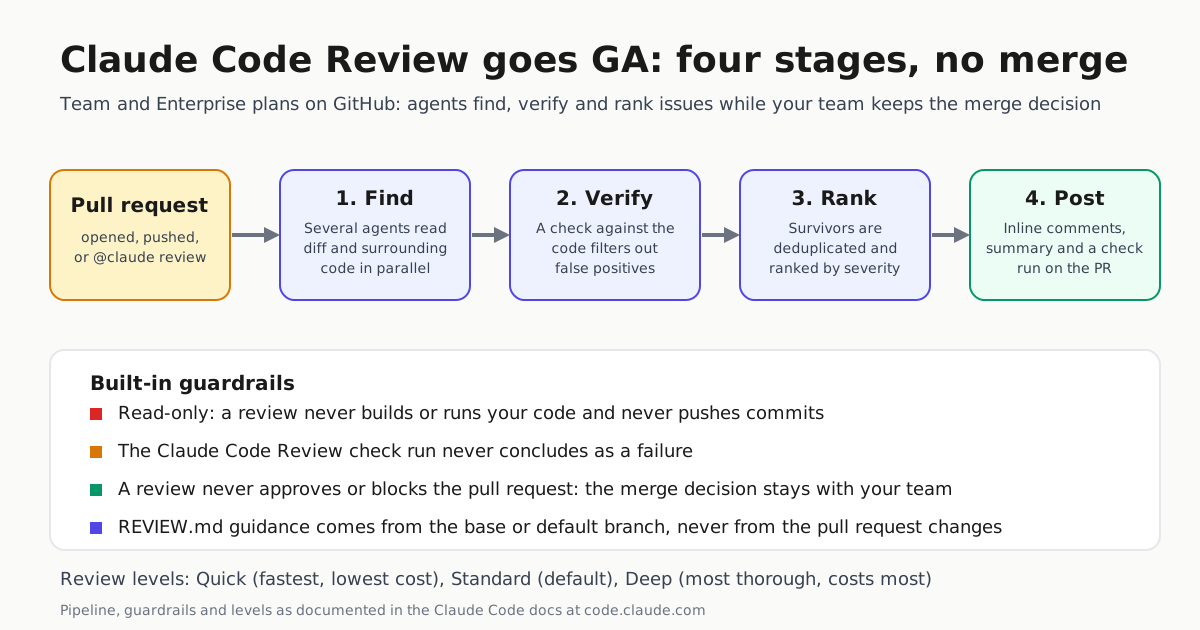
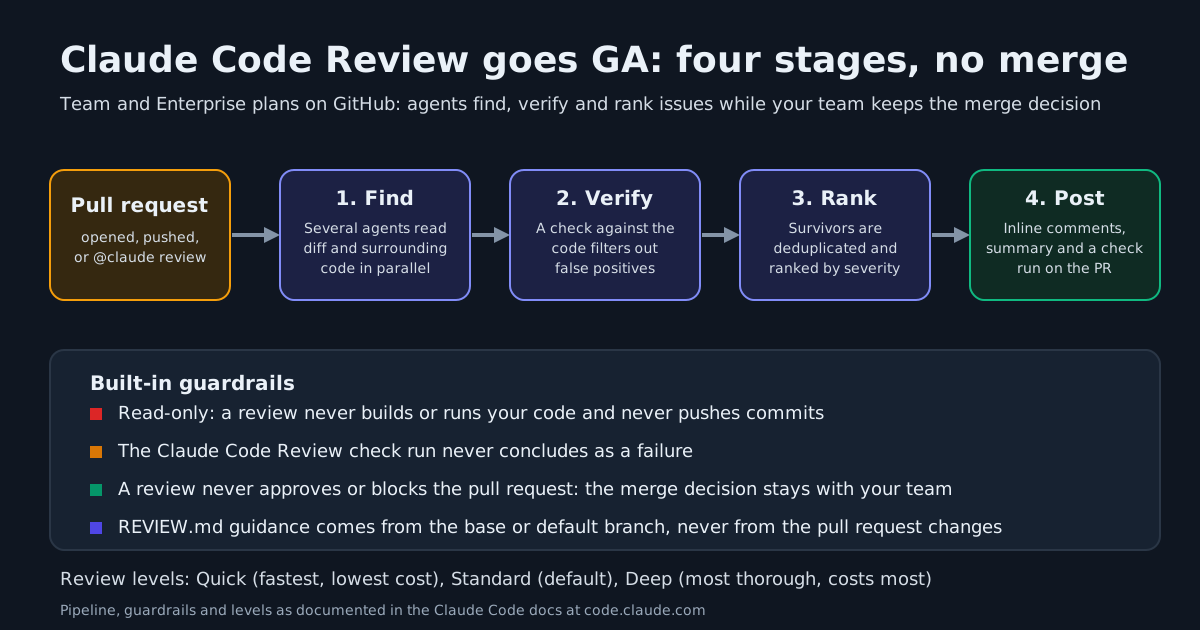
Anthropic’s Claude Code Review, the GitHub App that runs multi-agent reviews of pull requests, is now generally available for organizations on Claude Team and Enterprise plans. Anthropic announced GA in an Oct. 15 post from its ClaudeDevs account, saying reviews are faster and “catch more of the bugs that matter,” with admin-chosen Quick, Standard or Deep review levels for each repository. TNW reported that the exit from research preview ships with $10,000 to $50,000 in promotional credits for eligible enterprises, and with a carve-out that matters for data-residency organizations.
How a review runs: four stages, read-only, no merge authority
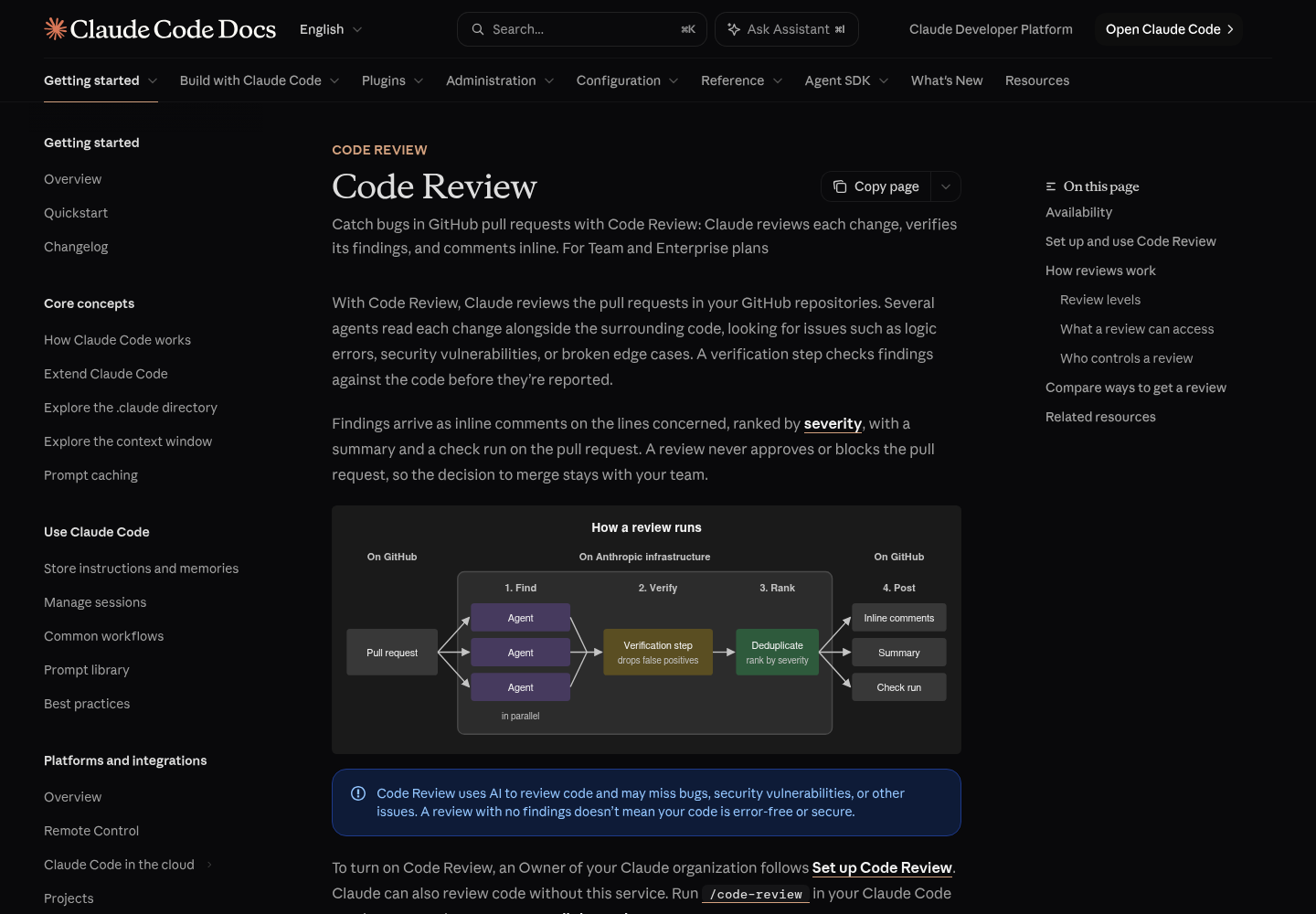
Per the Claude Code docs, each review runs on Anthropic infrastructure in four stages:
- Find — several agents examine the diff and surrounding code in parallel, looking for logic errors, security vulnerabilities and broken edge cases.
- Verify — a verification step checks candidate findings against the code and filters out false positives.
- Rank — survivors are deduplicated and ordered by severity.
- Post — findings land as inline comments on the lines concerned, plus a summary and a check run named Claude Code Review.
Three guardrails are built in: a review never approves or blocks the pull request and its check run never concludes as a failure; repository access inside a review is read-only with no commits pushed; and the reviewer never builds or runs your code. That matches the stance we have argued for in AI PR Review Agent Policy: Agents Propose, Humans Merge.
REVIEW.md and CLAUDE.md files tune what gets flagged, and REVIEW.md is read only from the base or default branch — never from the pull request’s own changes, a structural injection guard. Triggers are set per repository (on open, after every push, or on request only), and anyone with write access can start a review by commenting @claude review. Admins get no model choice: Code Review selects the Claude models itself, and thoroughness is controlled through the review level.
Levels and cost
| Level | Depth | Speed and cost |
|---|---|---|
| Quick | Lighter pass | Fastest, lowest cost |
| Standard (default) | Balanced | Mid on both |
| Deep | Most thorough | Slowest, costs the most |
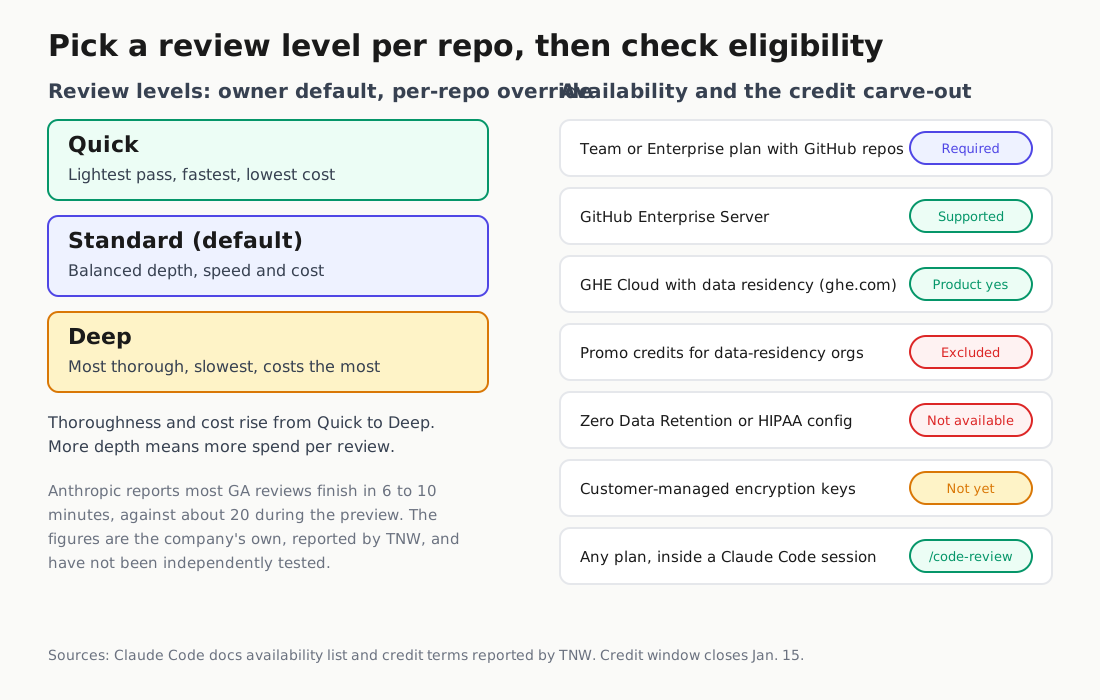
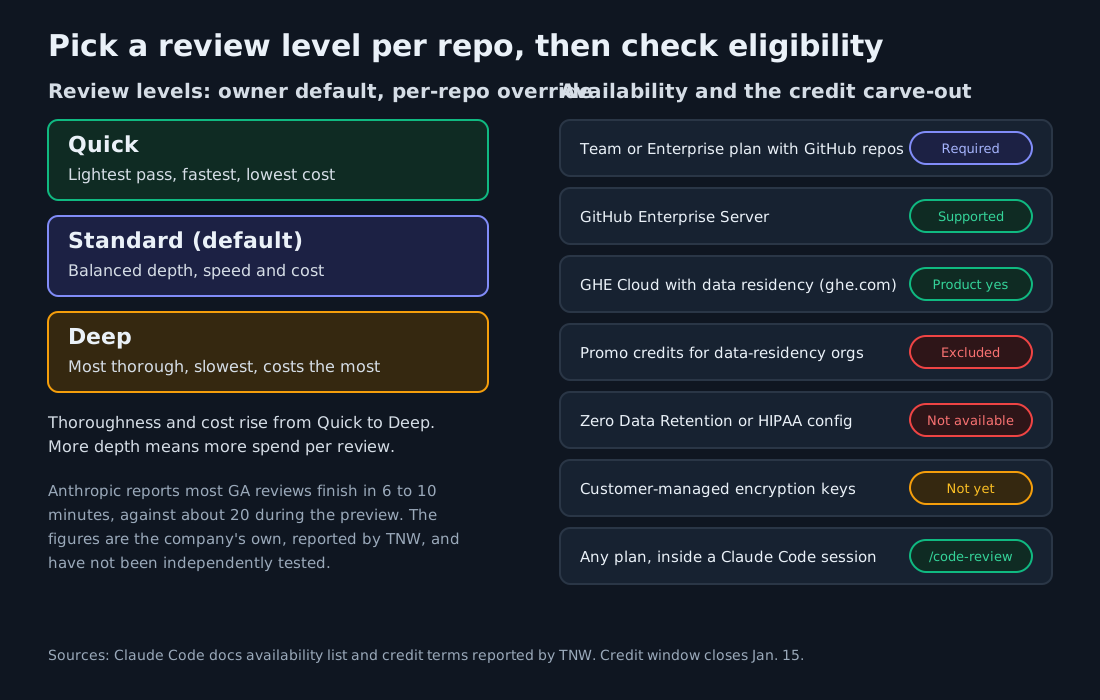
An Owner picks one level for the organization and can override it per repository — Quick for a routine codebase, Deep for a critical one. TNW reports that most GA reviews finish in six to ten minutes against roughly twenty during the preview, and that preview reviews cost $15 to $25 each; both figures trace to Anthropic and have not been independently tested. The docs describe a monthly spend limit and reviews skipped for budget, so estimate per-review cost and set the limit before turning this on org-wide.
Who can use it — and who cannot
Availability requires a Team or Enterprise plan and GitHub-hosted repositories, including GitHub Enterprise Server and GitHub Enterprise Cloud with data residency (an Owner follows the GitHub Enterprise Server admin setup and enters the ghe.com hostname). Organizations with Zero Data Retention enabled or the HIPAA configuration applied cannot use Code Review at all, it is not covered under Anthropic’s BAA, and customer-managed encryption keys (CMEK) are not yet supported — restrictions that intersect the tensions in Zero Data Retention AI Agents.
The credit carve-out. TNW’s framing centers on Europe, but the precise split matters: the product supports data-residency instances; the credit offer does not. An organization connected to a data-residency instance on a .ghe.com address cannot claim, and TNW reports that connecting one after claiming stops credits for the whole organization, including reviews running on github.com. Credits are fixed by active seat count, run 30 days from the claim, and the window closes Jan. 15.
Security posture and the competitive field
The GitHub App takes read access to the repositories it reviews, and the docs note the app holds a broader permission set shared with other Claude features — inventory it before installing, in the spirit of Review Bots Now Run PR Code. TNW recalls that in June a researcher showed a prompt injection flaw in Anthropic’s Claude Code GitHub Action that handed over an installation token with write access; Anthropic fixed the core bypass within four days, rated the issues 7.8 and paid a $4,800 bounty.
Anthropic’s performance claims — 16% of its pull requests drew substantive comments before Code Review versus 54% after, engineers marked under 1% of findings incorrect, and Claude writes 80% of its own code — are self-reported and untested, and the docs themselves warn that a clean review does not mean the code is sound. Treat the Verify stage as a false-positive filter, not a proof. The competition is entrenched: CodeRabbit raised $143M co-led by Atomico and runs two million reviews a week for 17,000 customers, per TNW. Anthropic’s counter is distribution — the Claude Code overview already lists Code Review as the answer to “Get automatic code review on every PR.”
What to do now
- Check eligibility against plan, code host, and the ZDR, HIPAA and CMEK limits.
- Have an Owner install the Claude GitHub App, choose repositories and set trigger behavior.
- Set levels per repository, add a REVIEW.md on the default branch, and set the monthly spend limit.
- Enterprises: assess the credit claim early — and read the data-residency carve-out before connecting a .ghe.com instance.
- No Team or Enterprise plan?
/code-reviewruns in any Claude Code session on any plan, and running Claude in your own GitHub Actions or GitLab CI/CD keeps reviews on your runners.
One sourcing note: at fetch time, Anthropic’s newsroom carried no separate press item for the GA — the October listing covers independent evaluators, the US midterms and the Singapore office — so the docs page and the ClaudeDevs post are the authoritative references for now.
Sources
- Code Review - Claude Code Docs
- ClaudeDevs on X: "Code Review is now generally available for Claude Team and Enterprise plans. Reviews are now faster, catch more of the bugs that matter, and admins can pick from Quick, Standard, or Deep review levels for each repo." / X
- Anthropic makes Code Review generally available, with $50,000 in credits attached
- Overview - Claude Code Docs
- Newsroom \ Anthropic