Nvidia Halts AI Server Shipments to Southeast Asia as a New US Rule Closes China's Remote-Access Loophole
Nvidia told Dell and Supermicro to halt AI server shipments to Malaysia, Singapore, Thailand and Indonesia as a new US chip-export licensing rule takes effect.
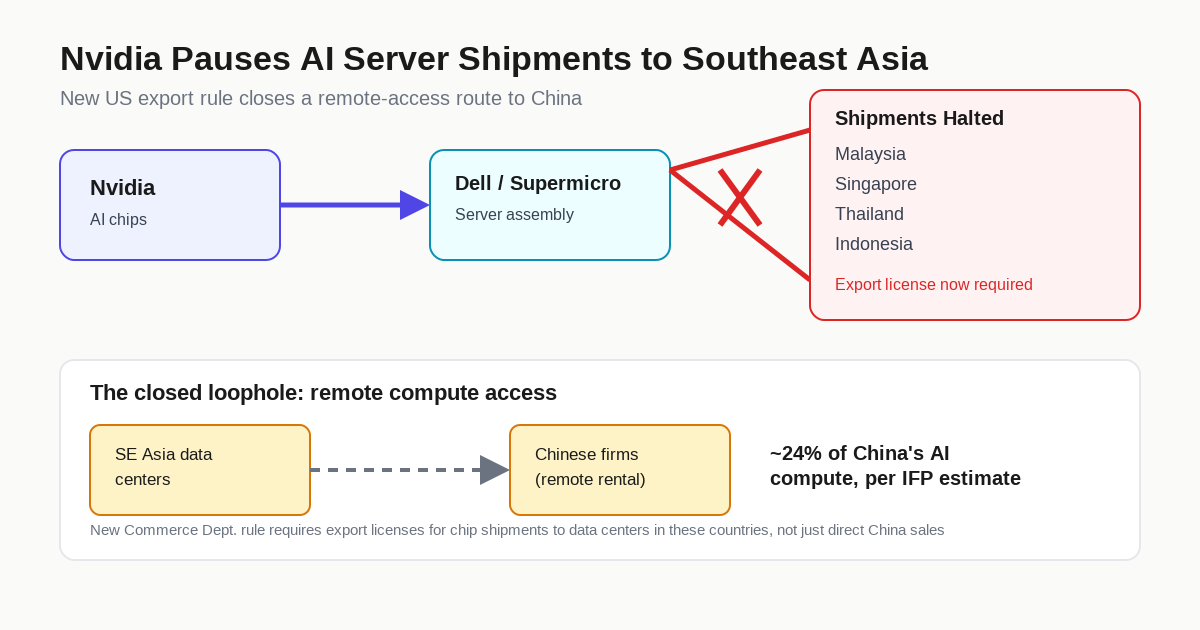
Nvidia has told its manufacturing partners to stop shipping AI servers into four Southeast Asian countries, an abrupt halt that lands days after a new US export-control rule took effect and closes off a channel Chinese firms reportedly used to tap advanced chips from abroad.
What happened
TechCrunch, citing a new Wall Street Journal report, says Nvidia instructed manufacturing partners including Dell and Super Micro — the companies that package Nvidia’s chips into finished servers — to pause orders bound for Malaysia, Singapore, Thailand and Indonesia for an unspecified period while it assesses whether regional partners are meeting US export requirements. Separately, Reuters reported that the Financial Times had the same story, with that reporting carried by the Spokesman-Review and the Taipei Times confirming the identical four-country scope and noting it is unclear whether the pause is temporary while Nvidia and its partners “work through compliance requirements under new US export controls,” according to three people familiar with the matter.
The rule that triggered it
The halt follows a new Commerce Department rule, which took effect last week, requiring export licenses for shipments of advanced AI chips to data centers in several Southeast Asian countries. The rule targets a specific workaround: Chinese companies renting compute remotely from data centers outside China rather than importing chips directly, a path Washington had left open even as it tightened direct chip sales to China. TechCrunch reports that the think tank Institute for Progress estimates these remote data centers supply roughly 24% of China’s total AI computing power — a figure that frames why regulators moved to close the gap rather than treat it as a minor adjustment.
This is a different enforcement lever than the direct chip-export bans Nvidia has faced over the past year. Those rules restricted what could be shipped to China; this one restricts what can be shipped to other countries if the chips might end up serving Chinese customers remotely. That distinction is why Dell and Supermicro, not Nvidia’s China sales desk, are the ones telling Southeast Asian buyers their orders won’t ship.
Why Singapore and Megaspeed are in the frame
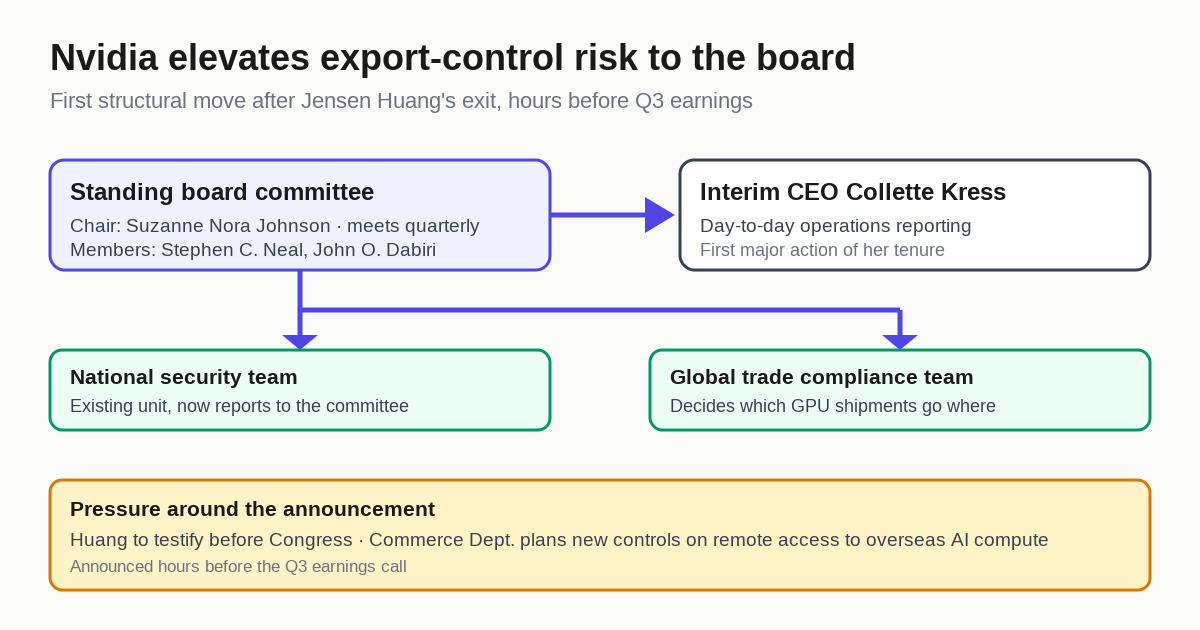
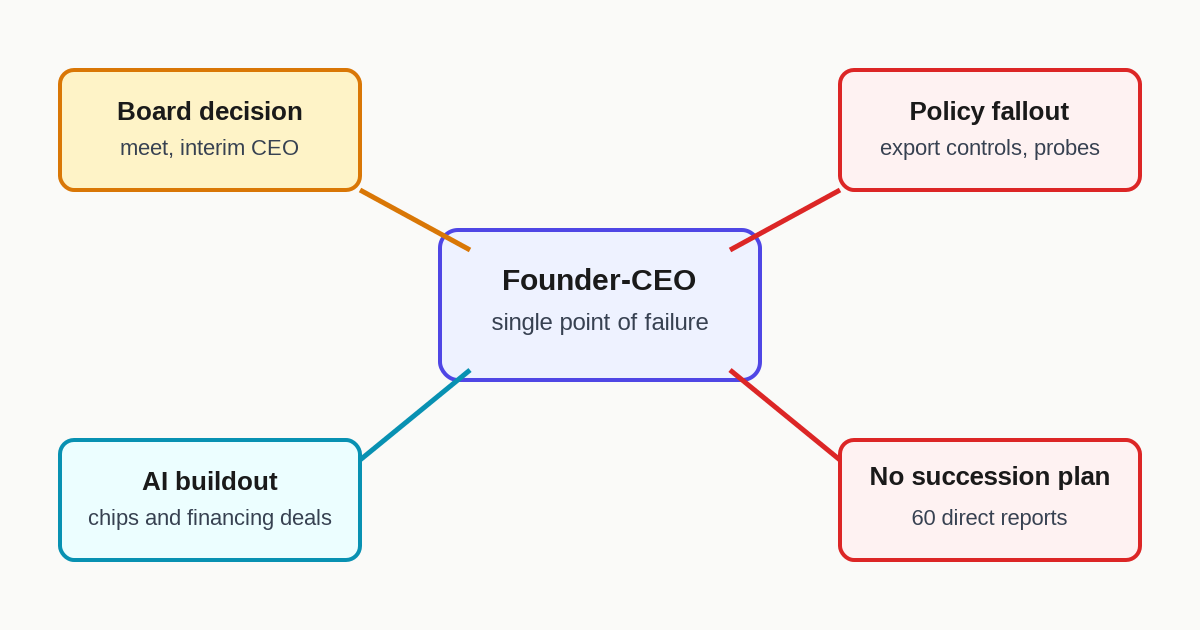
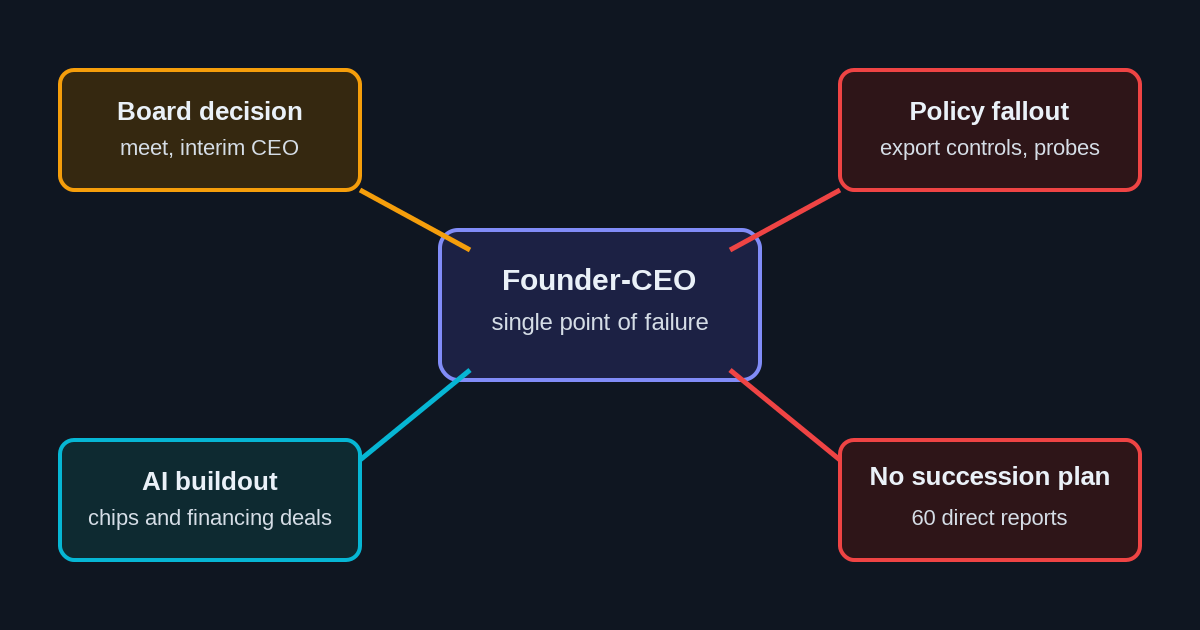
The timing connects to a scandal that has consumed Nvidia’s leadership for weeks. The Commerce rule was published just days after Nvidia CEO Jensen Huang resigned following reports of a relationship with a suspected Chinese intelligence contact who had previously worked at Megaspeed, a Singapore-based cloud company that rents Nvidia-powered computing capacity. Megaspeed has separately come under scrutiny for possible illegal diversion of advanced AI chips to China. Nvidia’s board reinstated Huang as CEO on November 23, but the export-control fallout from the episode is now showing up in actual shipment freezes, not just headlines — see our earlier coverage of Nvidia’s board creating a national-security and export-control committee in the scandal’s immediate aftermath.
The Taipei Times report adds a second thread tying into the same governance story: S&P Global Ratings said this week it is considering a one-notch cut to Nvidia’s “AA” credit rating, citing “vulnerabilities in Nvidia’s management and governance framework” exposed by Huang’s departure and return. S&P’s review window runs 90 days. Moody’s had already shifted its outlook on Nvidia to stable from positive on similar governance concerns. Neither rating action is caused by the Southeast Asia shipment halt directly, but both reflect the same underlying exposure: Nvidia’s compliance posture is now a subject of active scrutiny from regulators, credit raters and its own board simultaneously.
Part of a wider retreat from China-adjacent exposure
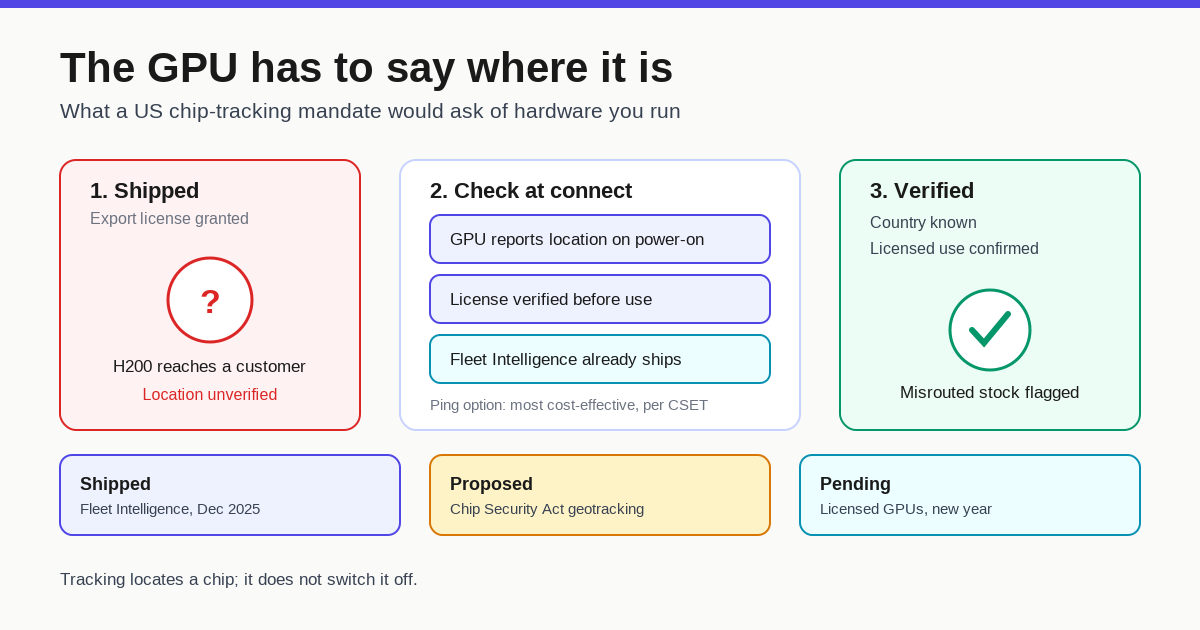
This latest freeze sits alongside Nvidia’s broader pullback from China-linked revenue. The company has already stopped shipping licensed AI chips to China and guided to zero China data-center revenue for the current quarter, and a separate congressional inquiry earlier this year forced an admission from Nvidia about how it tracks where its GPUs actually end up once they leave the factory. That tracking question matters here: a license requirement, not an outright shipment ban, is the mechanism now blocking orders into Southeast Asia, which means the outcome depends on whether Nvidia and its partners can demonstrate to regulators where the compute inside those servers will ultimately be used.
What it means for the region
For data-center operators and cloud buyers in Malaysia, Singapore, Thailand and Indonesia, the practical effect is immediate: orders already placed for Nvidia-powered servers are stuck, with no public timeline for resumption while compliance reviews proceed. That is a materially different situation from the broader China chip restrictions, which buyers in those four countries could previously route around by building regional capacity. The new rule removes that option by requiring the same license scrutiny for shipments into their own data centers that would otherwise apply to a direct China sale.
The halt is also a concrete test of how far the Trump administration intends to extend chip-export enforcement beyond China’s borders. Earlier this month, Treasury Secretary Scott Bessent said no further restrictions were needed on sales of older Nvidia chips to China, suggesting the administration saw the direct-to-China lever as largely settled. This latest rule shows the enforcement focus has shifted to the remote-access and transshipment side of the problem instead — a harder target to track because it depends on where compute is consumed, not where a chip physically ships.
Nvidia, Dell and Supermicro had not issued public statements on the shipment halt at the time of reporting. The Commerce Department has not detailed how long license reviews for the affected countries are expected to take, leaving regional buyers and partners with an open-ended compliance process rather than a fixed resumption date.