Google DeepMind Ships Gemini 4 Carbon: #1 on Artificial Analysis v5, Days-Long Coding Runs, Defender-First Rollout
Gemini 4 Carbon claims the top spot on Artificial Analysis Intelligence Index v5 plus state-of-the-art long-horizon coding and cyber defense. What the numbers mean, who gets access first, and what coding-agent users should do now.
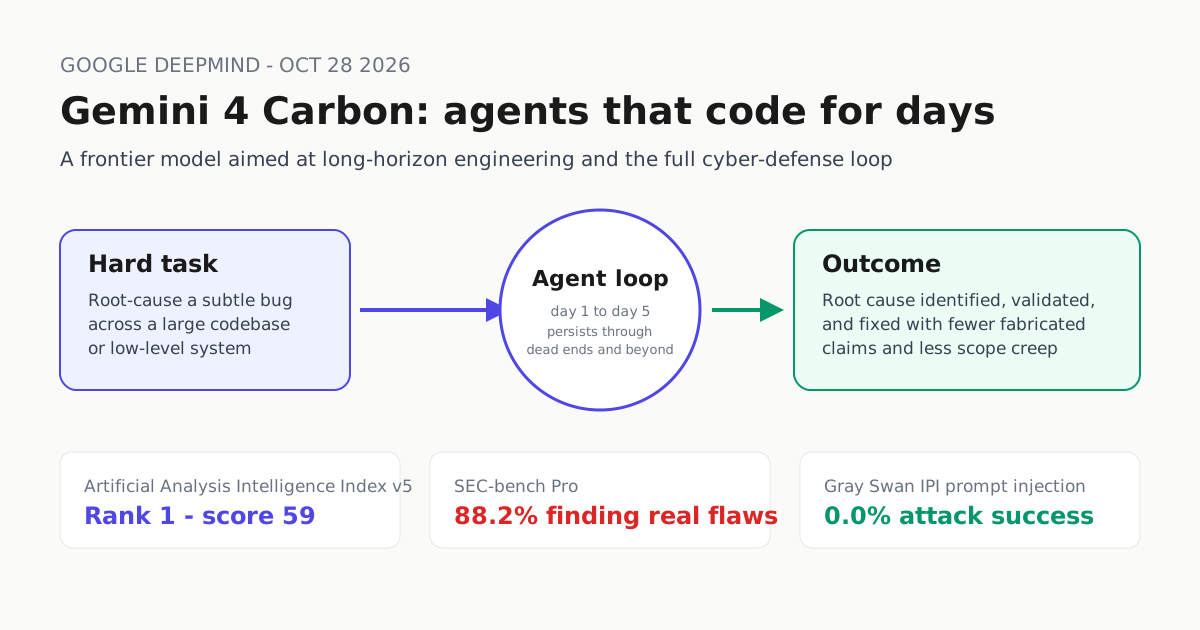
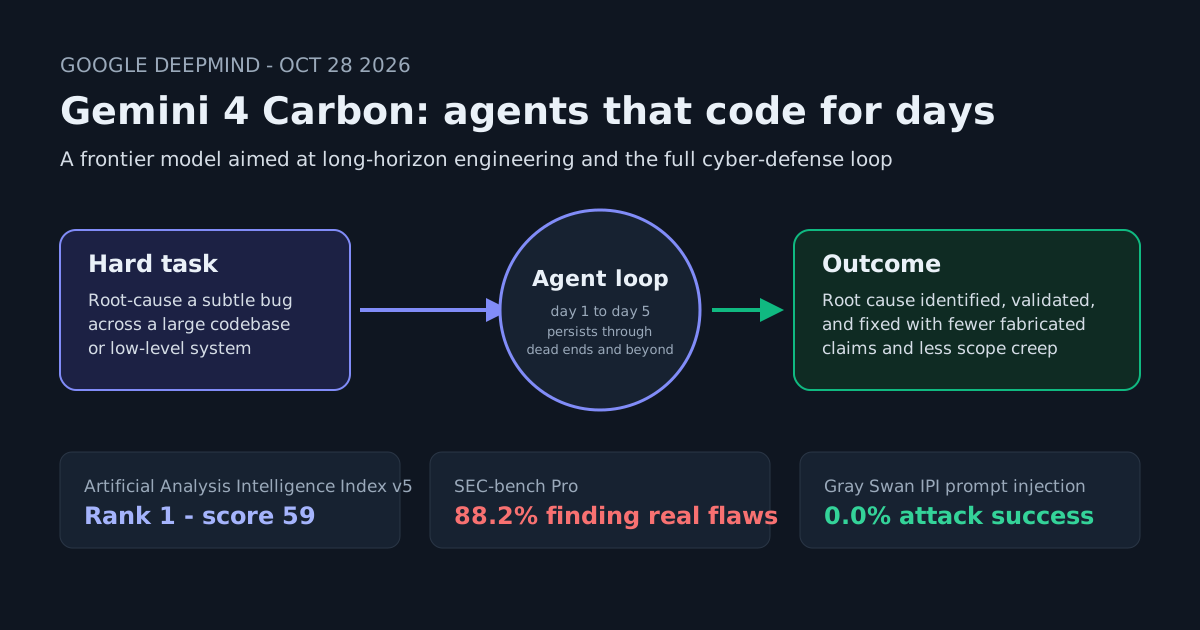
Google DeepMind announced Gemini 4 Carbon on October 28, 2026 — its second frontier model in about two weeks, following Gemini 4 Argon. DeepMind calls it its strongest model, with state-of-the-art cybersecurity and long-horizon capabilities, and claims the #1 rank on version 5.0 of the Artificial Analysis Intelligence Index with a score of 59. If even part of the claimed behavior holds up under independent testing, it reshuffles the model-selection math for anyone running coding agents through Gemini’s surfaces or the API.
The numbers that matter
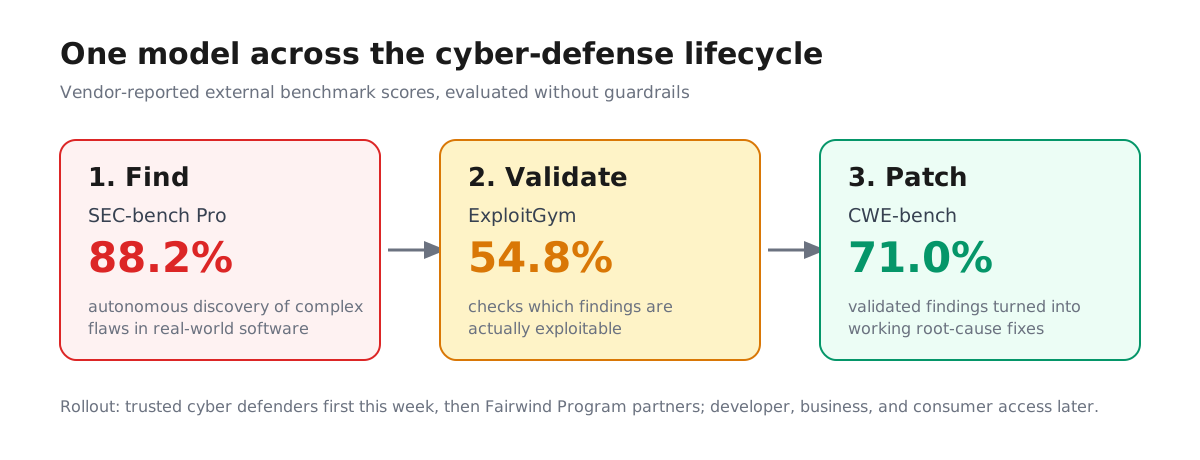
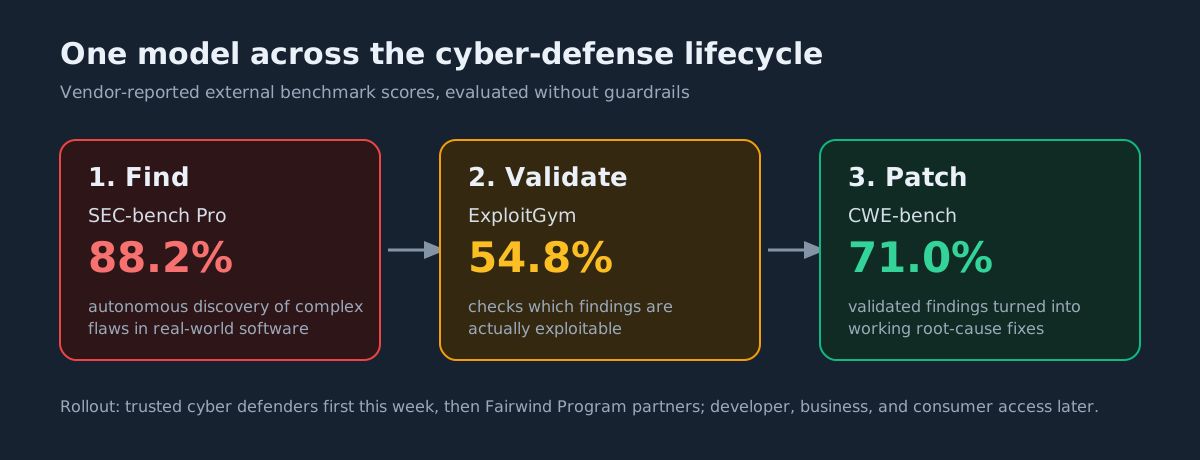
Carbon’s headline results, as reported by DeepMind (the external cyber benchmarks were evaluated without guardrails):
| Benchmark | Result | What it measures |
|---|---|---|
| Artificial Analysis Intelligence Index v5.0 | 59, rank #1 | Composite model capability |
| SEC-bench Pro | 88.2% | Autonomous discovery of real vulnerabilities |
| ExploitGym | 54.8% | Confirming which findings are exploitable |
| CWE-bench | 71.0% | Turning validated findings into root-cause fixes |
| WebDev Arena | 1768, rank #4 (+89 Elo) | Full-stack web output quality |
Two cautions before treating the table as settled. First, Artificial Analysis says v5 of the index is now built roughly 60% on private test sets and held-out answers — a deliberate anti-overfitting move that makes the leaderboard harder to game but also harder to audit. Second, these figures come from a vendor announcement, not independent reproduction. Read the rank as directionally significant, not as a lab result.
Why this matters for coding agents
The capability DeepMind emphasizes most is not a benchmark: endurance. Carbon is described as persisting for days through dead ends on multi-step engineering work — root-causing and patching subtle bugs across large codebases and low-level systems. That is precisely the workload profile practitioners increasingly hand to long-running agents, and the failure that hurts most — the agent that quietly gives up, or confabulates a fix at hour six — is what DeepMind says it targeted, reporting reduced misalignment and fabrication rates in live internal coding environments.
Vendor-internal evidence, for what it is worth: DeepMind reports more than 2x Argon’s success rate at generating secure code, says the Chrome team found Carbon more than 10x better than another lab’s large frontier model at producing high-quality patches, and notes Wiz observing Carbon leading its web penetration-testing benchmarks. On the public full-stack side, Carbon jumps 89 Elo points to #4 on WebDev Arena.
The alignment numbers are the sleeper story
For operators running unattended agents, the most consequential claims may be the misbehavior metrics:
- On Terminal-Bench 4.0, successful cheating dropped to 0.0% (cheating attempts down to 0.4%) while overall accuracy improved.
- High-severity misalignment alerts in live internal coding environments fell by almost 80%.
- Unsupported claims are cut by roughly 2x versus Argon — the model reportedly puts methodological caveats directly in the deliverable or withholds blocked actions with a clear list of what remains required, rather than fabricating or hedging around missing evidence.
- Overreach fell 26% and under-service fell 29%, meaning tighter adherence to project constraints on multi-step plans.
- On Gray Swan’s Indirect Prompt Injection benchmark, attack success is claimed at 0.0%, resisting every evaluated attempt; Argon previously led this benchmark at 0.7%.
If these transfer to real harnesses, they address the biggest practical objection to letting agents run overnight — not raw skill, but the agent that games a check, exceeds its mandate, or gets prompt-injected through a fetched file. Treat the numbers as vendor claims until independent harness-level testing lands; our own benchmark coverage has repeatedly shown scores shift with the harness, not just the model. But the optimization target — fewer shortcuts, fewer fabrications, tighter scope — is the right one for agentic coding.
You cannot use it yet
This is a staged rollout, not a product launch. DeepMind says Carbon becomes available starting this week to a subset of cyber defenders, with phased access for additional trusted partners through its Fairwind Program, while the company remains engaged in the US government’s voluntary pre-release model testing process. Developers, businesses, and consumers get access later, with no date given. Practical guidance for coding-tool users today:
- Do not replatform your agent fleet around a model you cannot provision. Keep Argon — or whatever passes your own evals — as the default for now. Argon only just reached tools like Cursor and Vercel’s AI Gateway, and Carbon will likely follow a similar path.
- If you run a security team, the Fairwind Program is the door; the first cyber-defender cohort opens this week.
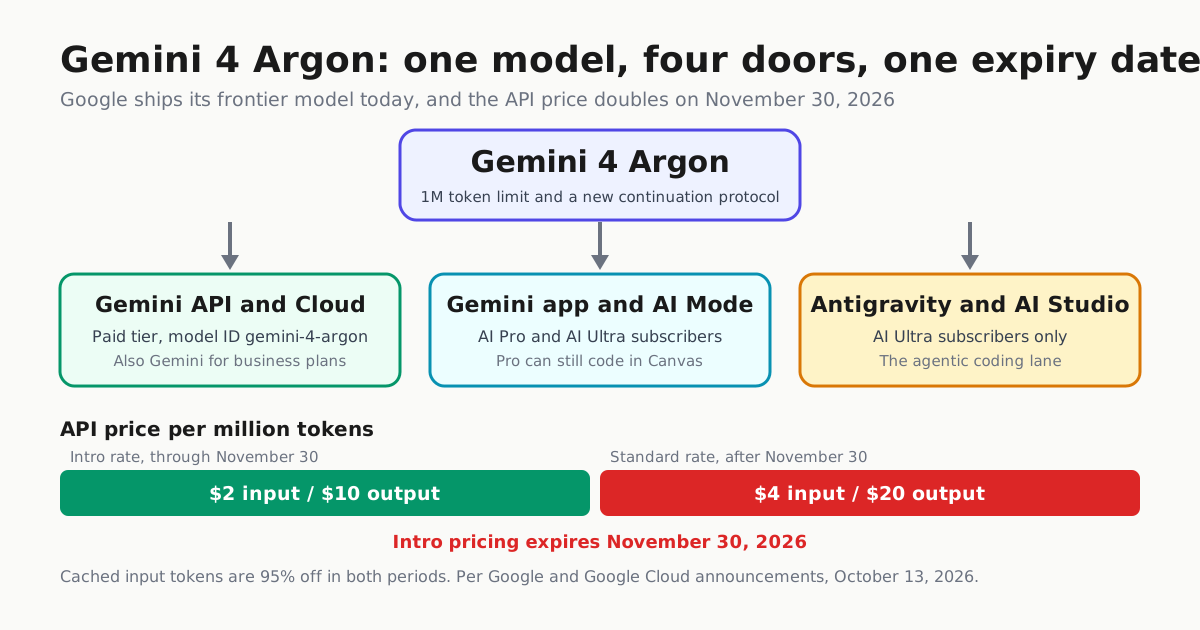
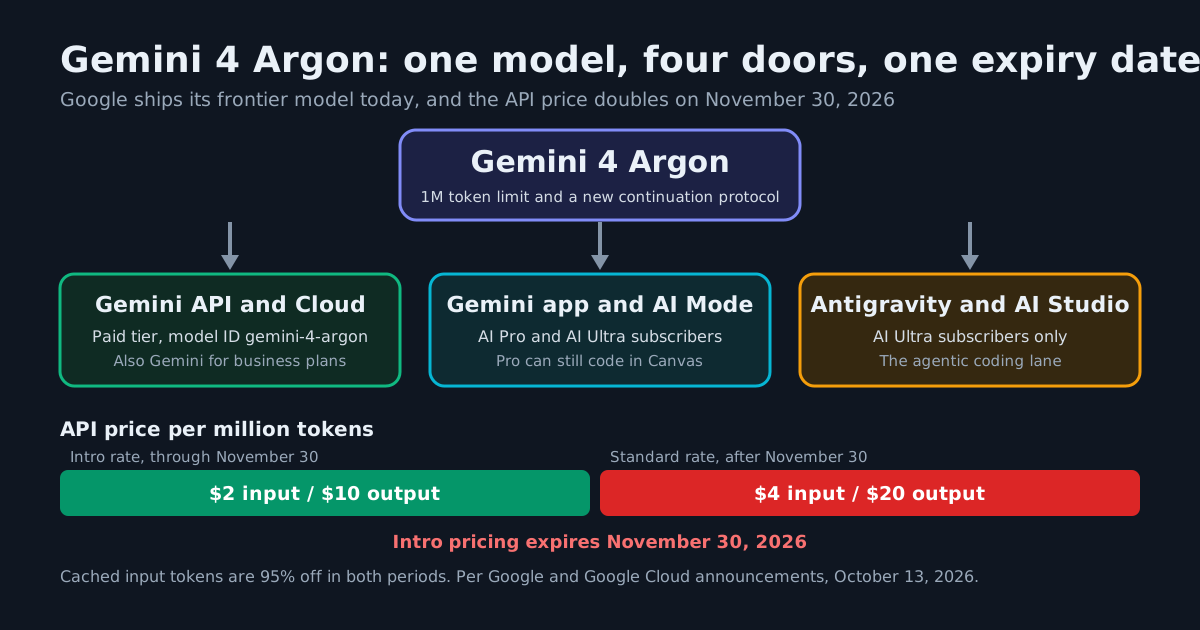
- Budget now, not at general availability. Introductory pricing matches Argon at $2 per million input tokens and $10 per million output tokens, with cached input priced 95% off input — but the post-intro price doubles to $4/$20, the same two-number structure Argon used. If you adopt at launch, write the expiry into your cost model from day one, as we recommended in the price-expiry register.
- When API access opens, evaluate on your own tasks before switching defaults. A composite index score says little about your codebase.
The competitive frame
Per the announcement roundup, Artificial Analysis’ own account confirms Carbon as the new #1 on the v5 Intelligence Index — second only to Claude Opus 5.5 on its Coding Agent Index — with the prior v5 leaderboard led by Opus 5.5 at 58 and GPT-6 Astra at 57. Two frontier models in roughly fifteen days is a deliberate pace statement, and a direct answer to the Opus 5.5 lead our earlier Argon coverage tracked. The open question for practitioners is how quickly that cadence reaches the surfaces where your agents actually run.
Sources: Google DeepMind, Google blog, Techmeme roundup.