Gemini 4 Argon Pricing Has Two Numbers: Budget the $4/$20 One in a Price-Expiry Register
Gemini 4 Argon launched at $2/$10 with no end date before $4/$20 applies. Book intro-priced models at list in a price-expiry register, then rehearse the step.

Go deeper. Build your own.
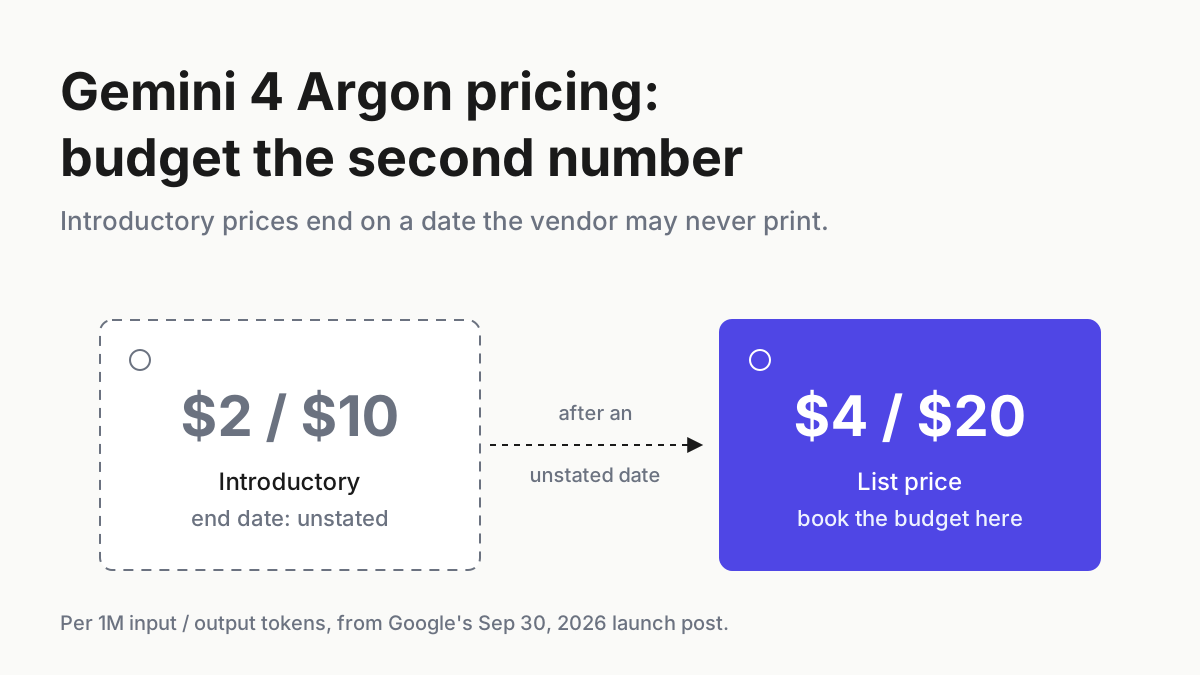
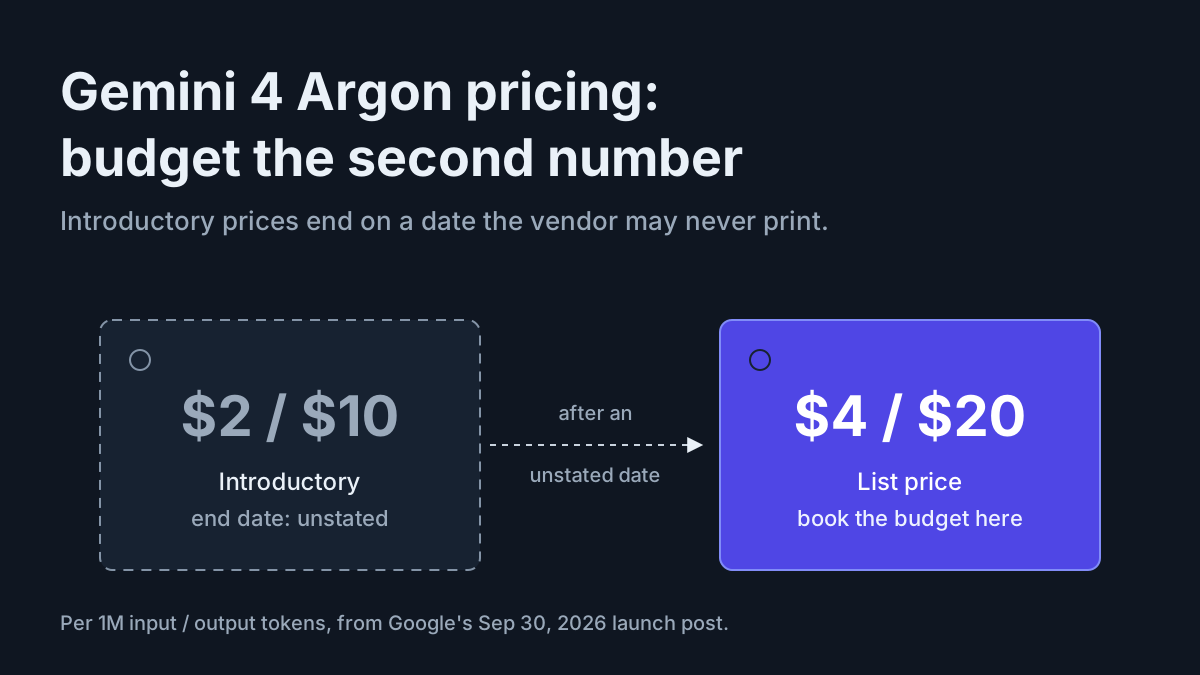
In Google’s launch post for Gemini 4 Argon, the second of two prices sits in a footnote with no date attached. The headline rate is $2 per million input tokens and $10 per million output. The footnote says that “after the introductory period expires,” $4 and $20 apply. Google does not say when that happens, and on Oct 7 almost nobody outside a cyber-defense program could buy either one.
That makes Gemini 4 Argon pricing a clean test case for a habit most teams lack. An introductory price is a countdown with a hidden clock. If your forecast, your quotas and your cost alerts are built on the first number, the step-up arrives as an incident.
Book every intro-priced model at list from the day you adopt it, and keep the gap as found money rather than a baseline. The rest of this piece is the register that tracks each countdown, the rule for booking it, the alert triggers, and a quarterly rehearsal that flips a lane to list in the forecast before the vendor does it on the invoice.
What Google priced on Sep 30, and what it left undated
Google announced Gemini 4 Argon on Sep 30, 2026, in a post by Koray Kavukcuoglu on blog.google. “Argon” is part of the product name, not a codename. The post says “Argon will launch at an introductory price of $2 per million input tokens and $10 per million output tokens,” with cached input “95% off,” and the footnote sets $4 and $20 once the introductory period expires. Work the discount through and cached input comes to $0.10 per million at intro and $0.20 at list; those two figures are our arithmetic, not printed by Google.
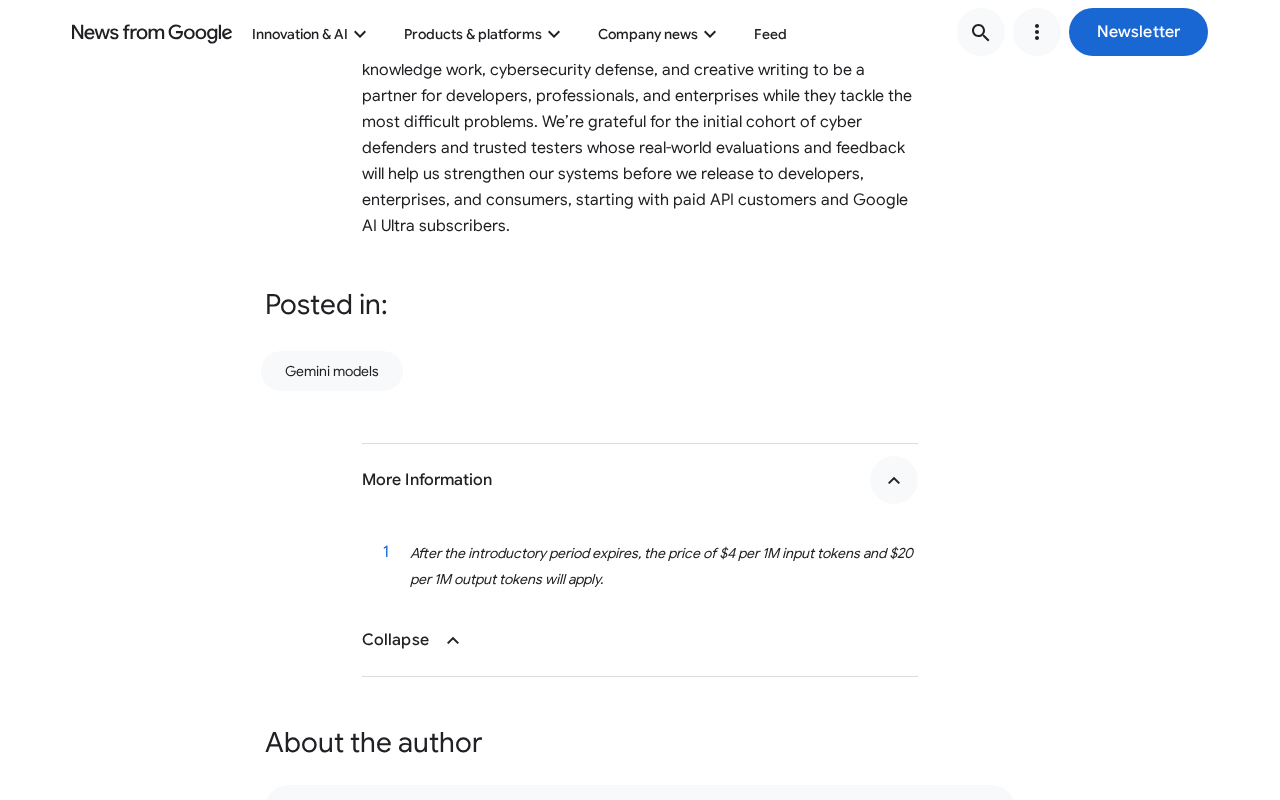 Screenshot: News from Google, “Introducing Gemini 4 Argon” (Sep 30, 2026), captured Oct 7, 2026.
Here is what the post does not say. It gives no end date and no duration for the introductory period. Argon has no row on Google’s Gemini API pricing page, and no public model ID or rate limits had been published when we read both pages on the evening of Oct 7 (00:35–00:40 UTC Oct 8), and still none when we re-read them on Oct 8.
Access is the other gap.
The first release went to “a set of trusted cyber defenders” through Fairwind, Google DeepMind’s early-access program for cyber defenders, which says it works with “over 650 partners globally” (deepmind.google). Partners get a version without cyber guardrails, per the launch post. The US government and Google’s own teams also have access; Sundar Pichai told The Stack on Oct 1 that Argon is “with the US gov’t and going to a set of trusted cyber defenders.” Paid API customers and Google AI Ultra subscribers come next, per the launch post, undated.
So the introductory price is undated and, for most developers, not yet purchasable.
None of this is unusual. DeepSeek-V3 launched in December 2024 at its predecessor's prices "until Feb 8," then moved to $0.27 input on a cache miss and $1.10 output per million from Feb 8, 2025, per [DeepSeek's announcement](https://deepseek.com/en/news/deepseek-v3/). Gemini 2.5 Flash's input price doubled from $0.15 to $0.30 per million when it left preview on Jun 17, 2025, per [Google's developer blog](https://developers.googleblog.com/gemini-2-5-thinking-model-updates/), even as its thinking-output price fell from $3.50 to $2.50. Gemini 3.8 Flash has a dated step on the pricing page today.And the counter-example: Anthropic launched Claude Sonnet 5 at $2/$10 as introductory pricing through Aug 31, 2026, then said on its pricing page that the scheduled rise to $3/$15 “will not occur”. Countdowns can be cancelled. You only learn that after you budgeted.
Why an agent fleet hits the step-up first
A person using a chat app notices a price change on a monthly statement. An agent fleet consumes tokens on a schedule nobody watches token by token: nightly jobs, review lanes, retries, subagents. When a model’s price doubles, every one of those lanes doubles on the same morning, and the first signal is usually a cost alert that fires because the baseline was set at the promo.
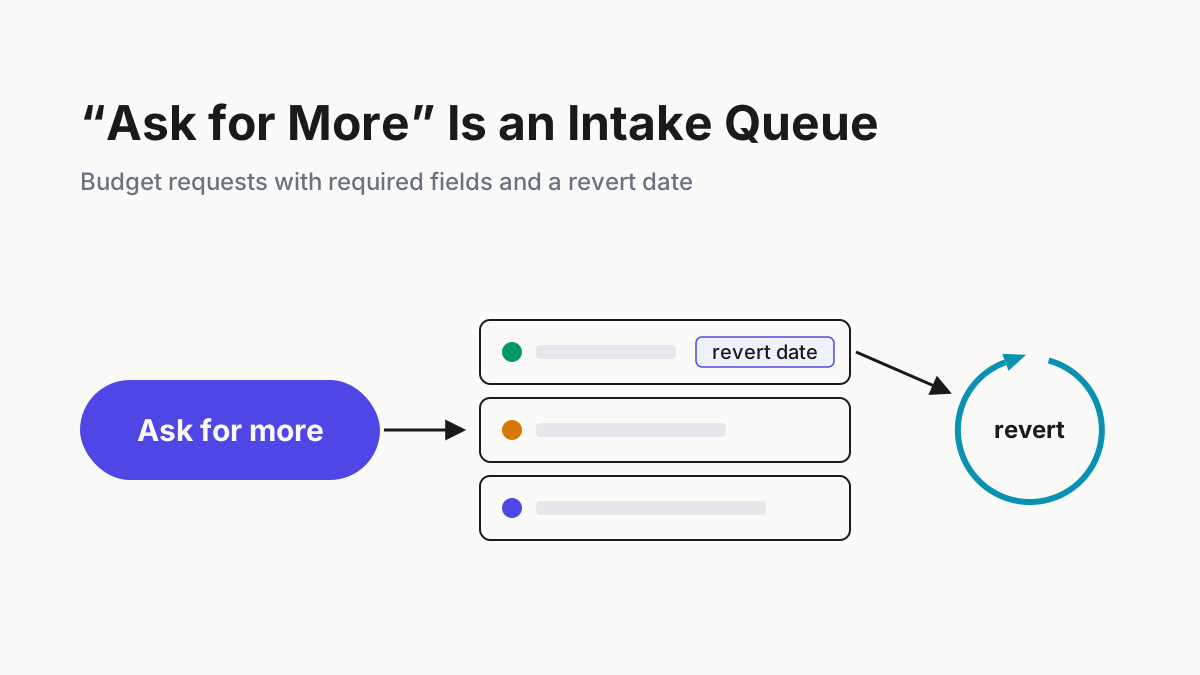
The fix is not to avoid introductory pricing. It is to stop treating it as the price. Internal budgets with revert dates have their own intake process, covered in budget increase request intake; this piece is about the date the vendor controls.
The price-expiry runbook: register, rule, alerts, rehearsal
Six steps. Do steps 1 and 2 the day a promo-priced model enters any lane, even a trial lane, because trials become defaults faster than budgets get revised.
1. Open the price-expiry register
One row per model in use or on trial. The Argon row is the worked example; the other rows are the precedents, kept as history so the next person can see how these countdowns ended. Every price below was read on the evening of Oct 7, 2026 US Eastern (00:20–00:45 UTC Oct 8) and must be re-read before you rely on it.
| Model | Intro price (in / out per 1M) | List price (in / out per 1M) | Stated end date or “unstated” | Access tier today | Budget line booked at (list) | Alert date | Read / source | Owner |
|---|---|---|---|---|---|---|---|---|
| Gemini 4 Argon (worked row) | $2 / $10; cached $0.10, computed | $4 / $20; cached $0.20, computed | Unstated | Gated: Fairwind, US government, Google internal; no public model ID or rate limits | $4 / $20 | Weekly page check every Monday until a pricing row and an end date appear | ~00:40 UTC Oct 8, 2026, blog.google launch post | Inference budget owner (a named person) |
| Gemini 3.8 Flash | $0.75 / $3.75 | $1.50 / $7.50 | Dec 31, 2026; list from Jan 1, 2027 | Listed on Google’s API pricing page | $1.50 / $7.50 | Dec 1, 2026 | ~00:35 UTC Oct 8, 2026, ai.google.dev pricing | Same owner |
| DeepSeek-V3 (history) | Predecessor’s prices “until Feb 8” | $0.27 / $1.10; cache hit $0.07 | Feb 8, 2025 | Generally available | $0.27 / $1.10 | Jan 9, 2025 | deepseek.com V3 announcement | Closed row |
| Gemini 2.5 Flash (history) | $0.15 / $3.50 in preview, thinking output | $0.30 / $2.50 at GA | None stated; input rose at GA on Jun 17, 2025 | Preview, then GA | $0.30 / $2.50 | Trigger: model leaves preview | Google Developers Blog GA post, Jun 17, 2025 | Closed row |
| Claude Sonnet 5 (counter-example) | $2 / $10 through Aug 31, 2026 | Planned $3 / $15; Anthropic says it “will not occur” | Aug 31, 2026, then withdrawn | Generally available | $3 / $15 until the pricing page printed the cancellation | Aug 1, 2026 | ~00:20 UTC Oct 8, 2026, platform.claude.com pricing | Closed row |
Two columns do most of the work. “Stated end date or unstated” forces someone to read the vendor’s page instead of a news rewrite. “Budget line booked at” is always the list column, never the intro column, which is the rule in step 2.
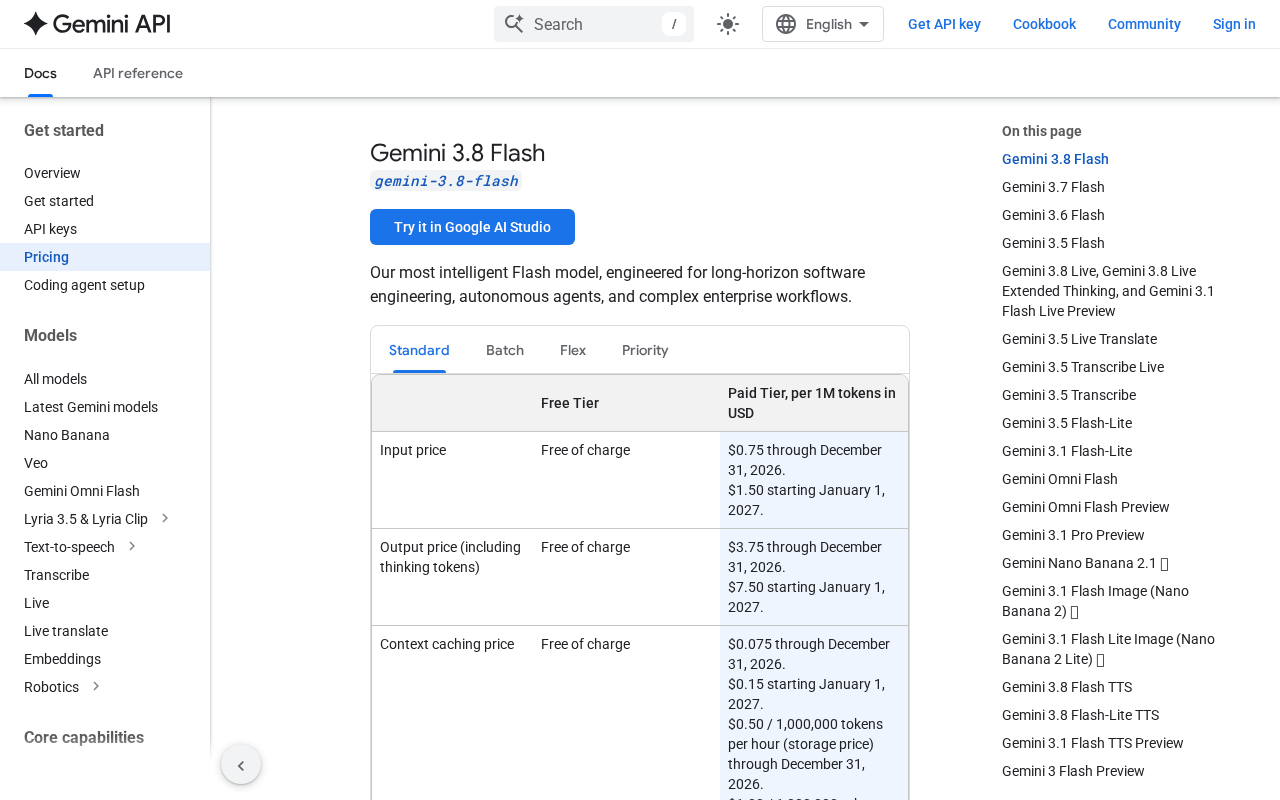 Screenshot: Google AI for Developers, “Gemini Developer API pricing” (undated docs page), captured Oct 7, 2026.
2. Apply the budget-at-list rule
Paste this into the budget policy, not a wiki page nobody opens.
BUDGET-AT-LIST RULE
1. Every budget, quota and cost-per-task meter is computed at the list price.
   The introductory price never appears in a forecast.
2. An "unstated" end date counts as already expired. Book at list from day one.
3. A stated end date gets an alert 30 days out and an automatic re-forecast.
   An unstated one gets a weekly check of the vendor's own pricing page.
4. A gated model gets no capacity plan until it has a public model ID
   and published rate limits.
5. Promo savings are found money: recognized after the month closes,
   never carried into next month's baseline.
6. Admission meter: monthly spend at list / tasks completed. If that number
   breaks the lane's budget, the model stays out of the default routing table,
   whatever its launch price.
7. When a vendor cancels a step-up, change the list column only after the
   vendor's own pricing page prints the new price.
Rule 6 is the one that changes routing decisions. A model that only fits the budget at its promo price does not fit the budget.
Rule 2 is the one people argue with, usually on the grounds that an undated promo might run for a year. It might.
But a forecast built on that hope has no date on which it becomes wrong, so nobody re-checks it. Booking at list costs nothing if the promo runs long: the difference shows up as underspend, which is an easy conversation. Booking at intro and losing the promo mid-quarter is a budget increase request, which is not.
3. Set the alert triggers
A stated date is the easy case. The harder ones are the events that tell you the clock just started or the row needs rewriting. Wire each of these to the register owner:
- The vendor adds an end date. For Argon, the most likely place is a new row on the API pricing page when paid access opens. The weekly check exists to catch it.
- The model leaves early access or preview. Gemini 2.5 Flash is the precedent: the preview price was not the production price. General availability is a repricing event even when nobody calls the old price introductory.
- A cheaper tier appears. A smaller sibling, a batch tier or a flex tier can make the list-price comparison moot. Re-run the admission meter against it before the step-up, not after.
Cost alerts need one more change. If they are baselined at the intro price, step-up day pages someone for an “anomaly” that was on the calendar. Re-baseline them at list, as agent cost anomaly alerts recommends for thresholds generally, so the alert fires only for spend that list pricing does not explain.
4. Run the quarterly step-up rehearsal
Once a quarter, or whenever a row’s alert fires, take one lane and flip it to list in the forecast. It takes about 30 minutes.
- Export last month’s real token mix for the lane: input, cached input, output.
- Re-price it at list. For Argon that is every line doubled.
- Mark which budget lines break, and by how much.
- Confirm the cost alerts are baselined at list.
- Name the owner of the pay, swap or pause decision, and list the jobs that pause first.
Here is the rehearsal on a lane you plan to move to Gemini 4 Argon once paid API access opens, with an illustrative mix: 400 million input tokens and 60 million output tokens a month across about 4,000 code reviews. At the intro price that is $800 plus $600, or $1,400 a month. At list it is $1,600 plus $1,200, or $2,800.
Against an illustrative lane budget of $2,000, the intro forecast shows $600 of headroom and the list forecast shows the lane $800 over. The admission meter says the same thing per task: $0.35 per review at intro, $0.70 at list.
Run the same rehearsal on a lane that can actually buy today. Gemini 3.8 Flash is on Google’s pricing page with a printed date: $0.75 / $3.75 through Dec 31, 2026, then $1.50 / $7.50 from Jan 1, 2027. An illustrative triage lane using 900 million input and 150 million output tokens a month costs $675 plus $562.50, or $1,237.50, at today’s rate, and $1,350 plus $1,125, or $2,475, from New Year’s Day.
If that lane’s 2027 budget was drafted in October from this month’s invoice, it is already half the size it needs to be. The Dec 1 alert in the register is there so the re-forecast happens before the budget is signed, not after the January bill.
Caching changes the size, not the sign. If 250 million of those input tokens were cache reads at the computed rates, the illustrative month would be $925 at intro and $1,850 at list, which fits the $2,000 budget at list. That is a real finding from the rehearsal: the lane can adopt Argon at list only if its cache-hit rate holds, so the cache-hit rate goes in the register notes as a condition of admission.
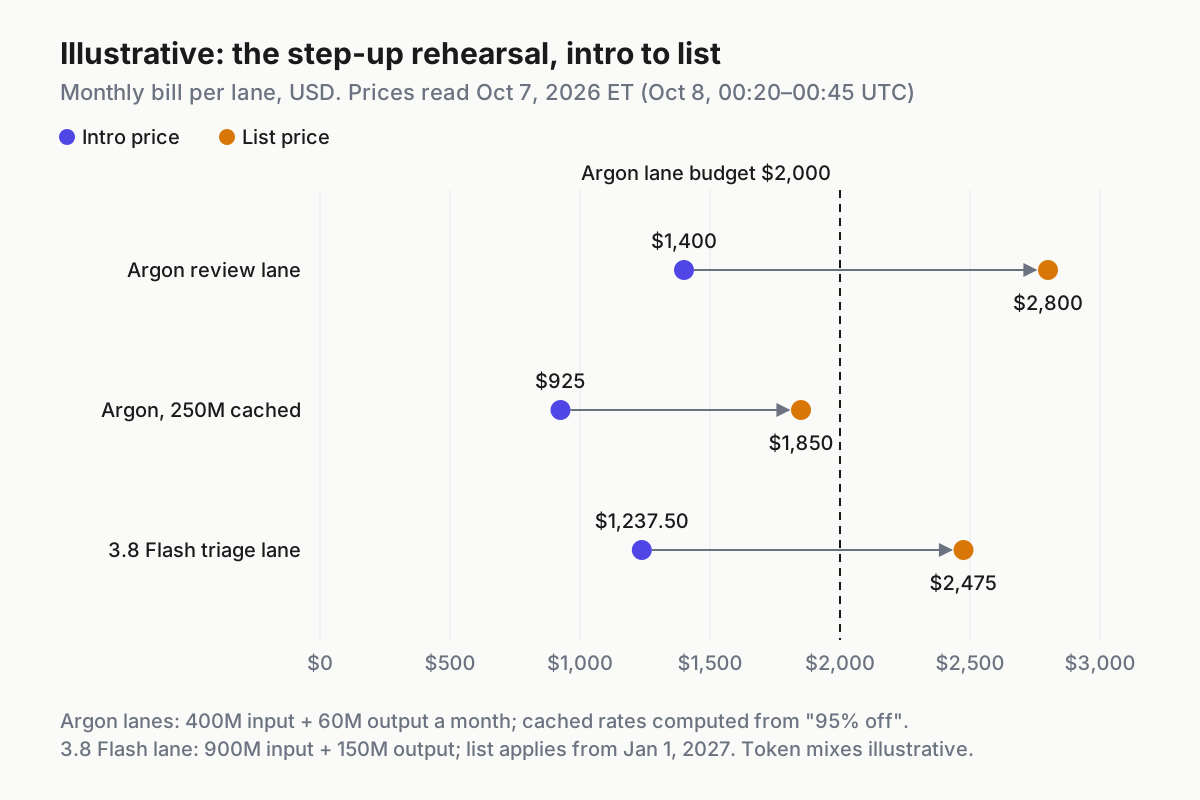
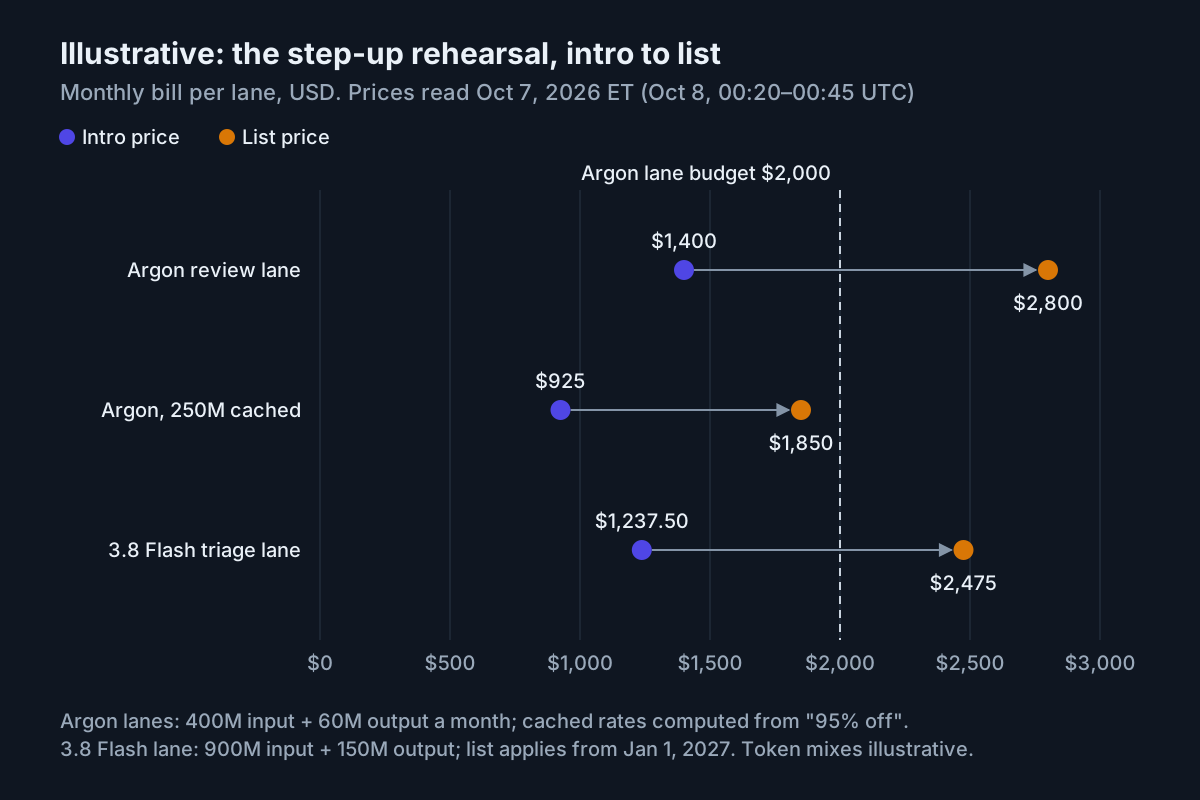 Illustrative: the rehearsal’s three lane bills at intro and list price; only the cached Argon lane stays under the $2,000 budget at list.
5. Record where every price came from
Each price in the register needs two more facts beside it: the URL of the vendor page it came from and the date and time you read it. Launch posts, pricing pages and news coverage disagree more often than they should, and the vendor’s own pricing page is the one that governs the invoice. For Argon today that means the launch post, because the pricing page has no row; when a row appears, the row wins and the register notes the switch.
Read the footnotes. Argon’s list price lives in footnote 1 of the launch post, behind a “More Information” toggle, not in the paragraph that carries the headline price. Anthropic’s cancellation of the Sonnet 5 rise is also a footnote on its pricing page. Whoever owns the register should open the page, expand every note, and copy the exact wording into the row, so the next reader can check the claim in one click.
6. Close the loop on the register
After each rehearsal, write the result into the register row: the lane, the list-price monthly figure, the decision and the owner. When a countdown ends, keep the row and mark it closed, as the history rows above are. The next promo from any vendor gets compared against how the last one actually ended, not how its launch post read.
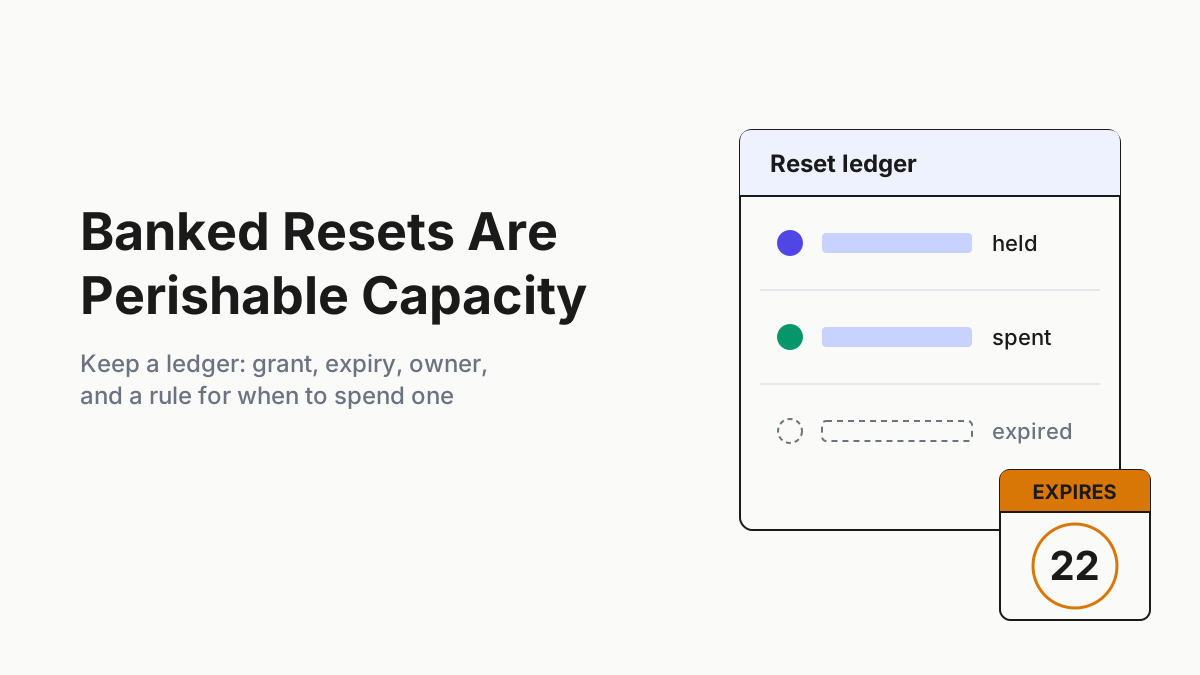
Perishable capacity is a separate ledger. Rate-limit windows and banked quota expire on their own clocks, and the banked rate-limit reset ledger tracks those; flat-rate plan changes belong to the subscription squeeze. This register stays on API list price.
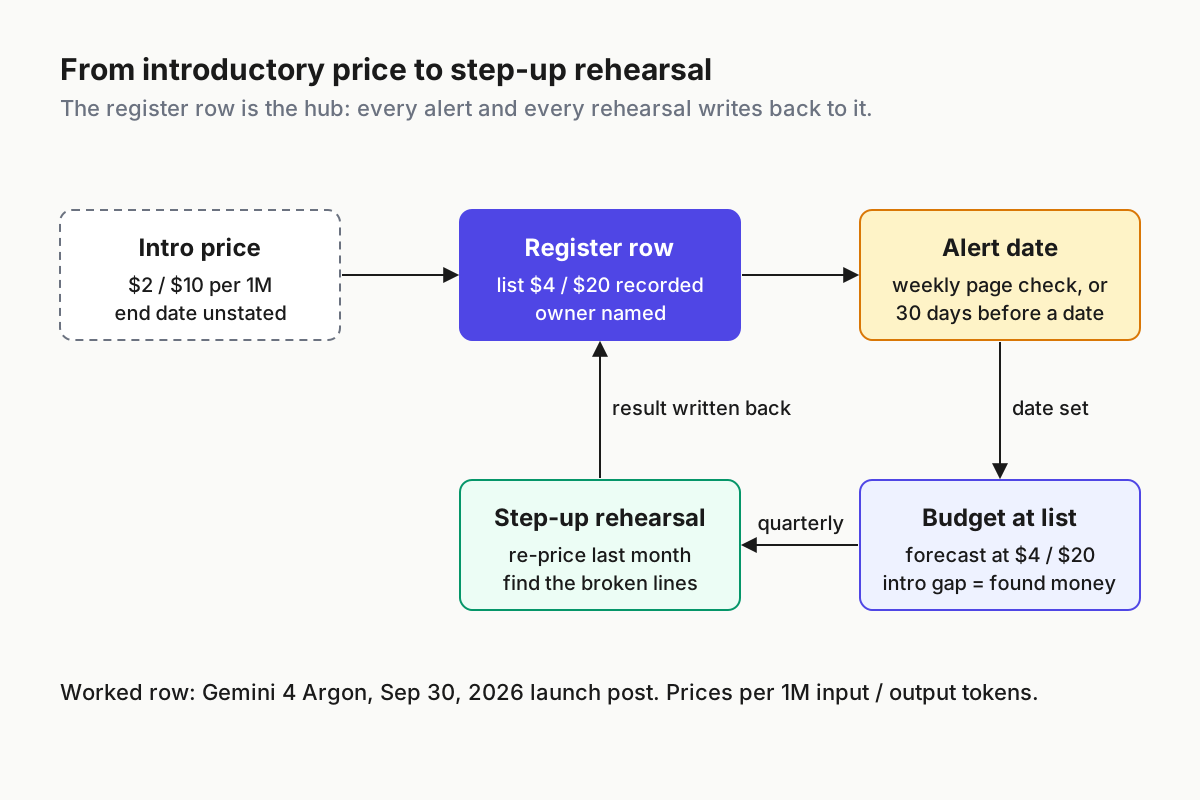
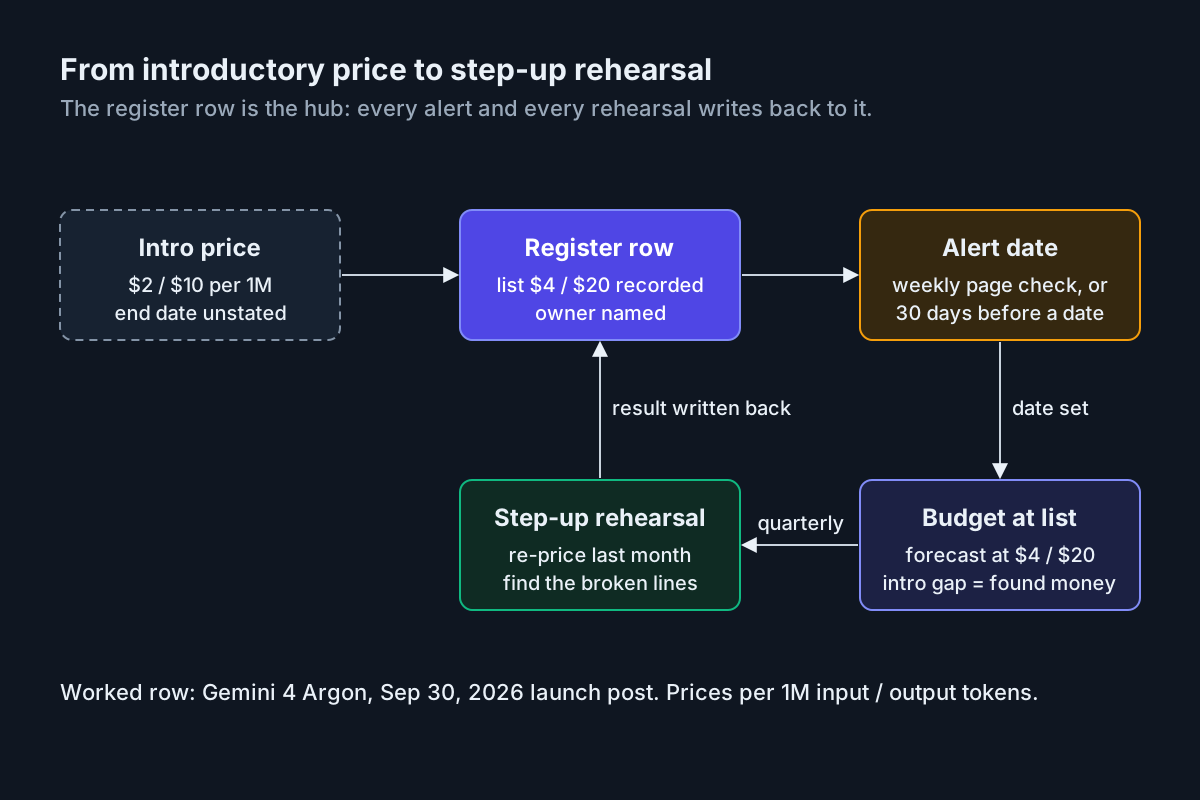 Five boxes, one loop. The rehearsal writes back to the row it tested.
When the step-up catches a fleet unprepared
| What breaks | Signal you would see | First action |
|---|---|---|
| Promo price baked into the forecast | The budget shows headroom that disappears on step-up day | Re-forecast every intro-priced lane at list now, and move the gap to a found-money line |
| Cost alert fires on a scheduled price change | Spend “anomaly” pages on the morning a dated step takes effect | Re-baseline the alert at list, then close the page as expected |
| Capacity planned for a gated model | Tickets reference a model ID that does not resolve | Remove the lane from the capacity plan until a public model ID and rate limits exist |
| End date appears without anyone noticing | Vendor pricing page shows a new row or date the register lacks | Add the date, set the 30-day alert, run the rehearsal for that lane this week |
| List column changed on a rumor | Register shows a lower list price that the vendor page does not print | Revert to the vendor’s printed price; cite the page and read date in the row |
| Model ID changes at general availability | Calls from a preview ID start failing or route to a new price | Update routing and the key and model inventory together, then re-read the price row |
The last row is where pricing meets credentials. A move from early access to a public model ID often means new keys or projects, and the fleet API key migration drill covers finding every copy before the old path stops working.
One register for every lane’s countdown
A single promo is a line item. A fleet with five lanes on five vendors’ introductory prices has five undated budget steps, and the fleet’s cost view only stays honest if each one has a row, a list-price booking and an owner. That is the cost side of agentic ops: the same habit of writing down what each lane runs on, applied to what each lane will cost after the countdowns end.
Equal sticker prices do not mean equal bills; how caching and context length shape two vendors’ invoices at the same list price is the job of the same-list-price bill shape test. This register answers the earlier question: which list price you should be planning on at all.
FAQ
How much does Gemini 4 Argon cost per million tokens?
Google’s launch post sets an introductory $2 per million input tokens and $10 per million output, then $4 and $20 after the introductory period expires. Cached input is 95% off, which by our arithmetic works out to $0.10 and $0.20. Google gives no end date, so budget at $4 and $20.
When does Gemini 4 Argon introductory pricing end?
Google has not said. The launch post gives no end date or duration, and Argon had no row on Google’s API pricing page when read on Oct 7, 2026. Treat the end date as unstated, book at list from day one, and check the pricing page weekly for a new row.
Can developers use Gemini 4 Argon through the API yet?
Not broadly as of Oct 7, 2026. Access was limited to Google DeepMind’s Fairwind program for cyber defenders, the US government and Google’s own teams, with no public model ID or published rate limits. Google says paid API customers and AI Ultra subscribers come next, without a date.
Sources
- Google, “Gemini 4 Argon: our next era of frontier intelligence” (Sep 30, 2026): intro and list prices, cached discount, rollout order
- Google AI for Developers, Gemini API pricing: no Argon row; Gemini 3.8 Flash dated step (read 00:35 UTC Oct 8, 2026)
- Google DeepMind, Fairwind Program: early-access program for cyber defenders, 650+ partners
- DeepSeek, DeepSeek-V3 announcement: promo pricing until Feb 8, 2025, then list
- Anthropic, Claude pricing: Sonnet 5 introductory pricing and the cancelled rise (read 00:20 UTC Oct 8, 2026)
- The Stack, Oct 1, 2026: Pichai on Argon access
- Google Developers Blog, “Gemini 2.5: Updates to our family of thinking models” (Jun 17, 2025): Gemini 2.5 Flash pricing at GA