GitHub Octoverse 2026: 40%+ of Pull Requests Now Start With a Coding Agent, and Review Is the Bottleneck
GitHub's Octoverse 2026: 40%+ of pull requests now start with a coding agent, merge faster and carry bigger diffs. Review is now the new bottleneck.
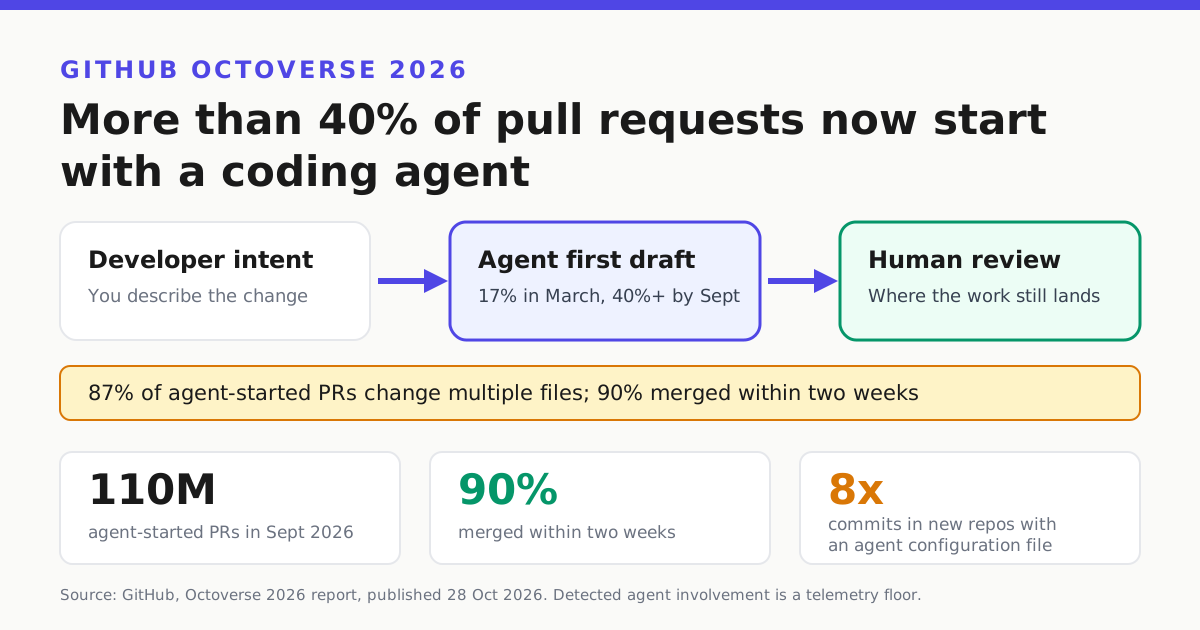
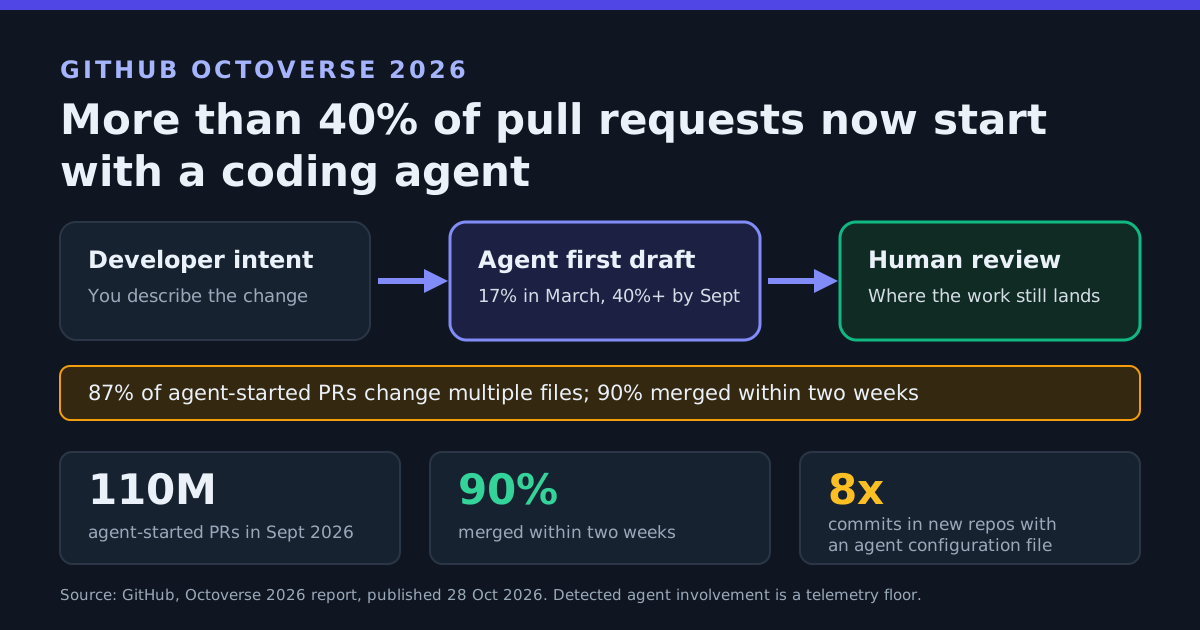
GitHub published its annual Octoverse report on October 28, 2026, and the number that matters is not a benchmark score. It is a change in who writes the first draft of a pull request.
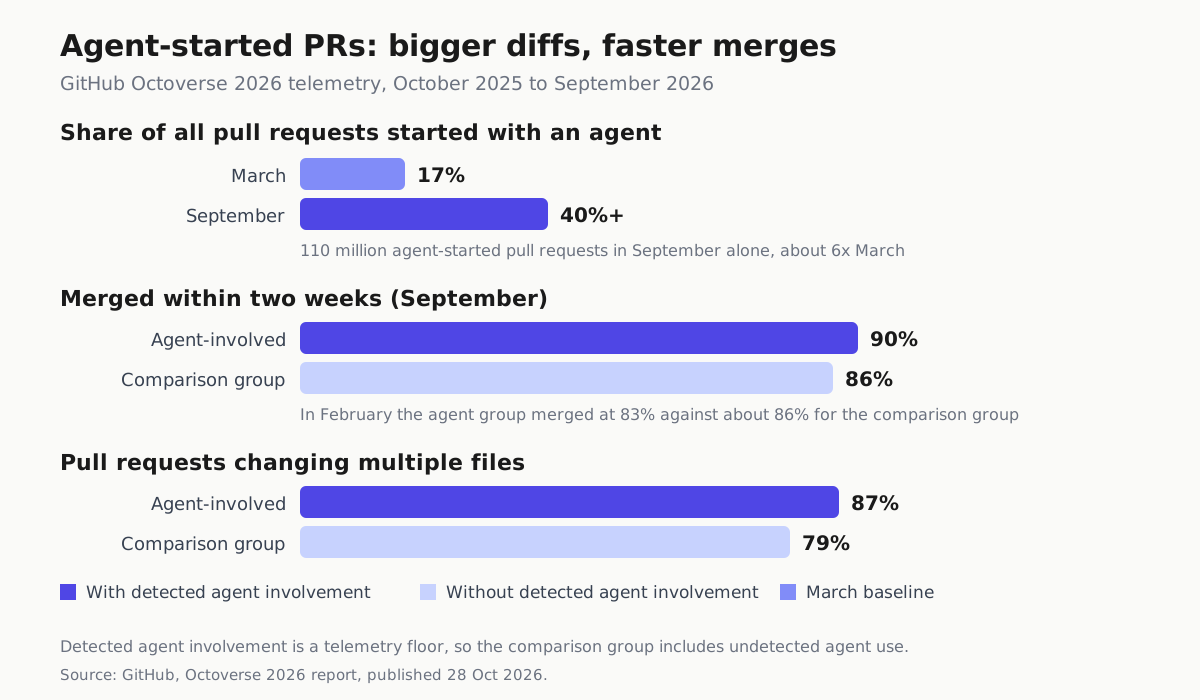
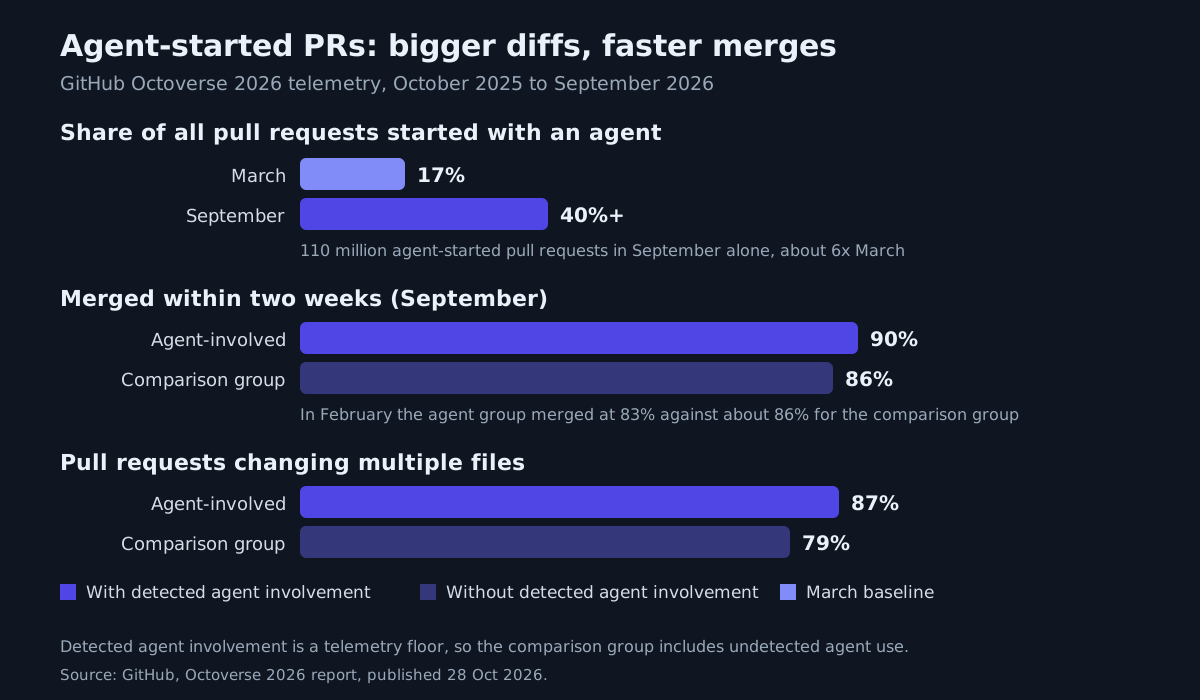
As of September 2026, more than 40% of pull requests on GitHub began with a coding agent’s first draft, up from 17% in March. That is 110 million agent-started pull requests in September alone, about six times March’s volume, according to GitHub’s Octoverse 2026 post. Here is what it means for teams running agents in CI and review.
The scale underneath the headline
The report’s window runs October 1, 2025 to September 30, 2026, and counts public and private repositories unless noted.
| Metric (Octoverse year) | Figure |
|---|---|
| Pushes | 17.9 billion, more than 2024 and 2025 combined |
| Commits | 34.3 billion, more than three times two years ago |
| Merged pull requests | 1.3 billion, an average of 3.5 million a day |
| Agent-started PRs, Sept 2026 | 110 million, more than 40% of all PRs |
Agents did not slow merges down
In February, 83% of agent-involved pull requests merged within two weeks, slightly behind the roughly 86% for pull requests without detected agent involvement. By September the agent-started group was at 90% while the comparison group held at about 86%.
The more consequential change is blast radius: about 87% of agent-started pull requests change multiple files, against 79% of pull requests without detected agent involvement. Agent pull requests are bigger and landing faster, so the constraint on throughput has moved from writing the code to reviewing it.
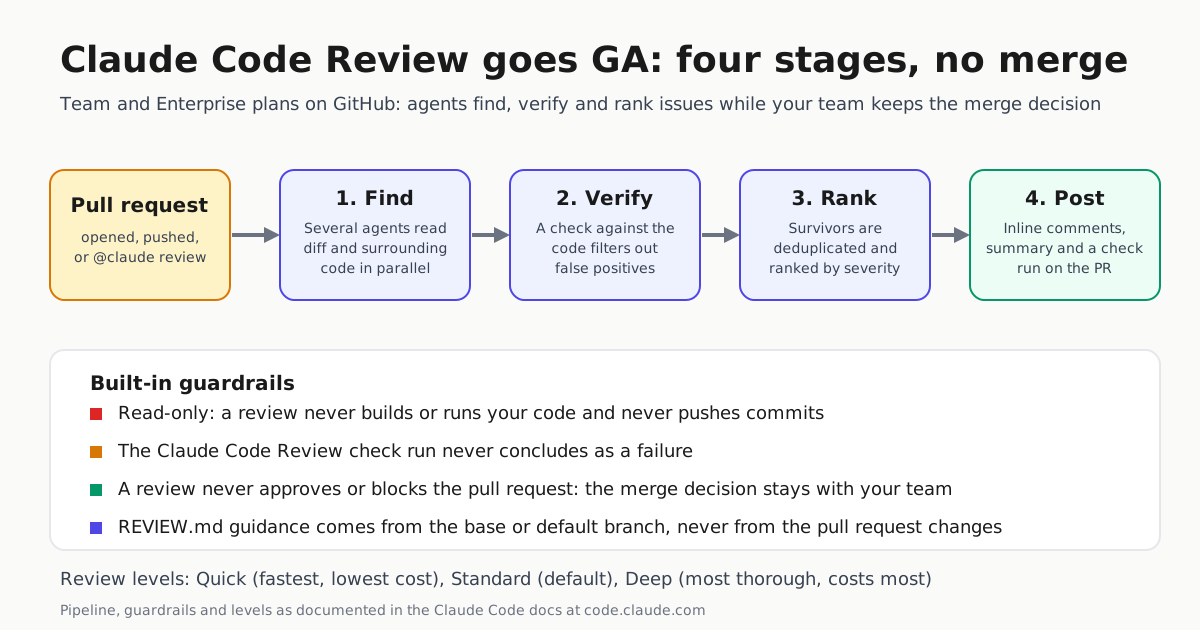
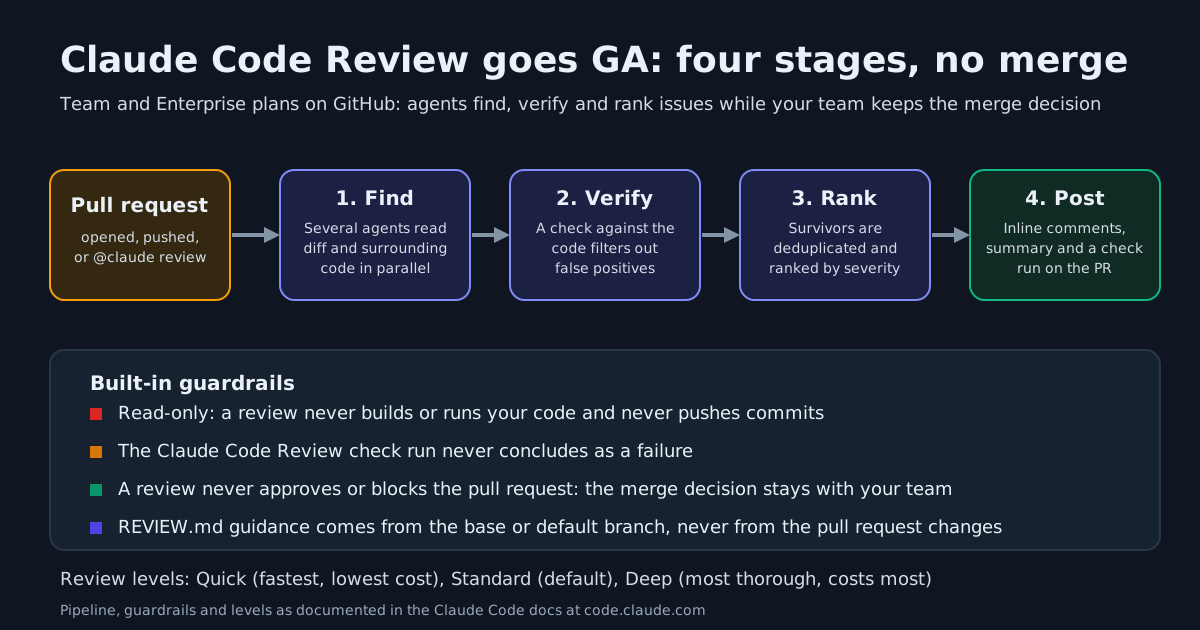
Review tooling is growing to match. Stacked pull requests, which split related work into smaller reviewable changes, launched as a preview on July 30 and had more than 264,000 developers using them by September. AI-assisted code review and GitHub Advanced Security usage each grew more than 90% year over year. At this volume the review path decides your throughput. Our AI PR review agent policy and overnight agent merge gates cover what stays human.
Delegation is changing faster than drafting. Among GitHub Copilot’s monthly active users, 55% now use agentic features, up from 35% a year earlier. The steepest growth is the hands-off mode: Copilot cloud agent, where a developer assigns a task and an agent works independently, grew 230% year over year against 85% for agent chat.
The repo-level lever is a file, not a model
The most actionable number is not about pull requests at all. Among repositories created in 2026, the average repo with an agent configuration file logged eight times as many commits as the average new repo without one.
Two cautions keep that honest. The link between a file’s presence and commit volume is an association, not a cause. And an agent configuration file is a maintained artifact that goes stale like any other instruction file, as we cover in Plugins, Gists, and Rotting AGENTS.md.
Language and model choice follow the agents
Among repositories created in 2026, TypeScript was the primary language in 35% of repos with an observed agent signal, against 24% without one. GitHub’s reading is that developers who leave the choice open let agents pick a narrower set of languages, a signal about where agent output is easiest to check, not a reason to migrate a codebase.
Model choice is now a per-step decision. In September 2026, 61% of Copilot users who selected a model themselves used more than one model across their sessions, up from 50% four months earlier, and no single model carried more than 25% of requests.
What is shipping, and what was only announced
GitHub’s Universe recap from the same day separates product from availability. Project HydraFusion, a research preview that plans a task across models, routed almost 60,000 sessions in the CLI and the Copilot app before becoming generally available as Copilot Fusion. The same post presents the Copilot app, projects, session continuity, automations and code review Max as available now, while Enterprise access to all Copilot features billed to AI credits starts through GitHub Sales, with self-serve still to come. Introduced and available to your account today are different claims, and that difference is where a procurement decision lands.
What the telemetry cannot show
Detected agent involvement is a floor, so the 86% comparison group almost certainly contains some agent work and the measured gap is understated. GitHub also sells the products this report measures. Its methodology section documents recalculated prior-year figures and a forecast built from 43 models spanning 3x growth to under 2x, with only three expecting less than a doubling.
An independent reading, and a number that does not reconcile
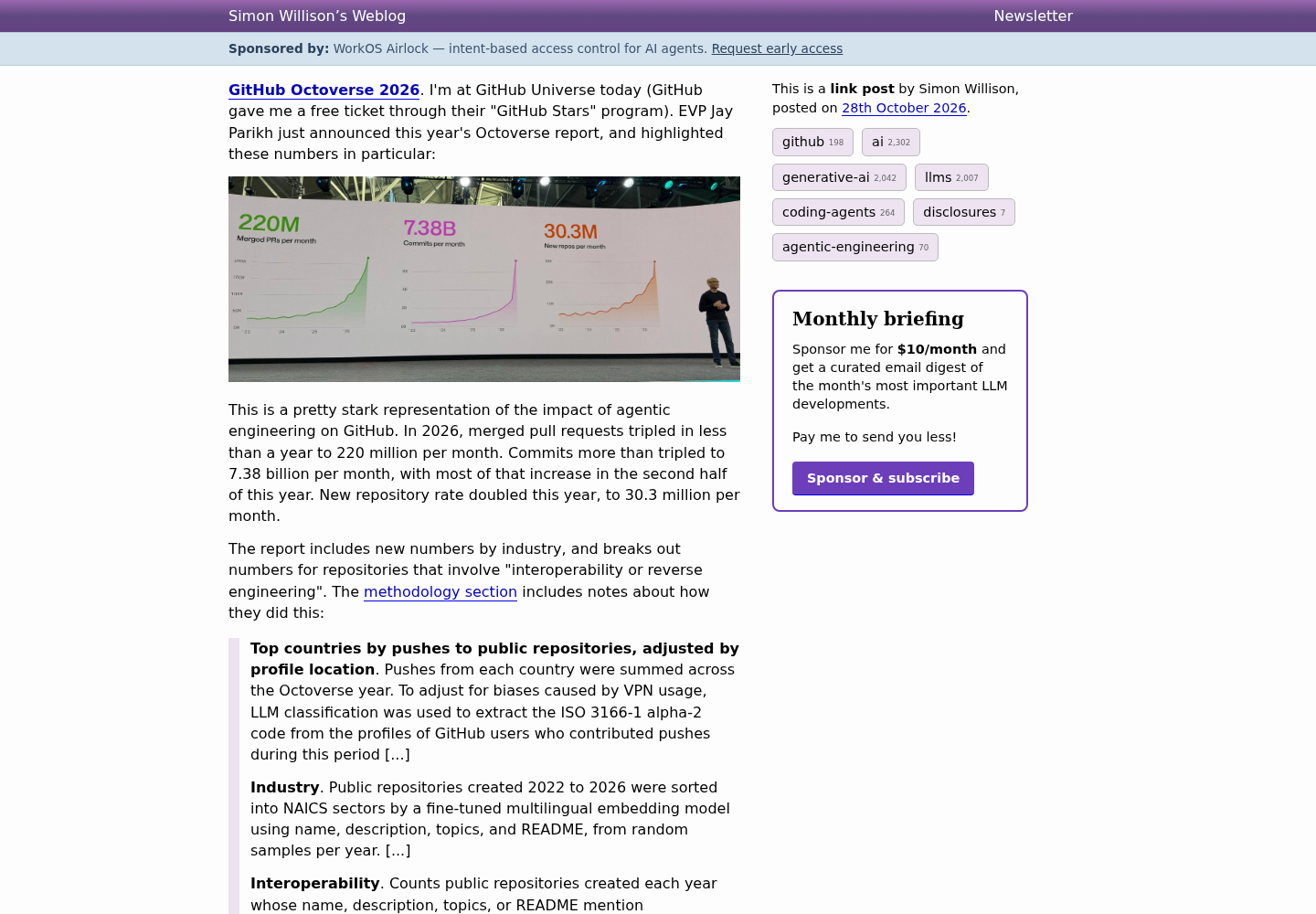
Simon Willison, at GitHub Universe, called the figures a stark representation of agentic engineering’s impact on GitHub. He recorded a different run rate announced on stage: 220 million merged pull requests and 7.38 billion commits a month. Those monthly figures do not reconcile with the report’s own 12-month totals of 1.3 billion merged pull requests and 34.3 billion commits, and the report does not explain the gap. Treat the window totals as the citable dataset and the stage figures as a separate run rate.
What to do with this
Measure time-to-merge on agent-started pull requests rather than PR count, which now rises for reasons your team did not cause. Size the review path for larger diffs and keep the human merge gate. Own the agent configuration file like any other production artifact. And assume model selection inside the agent is already a routing decision you do not control.
GitHub’s own summary is that the answer is still a person’s: someone decides what the code should do and whether it works. The new part is that the first draft now arrives before that conversation starts.