Cloudflare gives websites a search endpoint for AI agents
Search for Agents is in beta on all Cloudflare plans. It builds a site-specific index, advertises the endpoint on the site’s pages, and returns ranked Markdown excerpts.
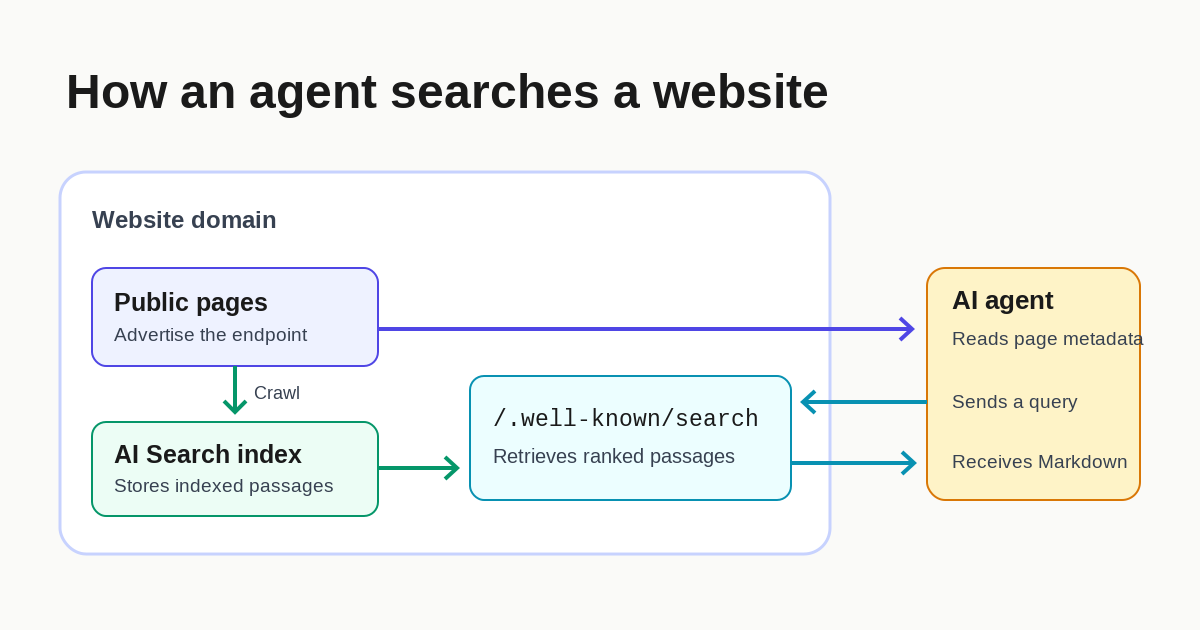
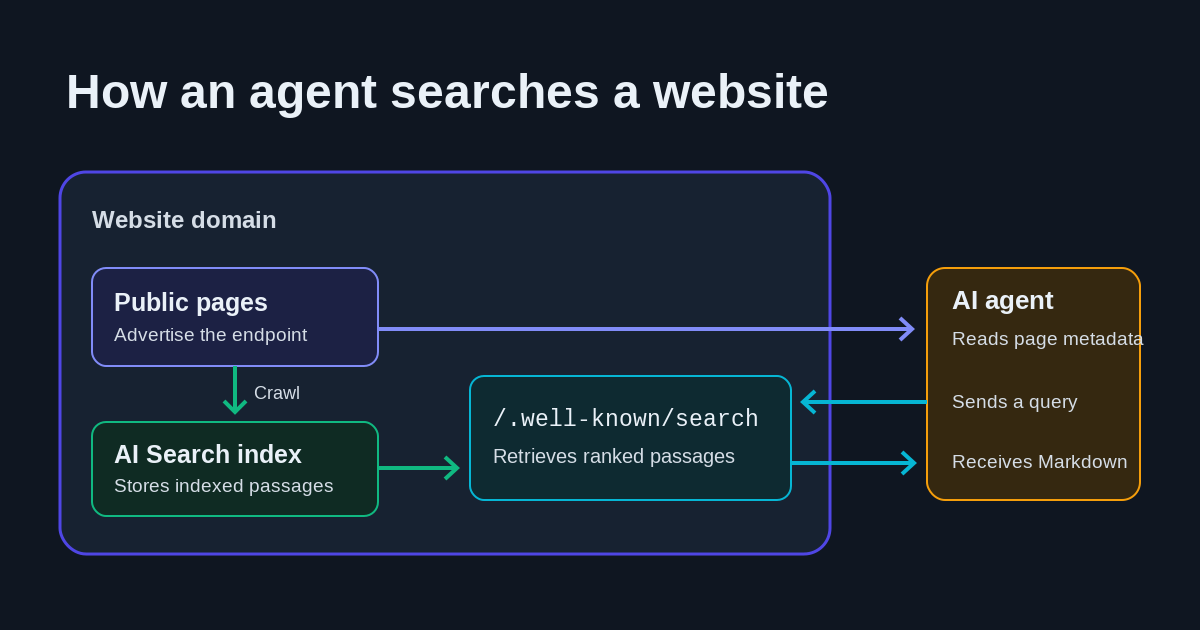
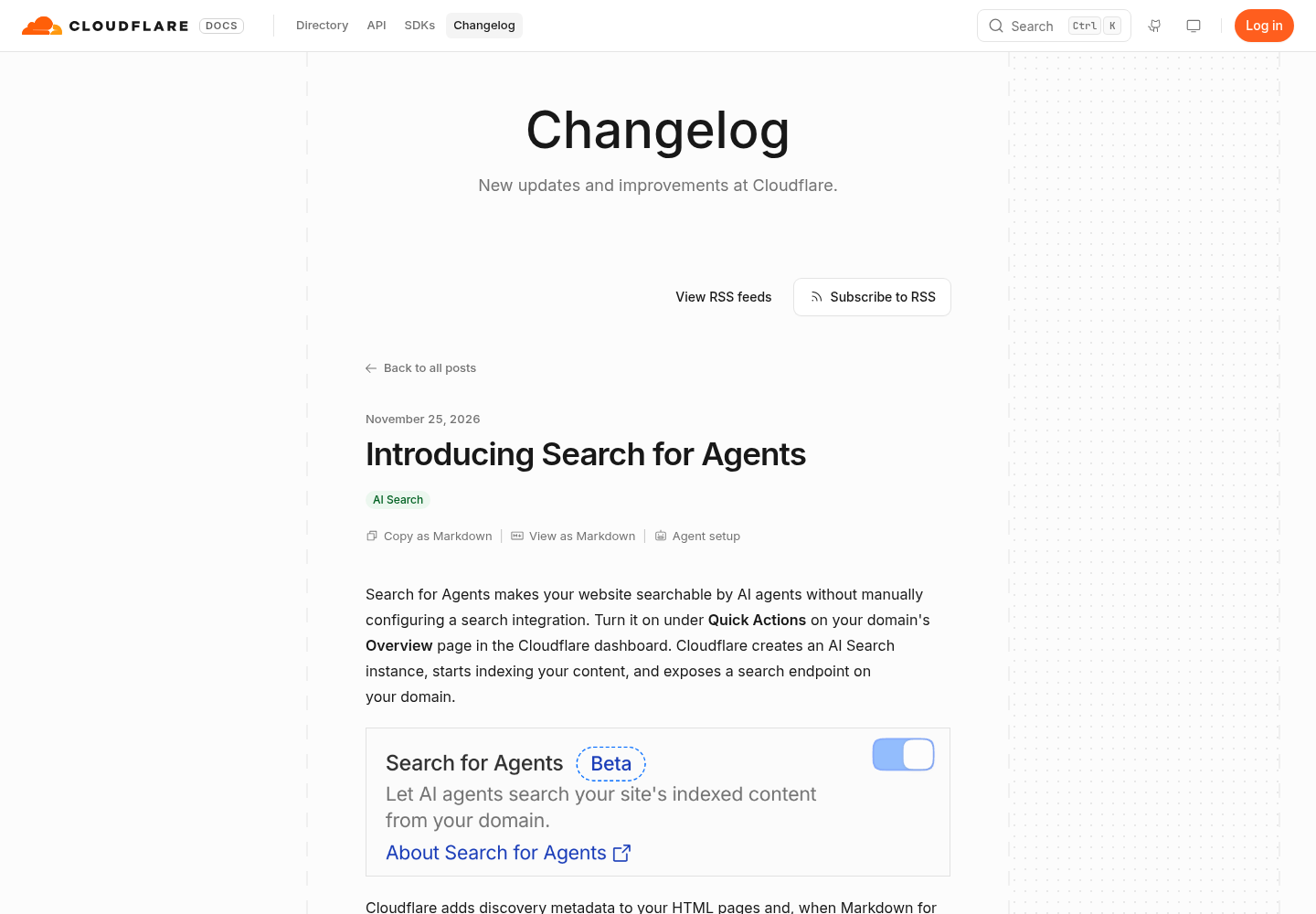
Cloudflare launched Search for Agents in beta on November 25, giving website operators a way to publish a search API for AI agents under their own domains. Enabling the feature creates a Cloudflare AI Search instance, starts crawling and indexing the site, and exposes /.well-known/search on the domain. The beta is available on all plans, including Free, subject to AI Search pricing and plan limits. Cloudflare’s November 25 changelog
The change matters most to teams running public documentation and support sites. Cloudflare already offered website indexing through AI Search, but operators had to configure an instance, make an endpoint available on their domain, and tell agents how to find it. The beta handles those steps together. An agent that lands on a participating site and recognizes the discovery metadata can ask the site’s own index a question before deciding which pages to open. Cloudflare’s launch announcement
What an agent gets back
Cloudflare adds metadata to the head of HTML responses that identifies the endpoint, the request method, and the documentation. Sites that also enable Markdown for Agents advertise the same information in the YAML front matter of Markdown responses. The two features handle different stages of a lookup. Markdown for Agents converts a page the client has already requested. Search for Agents finds relevant passages across the site’s index. Cloudflare’s Search for Agents guide
The search endpoint accepts keywords and natural-language questions. Clients can send a GET request with the q parameter or use HTTP QUERY with a plain-text or JSON body. The response contains retrieved Markdown excerpts, source references, and relevance scores. The calling agent can use those passages as evidence when composing its own answer. Cloudflare’s Search for Agents guide
Cloudflare illustrated the difference with its own developer documentation. In the company’s example, OpenCode found the search endpoint and used it to ask about the maximum push size for Cloudflare Artifacts. The retrieved table gives a uniform limit of 64 MiB per push. A separate row gives the maximum storage per repository as 1 GB for repositories created on or after September 29, 2026, and 10 GB for older repositories. For a storage question, the creation date determines which answer applies, and the retrieved passage gives the agent both the values and the condition. The demo shows discovery and retrieval in one client on Cloudflare’s own site. Broader adoption and answer quality across clients remain open questions. Cloudflare’s launch announcement
What site owners still control
The index starts building after activation. By default, Cloudflare discovers pages through links and sitemaps, follows links up to five hops from the source URL, excludes subdomains, and syncs every 24 hours. It combines keyword and vector search and returns up to 10 chunks per query by default. For a support team, those defaults affect whether a search finds the right version of a guide or includes a correction published earlier that day. The setup guide tells operators to index only content they intend to make publicly searchable. Requests to the endpoint remain subject to the domain’s AI Crawl Control and web application firewall rules. Cloudflare’s Search for Agents guide
Availability on the Free plan still comes with usage limits. Cloudflare counts ingestion, index storage, and queries under AI Search pricing, so a large documentation archive and a frequently queried support site can place different demands on the same feature. Cloudflare’s November 25 changelog · Cloudflare’s Search for Agents guide
Automater previously covered the Cloudflare and OpenAI discovery pilot. This beta puts discovery to work within a particular site. After a client reaches the domain, the operator can point it toward an index of that site’s content. How useful that becomes depends on whether clients recognize the metadata and whether the index surfaces the passages readers need. Automater’s coverage of the discovery pilot