Epochal Launches With $100M and Time Portal: A Point-in-Time Web Where Agents Forecast Without Seeing the Answer
Epochal launches with $100M and a point-in-time web: agents forecast on a trillion dated pages in a date-frozen sandbox, then get scored against the outcome.
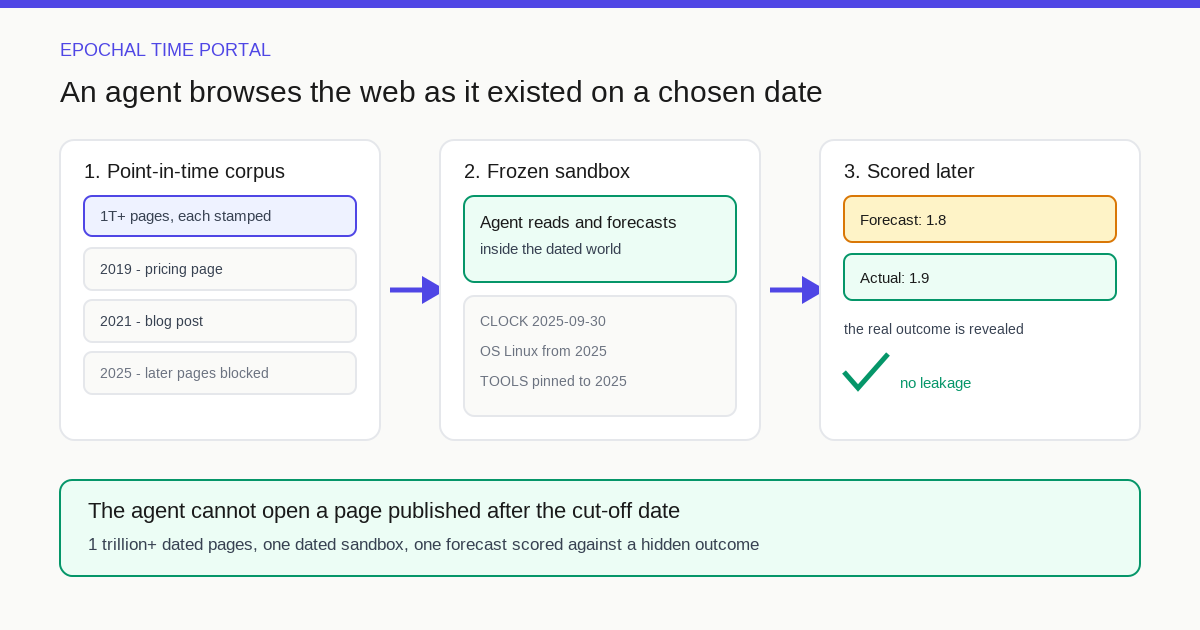
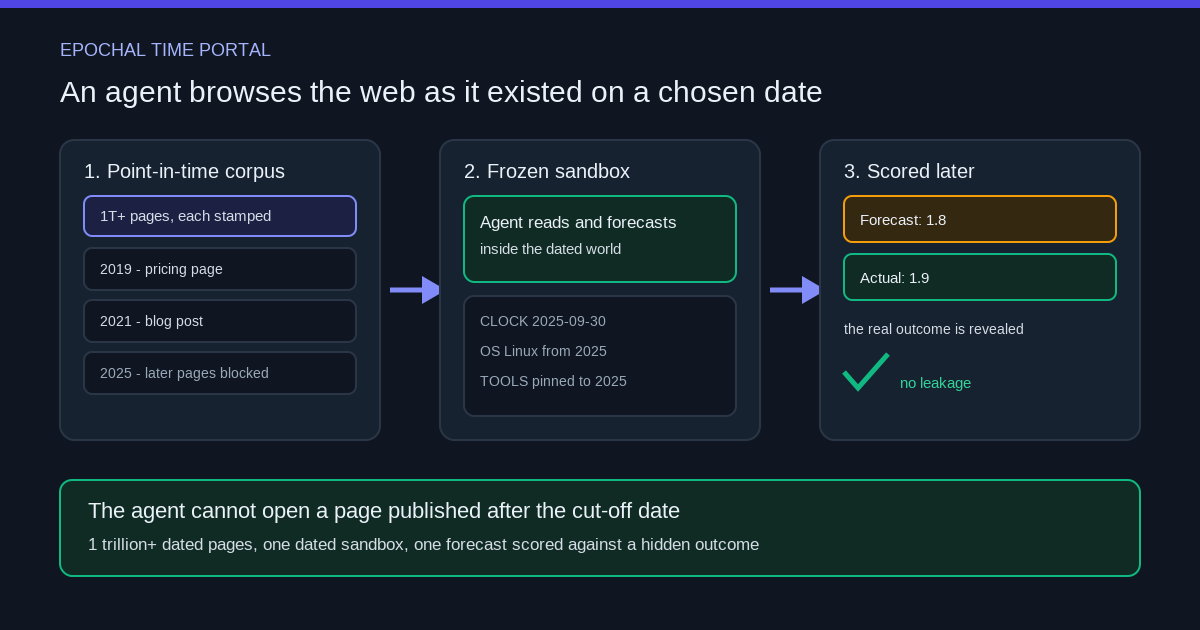
Epochal AI Inc. launched on Nov. 24, 2026 with $100 million in funding and a single product: Time Portal, a cloud service that hands an AI agent a search engine over a timestamped archive of the web as it existed on a date you pick. SiliconANGLE reported the launch the same day, and The Rundown AI’s Nov. 25 newsletter covers the team behind it. SiliconANGLE says the money came from chief executive Guodong Zhang, a machine learning researcher and former xAI co-founder who founded the company earlier in 2026 with xAI co-founders Zihang Dai and Manuel Kroiss; the staff also includes former researchers from Anthropic, OpenAI and Google DeepMind. The Rundown describes the $100 million as Zhang’s own money and counts the three as xAI founding members.
No new model shipped here. What launched is an environment, aimed at the hardest part of agent work to measure.
The problem Epochal is selling against
In its announcement post on X, Epochal wrote that “today’s AI has read almost everything and lived through almost nothing,” because it “learns from the internet all at once, already knowing how each story ends.” The company calls Time Portal “the first true point-in-time environment with trillions of pages spanning 30 years of history, where agents can browse the Internet as it existed on a past date.”
That is a claim about evaluation, not knowledge. A model asked to predict an outcome it has already read the answer to produces a score that measures recall, not forecasting. A benchmark measures something only if the agent cannot see the key, which is the discipline set out in our guide to evals for AI agents. Teams that want a leak-free world today hand-build it, with fixtures and simulated companies (Agents Need Fake Companies), or buy a slice of the market described in The RL Environment Gold Rush.
What the service is, as described
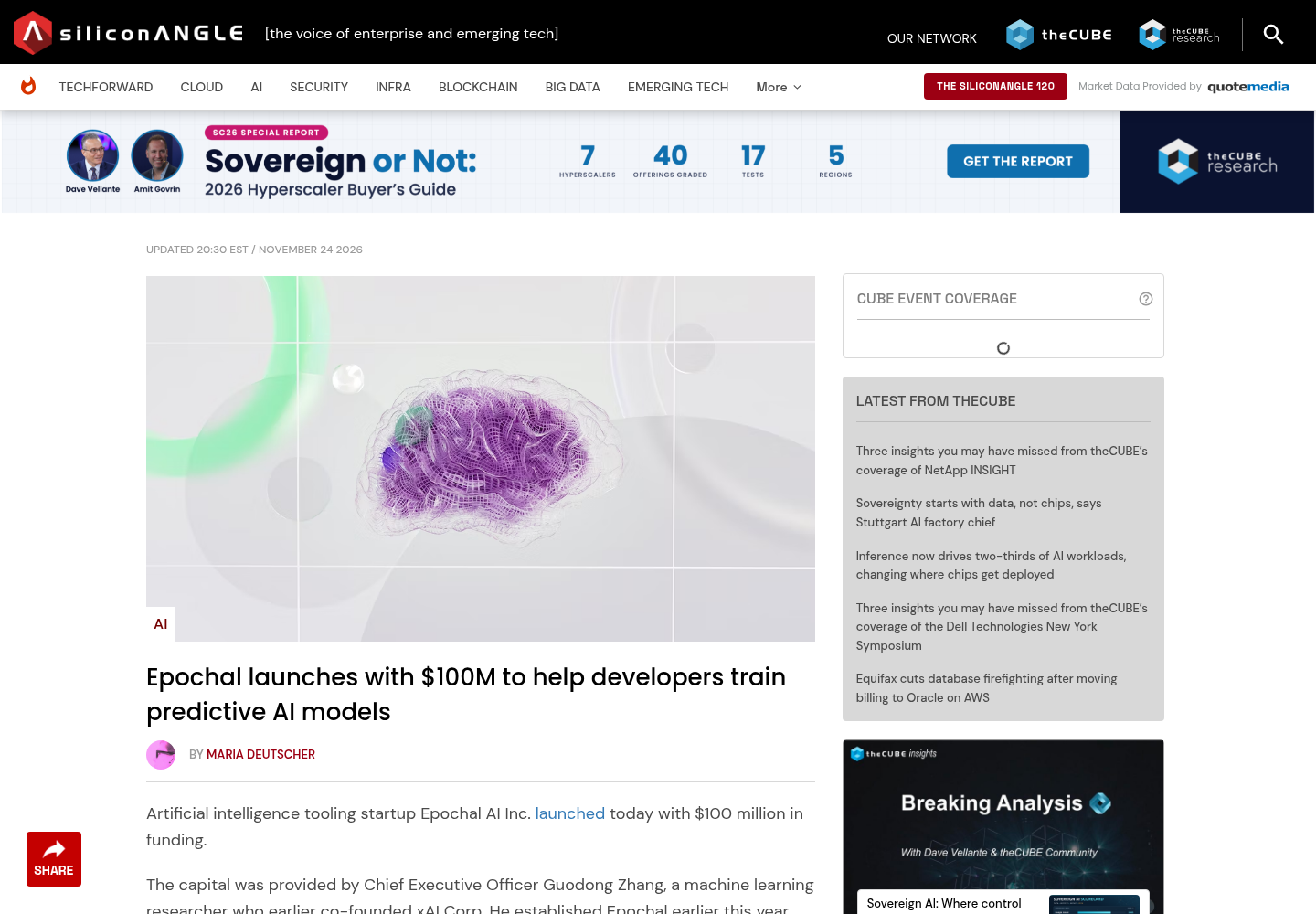
SiliconANGLE gives the most detailed public account so far. Three layers:
| Layer | What Epochal says it does |
|---|---|
| Corpus | More than 1 trillion pages across 30 years, each stamped with its creation time so a page’s changes over time can be tracked. The busiest pages are captured as often as once a minute. |
| Search | A purpose-built search engine where a query can be restricted to a time window. Relevance still ranks results, but a “Meta” query that excludes pages created before 2021 does not return the social network’s pre-rebrand pages. |
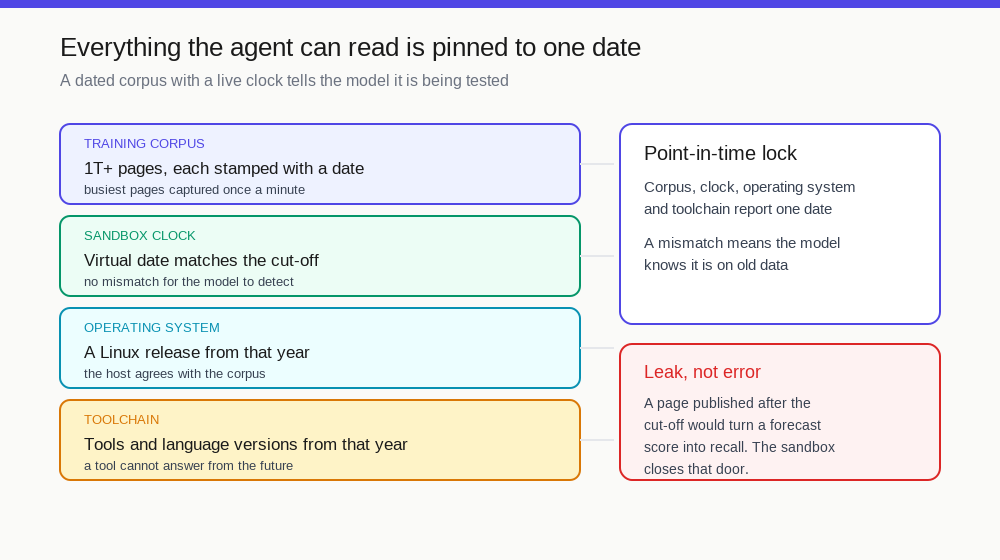
| Sandbox | Models run in a sandbox synchronized to the training window: training on 2025 pages means a Linux release from 2025, plus matching software tools and programming language versions. |
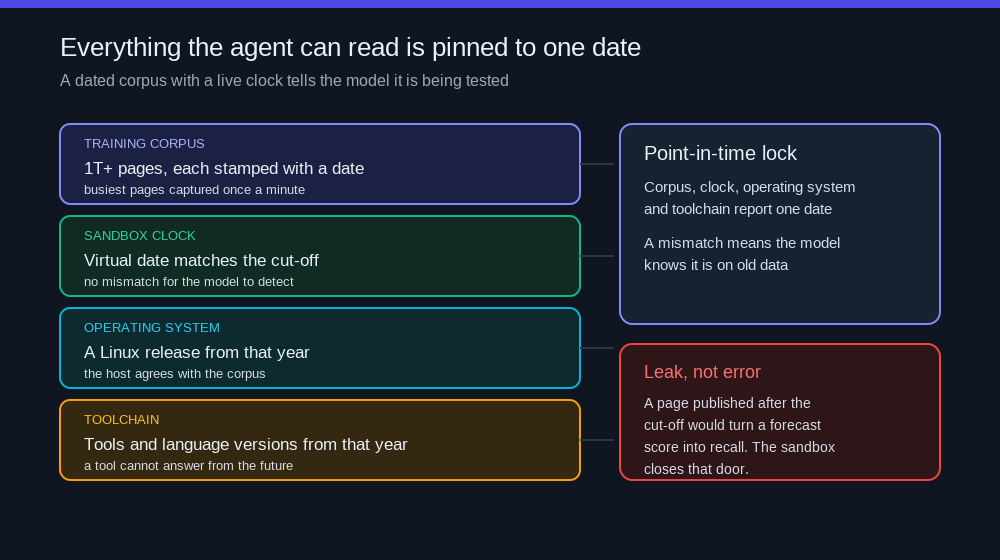
The sandbox is the layer teams are most likely to skip and least able to afford. SiliconANGLE notes that a frontier model can infer it is on historical data by comparing a page’s creation date with the operating system clock in its environment, and that such mismatches lower the effectiveness of training runs. Freeze the corpus but leave the clock live, and the agent has already been handed the answer.
# Illustrative outline of the loop Epochal describes. Not a published API.
cutoff   = chosen past date, e.g. 2025-09-30
corpus   = pages created on or before cutoff   (1T+ timestamped pages)
sandbox  = clock, OS and toolchain set to cutoff
forecast = agent(corpus, sandbox, "estimate Q4 revenue")
score    = compare the forecast with the revealed real outcome
The loop the service is built around
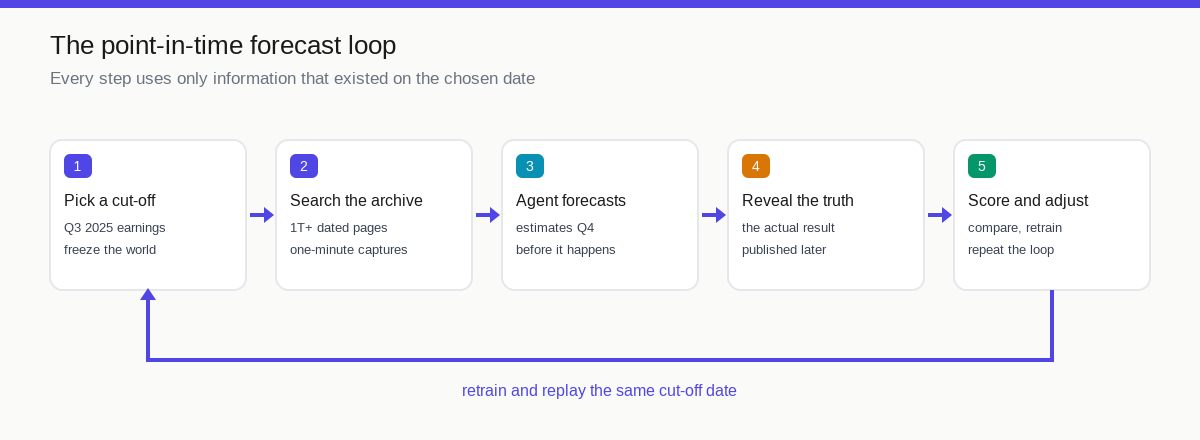
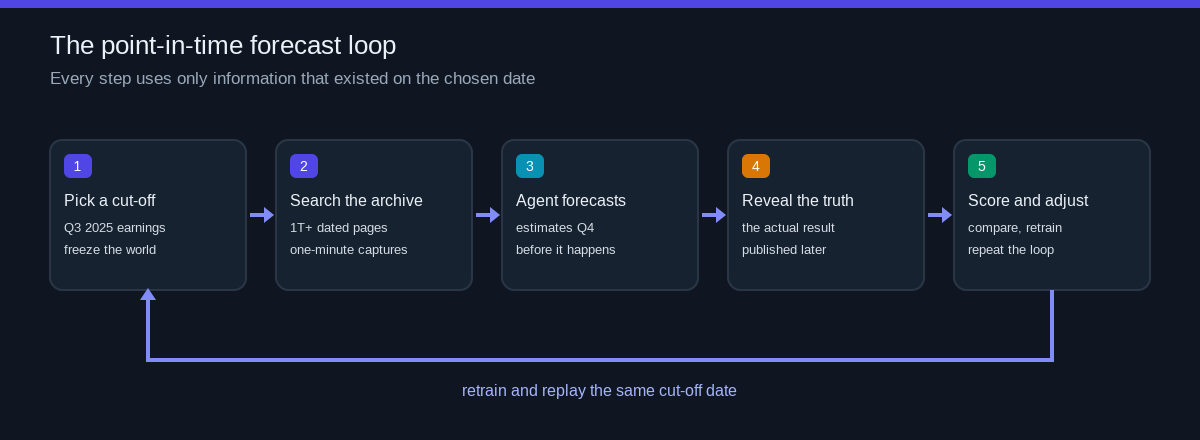
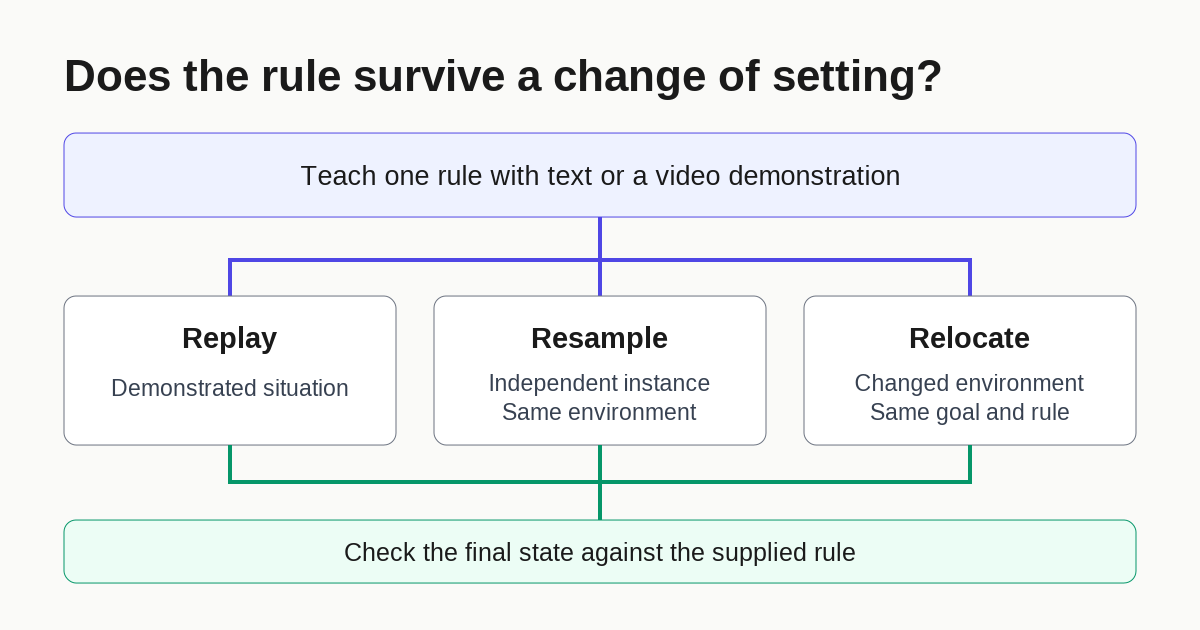
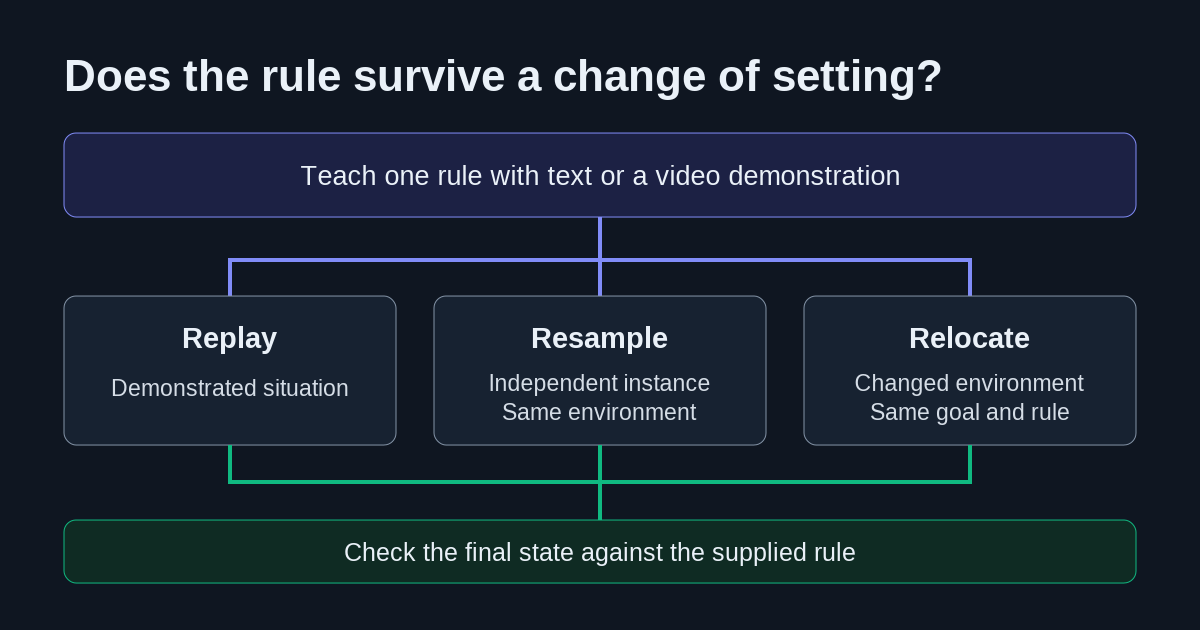
SiliconANGLE uses a quarterly-earnings example: fetch the first three quarters of 2025, ask the model for the fourth, compare the prediction with the real result, adjust, and repeat the workflow until the forecast improves. The Rundown AI reports Epochal saying it built the service in 90 days, and that agents forecasting 347 Kalshi and Polymarket questions live were replayed through Time Portal weeks later and made nearly the same calls.
Announcement versus availability
| Claim | Where it comes from | Status |
|---|---|---|
| $100M launch capital from Zhang | SiliconANGLE | Reported; Zhang is the only funder named |
| 1T+ timestamped pages across 30 years | Both outlets, citing the company | Vendor-stated |
| One-minute capture on the busiest pages | SiliconANGLE, citing the company | Vendor-stated |
| 347 live questions forecast, replays matching | The Rundown AI, citing the company | Vendor-stated; no experiment published |
| Service availability | SiliconANGLE | Live now in a single free tier with low usage limits |
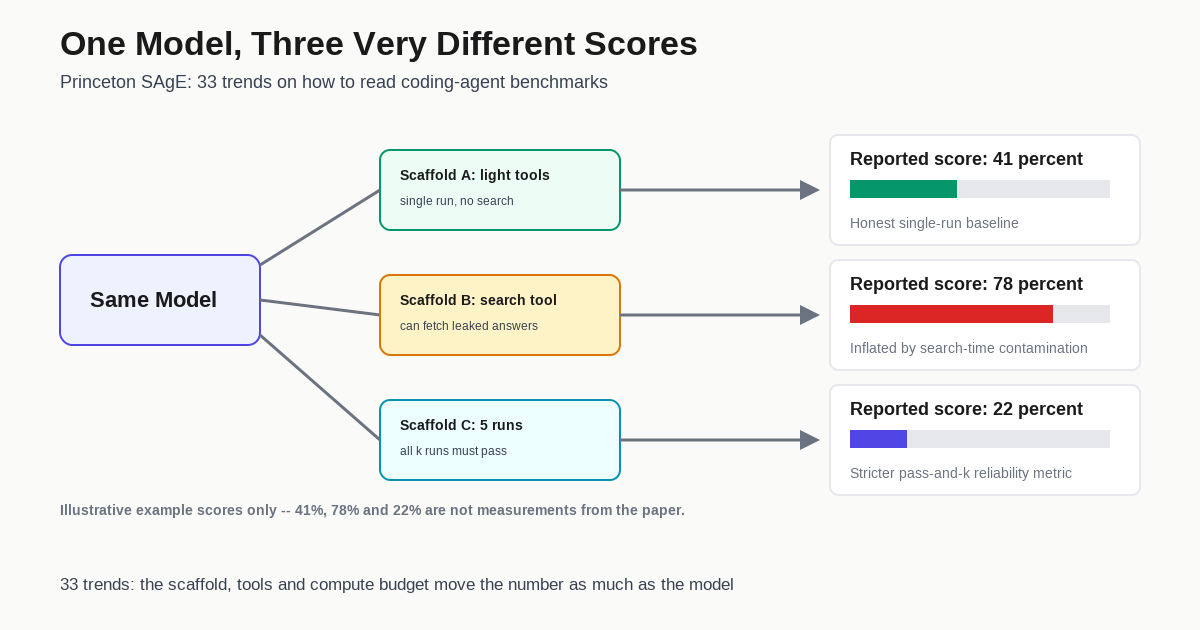
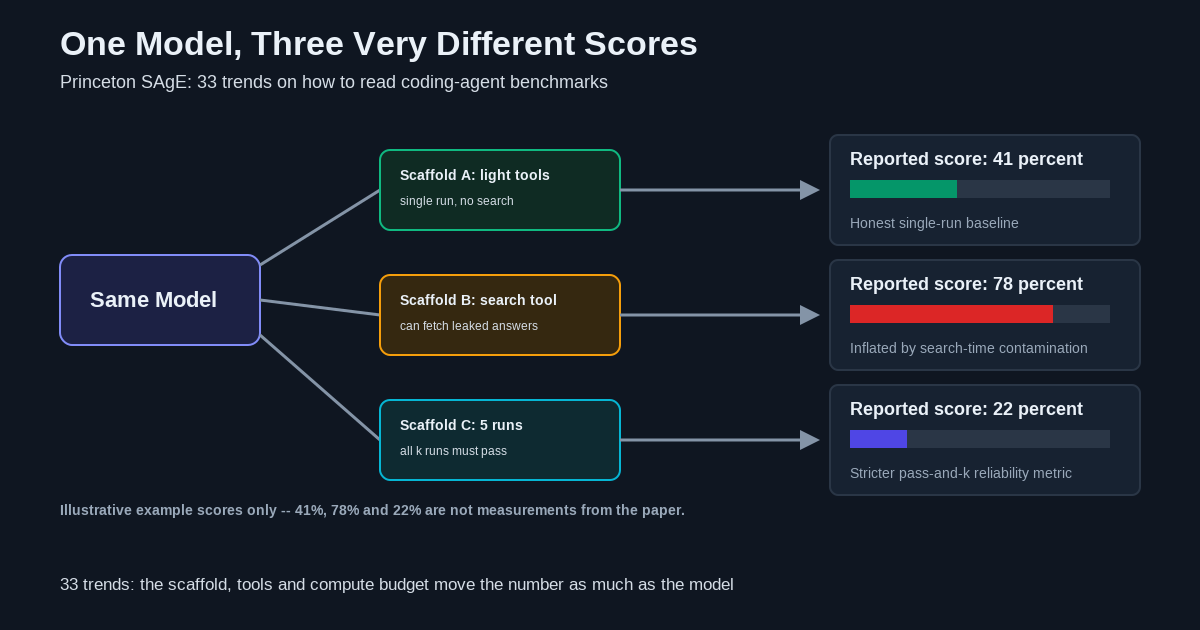
The gap between the first and last rows is the story. Epochal says it will publish results from several AI experiments run on the service, so the headline accuracy claim is currently a company claim with no external replication. That gap is familiar: Princeton’s SAgE group has documented that what a benchmark measures depends on the harness and the environment as much as on the model. A larger corpus will not close it; a published experiment with a reproducible cut-off date would.
What it changes for agent and eval teams
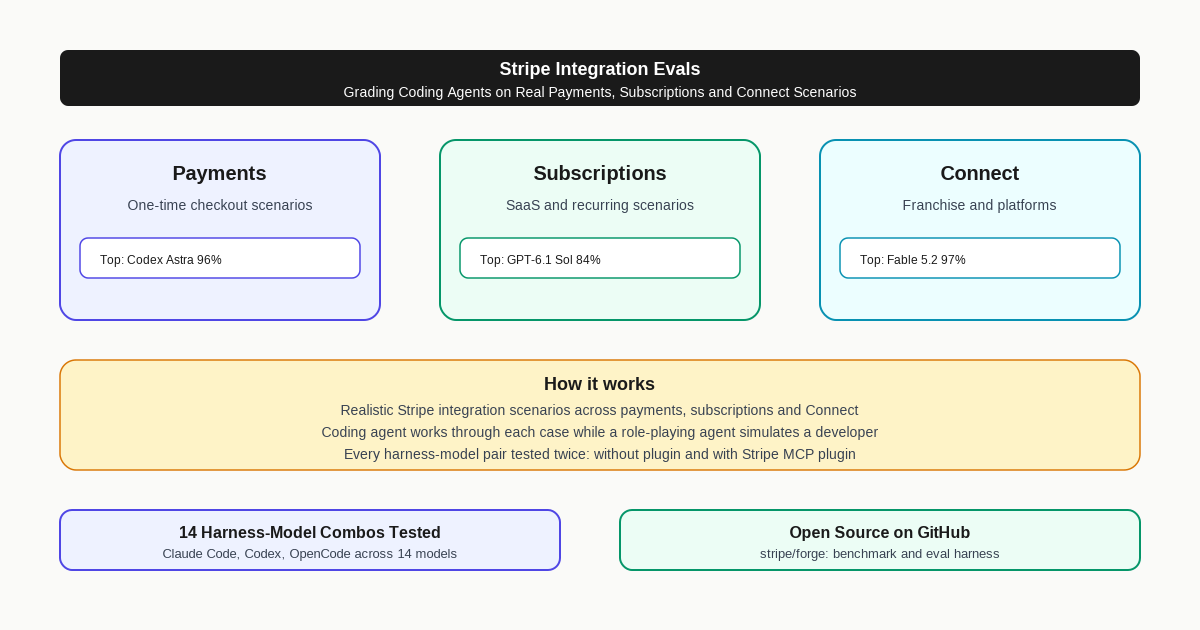
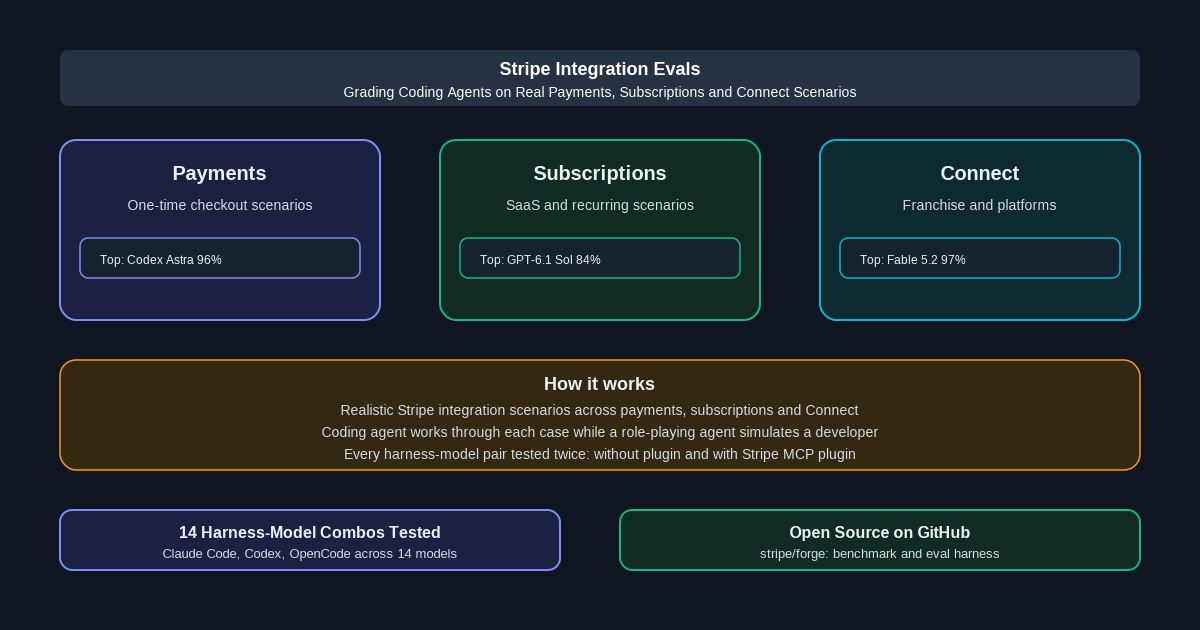
Forecast evaluation moves from “we wrote a fixture” to “we rent a dated world.” A question with a real settlement date and a real archive behind it becomes a benchmark, which raises the ceiling on what a team can claim. It also lands next to a known weakness: agent scores often move when the harness changes rather than the model, which is why Stripe open-sourced an integration benchmark. The counterweight is dependency and cost. A third-party archive plus a synchronized sandbox means relying on somebody else’s record of what the web said on a given day, and none of the three public sources describe how that archive was collected.
What to watch
- The promised experiments. Whether the Kalshi and Polymarket replay holds under a cut-off an outside team can verify.
- The free tier. SiliconANGLE describes one free tier with low usage limits and no paid tier announced; per-minute snapshots of a trillion pages are not cheap to run.
- Corpus provenance. How the archive was collected and licensed is not described in any of the three sources.
- Sandbox reproducibility. Whether “Linux from that year” and the pinned toolchain are documented or opaque.
The operator takeaway
If your team forecasts anything with a language model, the useful test this week is not whether Time Portal works. It is whether your current eval leaks: take a task with a known settlement date, remove every artifact created after that date from the agent’s tools, and see whether the score changes. If it changes, you were measuring recall. Epochal is selling the expensive, rented version of that experiment.
Sources
- Epochal launches with $100M to help developers train predictive AI models - SiliconANGLE
- Epochal on X: "Announcing Epochal! ✨ We believe the best measure of intelligence is the ability to predict the future. Doing so requires learning about the past and constantly working to be less wrong. Today's AI has read almost everything and lived through almost nothing. It learns from the inte…
- Three xAI founders want AI to predict the future