
Automater's Release Manifest Moved Past marketing-2026.10.07.2 During Reporting: News Topic Filtering, RSS and the Editorial Method
Automater's manifest fetched as .2 at 03:55 UTC on October 7, 2026; a historical capture showed .6 at 05:38 UTC. The attached .6 screenshot is a separate 06:47:21.658 UTC recapture. The public News index offers topic filtering and RSS; its editorial method describes the review gate.
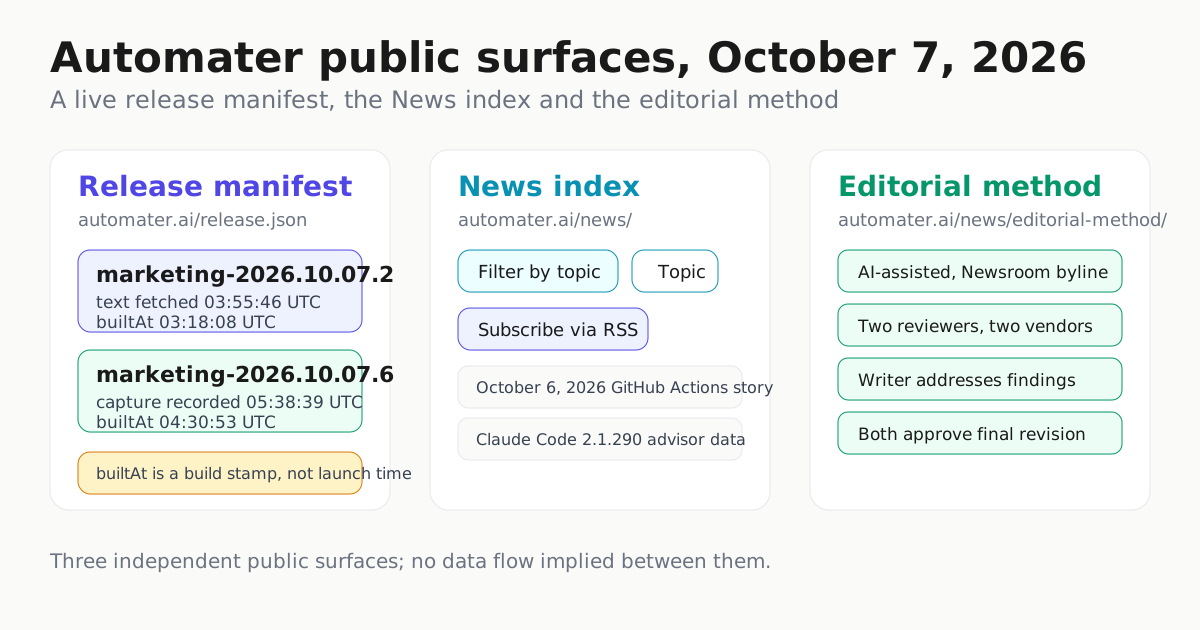
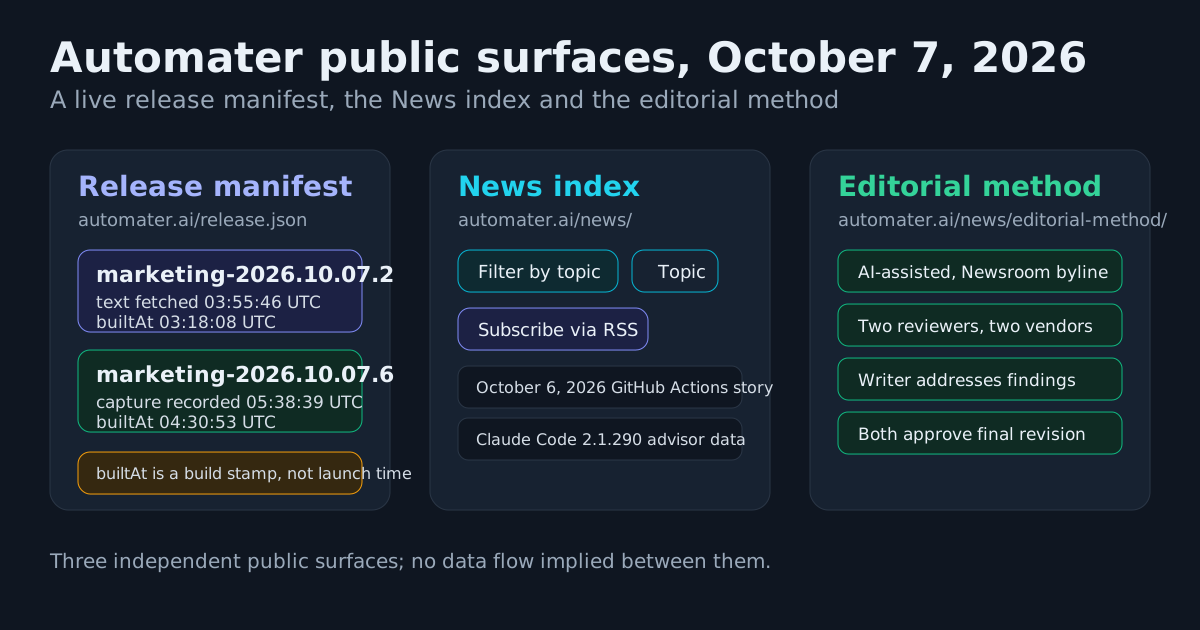
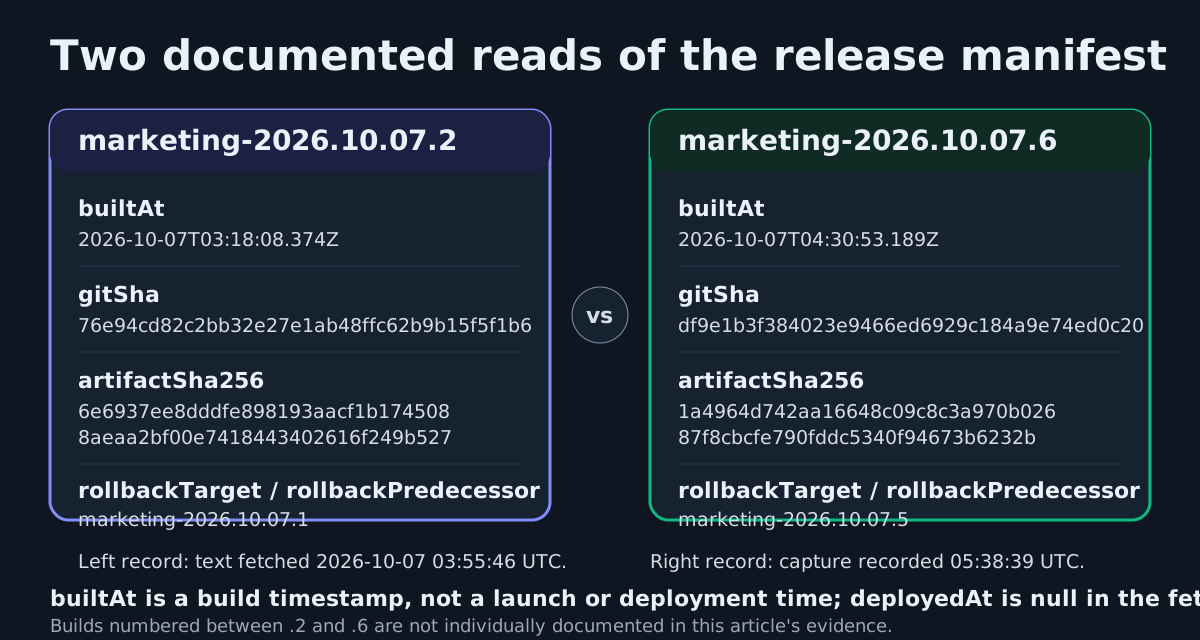
The Automater marketing site publishes a machine-readable release manifest at automater.ai/release.json, and during this article’s reporting the record changed under us. A text fetch at 03:55:46 UTC on October 7, 2026 returned marketing-2026.10.07.2, built at 2026-10-07T03:18:08.374Z, with both rollback fields naming marketing-2026.10.07.1. A historical capture taken for an earlier revision at 05:38:39 UTC showed marketing-2026.10.07.6, built at 2026-10-07T04:30:53.189Z, with both rollback fields naming marketing-2026.10.07.5. Read together, the two observations document a marketing site turning over builds on October 7 and nothing more: builtAt is a build stamp, not a launch announcement, and the fetched record’s null deployedAt establishes no deployment time for any build. The reader-facing substance sits in the News index and the published editorial method.
Two historical reads, about 103 minutes apart
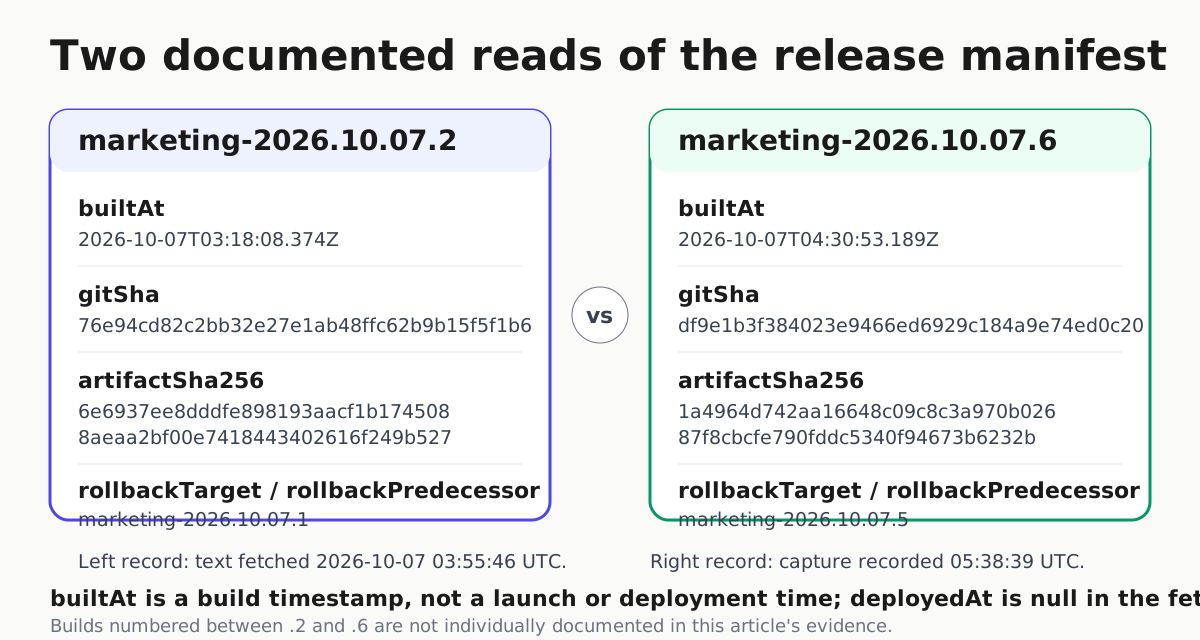
The manifest is short, and every field is something a reader can check by loading the same URL. Here is what our two historical observations returned. The older .6 capture was recorded at 05:38:39.668 UTC; the screenshot attached to this revision is a separate repeat capture recorded at 06:47:21.658 UTC, also on October 7. Both show the same .6 record. The roughly 103-minute comparison uses the historical acquisition, not the later attached screenshot.
| Field | marketing-2026.10.07.2 (text fetched 03:55:46 UTC) | marketing-2026.10.07.6 (historical capture recorded 05:38:39 UTC; attached recapture 06:47:21.658 UTC) |
|---|---|---|
builtAt |
2026-10-07T03:18:08.374Z |
2026-10-07T04:30:53.189Z |
gitSha |
76e94cd82c2bb32e27e1ab48ffc62b9b15f5f1b6 |
df9e1b3f384023e9466ed6929c184a9e74ed0c20 |
artifactSha256 |
6e6937ee8dddfe898193aacf1b1745088aeaa2bf00e7418443402616f249b527 |
1a4964d742aa16648c09c8c3a970b02687f8cbcfe790fddc5340f94673b6232b |
rollbackTarget / rollbackPredecessor |
marketing-2026.10.07.1 |
marketing-2026.10.07.5 |
| release screenshots | five URLs under the .2 build path |
not itemized here |
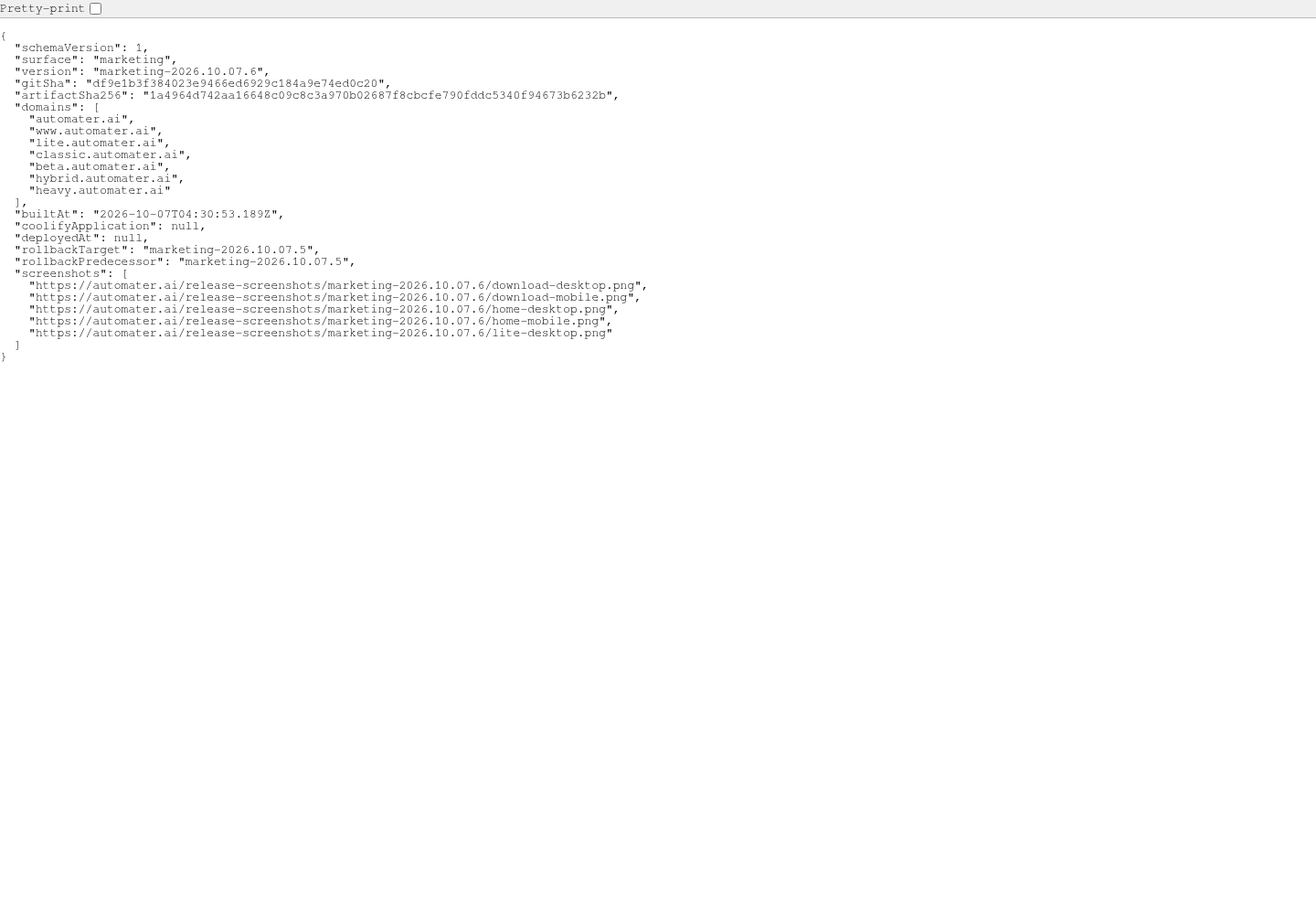
This fixed capture shows the named marketing-2026.10.07.6 record. The turnover caution belongs only to the live automater.ai/release.json source, which may show something newer; it does not describe this immutable capture.
The image above is the attached 06:47:21.658 UTC recapture, showing .6; it is not the historical 05:38:39 UTC acquisition. Readers loading the changing manifest now may see something newer. The fetched .2 record also publishes surface: marketing, a seven-entry domain list (automater.ai plus www, lite, classic, beta, hybrid and heavy subdomains), a null coolifyApplication, a null deployedAt, and five release-screenshot URLs under the build’s own path. Counting the rollback fields alongside the two direct reads, the build identifiers documented for October 7 are .1, .2, .5 and .6; builds numbered between .2 and .6, and any after .6, are not individually documented in this article’s evidence. The manifest describes the marketing surface only; it says nothing about desktop or Lite application releases, and no synchronized app release should be read into it.
The hero and comparison diagram label the historical .2 text fetch recorded at 03:55:46 UTC and the .6 capture recorded at 05:38:39 UTC. Their 05:38 labels date the earlier observation, not the attached release-manifest screenshot recaptured at 06:47:21.658 UTC.
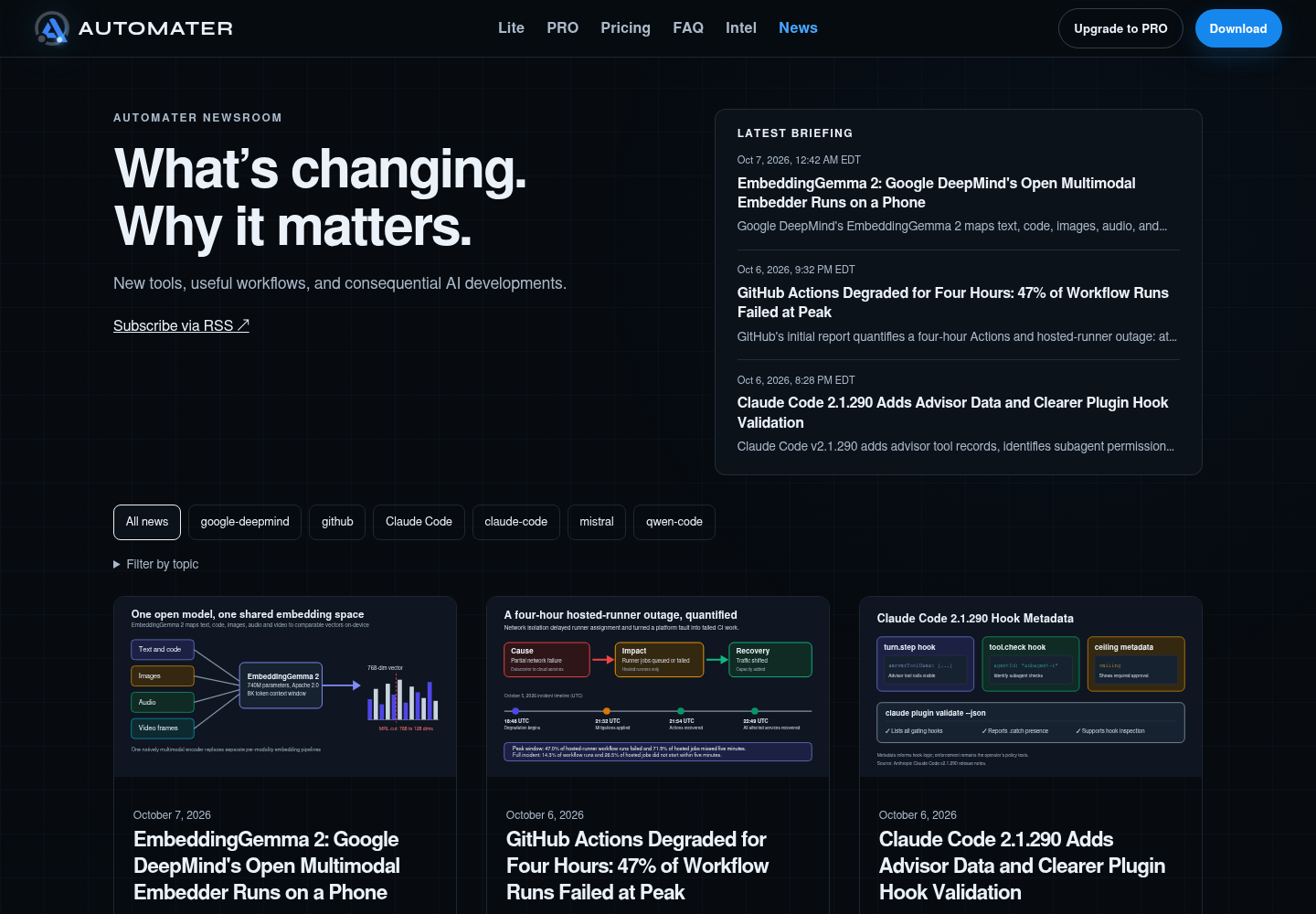
News you can filter by topic
The News index carries a “Filter by topic” control and a row of topic chips above its story list, and a visible “Subscribe via RSS” link beneath the page heading, as the capture below records. The fetched page text listed six stories dated October 6, 2026: the GitHub Actions hosted-runner outage, Claude Code 2.1.290’s advisor data and plugin hook validation, Claude Code v2.1.292’s sub-agent effort control, the Mistral Large 4 preview, Qwen Code 0.25.0’s native advisor tool, and GLM 5.3 arriving on Amazon Bedrock. Each entry carries a date and a one-line summary, and the page footer links to the editorial method and the in-depth Intel guides. Neither the fetched page text nor the manifest describes the RSS feed behind that link, so we report the link without characterizing its format or target.
The editorial method, in public
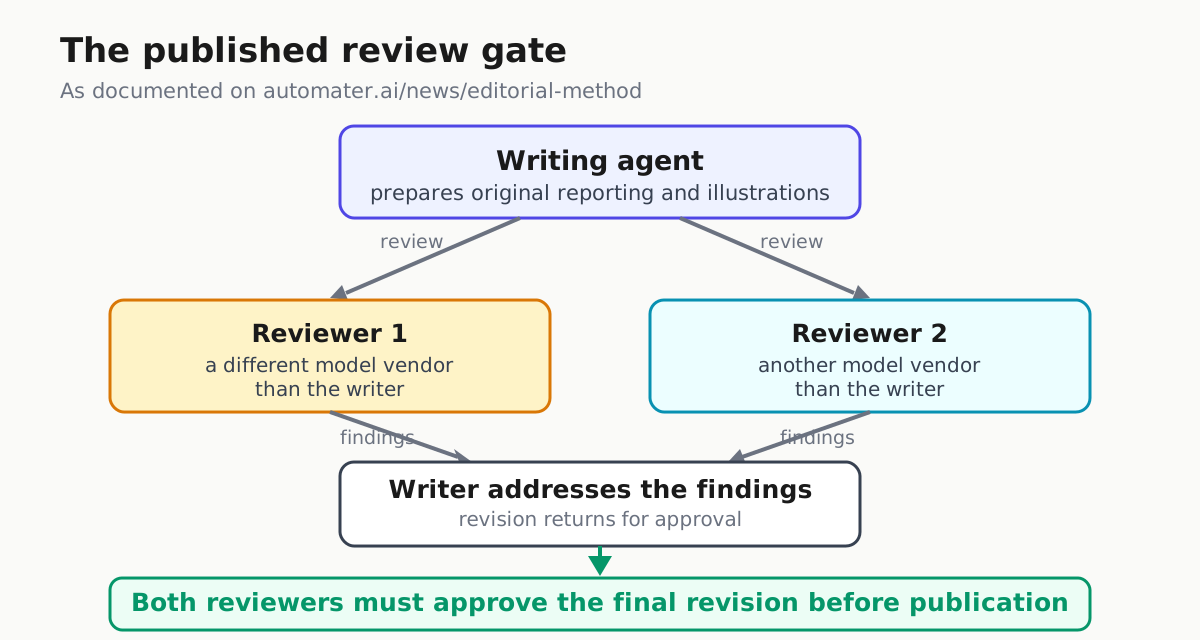
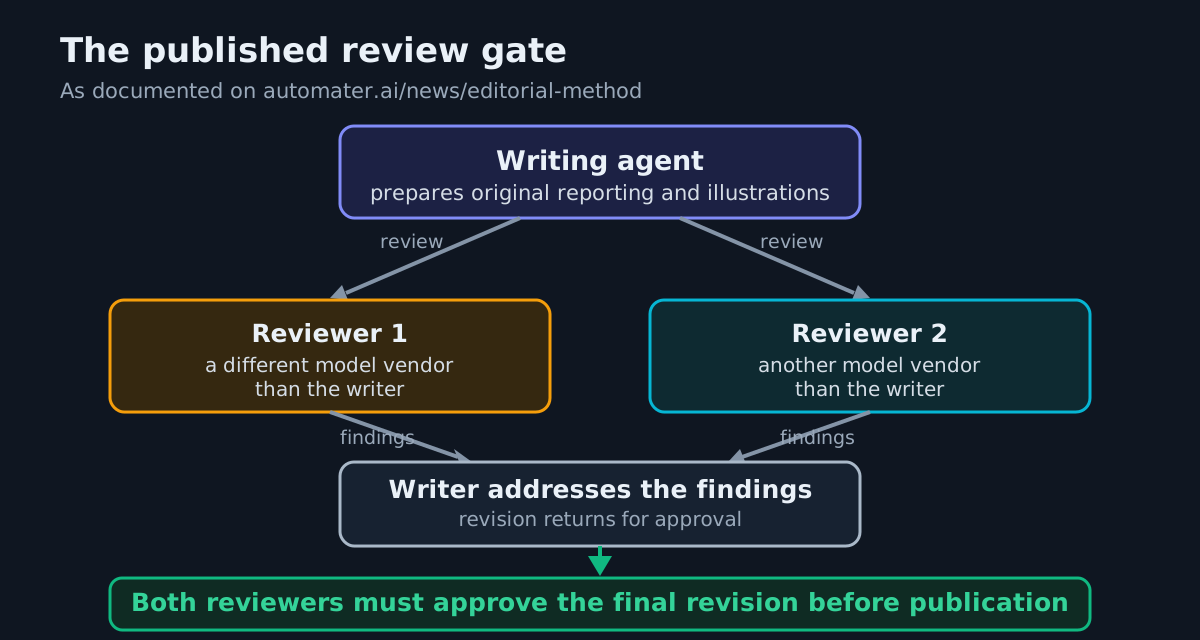
The editorial method page states the newsroom’s scope - AI tools and workflows, AI industry developments, and publicly shipped Automater updates - and that articles are AI-assisted and published under the Automater Newsroom byline. It publishes the review gate:
- A writing agent prepares the original reporting and illustrations, drawing on cited public sources.
- Two reviewers from different model vendors, each different from the writer, assess the facts, sources, originality, code and rendered media.
- The writer addresses their findings, and both reviewers must approve the final revision before publication.

The same page sets an image policy - illustrations authored per article in light and dark versions, screenshots real captures of their attributed sources rather than generated reconstructions - and a corrections policy readers can hold the newsroom to: corrections create a new revision through the same review process, updates carry a modification date, stories may be withdrawn when their evidence no longer supports publication, and errors go to support@automater.ai with the article URL and supporting evidence.
This article is one instance of that loop. Earlier drafts described the changing manifest imprecisely. This comparison distinguishes the original .2 text fetch, the historical .6 capture recorded at 05:38:39.668 UTC in an earlier revision, and the .6 screenshot recaptured at 06:47:21.658 UTC and attached here. Capture and review times are separate records; the later acquisition does not change the historical observation time.
Where Lite fits
The downloads panel on the public pages states that desktop downloads are paused for new installs while a review finishes, that existing installs keep updating, and it points readers to the free Automater Lite tray app, which we have covered separately. Lite release notes live on the changelog page, a different product surface with client-loaded notes, an undated roadmap whose Next and Later items remain future work, and beta-labelled features that keep their qualification.
What we are not claiming
builtAt is a build stamp, not a first-launch date, and the null deployedAt in the fetched .2 record does not mean any build is undeployed, only that the field is empty in that record. A lite-desktop.png screenshot URL in a manifest does not establish Lite binary availability. Roadmap items stay future, beta features stay beta, and reader features are claimed only where the public pages and a faithful capture show them. That restraint is the standard the editorial method asks readers to apply.