Cost, Not Compute, Is Deciding AI's Shape in Africa — While AI Debt Tightens South Africa's Refinancing
Semafor reports affordability, not frontier compute, will decide AI's shape in Africa, as South Africa's central bank warns AI debt could lift refinancing costs.
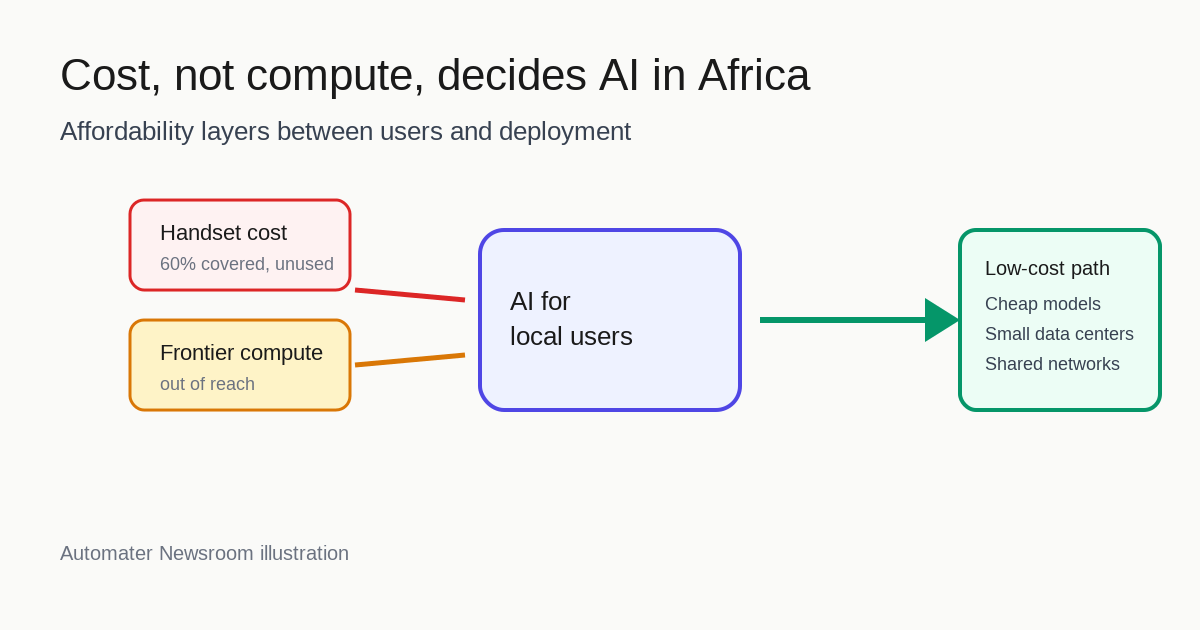
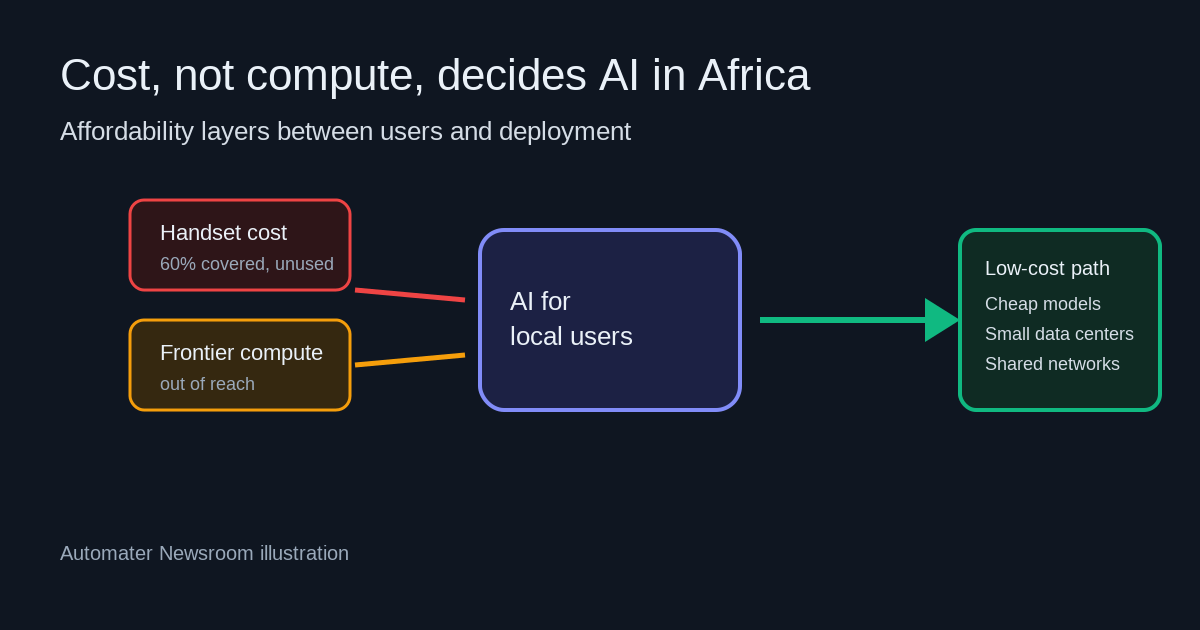
The most consequential question about artificial intelligence in Africa is not which frontier model wins — it is who can afford to use anything at all. That was the through-line of Semafor Africa’s Nov. 27 report from its Next 3 Billion event in Johannesburg, where operators, investors and policymakers sketched a regional AI path that diverges sharply from the capital-intensive buildouts dominating the US and Europe.
Affordability as architecture
Alexis Akwagyiram, Semafor Africa’s managing editor, frames cost as the variable that will “shape how the technology plays out” across the continent. MTN CEO Ralph Mupita’s line from the event captures the thesis: “Africa will have its own unique solutions, just like mobile happened differently in Africa.”
Three concrete claims anchor the report:
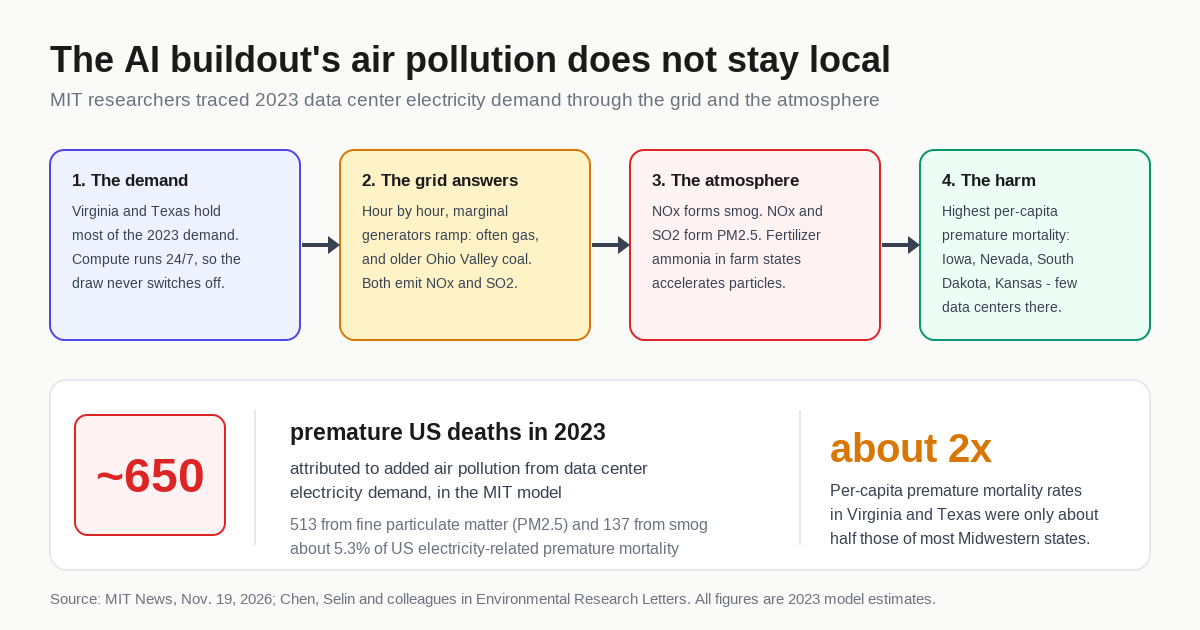
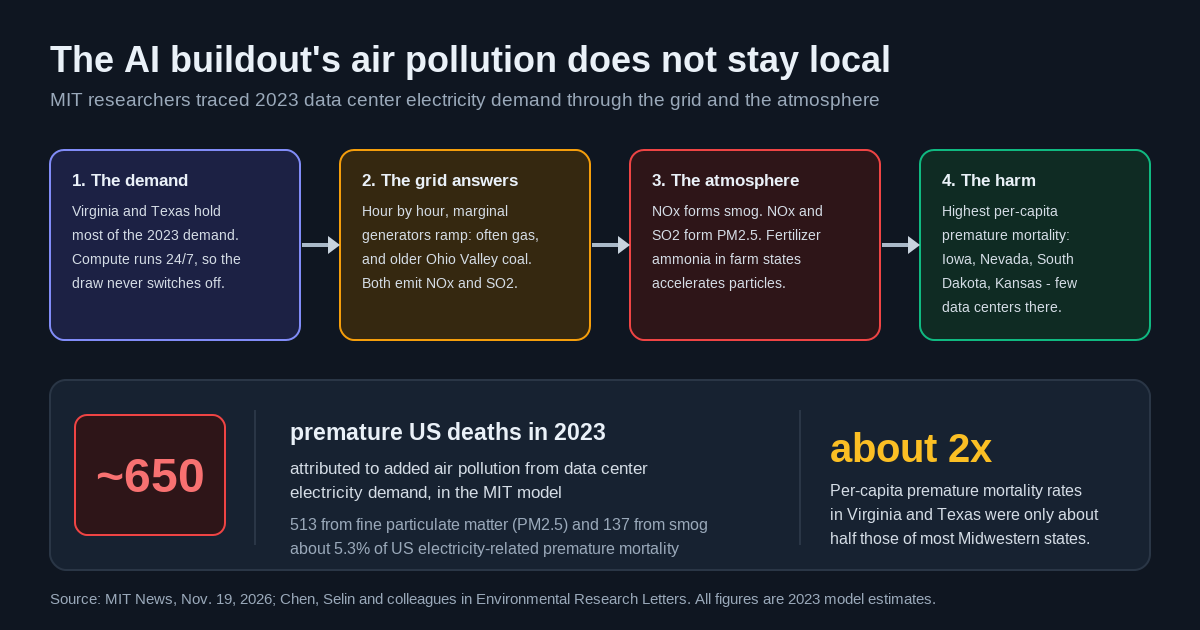
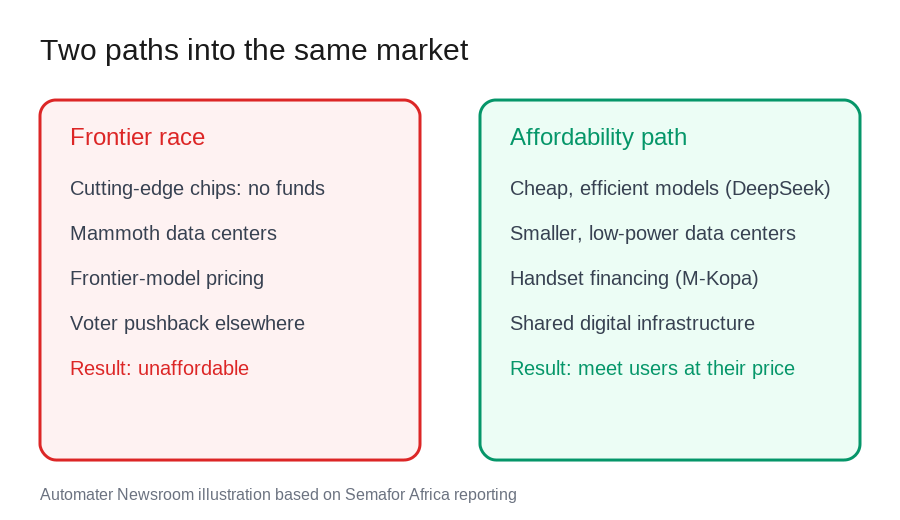
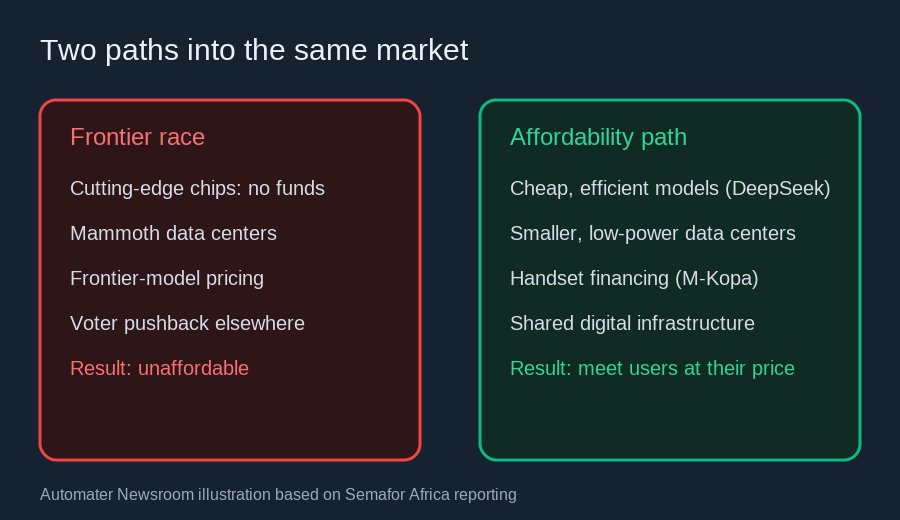
- No chip race. African nations and companies lack the funds to compete for cutting-edge chips — and, Semafor argues, don’t need to. Smaller, less power-hungry data centers can serve regional demand without the voter backlash now facing mammoth facilities in the US and Europe — a backlash with measurable costs, as MIT’s tally of data-center electricity harms shows.
- Cheap models as an enabler. China’s DeepSeek has demonstrated that making AI cheaper and less power-hungry lets African startups design products for local users “at a fraction of the cost of the frontier models promoted by leading US AI labs” — the same cost-collapse dynamic we tracked in our analysis of DeepSeek’s agent economics.
- The usage gap is a device-cost problem. Roughly 60% of Africa’s population live in areas with mobile internet coverage but don’t use it, with handset cost among the biggest barriers. Fintech M-Kopa is betting on smartphone financing to close it.
The policy ask from industry is infrastructure sharing. Ziaad Suleman of Cassava Technologies urged regulators to encourage shared digital infrastructure so companies can cut costs and pass savings to customers — “meet the user where they are” on price, rather than shipping “a Rolls-Royce solution which is unaffordable.” The GSMA, the telecoms industry body, separately warns the world risks creating a global AI divide.
The report is a newsletter column, not a commissioned study — the 60% coverage-without-usage figure is cited to research without a linked primary document, and the corporate voices have obvious commercial stakes. But its core structure matches what the day’s other data shows: the economics of AI are pulling in opposite directions at once.
AI debt reaches South Africa’s refinancing wall
The same day, Semafor reported that the South African Reserve Bank warned heavy borrowing by Western AI companies could raise Pretoria’s funding costs just as it approaches a refinancing crunch. Tech giants borrowing “hundreds of billions of dollars” alongside governments create competition for long-term capital. The Bank of England estimates hyperscaler bond sales will exceed $300 billion in 2026 — roughly 8% of global investment-grade issuance.
South Africa’s exposure is twofold. Maturing debt is expected to more than double to roughly $23 billion annually between 2030 and 2032, and South African savers hold 13% of their assets in AI-related equities, meaning a drop in AI shares could push up yields and weaken the rand. For African treasuries, the AI boom is not just an opportunity — it is a competing bidder for the same capital.
The other edge: Chinese factory profits
The demand side of that boom is visible in China’s industrial data, where factories posted their fastest profit growth since May, led by memory chips. Huawei is set to publish details of a new memory technology Bloomberg reports may be more cutting-edge than anything offered by South Korea’s leaders, while the world’s third- and fourth-ranked memory makers — both Chinese — are closing the gap in volume and advancement.
That matters for Africa’s affordability thesis directly: the hardware powering cheaper inference is increasingly supplied by the same Chinese ecosystem that produced DeepSeek’s cost-collapse models.
The gap between announcement and availability
Semafor’s Johannesburg commentary is an argument, not a product launch — no shared-infrastructure mandate has been announced, and the SARB warning is a scenario, not a rate change. What is verifiable today is the direction: African operators are explicitly optimizing for low cost, regulators are being asked to encourage sharing, and the global capital and hardware markets around AI are moving in ways that make that optimization more urgent.
For teams building on open models, the practical lesson is the one Cassava’s Suleman stated: affordability is the product decision. The operators who treat cost per user — handset, inference, power — as the primary constraint are the ones building for the world’s largest underserved market rather than against frontier-lab economics.