Greenlight Reports Automating Over 90% of Security and Risk Cases With Luna
An AWS customer report details Greenlight’s tiered security agents, memory pipeline and human remediation controls. The resolution figures remain customer-reported, with accuracy and operating costs undisclosed.
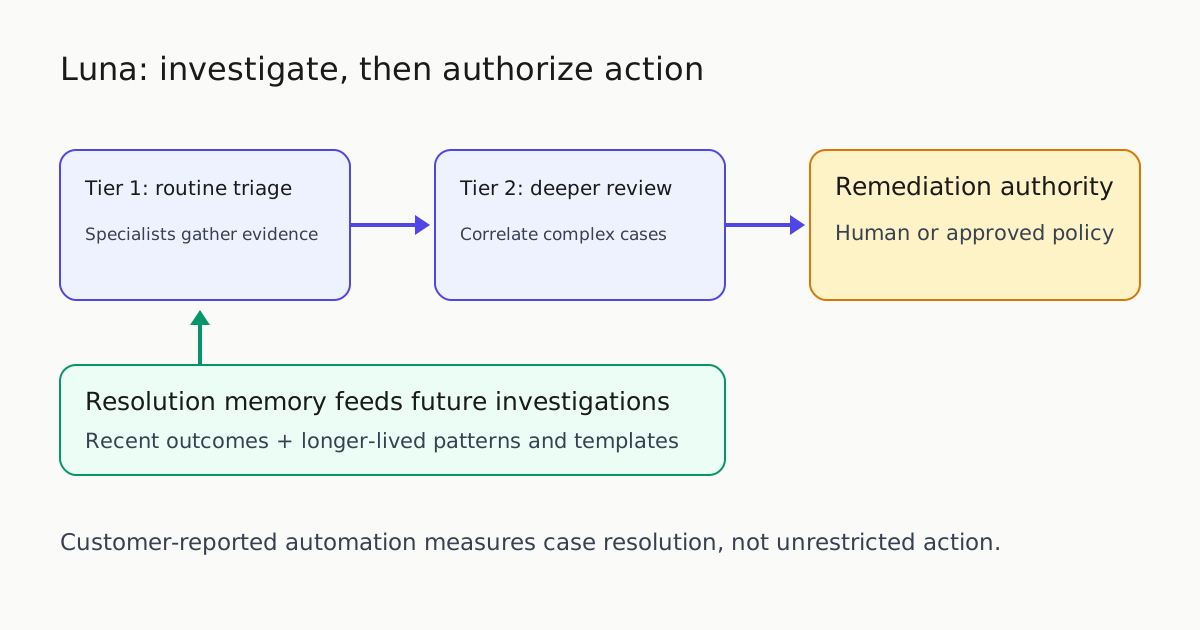
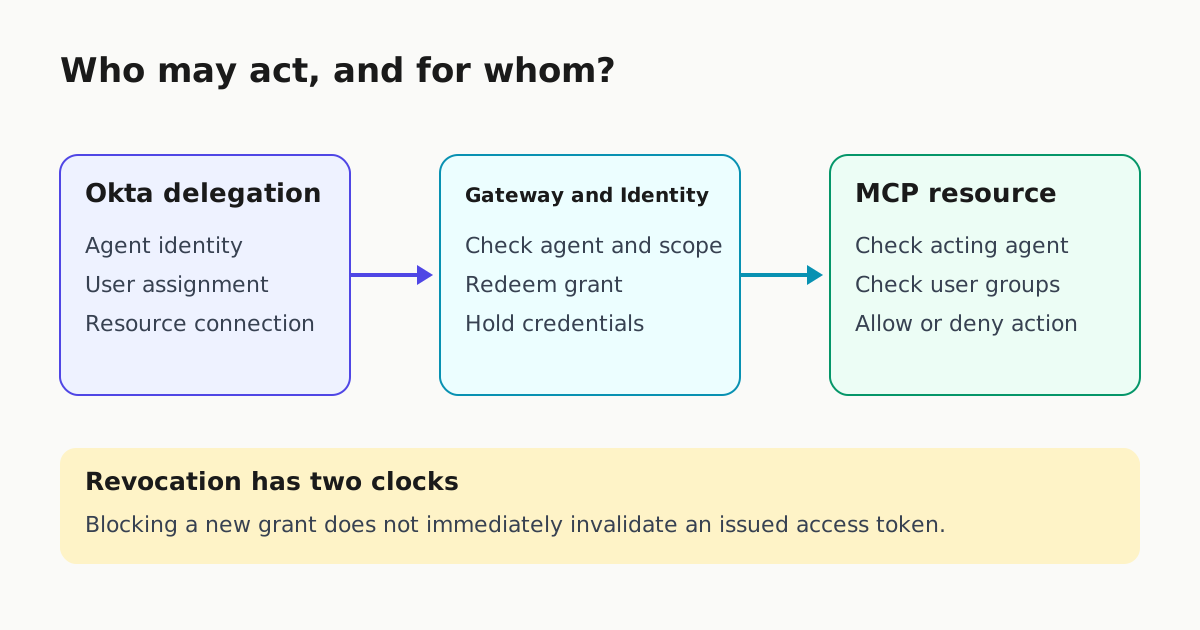
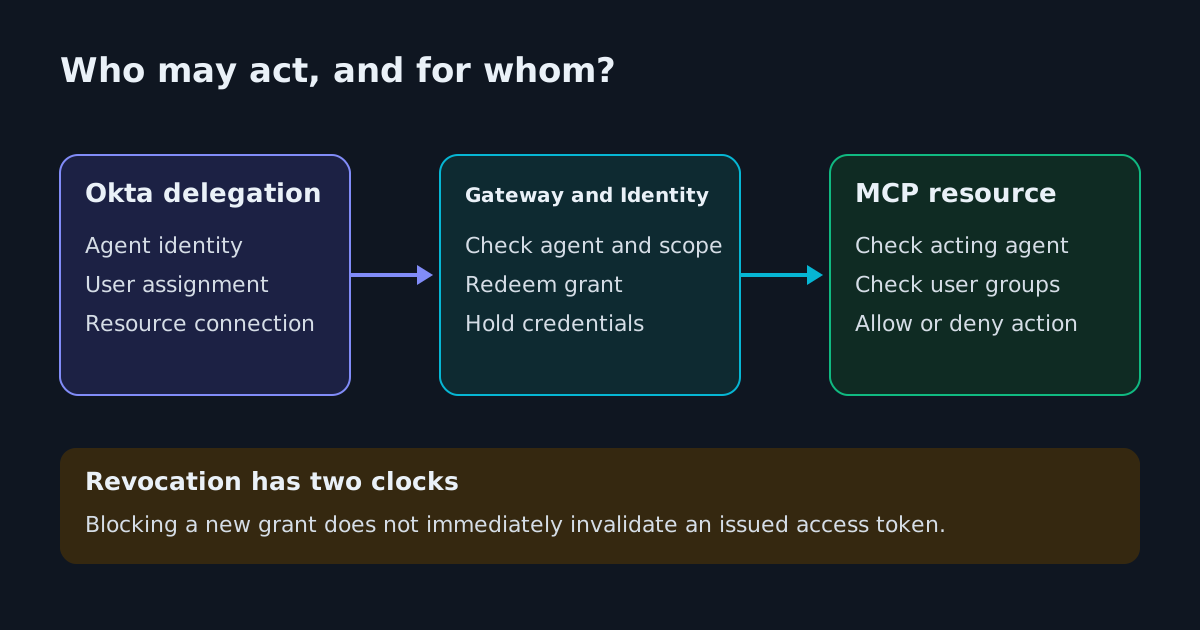
Greenlight Financial says its Luna agent system resolves more than 90% of the company’s security and risk cases without human intervention, across a reported workload of 3,000–4,000 cases a month. The consequential detail for security engineering teams is how narrowly that autonomy is defined: Luna investigates and triages cases, while remediation requires a human analyst or an explicitly approved automated policy.
The AWS customer architecture report describes a production deployment using Amazon Bedrock AgentCore runtime and memory, more than 30 specialized agents, and two levels of investigation. It is evidence of a deployed workflow, rather than an announcement of a newly available SOC product. Its performance figures are Greenlight’s measurements, published by its infrastructure vendor, without an independent evaluation.
What Luna actually automates
Greenlight’s alerts span compromised-card notifications, identity anomalies, infrastructure signals and financial risk events. A card alert can require checking whether the card is active, whether another provider already reported it, whether customer sessions look suspicious and whether support tickets supply relevant context. AWS says that manual investigation takes 15–30 minutes per case.
Luna’s first supervisor selects specialist agents to gather that information and synthesize a verdict. Those agents cover systems including identity, endpoint detection, payment processing, customer support and threat intelligence. Routine cases reportedly reach median triage times in single-digit seconds.
A second supervisor uses extended reasoning for deeper investigations, correlating three to five data sources and producing evidence chains for human review. It runs both on schedules and on demand for urgent escalations. Escalation to this second model tier should not be confused with escalation to a person: they are separate steps in the architecture.
| Reported measure | Manual baseline | Full Luna system |
|---|---|---|
| Monthly cases | 3,000–4,000 | 3,000–4,000 |
| Autonomous resolution | 0% | More than 90% |
| Routine median triage | 15–30 minutes | Seconds |
| Human analyst escalations | All cases | Less than 10% |
These are attributed operational figures, not a benchmark showing equivalent detection quality across the two approaches.
Memory changes the decision path
The report attributes an increase from 83% autonomous resolution with Tier 1 alone to more than 90% with Tier 2 and the learning pipeline. Because several components changed, the figures do not isolate memory’s contribution.
Luna retains recent events and outcomes in a rolling 30-day episodic window, alongside longer-lived preferences and resolution templates. A separate pipeline captures case resolutions, deduplicates patterns in DynamoDB and supplies digested learnings to supervisors at inference time. The report says three matching resolutions establish a confirmed pattern. This is accumulated operational context; it does not establish that the underlying model is being retrained.
That design makes previous decisions part of future evidence. It can suppress repetitive maintenance alerts, but also makes the quality and provenance of stored resolutions important. Our existing analysis of write-provenance rules for shared agent memory examines that control problem.
The useful boundary is outside the model
AWS’s separate taxonomy of agentic primitives in Amazon Quick distinguishes flexible agent judgment from workflows whose coordination and ordering are fixed in code. That distinction helps explain Luna’s significance: an investigation can use model discretion while permission to perform remediation remains a separate policy decision. The Quick article supplies a design framework, not corroboration of Greenlight’s results.
A third AWS report on an MCP data-lake gateway provides a concrete comparison. Its Athena tools reject write operations before they reach the data lake, and tool invocations share an audit point. It describes another implementation, not Luna’s access controls. Together, the reports illustrate why agent reasoning and enforceable tool permissions deserve separate architectural treatment.
What the numbers leave unanswered
AWS estimates 900–1,800 hours of routine manual work avoided monthly by applying the reported resolution share to 4,000 cases at 15–30 minutes each. That calculation is a workload estimate, not measured payroll savings or net return after inference, integration and oversight costs.
The supplied report does not disclose false-negative rates, independently audited resolution accuracy, detailed operating costs or a controlled comparison against the manual baseline. Faster closure alone cannot establish better security outcomes.
For regulated security teams, the substantive contribution is a documented production pattern: bounded triage, specialized evidence gathering, deeper model investigation and retained authority over remediation. Greenlight’s reported scale makes the workflow worth examining; its unresolved evaluation questions set the limits on what other organizations can infer from the headline percentage.