NVIDIA Dynamo Recipes Chart a B200 Path for Four Korean Open Models
NVIDIA is releasing Dynamo recipes for A.X K2, K-EXAONE 2.0, Solar Open 2, and Motif-3 on B200, with an up to 2x claim. Companion posts keep OpenShell, NVLink Fusion, and startup investments at earlier stages.
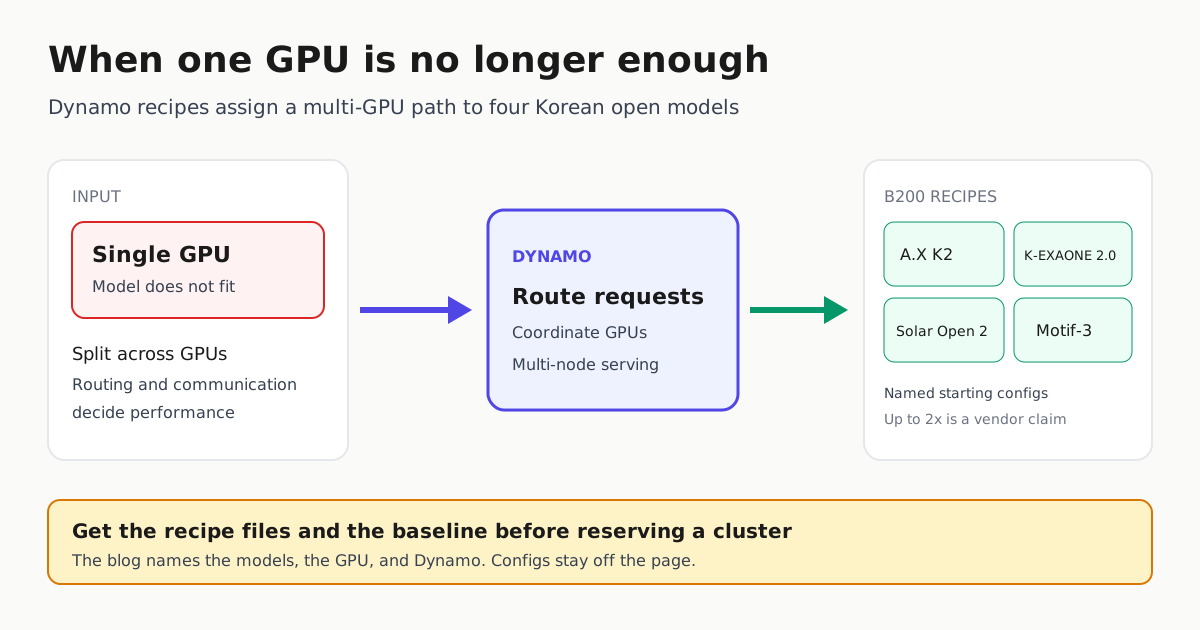
NVIDIA has published Dynamo deployment recipes for four Korean open models that must be split across GPUs. The recipe announcement names SK Telecom’s A.X K2, LG AI Research’s K-EXAONE 2.0, Upstage’s Solar Open 2, and Motif Technologies’ Motif-3. The recipes are optimized for B200 GPUs. NVIDIA says they deliver up to 2x performance out of the box. Dynamo, described as an open-source distributed inference framework, coordinates request routing and GPU-to-GPU communication for multi-node serving once a model no longer fits on one device.
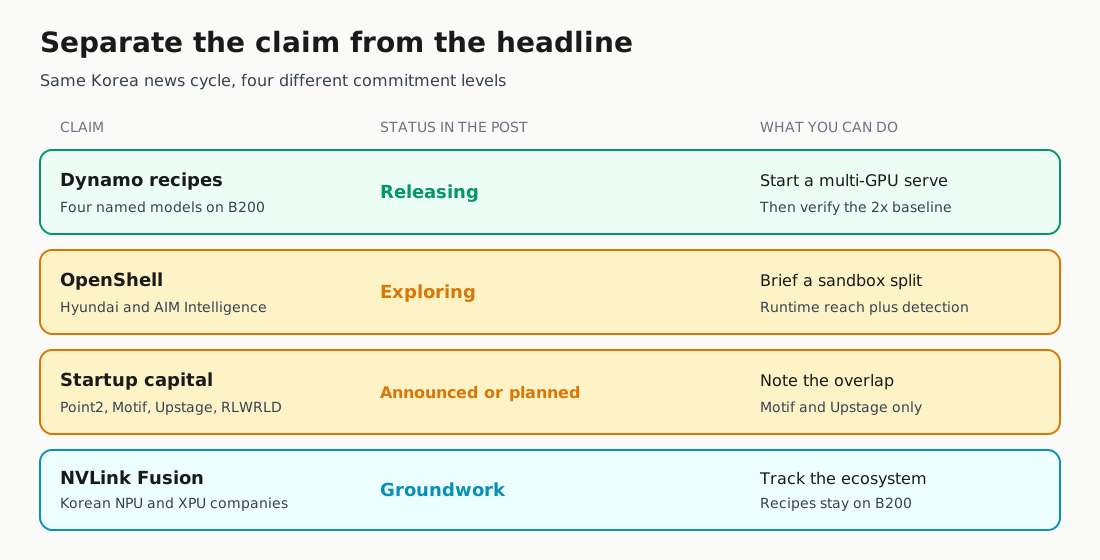
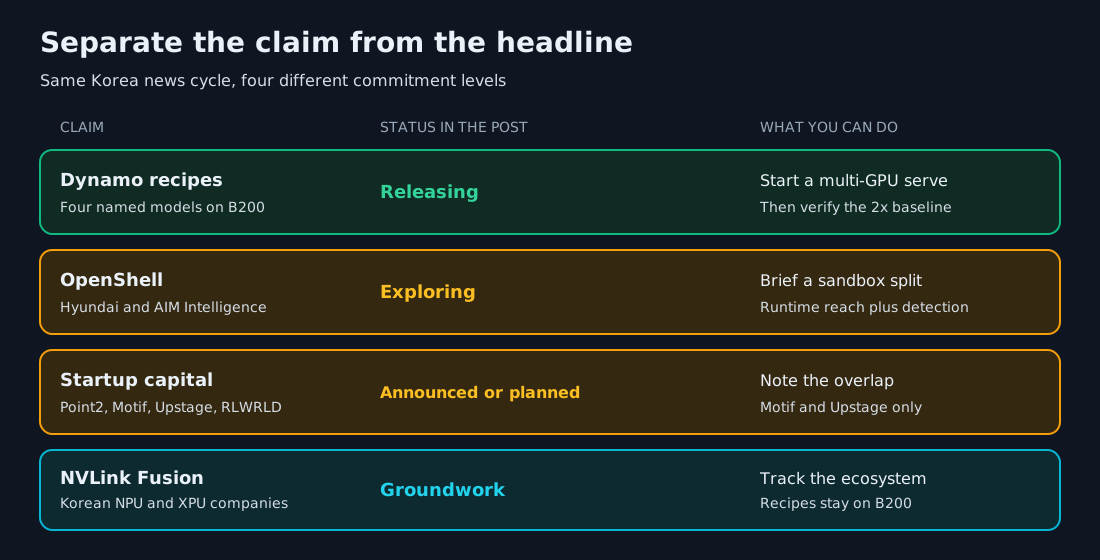
Teams serving any of those four models on B200 hardware get a named multi-GPU starting point. The same publishing cycle also includes an MSIT collaboration, an OpenShell sandbox track, and startup investments. The recipe post says NVIDIA is releasing the recipes. Companion posts use exploring, planned, or groundwork.
What you can assign from the recipe post
A model that outgrows one GPU has to be partitioned. Routing and communication then decide whether the split still performs. Dynamo is the framework NVIDIA says handles that coordination at data-center scale. The new artifacts are optimized deployment recipes for the four models, framed as a faster path into production and into AI for All services.
The page states the hardware target and the speedup, then stops at the claim. Up to 2x and optimized for NVIDIA B200 GPUs appear without a recipe filename, GPU count, parallelism plan, precision, concurrency level, or baseline. Assign Dynamo and the four model names now. Hold the speedup as NVIDIA’s out-of-the-box statement until the artifacts and a workload are public.
Read each model’s follow-up separately
A.X K2 is SK Telecom’s recipe model, with B200 as the printed GPU target. SK Telecom also appears in the sovereign-AI collaboration post, where NVIDIA says it is collaborating with SK Telecom and Rebellions, supported by MSIT, on sovereign infrastructure for Korean models and workloads with NVLink Fusion. The recipe text keeps A.X K2 on the B200 Dynamo path.
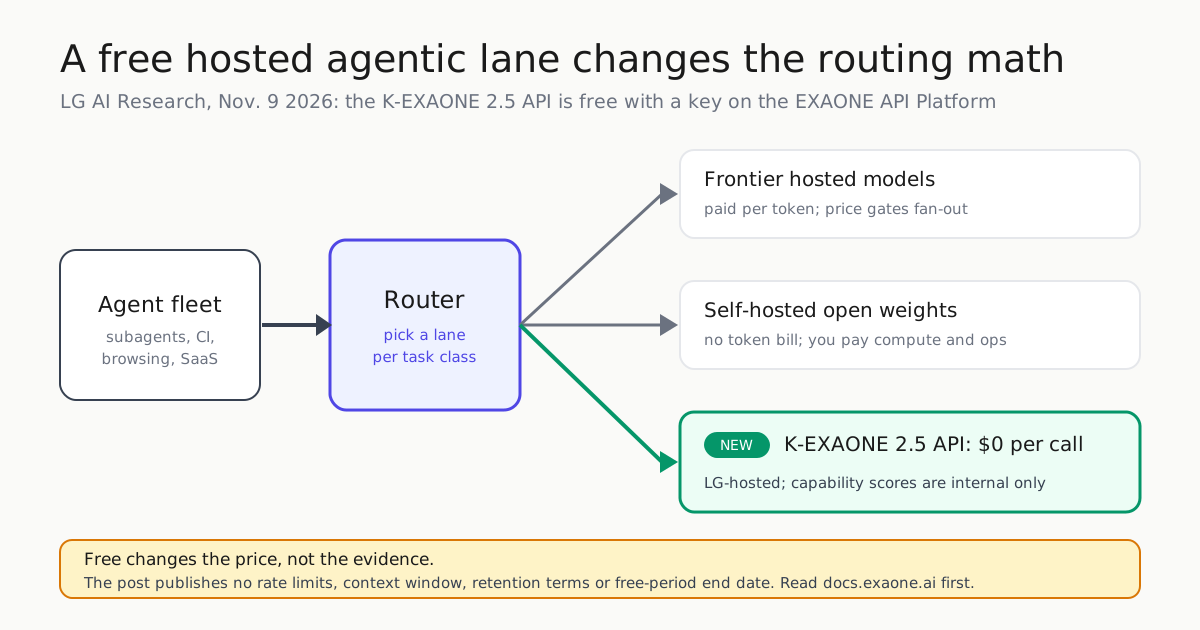
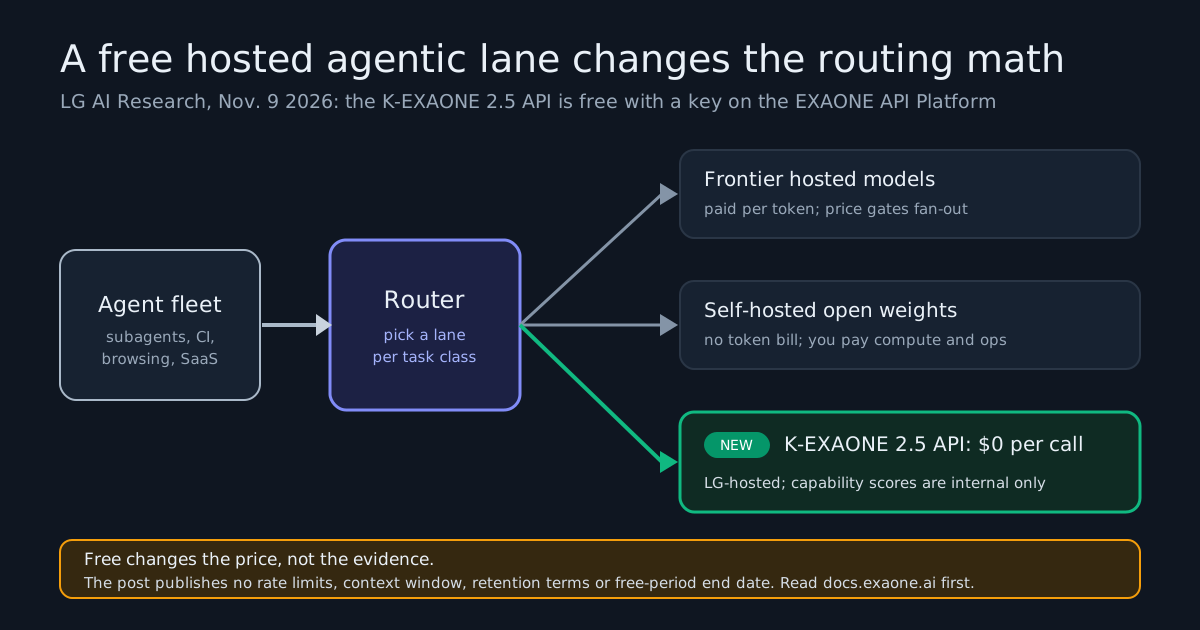
K-EXAONE 2.0 is LG AI Research’s recipe model. The agent-security post describes a different LG release: API access for K-EXAONE-2.5, developed with NVIDIA Nemotron datasets, including Nemotron-Personas-Korea. That open dataset holds 7 million fully synthetic Korean personas, grounded in official Korean statistics, for training data and evaluation in Korean contexts. Hosted access to 2.5 and a Dynamo recipe for 2.0 are separate paths: a remote API, and a multi-GPU serve.
Solar Open 2 is Upstage’s recipe model. Motif-3 is Motif Technologies’ recipe model. The startup forum post says Upstage builds Solar language models and document AI tools that pull information from complex documents. It describes Motif as a Seoul-based lab building foundation models for agents, and Motif-3 as a large language model released with open weights. The recipe headline calls all four open models. The explicit open-weights line is attached to Motif-3, so license checks for the other three still sit with each builder.
| Model | Builder | Action these posts support |
|---|---|---|
| A.X K2 | SK Telecom | B200 Dynamo recipe, plus a separate NVLink Fusion collaboration with Rebellions |
| K-EXAONE 2.0 | LG AI Research | B200 Dynamo recipe, distinct from K-EXAONE-2.5 API access |
| Solar Open 2 | Upstage | B200 Dynamo recipe, and a planned NVIDIA investment in Upstage |
| Motif-3 | Motif Technologies | B200 Dynamo recipe for an open-weights model, and a planned investment |
Collaboration counts
NVIDIA and Korea’s Ministry of Science and ICT are expanding collaboration across semiconductors, data-center infrastructure, talent, startups, models, agents, and security. Through the AI for All initiative, NVIDIA will work with three selected consortia and four leading Korean foundation model builders, using Dynamo to optimize and scale inference. The recipe post names four models. The collaboration post states three consortia and four builders, without a one-to-one map in the fetched text, so both counts should stay as written.
The same post lays the groundwork for Korean NPU and XPU companies to explore NVLink Fusion. Recipes in the companion announcement stay specified for B200. Training, certification, hackathons, and technical seminars are GPU-utilization programs listed beside that software work. A linked NVIDIA newsroom release covers the SK Telecom and Rebellions effort in more detail, and this account uses the blog’s own summary: an MSIT-supported collaboration on sovereign infrastructure with NVLink Fusion.
OpenShell is earlier-stage than the recipes
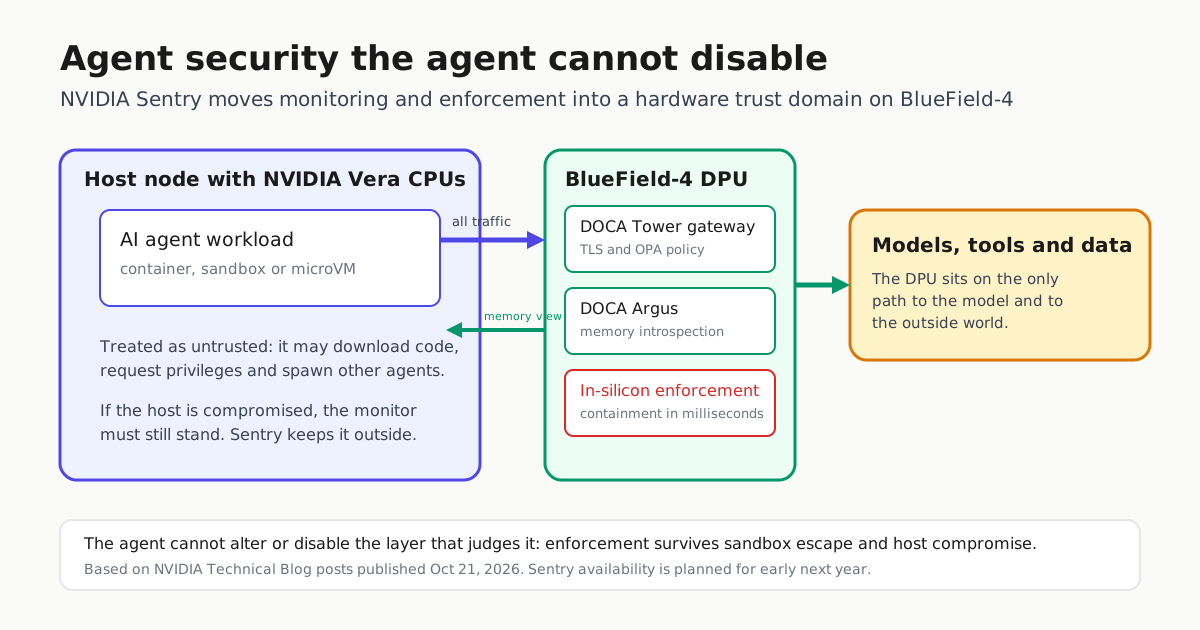
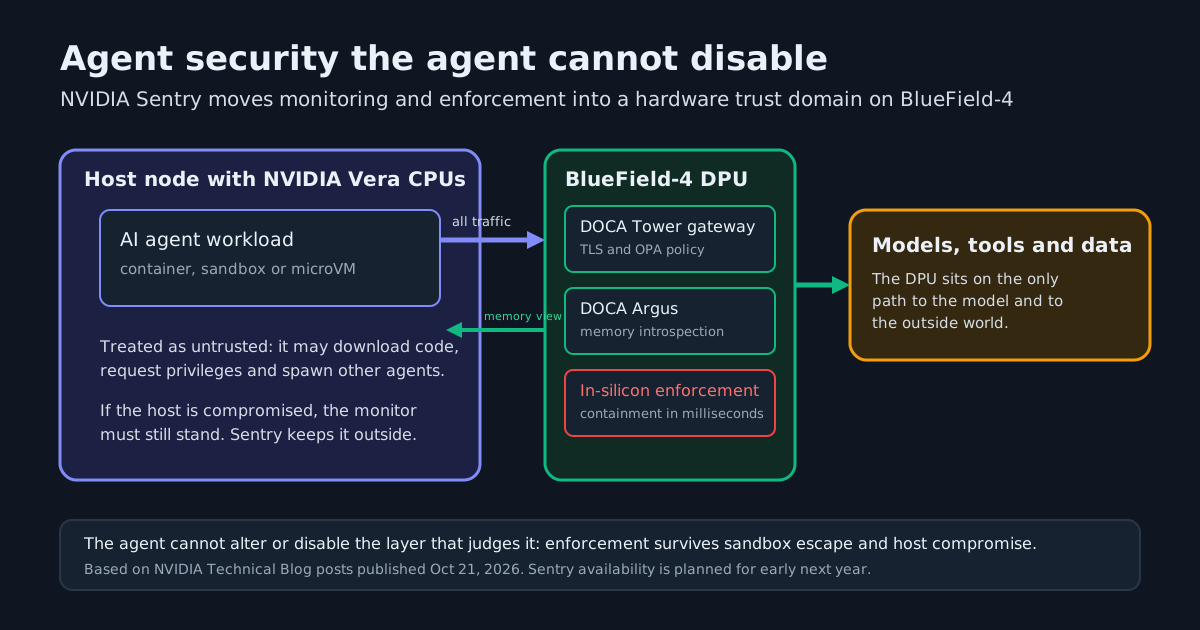
OpenShell is part of the NVIDIA Open Agent Safety Platform. The agent post says it provides sandboxed execution and policy-based controls to safeguard sensitive data, manage access to enterprise tools, and govern autonomous agent actions. Hyundai Motor Group is exploring NemoClaw blueprints and OpenShell. AIM Intelligence is integrating Starfort with OpenShell, pairing those runtime controls with detection of malicious instructions and data leakage. AIM is also considering a preliminary public-energy proof of concept, with possible later use in enterprise, industrial, and robotics settings.
Those verbs stop at exploring, integrating, and considering. The control split is specific enough to brief: OpenShell governs reach, and Starfort watches instructions and leakage. NVIDIA Sentry and OpenShell Move Agent Enforcement Outside the Agent’s Reach explains enforcement placed outside the agent. This Korea post adds Hyundai and AIM and leaves the four Dynamo recipes on their own track. Nemotron-Personas-Korea remains the training and evaluation dataset named with K-EXAONE-2.5.
Two recipe builders also appear in the investment note
At the MSIT-NVIDIA AI Startup Partnership Forum at COEX, vice minister Ryu Je-myung and NVIDIA leaders met more than 20 Korean startups across foundation models, physical AI, infrastructure, and semiconductors. NVIDIA has announced an investment in Point2 Technology, which builds radio-frequency interconnects between chips and racks. Further investments are planned in Motif Technologies, RLWRLD, and Upstage. Point2 and RLWRLD sit outside the recipe list. Motif and Upstage sit on both the recipe list and the planned-investment list.
Match the post to the job
Serve A.X K2, K-EXAONE 2.0, Solar Open 2, or Motif-3 on B200 by starting from the Dynamo recipe announcement, then get the recipe body and the benchmark behind the 2x claim before reserving capacity. For sandboxes, read Hyundai as exploring OpenShell and NemoClaw, and AIM as integrating Starfort. For partners, read three consortia, four foundation-model builders, Dynamo as the inference software, and NVLink Fusion as groundwork for Korean NPU and XPU exploration, plus the separate SK Telecom and Rebellions infrastructure collaboration. For financing overlap, Point2 is announced and Motif, RLWRLD, and Upstage are planned. The pages leave latency, cost per token, and minimum GPU count unpublished. Related-news modules on the fetched pages date the recipe, agent, and collaboration posts November 8, 2026, and the investment post November 9, 2026.
Sources
- NVIDIA Dynamo Recipes Bring Korea’s Leading Open Models to Production | NVIDIA Blog
- Korea’s AI Ecosystem Advances and Secures Agentic AI With NVIDIA | NVIDIA Blog
- From Chips to Skills, NVIDIA and Korea Expand Sovereign AI Collaboration | NVIDIA Blog
- NVIDIA Announces New Planned Investments in Korean Startups at the MSIT-NVIDIA AI Startup Partnership Forum | NVIDIA Blog