Cursor After SpaceX: The Proposed Cutoff Is a Command-Center Problem
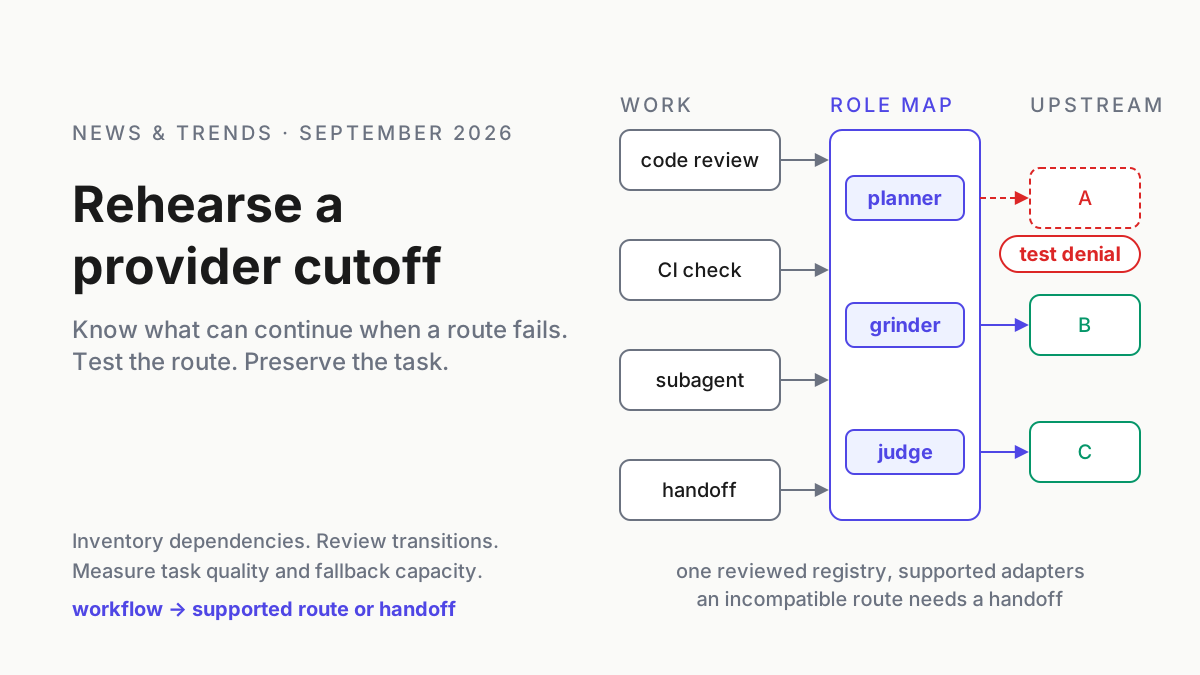
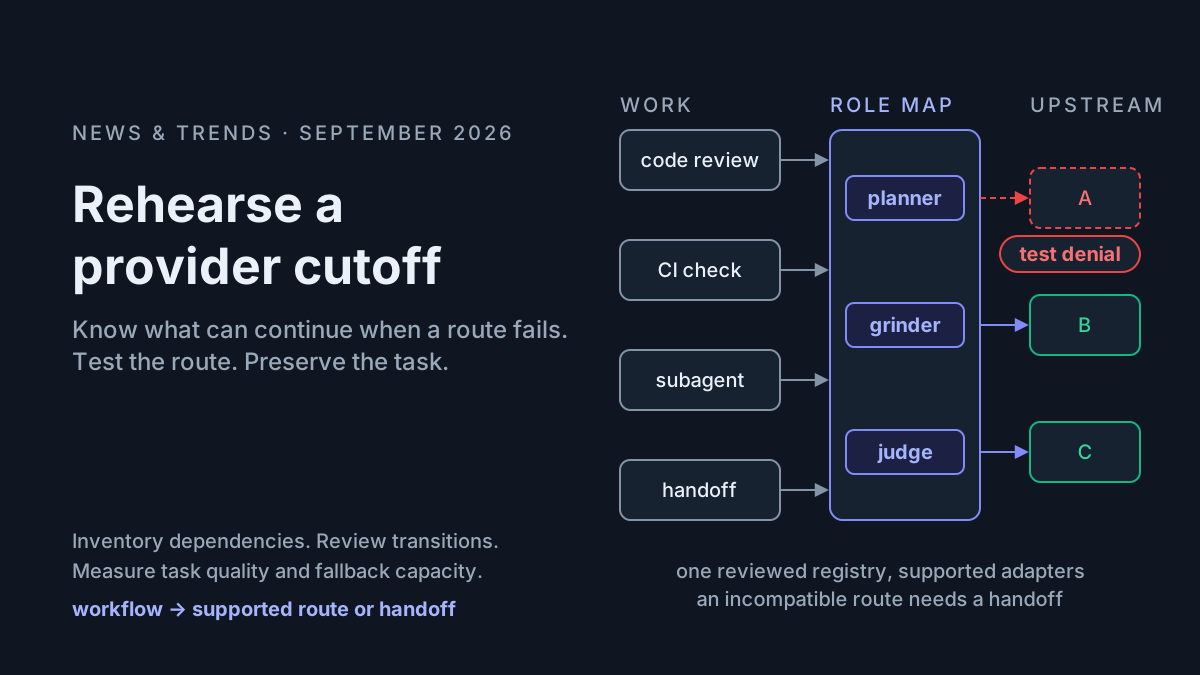
SpaceX closed its Cursor acquisition August 14; OpenAI proposed ending model access November 12. Here is the record and a practical continuity checklist.

Go deeper. Build your own.
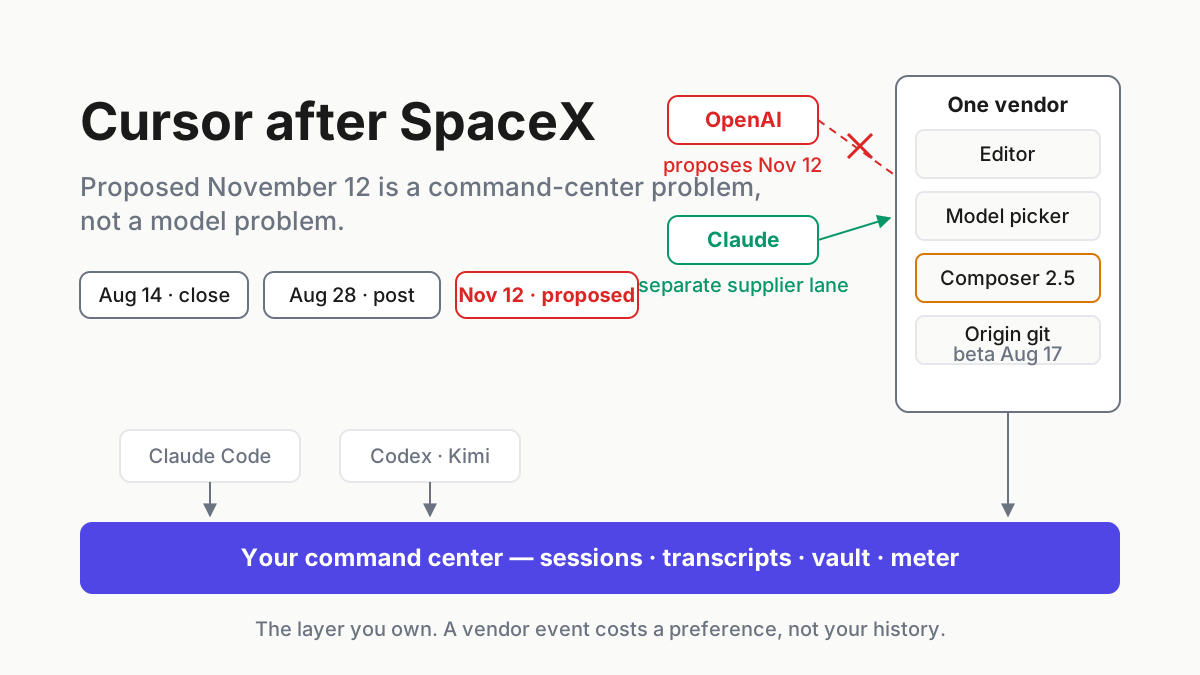
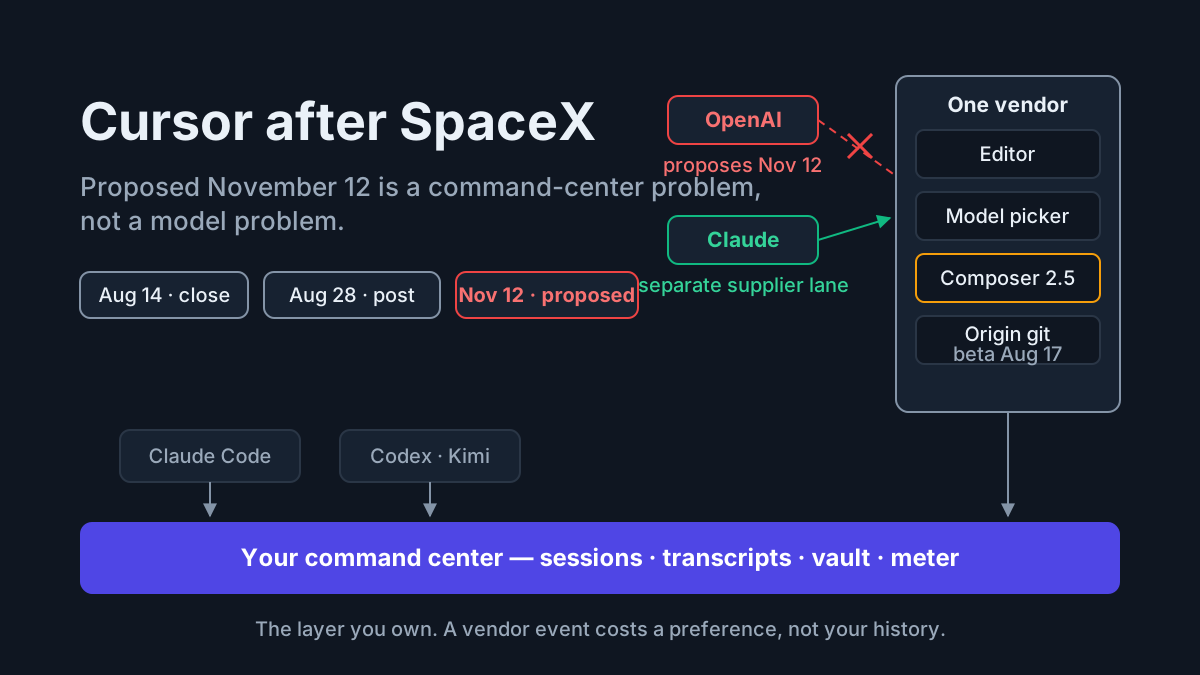
OpenAI published its Cursor post on August 28. It says SpaceX closed its acquisition of Anysphere, the company behind Cursor, on August 14; OpenAI intends to wind down Cursor’s access to OpenAI models; and it proposed November 12 as the cutoff date. OpenAI also says the contract requires maximum notice and provides a limited cancellation window after a change of control. Until that process resolves, November 12 is a planning date, not a guaranteed outcome.
The reaction sorted quickly into Cursor-is-dead, Cursor-is-fine, and told-you-so from terminal users. “Which editor wins” is not the useful question here. The proposed November 12 date demonstrates concentration. One vendor now holds the editor, the model roster, and an optional code host, while an upstream contract can still change that roster.
This piece provides the dated record, a concentration analysis that survives the next announcement, and a continuity checklist for operators who plan to stay or leave. Owning the management layer and keeping working records under local control reduce migration cost in either case.
The Cursor–SpaceX record: August 14 to November 12
Dates first, because the discourse keeps smearing them.
| Date | What happened |
|---|---|
| May 18 | Cursor releases Composer 2.5, which it describes as its first frontier-level coding model. |
| August 14 | SpaceX closes the Anysphere acquisition. |
| August 17 | Origin, Cursor’s own code-hosting service, opens in early beta — three days after close. |
| August 28 | OpenAI says it intends to wind down Cursor’s model access and proposes November 12 as the cutoff. |
OpenAI’s post frames its decision as a trust issue after the change of control. It does not publish the contract, the cancellation-window length, or a taper schedule. That missing detail matters: readers should not turn “proposed November 12 cutoff” into a claim that access certainly dies at a specific keystroke.
For continuity planning, treat November 12 as the boundary until the parties publish a different outcome. Preparing early is cheap even if the date moves.
Note what is not in the record: any date on which Cursor stops working. The product is fine. A supplier lane is closing.
Not a shootout, a structure problem
The reflex frame is Claude Code versus Cursor, and that piece already exists on this site — verdicts, pricing math, the lot — and nothing about November 12 invalidates its logic. If you are purely choosing between the two, read that and skip ahead to the checklist.
This article is about the thing a shootout cannot see. The question is not which tool is better. It is what it costs you that your editor, your model roster, and now possibly your git remote all resolve through a single company’s contracts — contracts that turned out to have other companies’ hands on them.
The useful exercise takes eleven minutes: inventory every session in which a plan, diff, or architectural decision exists only inside the IDE, then ask which records you could still open if the app or account were unavailable. Cursor’s own chat-history documentation says local chats are stored on the machine in SQLite and can be exported to Markdown; background-agent chats are stored remotely. That is a workable export path, but it still requires the operator to use it. The inventory, not any model preference, is what the rest of this piece is about.
Many models, one delivery path
A broad model picker is useful, but it is not the same as supplier independence. Models selected through one IDE still arrive through that IDE’s routing, terms, and account. The proposed OpenAI wind-down is the clean example: changing a supplier agreement can remove a lane even while the editor remains healthy. The picker diversifies models; an outside command center diversifies custody of your history and operating data.
What one vendor holds: the editor, the models, the git, and a clause
Count what a fully bought-in Cursor setup can concentrate. Muscle memory: keybindings, tab habits, the review flow your hands do without you. Config: rules files, custom modes, MCP wiring. Context: the indexed codebase, plus the chat history where half your architectural decisions are actually recorded. Spend. And, for teams that opt into the early beta, repositories on Origin.
Each of those moves made local sense at the time. That is how concentration always assembles — one reasonable convenience per quarter, and then one morning a post from a company you don’t pay explains what your November looks like.
The contract is the part operators skim past. Cursor customers did not sign the OpenAI–Anysphere model agreement and cannot inspect its complete terms. Yet the agreement’s change-of-control process can reach through two corporate layers and alter a workflow with limited notice. If you run this stuff inside a company, corporate AI on a Windows PC is increasingly a story about who holds the off-switches, and the honest answer here is often “not us.”
The structure matters more than assigning motives. Cursor depends on model suppliers whose complete commercial agreements customers cannot inspect, and every hosted agent lane has similar upstream dependencies. The proposed cutoff is a visible audit of an arrangement common across the category.
A quick self-audit is cheaper than an opinion. Can you full-text search your AI history without launching the vendor’s app? Does every critical repository have a second remote? Do rules files live in git or only in an editor profile? Could the team reconstruct last month’s biggest architectural decision from files it owns? Each “no” identifies concrete migration work.
The hedge is a command center, not a divorce
State the hedge as requirements rather than products: supported sessions enumerable outside any one vendor UI; important transcripts on the operator’s disk in searchable formats; spend visible across providers; secrets redacted before deliberate sharing. A tool that cannot expose a durable record should be listed as a gap, not silently described as covered.
That layer has to sit outside every editor and every CLI, or it is just another room in somebody’s building.
On Windows, Automater Lite is one example of that layer. Its Library normalizes supported local assistant histories into an on-disk archive with search; its meters put supported provider activity beside sessions; and Vault redaction can scrub sensitive spans. The public product page says the archive stays on the machine and uploads require an opt-in. Cursor also supplies its own Markdown export, so critical IDE conversations can become ordinary files the operator controls. Automater Lite is a free download for Windows, macOS and Linux at automater.ai/downloads.
Two honest limits. This walkthrough focuses on Windows; check the current downloads page for published Automater builds on other platforms. No outside archive should be assumed to capture every proprietary editor state. Cursor’s local chat history and Markdown export cover ordinary chats; its documentation says background-agent chats remain remote. Test the exact records you care about instead of assuming an “export” button means complete portability.
The pre–November 12 checklist
The interval before November 12 is enough for a controlled continuity drill. Run it in this order.
1. Inventory the model mix. List which workflows are pinned to OpenAI models — custom modes, rules that name a model, scripts that assume one. Those are the lanes exposed to the proposed November 12 cutoff. Decide each one’s fallback now, per workflow, not on the 11th in a panic.
2. Get important history into ordinary files you own. Cursor lets users export local chats to Markdown. Use it for sessions that carry real decisions, and separately inventory remote background-agent history. If a session mattered, preserve it as a file outside the app. Tag the archive cursor-era so the reasoning remains discoverable when the originating tool looks different.
3. Commit your config. Rules files, AGENTS.md, MCP config — into the repo, not the editor profile. It is all portable text. Treat it like code and the next migration, to anywhere, gets cheap.
4. Mirror any Origin repos. Origin went beta on August 17; it is two weeks old. Whatever it grows into, a second remote costs one command today:
git remote add mirror git@github.com:you/repo.git
git push --all mirror
git push --tags mirror
5. Dual-run one real repo. Two weeks, Cursor beside one outside CLI, same actual tasks. Meter both sides — /usage for Claude Code if that is the comparison lane, plus your local records for the totals — and remember Claude Code’s weekly boost settles on September 14, so price against the new normal, not today’s. You are measuring switching cost so that staying becomes a decision.
6. Write the succession map down. One page: each Cursor workflow, its post-November lane, who owns the move. Solo operators need the page too — future-you in a November incident is a colleague who was not in the room today. If you run a team, this is also the exact artifact procurement will ask you for.
7. Decide by November 1. Not because doom arrives on the 12th, but because deciding on your calendar instead of theirs is the entire game.
If you stay — and staying might be right
Now the even-handed part, because “dump Cursor” is not the thesis.
Cursor has its own model lane in Composer 2.5, and the editor does not depend on OpenAI alone. That is the strongest factual case for staying: the proposed cutoff concerns one supplier, not the product. If your daily mix already works without OpenAI models, November 12 may change little.
Leaving is also a reasonable option when a required workflow depends on the OpenAI lane or when the ownership change fails an organization’s vendor policy. Calm movers and calm stayers share one trait, and it is not taste in tools: their history is not parked only inside the thing they are deciding about.
But notice that every argument for staying is stronger when your layer is in order. Stay with your history on your disk, your config in git, your Origin repos mirrored, and one rehearsed exit — and you are a customer. Stay without those and you are collateral, pre-positioned for the next clause. The better Cursor’s answer to the cutoff turns out to be, the cheaper it was to get ready anyway; readiness is the rare hedge that costs nearly nothing when it expires unused.
And if you want the harness-side version of this argument — runtimes where the model is a swappable plugin, so a supplier cutoff becomes a config edit instead of a migration — that is the plugin-bag piece.
FAQ: Cursor after the SpaceX close
What happens to Cursor on November 12?
OpenAI has said it intends to wind down Cursor’s access and proposed November 12, 2026, as the cutoff. The contract’s limited cancellation window means that date is not final in OpenAI’s own wording. Cursor itself keeps running, and Composer 2.5 gives it an in-house lane. Workflows pinned to OpenAI models should still have a tested fallback.
Is Cursor shutting down after the SpaceX acquisition?
No. SpaceX acquired Anysphere, Cursor’s maker, on August 14, 2026, and the product continues under new ownership — with Origin code hosting in early beta since August 17 and Composer 2.5 as the in-house model. The proposed November 12 change concerns OpenAI model access specifically. It is a supplier-access change, not a Cursor shutdown.
Do I need to leave Cursor before November 12?
No — but get your layer in order first: history exported to disk you own, config committed to repos, Origin repos mirrored, and one metered dual-run so you know your real switching cost. Done early, the cutoff costs you a preference instead of your history, and staying becomes a genuine choice.
Sources
- OpenAI — Our decision on Cursor following its acquisition by SpaceX
- Cursor — Joining SpaceX — August 14 acquisition announcement
- Cursor — Origin code hosting — August 17 early-beta announcement
- Cursor — Composer 2.5 — in-house model release
- Cursor Docs — Chat history — local SQLite storage, Markdown export, and remote background-agent history