
Anthropic Replaces Git with Scion After Claude-Driven Merges Hit 30,000 Per Day
A seven-person team built Scion, an always-online client-server version control system, and migrated Anthropic's entire monorepo from Git in five months after daily merges surged from 2,500 to over 30,000.
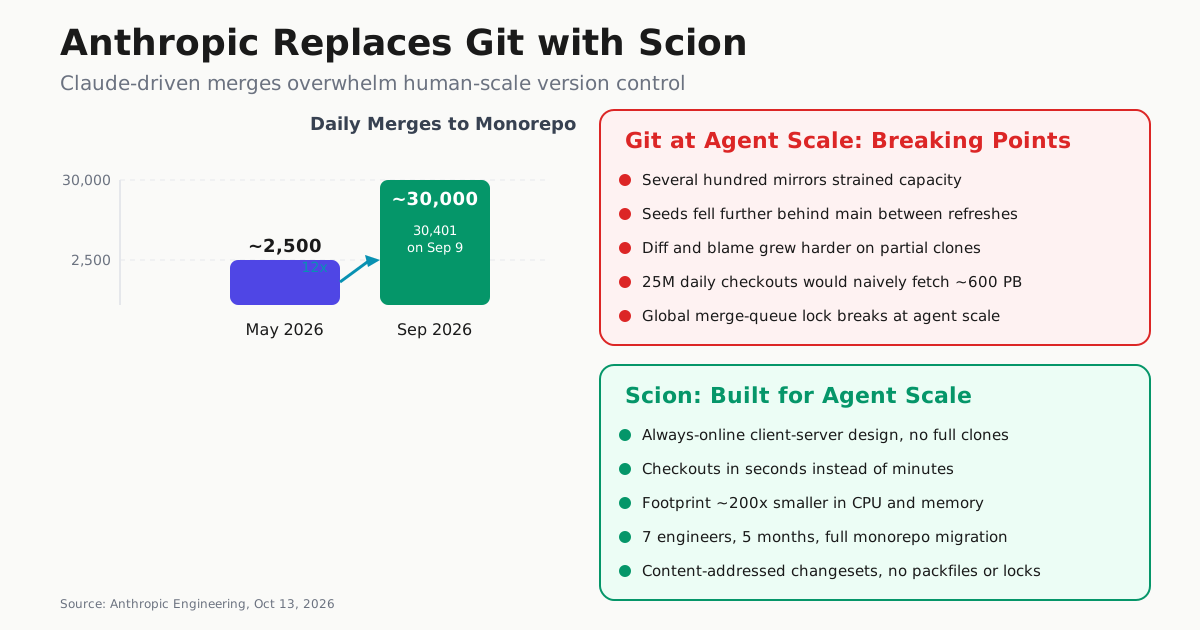
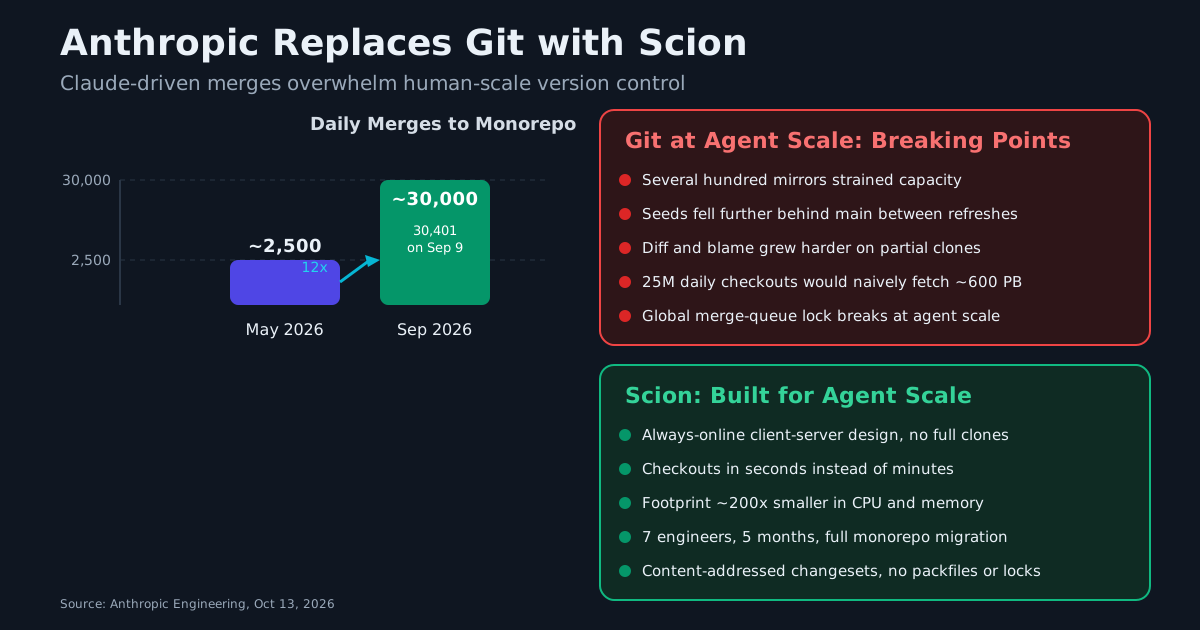
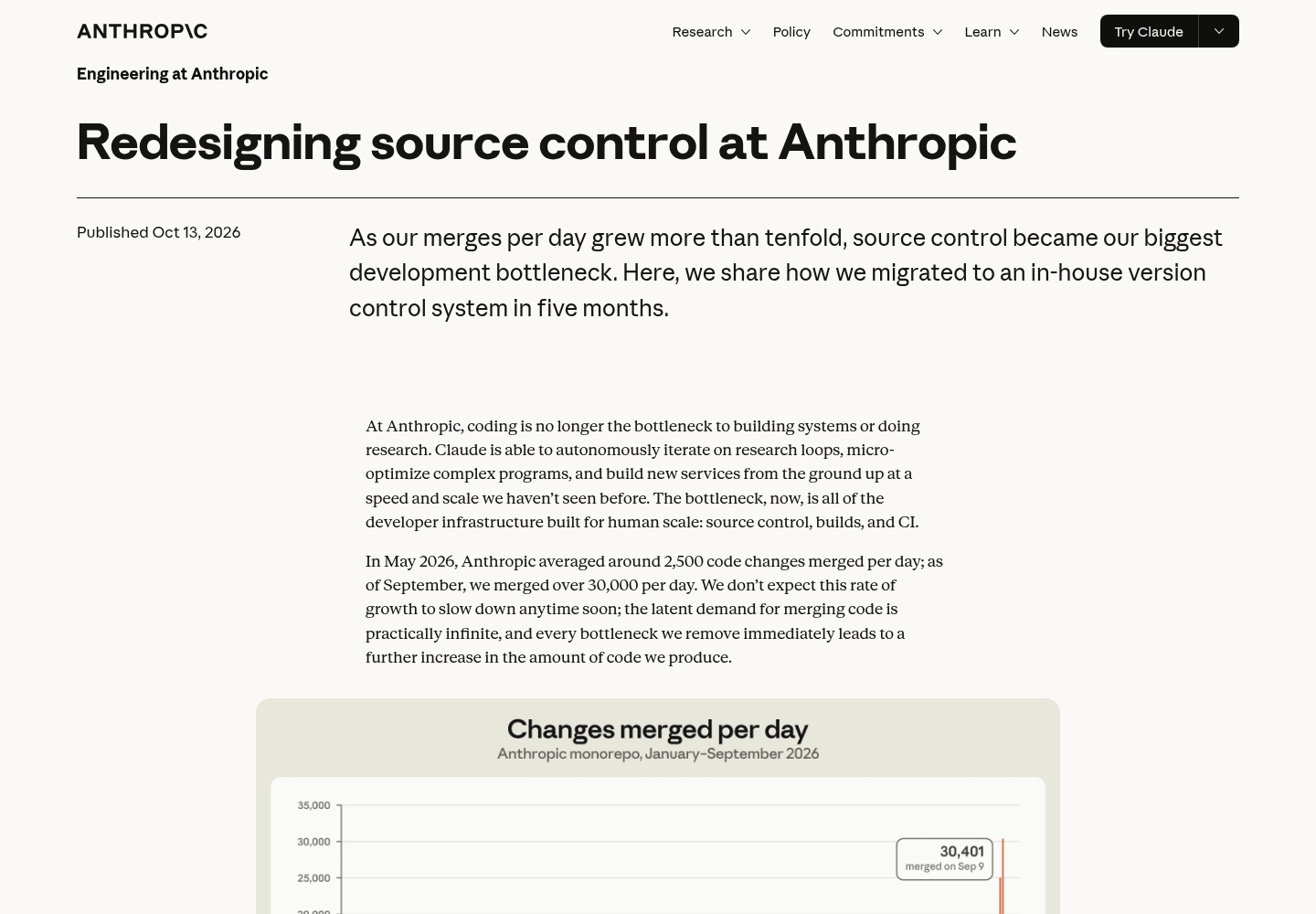
Anthropic published a remarkable engineering post on October 13, 2026, detailing how its monorepo merges grew from roughly 2,500 per day in May to over 30,000 per day by September — a more than tenfold increase driven by Claude agents writing code at a scale traditional developer tooling was never designed to handle. In response, a seven-person team built Scion, an in-house version control system, and fully migrated the company’s monorepo from Git in just five months.
The numbers are striking. Anthropic performs on the order of 25 million code checkouts per day for CI alone, before counting developer environments, agent sandboxes, and research jobs. The main branch history is nearly 100 GB, with a compressed working copy exceeding 25 GB. Fetched naively, that would generate over 600 petabytes of Git traffic per day. At peak, the company operated several hundred internal Git mirrors to manage the load — an approach that was becoming unsustainable as seeds fell further from main between refreshes and operations like diff and blame became harder to keep working on partial repositories.
Scion takes a fundamentally different approach from Git. Rather than adapting a distributed version control system designed for offline human developers, the team designed for the reality of agent-scale development: clients are always online, the server handles the heavy computation, and nothing requires a full materialized copy of the repository anywhere. The core data structure is the changeset — an entry in a write-ahead log that stores changed files relative to its first parent, along with content-addressed pointers to compressed file contents in blob storage. Changesets are created server-side and available everywhere instantly, with no packfiles, no locking, and no cross-server coordination.
Derived data structures for blame, path history, and commit graph traversal are computed recursively from changesets and can be added or optimized without changing the client. The team writes that they have added new types of derived data many times as the system has grown, such as indices for copy detection and path-based file search.
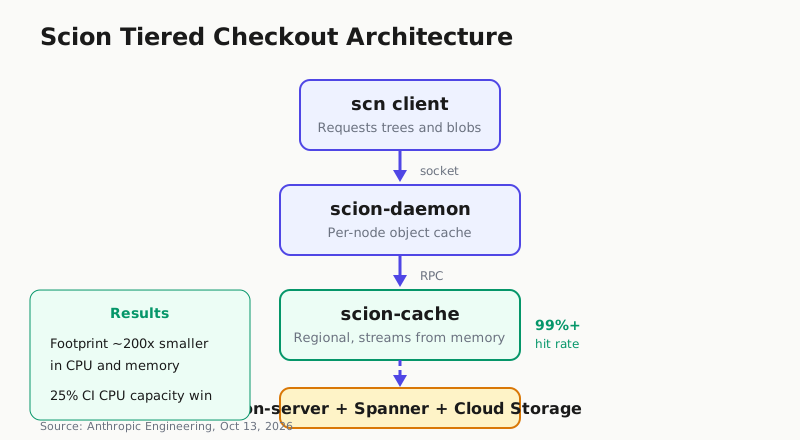
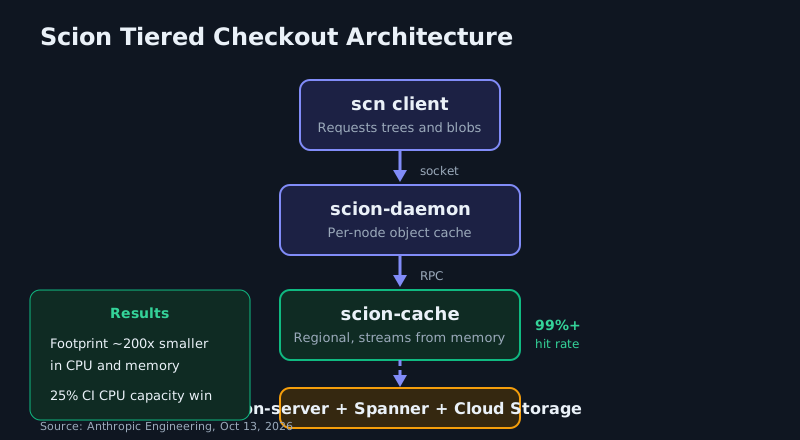
The checkout architecture is tiered: the scn client talks over a socket to a per-node scion-daemon, which queries regional scion-cache servers that stream objects directly from memory. When a cache misses, it falls back to authoritative scion-servers backed by Spanner and cloud storage. Each tier maintains a cache hit rate above 99% and requires no long-lived state, making horizontal scaling straightforward. The result is dramatic: CI and research jobs check out code in seconds rather than minutes, and Anthropic’s source control infrastructure footprint shrank roughly 200 times in CPU and memory compared to the previous Git mirroring setup, with CI alone realizing a 25% CPU capacity win.
Claude itself was instrumental in building Scion. The team recounts asking an early internal snapshot of Claude Mythos Preview to rewrite the Git-to-Scion ingestion pipeline — it produced a version that consumed 20 times less memory and ran four times faster while preserving all implicit invariants around ingestion ordering and data structures. The engineers describe their evolving role as supplying high-level system understanding and design tradeoffs, often telling Claude “no” when it over-engineered solutions to hypothetical concerns raised during adversarial review.
The post also signals deeper changes ahead for CI/CD at agent scale. The team questions whether traditional merge queues make sense when hundreds or even thousands of changes can merge while tests are running. They have not been able to replicate the industry standard of a global repository lock on the merge queue and are instead investing in post-merge and pre-deploy automated testing. When concurrent changes do conflict, they note, Claude can typically fix those conflicts faster than humans can even identify them.
Anthropic describes offering a broadly useful public Scion as difficult: the system diverges significantly from Git, meaning organizations would need to migrate every part of the development lifecycle, and it depends on bespoke code review (Antique), code search, and CI components that would be difficult for other organizations to adopt. But the company is sharing its findings so that Git platforms and the broader community can apply the lessons — such as server-side RPCs for source control queries, rethinking fetch negotiation protocols, and making Git’s sparse and shallow features compose well together — without departing from Git entirely.
The engineering team also describes a new operational model using Claude Tag to create component-specific monitors called “superfans” that watch telemetry and logs for subtle anomalies that traditional alerts miss. Each system component — scion-daemon, scion-cache, the Antique merge queue — has its own superfan acting like an experienced engineer with nothing better to do than refresh charts.
Anthropic’s post arrives as the AI coding landscape is rapidly reshaping infrastructure assumptions. We have explored how agentic CI/CD pipelines must evolve when machines make commits at scale, and our guide to agentic coding covers the foundational shift that makes systems like Scion necessary. For operators tracking the tooling implications, the latest Claude Code 2.1.296 release shows how Anthropic is simultaneously refining the coding agent that created this pressure in the first place.
The full engineering post is available on the Anthropic Engineering blog, which also features recent work on Claude Code, agent harnesses, and AI-resistant evaluations. This is a concrete case study of agentic coding reshaping the infrastructure beneath it. As the post observes, Anthropic is often the first to see where tools built for human scale start to strain, and the team expects others using AI coding tools to experience these same pressure points within six to twelve months.