
Modal Crosses $1B ARR and Raises $750M Series D at $15.75B Led by Accel
Modal announces a $1 billion annualized run rate and a $750M Series D at a $15.75B post-money valuation led by Accel, with Sandboxes alone at a $300M run rate. What agent builders should plan around now.
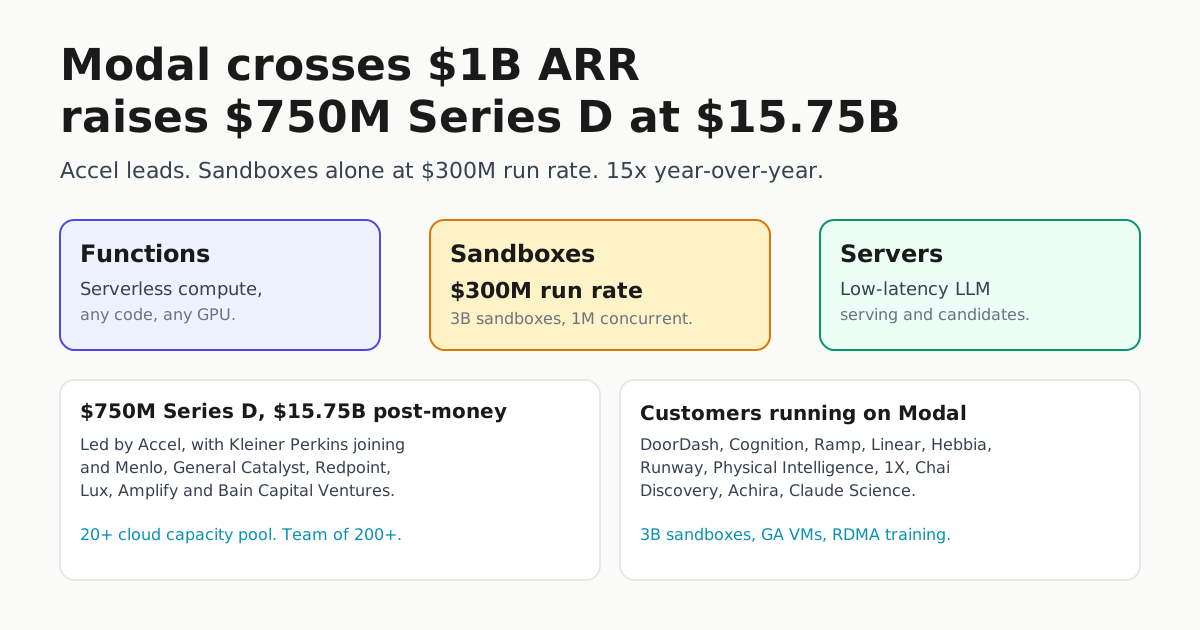
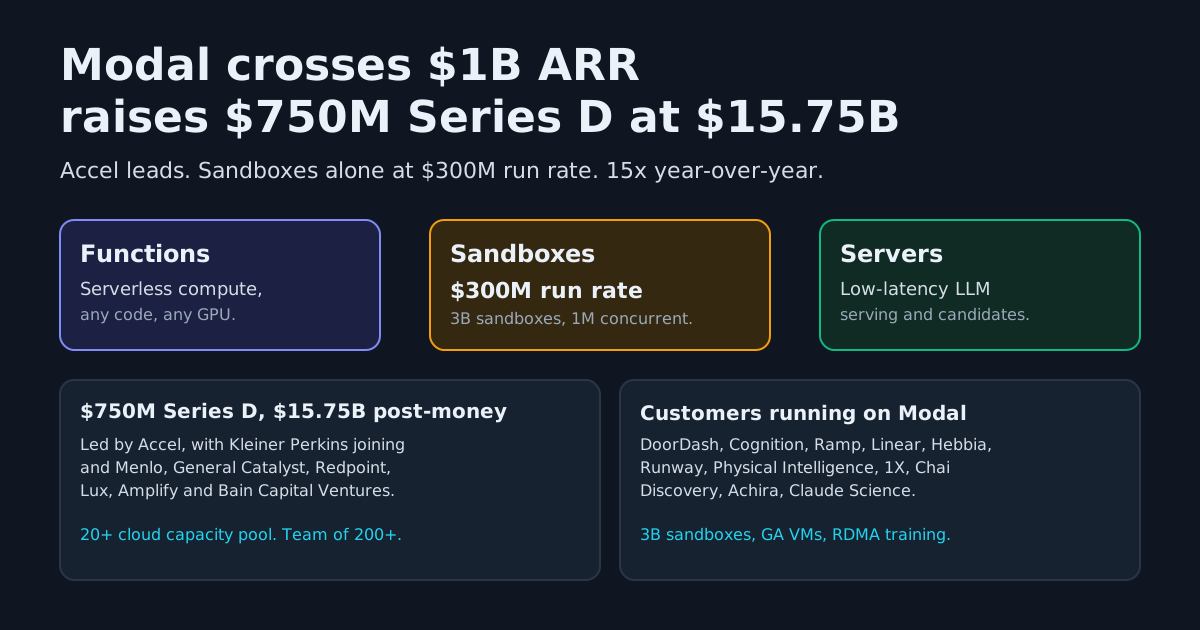
Modal, the platform that quietly runs coding agents, video generators, RL training jobs and inference endpoints for a wide slice of the AI builder market, has crossed $1 billion in annualized run rate and closed a $750M Series D at a $15.75B post-money valuation led by Accel, with Kleiner Perkins joining and Menlo Ventures, General Catalyst, Redpoint, Lux Capital, Amplify Partners and Bain Capital Ventures all participating (Modal blog).
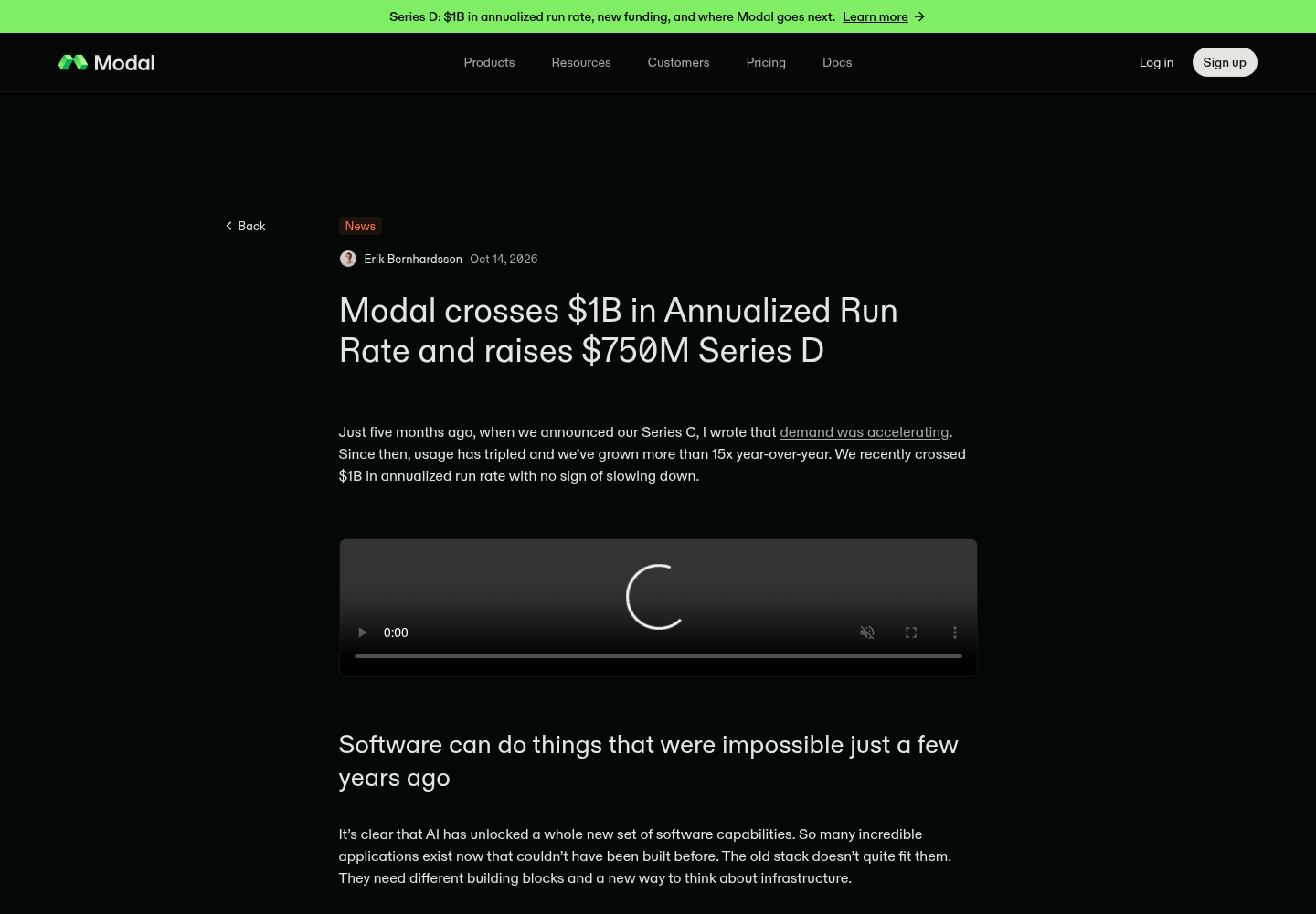
The headline numbers land roughly five months after the Modal Series C, with usage tripling in that window and growing more than 15x year-over-year. The more telling figure is buried further down the post: Sandboxes, the product Modal launched in 2023 as computers for agents, is on its own roughly $300M run rate, with close to 3 billion sandboxes spun up cumulatively and the ability to scale to a million concurrent (Modal blog).
For Automater readers running coding agents, background workers or reinforcement-learning fleets, this is the shipped-market signal that the runtime layer agents sit on, sandboxed cloud computers, on-demand GPUs and hosted inference, is now a venture-scale category in its own right, well past the experiment stage (how AI agents actually work).
What Modal actually runs
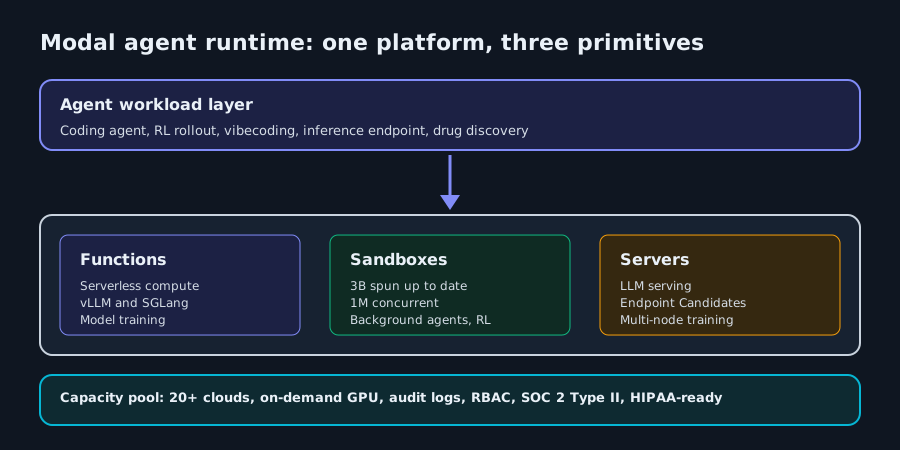
The product lineup has converged on three primitives: Functions for serverless compute, Sandboxes for running untrusted code at scale, and Servers for low-latency LLM serving. The homepage positions Modal as container infrastructure that will not box you in, with the runtime stack sitting on a capacity pool that spans 20+ clouds (modal.com).
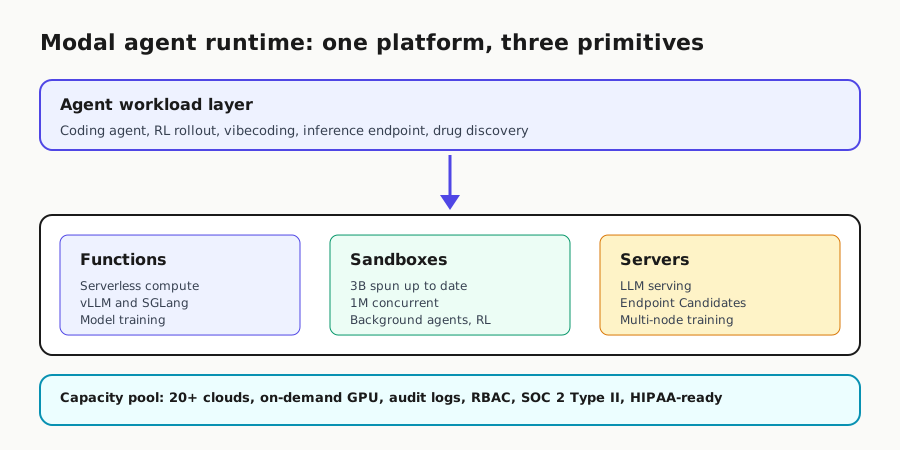
Customers named in the announcement read like an index of the current AI builder scene:
- DoorDash AI platform team uses Modal to ship internal tools and customer-facing apps.
- Cognition runs both reinforcement-learning infrastructure and production inference on Modal.
- Ramp Inspect product depends on Modal sandboxes to spin up quickly with a lot of services and data.
- TypeSafe AI Jev served 1 trillion tokens on Modal in its first three days.
- Runway generates video globally; Physical Intelligence, Generalist AI and 1X train robots.
- Chai Discovery and Achira run drug discovery; scientists working through Claude Science run their workloads on Modal.
- Linear and Hebbia build background agents that are experts in their fields.
That covers every agent pattern Automater tracks: background coding agents, long-running RL rollouts, vibecoding platforms, production inference, and even robotics training (the RL environment gold rush).
The Sandboxes math
Sandboxes is the line item that matters for builders budgeting capacity. Modal launched the primitive in 2023 after noticing that people were using LLMs to generate code and needed an isolated environment to run it in. Three years later it is a $300M run rate product on its own (Modal blog).
The unit economics are unusually clean. Sandboxes can spin up millions concurrently, burst CPU and memory on demand, snapshot and restore for fast startup, and integrate with the rest of the Modal platform: audit logs, RBAC, SOC 2 Type II compliance, HIPAA readiness, without the user building their own YAML pile (modal.com).
If you are planning capacity, procurement or failover for an agent fleet, this is the moment to treat Modal as a first-class runtime rather than an experiment. The 20+ clouds capacity pool and a team of 200+ across NY, SF and Stockholm is the kind of operational footprint you cannot replicate by renting bare metal.
What just shipped alongside the round
The Series D post doubles as a product update. Worth noting in your fleet runbook:
- Multi-node training is live: one decorator hands you an RDMA-connected cluster with no capacity commitment.
- Modal Servers, a better solution for HTTP endpoints, are moving up the stack.
- Endpoint Candidates evaluate and promote inference endpoints on quality, latency, throughput and cost before routing production traffic.
- Sandboxes with virtual machines are now generally available, so you can request full VMs rather than only containers.
- RL and post-training products are launching on top of the same platform (Modal blog).
What this changes for agent builders
Two operational conclusions fall out of the announcement for anyone running agents in production.
First, the agent-runtime layer is now priced and staffed like the cloud platforms of the previous generation. Treat your runtime the same way you treat your model provider: pin a primary, name a failover, keep a reset ledger. Modal as a primary works; if you cannot tolerate the cutoff, the drill is the same as for any model vendor (rehearse the provider cutoff).
Second, the sandbox is no longer a sidecar product. With 3B sandboxes shipped, 1M concurrent and Modal own audit, RBAC and data-residency controls, you can stop building your own sandbox fleet and start metering what you actually use (three meters for one agent job). For background agents that spin up a sandbox per task, the bill shape is now a runtime line item rather than a research expense. The fact that even escape-leaning research patterns are being answered in the market by managed sandboxes with compliance baked in changes how you plan isolation (the sandbox is a suggestion).
The takeaway is mundane but consequential: the runtime agents sit on is venture-scale, multi-region and actively shipping product. Plan accordingly.
Modal blog - $1B ARR Series D announcement - Modal blog index - modal.com