
Kylon Launches a 'Company Harness' Where Claude Code, Codex and Devin Join Human Teams in Shared Rooms
Kylon's company harness puts its built-in Operations agent Ryan alongside user-brought Claude Code, Codex and Devin, with sandboxed cloud runtimes, draft-first approvals for email and line X sends and credit metering by room, agent and person.
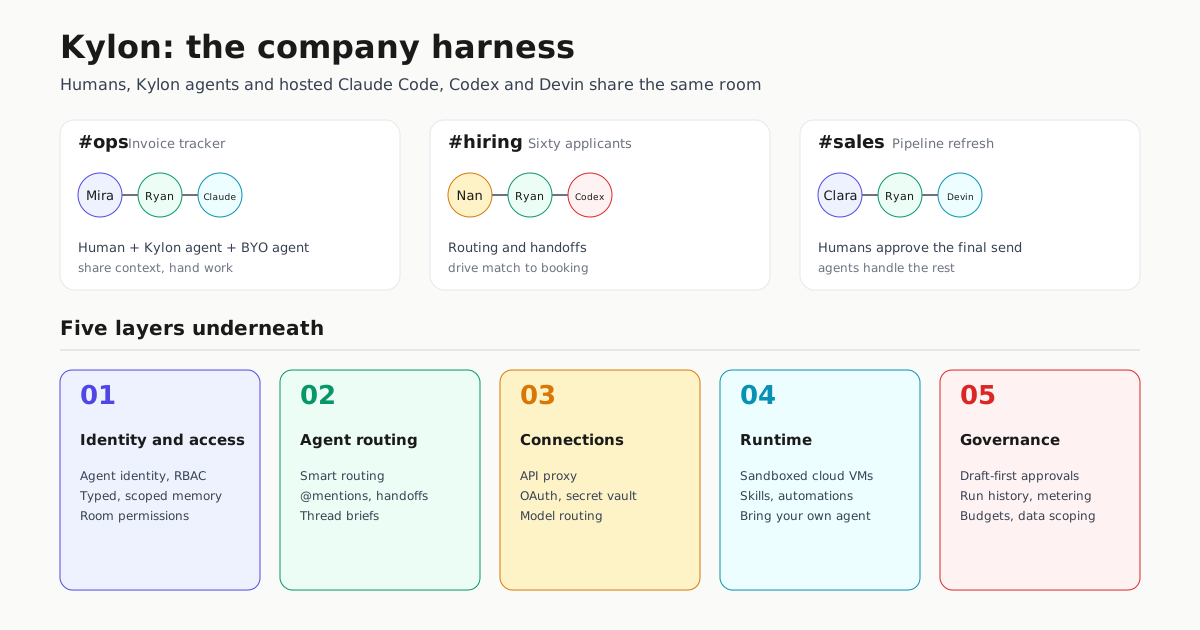
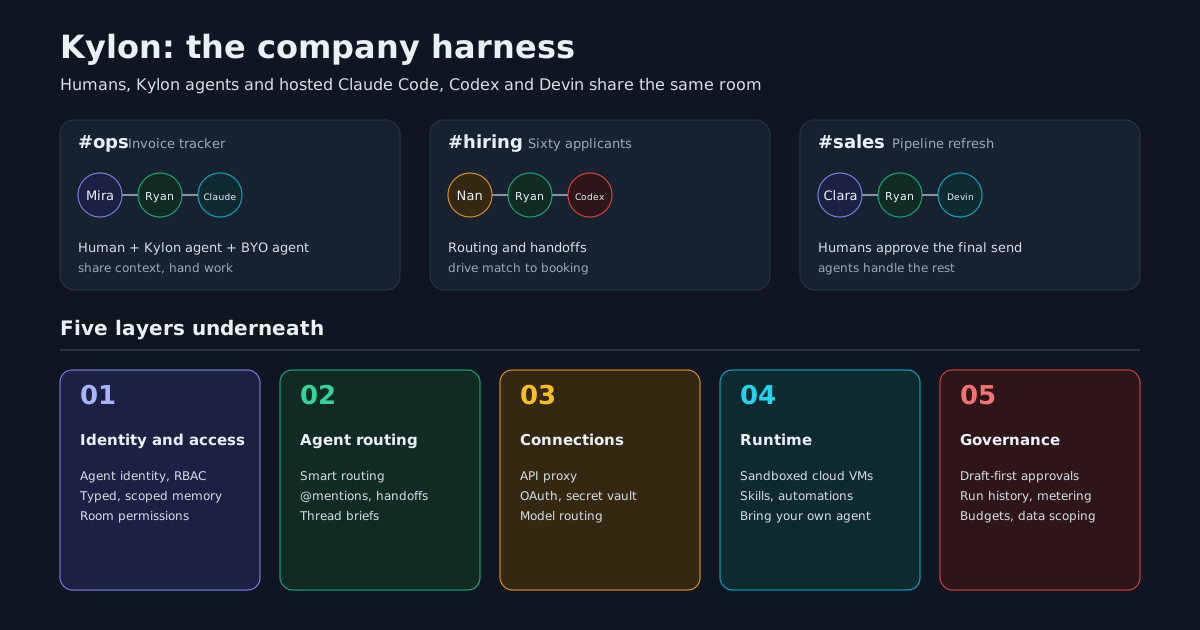
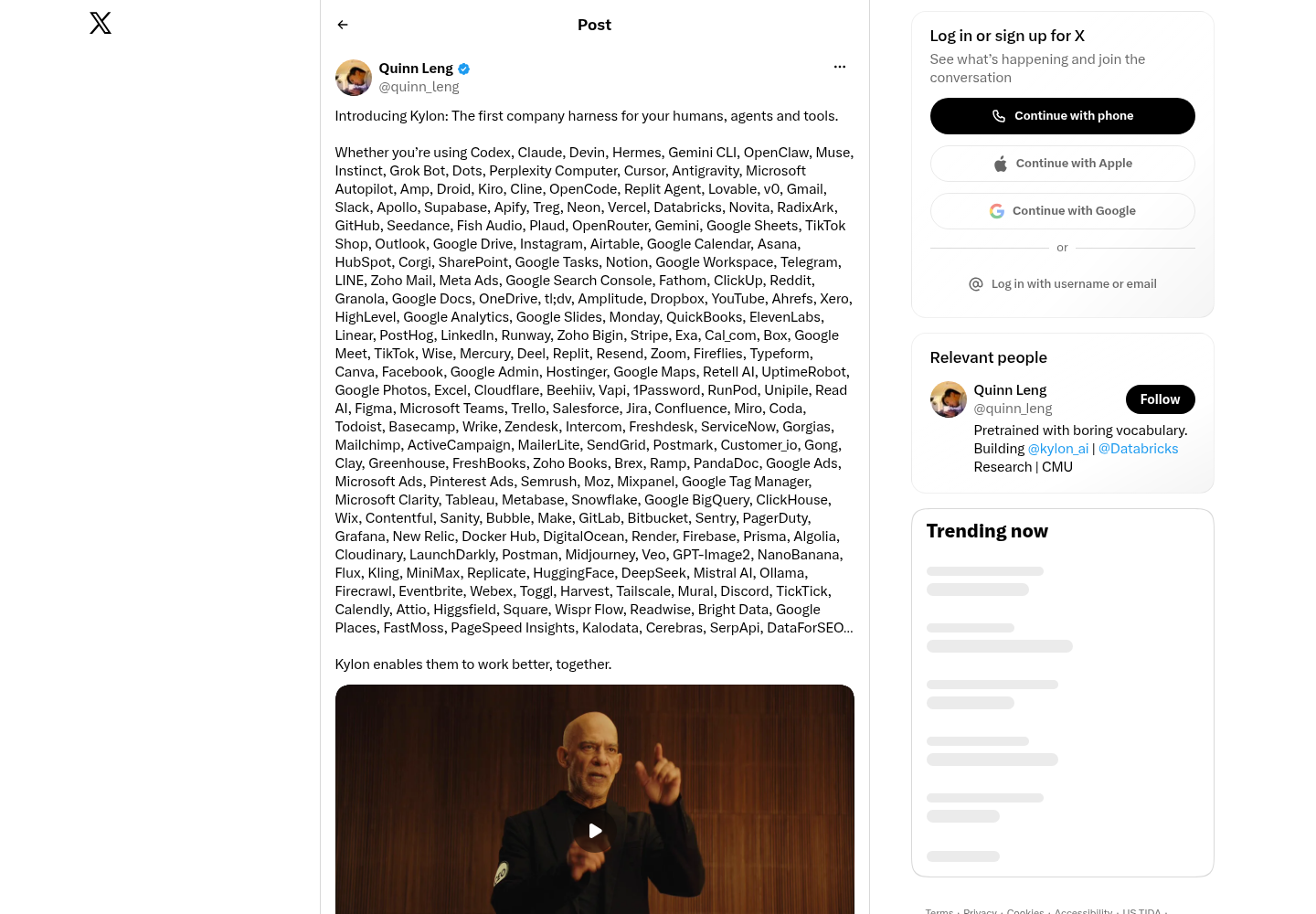
Kylon launches as a “company harness,” a room-based workspace where humans, Kylon’s own Operations agent Ryan, and user-brought Claude Code, Codex and Devin share the same threads, hand work to each other, and leave approvals and metering to the platform (Quinn Leng on X).
The launch page is explicit about who joins a room. The Kylon homepage states that Claude Code, Codex and Devin “join your rooms next to your teammates and Kylon’s own agents,” and each of the four workflow demos is performed by Ryan, Kylon’s built-in Operations agent. Each hosted agent runs in its own sandboxed cloud computer with shared skills, automations and event triggers, organized as five numbered layers: identity and access, agent routing, connections, runtime, and governance (Kylon product page). Credentials for Gmail, Notion, GitHub, Salesforce and more than 3,000 other services flow through OAuth and an API gateway; the secret vault keeps keys out of chat, and credential injection applies them at run time rather than pasting them into a prompt (Kylon product page, Kylon homepage).
From chat to rooms
The harness differs from a shared LLM subscription in the room model. Teams operate in named rooms (#ops, #hiring, #sales, #design), each a chat with threads, shared files and member agents. Smart routing picks which agent answers when no @mention is used; any person or agent can hand a thread to another the same way. Thread briefs pull recent room context into a sub-conversation’s opening message, so an agent does not re-ask the setup the room already had (Kylon product page).
Every agent is a workspace member with its own profile, an access list and room-scoped permissions. Typed memory is scoped to where it applies and re-checked over time. A new agent starts private with no rooms and only its creator, and admins decide who can reach it and which rooms it joins (Kylon product page, Kylon homepage).
The five layers
Kylon presents its harness in five numbered layers (Kylon product page):
- 01 Identity and access: agent identity, RBAC for both people and agents, scoped memory, room permissions.
- 02 Agent routing: smart routing, @mentions and handoffs, thread briefs, an agent directory.
- 03 Connections: API proxy across tools and hosted agent model calls; OAuth with one-time setup; credential injection; secret vault; and model routing that maps intelligence levels to current models with failover.
- 04 Runtime: a sandboxed cloud computer per hosted agent, shared skills, automations, event triggers, and a bring-your-own-agent slot for Claude Code, Codex and others.
- 05 Governance: draft-first approvals, run history that leaves a trace every tool-using turn can open, usage metering by room, agent and person with budgets, and per-App data scoping.
Governance for riskier actions
The product page limits draft-first holds to emails, X posts and LINE messages, which the launch site expands with “emails and documents come back as drafts for a person to review” (Kylon product page, Kylon homepage). Run history records every turn that uses tools, so a reviewer can open that trace as a separate review surface from the room thread the team shares as context. Usage is metered by credits per room, per agent and per person, with budgets; Core starts at $100 a month for 1,000 credits and up to 10 agents, and pauses work when credits run out (Kylon homepage).
The harness scopes each internal App to its own data and only the connections granted to it. That boundary matters when teams connect Slack and a finance agent into the same room, and it lines up with the context-isolation work we have been documenting for shared-workspace agents (Kylon product page).
Bringing the agents you already use
Claude Code, Codex and Devin join a room as teammates, share it like any other member, and leave the final call to a human (Kylon homepage). Leng’s launch post also calls out OpenClaw, Hermes, Cursor, Cline, Kiro and the rest of the long tool list, which reads as a compatibility roster rather than a guarantee of room membership (Quinn Leng on X). Agents carry no extra Kylon fee on top of each vendor’s own plan (Kylon homepage).
Practical workflows the launch surfaces
The launch site walks through four repeatable workflows (Kylon homepage):
- Finance / #ops: Mira asks for an invoice tracker; Ryan, the Operations agent, builds one in chat from the billing mailbox.
- Hiring: Nan has sixty applicants in her inbox; Ryan pulls them into the room and matches them against the Monday brief, then Nan asks Ryan to book the three best matches.
- Sales: Clara rebuilds the same pipeline slide by hand every Monday; Ryan reads the deals and the shared mailbox and builds the dashboard.
- Operations: Saul needs a phone-friendly count page; Ryan publishes counts.northwind.app and warehouse counts flow into the records.
These are the same handoff patterns Automater readers have been wiring by hand in multi-agent command centers: an orchestrator routes, a domain agent executes, a human approves. Kylon’s claim is that the room, the scoping, the metering and the approvals ship pre-wired.
Why it matters now
The multi-agent harness landscape is consolidating, and the new wave of harnesses (OpenClaw, Crush, Amp) has been the names worth watching. The operational books that gate agents, including draft-first approvals, run history and credit budgets, are exactly the policies our fleet-operations coverage has been calling for. The homepage distinguishes Kylon from Grok Bot and Muse by positioning those as personal agents and Kylon as a company build aimed at small and midsize teams, with a Custom plan for larger customers (Kylon homepage).
For teams already paying for Claude Code and Codex seats, the workload now has a place to live above the IDE. Drafts of outbound email stop being lost in a side chat; an agent that wants to post to X has to wait for a person to send; and the room’s run history is the audit log a reviewer can open, separate from the room thread that the team shares as context.
Pricing and disclosure: SOC 2 Type II and ISO/IEC 27001:2022 audits are listed as in progress, GDPR compliance is claimed, and the company says per-workspace pricing with Core starting at $100 a month for 1,000 credits and up to 10 agents (Kylon homepage).
Sources
- Quinn Leng on X: "Introducing Kylon: The first company harness for your humans, agents and tools. Whether you’re using Codex, Claude, Devin, Hermes, Gemini CLI, OpenClaw, Muse, Instinct, Grok Bot, Dots, Perplexity Computer, Cursor, Antigravity, Microsoft Autopilot, Amp, Droid, Kiro, Cline, OpenCod…
- The company harness · Kylon
- Kylon - Your first company harness. Where humans and agents run your business together