
DeepSeek Opens Search and Fetch APIs to All at $0.75 per 1,000 Calls, Free in Claude Code and Codex Until October 31
DeepSeek opened Search and Fetch APIs at $0.75 per 1,000 calls each, free in Claude Code and Codex until October 31, powered by its in-house search engine.
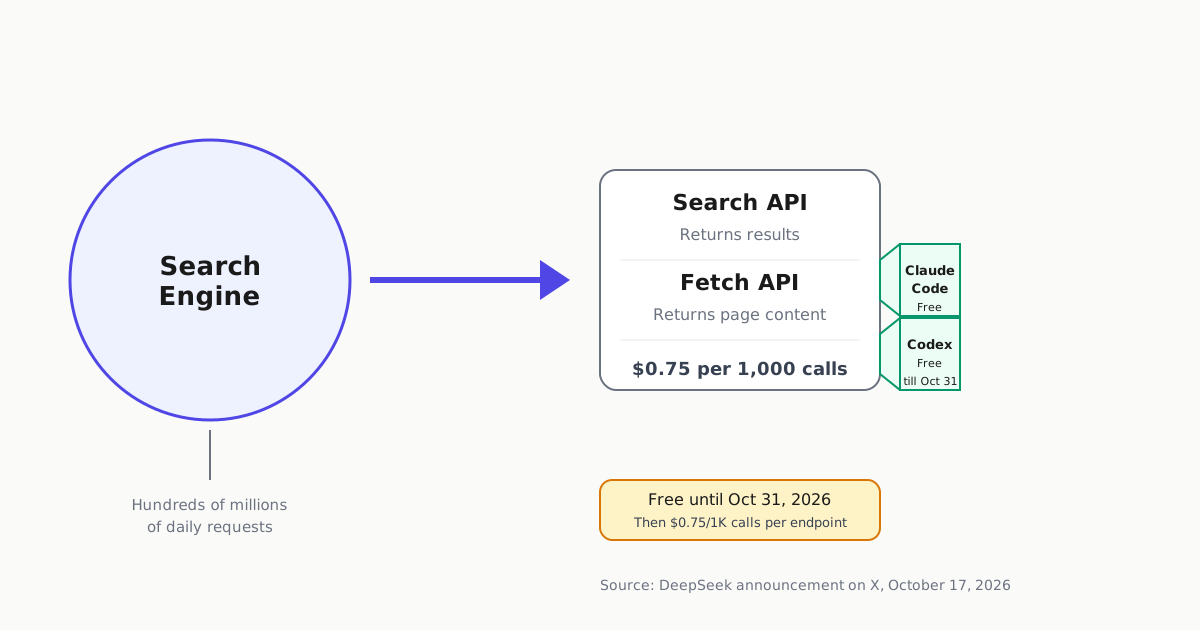
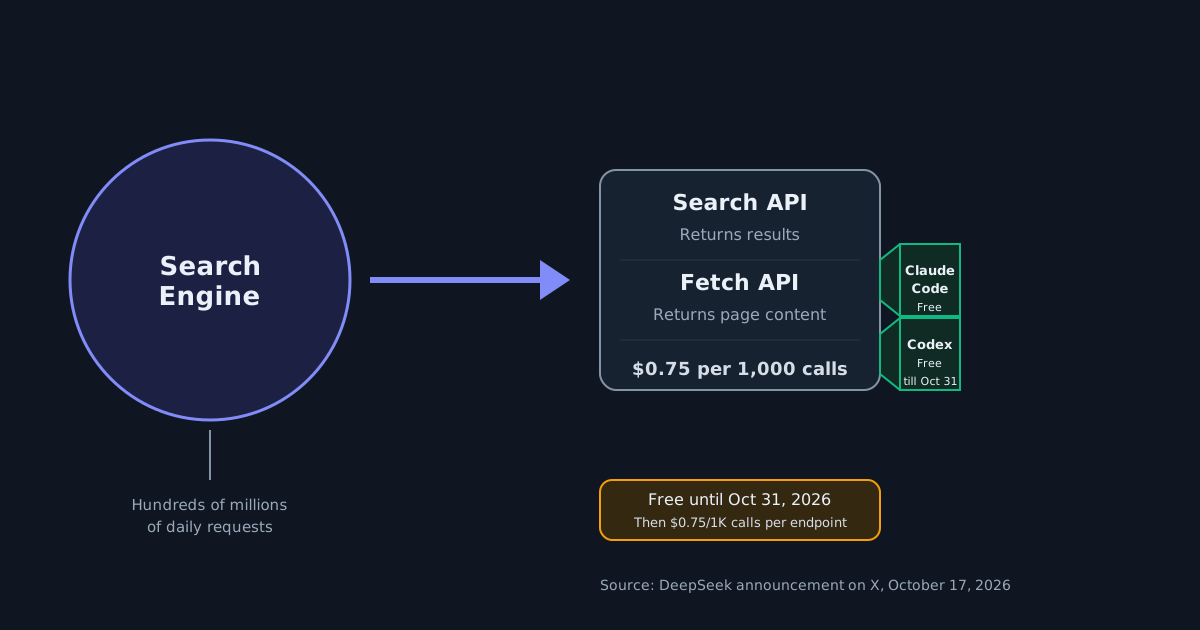
DeepSeek opened its in-house search engine to everyone today, launching two new API endpoints—Search and Fetch—priced at $0.75 per 1,000 calls each. The release arrived alongside the DeepSeek-V4.1-Flash-1017 model update, and DeepSeek confirmed that server-side search and fetch calls made from DeepSeek Harness, Claude Code, and Codex remain free for DeepSeek API users until October 31, 2026, at 16:00 UTC.
Search Built In-House, Not Rented
DeepSeek says its search engine serves hundreds of millions of requests daily worldwide. Unlike coding tools that wrap third-party search APIs—Bing, Google, or Brave—DeepSeek operates its own crawler and index. For developers running agent pipelines, an in-house index means one fewer external dependency and a retrieval stack the API provider controls end to end.
The two endpoints are straightforward in concept. The Search API accepts a query and returns results; the Fetch API retrieves and processes the content of a given URL. Together they cover the standard retrieval pipeline: search for sources, then fetch and clean their content before feeding them to a model. Full documentation is available in the DeepSeek API docs, which also cover the V4.1-Flash-1017 model now serving the deepseek-flash model name.
A Pricing Structure That Undercuts the Market
At $0.75 per 1,000 calls for each endpoint, DeepSeek’s pricing makes search an affordable line item rather than a significant operating cost. For coding agents that often chain multiple searches per task, low per-query costs keep retrieval from dominating the agent bill.
The free window for harness users is notable. DeepSeek explicitly names three coding tools where server-side search and fetch calls will not be billed until the end of October: DeepSeek Harness, Claude Code, and Codex. This means developers using those tools with a DeepSeek API key can route their agents’ web retrieval through DeepSeek’s search infrastructure at no cost for the next two weeks. For teams already running overnight agent jobs, the free search window adds another dimension to cost planning.
After October 31, billing kicks in at the standard rate. The cutoff is precise—16:00 UTC—so operators running overnight jobs should factor the deadline into their scheduling.
Part of a Coordinated Platform Push
The Search and Fetch APIs did not launch in isolation. Techmeme reported the same day that DeepSeek shipped the V4.1-Flash-1017 model update, which the company describes as a Pareto improvement: stronger benchmarks, faster task completion, and shorter outputs than its predecessor. The model was specifically optimized during training for the DeepSeek Harness. The Harness itself released version 0.2.1 to support the new model.
This is a coordinated surface-level push. DeepSeek is simultaneously improving the model, the tool runtime that drives it, and the retrieval backend that feeds it fresh information. For developers building agent pipelines, the combined package means they can now use one provider for the model, the harness, and the search layer, with a single API key and a single bill. The Vercel AI Gateway Index recently showed open-weight models capturing 71.5% of all tokens through gateways, and DeepSeek’s vertically integrated search layer extends that cost advantage into the retrieval tier.
What This Means for Coding Agents
Search-enabled coding agents have become table stakes. Claude Code, Codex, Cursor, and others all ship with web retrieval capabilities, but the underlying search provider is often opaque or expensive. DeepSeek’s move gives developers an explicit, priced alternative that they can reason about directly.
The two-week free period gives teams time to evaluate DeepSeek’s search quality against their current provider without committing spend. At $0.75 per 1,000 calls, the cost is low enough to try casually and cheap enough to run at scale once billing begins. For teams that already use DeepSeek as their model provider, adding search means one API key, one bill, and one vendor relationship—a simplification that matters when managing agent infrastructure across multiple tools and cloud accounts.
DeepSeek’s pricing also puts pressure on the broader search API market. When an in-house engine can charge well under a dollar per thousand queries, the economics of reselling third-party search results become harder to justify. For coding tool vendors who currently bundle Bing or Google search into their agent runtimes, DeepSeek’s vertically integrated alternative offers a path to lower per-task costs without sacrificing retrieval quality. The Harness 0.2.1 release ensures that DeepSeek’s own agent runtime takes full advantage of the integration, with the new model trained specifically to work well with the harness.
Sources
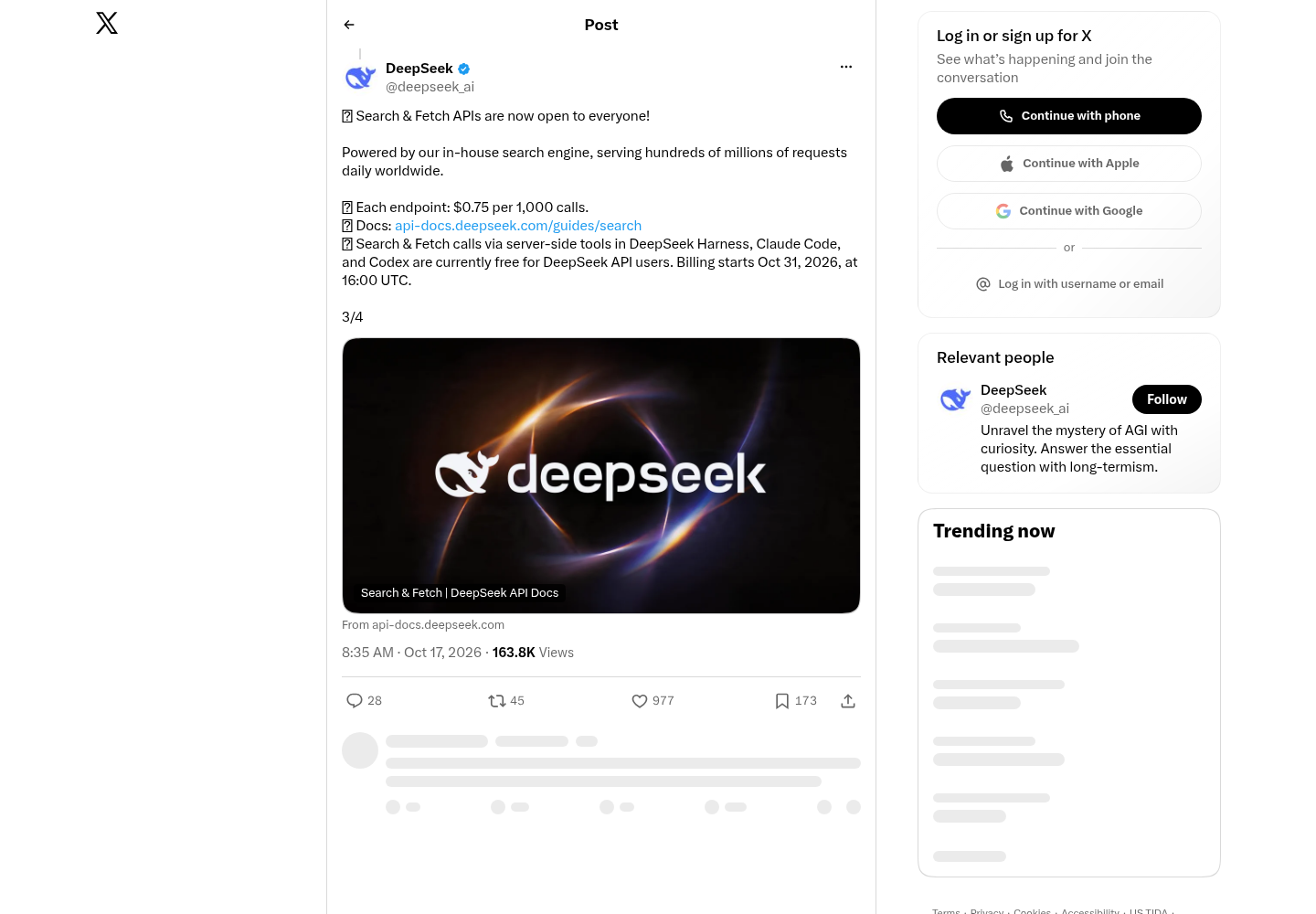
- DeepSeek on X: "🔍 Search & Fetch APIs are now open to everyone! Powered by our in-house search engine, serving hundreds of millions of requests daily worldwide. 💰 Each endpoint: $0.75 per 1,000 calls. 📖 Docs: https://t.co/xLVnK4QQIr 📌 Search & Fetch calls via server-side tools in DeepSeek Har…
- Your First API Call | DeepSeek API Docs
- Techmeme: DeepSeek releases V4.1-Flash-1017, an update it says offers “stronger benchmark performance, faster task completion, and shorter outputs” than its predecessor (Saritha Rai/Bloomberg)