
Vercel AI Gateway Index: Open-Weight Models Hit 71.5% of Tokens as Anthropic Spend Share Drops Below Half
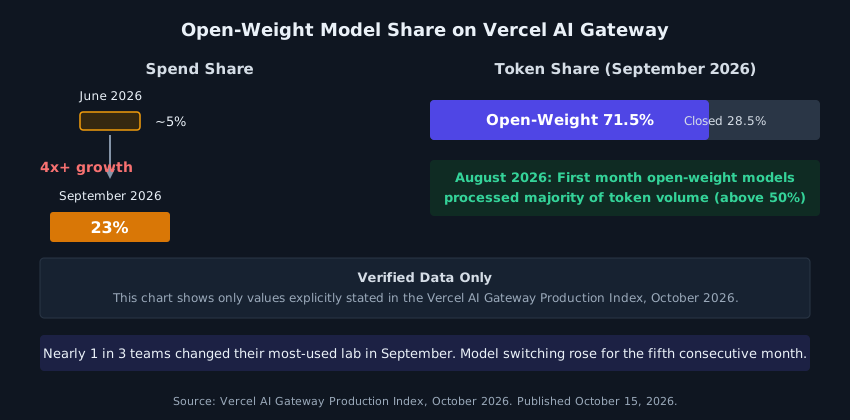
Vercel's October 2026 AI Gateway Production Index shows open-weight models now process 71.5% of tokens and claim 23% of spend — quadruple June's share — while Anthropic's overall spend share fell below 50% for the first time. Nearly one in three teams changed their most-used lab in September, an index record.
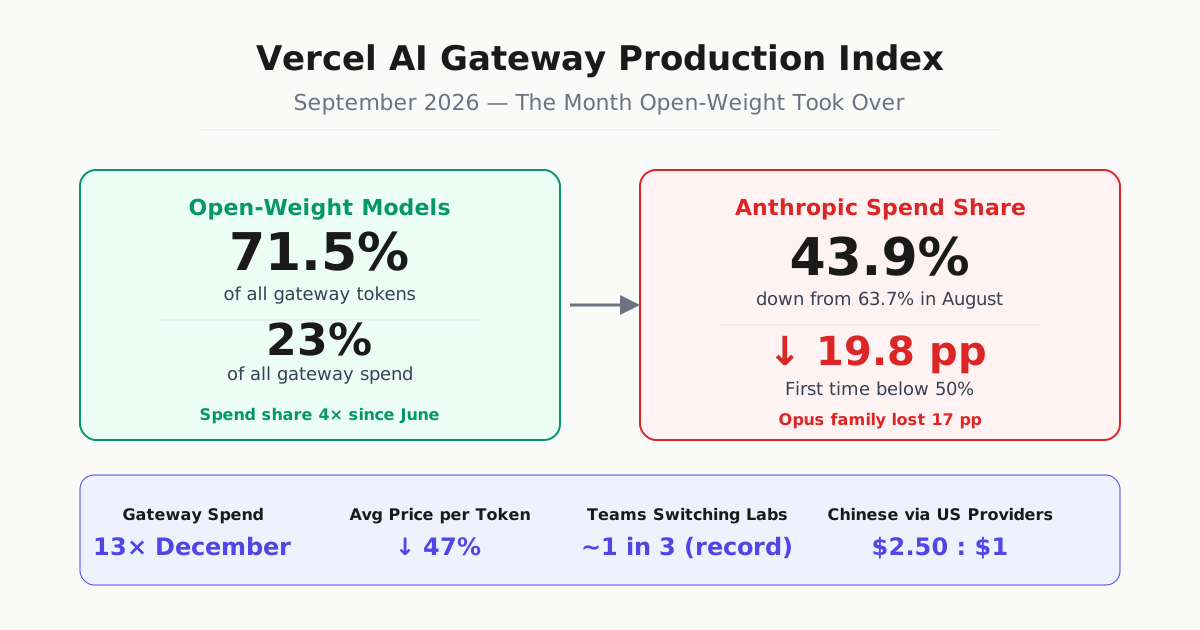
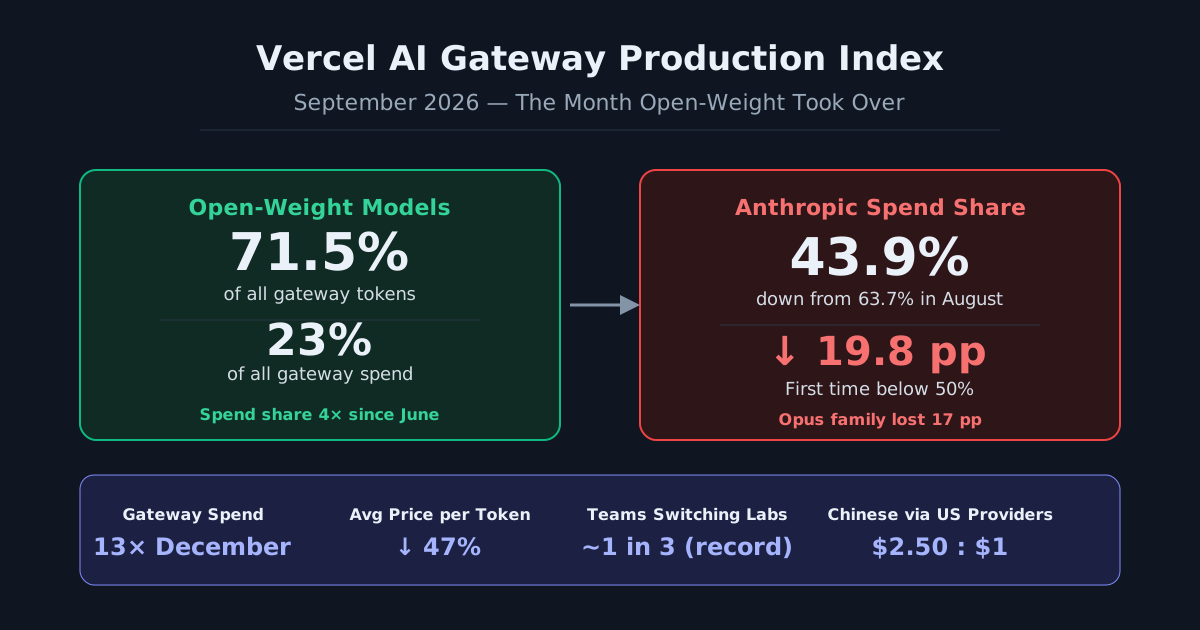
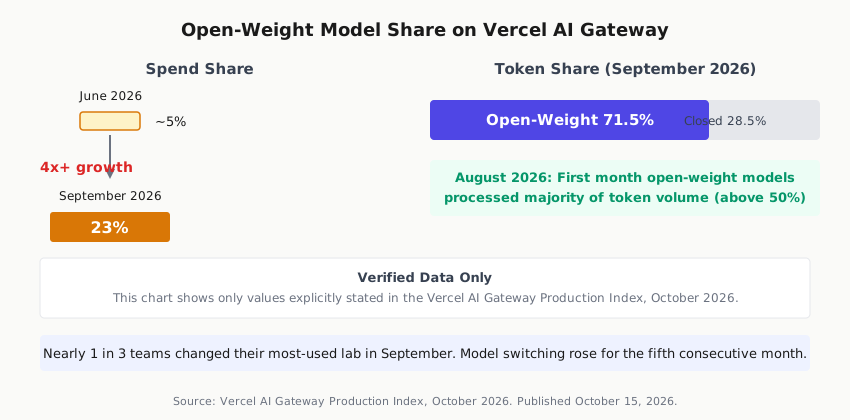
Vercel published its October 2026 AI Gateway Production Index on its blog on October 15, and the headline is unambiguous: open-weight models have firmly taken the lead in production AI workloads. In September, open-weight models processed 71.5% of all tokens routed through the gateway and captured 23% of total spend — a spend share that has more than quadrupled since June, when open-weight accounted for roughly one in twenty gateway dollars.
The data comes from tens of trillions of tokens routed through Vercel’s AI Gateway each month, providing one of the most comprehensive public windows into enterprise AI usage patterns. The gateway routes traffic between production applications and AI labs across hundreds of models with no markup on token pricing, meaning the spending data reflects actual list-price economics rather than platform fees.
The open-weight surge hits both ends of the price spectrum
Open-weight growth is not coming from one niche. The cheapest models drive token volume while the expensive ones drive spend. DeepSeek-V4.1-Flash alone processed nearly half of all September tokens — yet accounted for just 2.6% of total gateway spend, with a per-token price roughly one-fifth of the open-weight average. At the other end of the spectrum, Kimi K3, priced at more than four times the open-weight average cost per token, drove nearly half the increase in open-weight spending while processing far fewer tokens.
DeepSeek’s models collectively processed 58% of all gateway tokens for just 6.6% of spend. Moonshot AI’s Kimi family accounted for 3.6% of tokens but 13.2% of spend — a striking concentration of value at the premium end of the open-weight market. Z.ai’s GLM models contributed 7.2% of tokens and 4.5% of spend.
Anthropic drops below half of gateway spend
For the first time since Vercel began publishing the index, Anthropic’s share of total gateway spend fell below 50%, dropping from 63.7% in August to 43.9% in September. The Opus family alone accounted for 17 of the nearly 20 percentage points lost, even as Opus 5.5 captured 11.03% of total gateway spend in its first two weeks — the largest spend share of any September model launch.
The dynamic is nuanced. Anthropic’s absolute gateway spend is still growing — frontier model spend has increased tenfold since December. But spending on alternatives is growing faster. As the index report observes, a company can spend more with a frontier lab while relying on it for fewer workloads, so the lab gets more revenue but a smaller share of the customer’s overall AI business.
The market gets bigger, cheaper, and more fluid
September’s total gateway spend was approximately 13 times December’s, while the average price per token fell 47%. The median paid customer active in both months more than doubled its spend. Teams are buying more compute even as each token costs less.
Perhaps more significant for enterprise procurement: nearly one in three teams changed their most-used AI lab in September — an index record. Nearly one in two teams changed their most-used model. Both switching rates rose for the fifth consecutive month. The average team using at least 10 million tokens since December has used 15 different models. That rises to 26 for teams above 100 million tokens and 42 for those processing at least a billion. The model is becoming a replaceable component, and enterprises are treating it as one.
Chinese models flow through American pipes
About $2.50 was spent on Chinese-origin models through US-based providers for every $1 spent through China-based providers in September. More than two-thirds of all gateway spend on Chinese models went through American companies, up from less than 10% in December. Moonshot AI saw US providers serve nine in ten of its tokens; Z.ai saw seven in ten.
September’s model launches: Jev wins reach, Opus wins spend, Luna wins loyalty
TypeSafe AI’s Jev decision model achieved the fastest adoption in AI Gateway history, reaching 35.3% of paid teams in its first two weeks — nearly double second-place Sonnet 5.5 at 18.1%. But as a decision model with fast, cheap, low-token requests, Jev accounted for just 1% of tokens and 0.15% of September spend.
Opus 5.5 took the largest spend share of any September launch at 11.03%, more than double GPT-6 Astra’s 4.86% in second place. OpenAI’s GPT-6 Luna posted the highest retention rate at 64.8%, while Sonnet 5.5’s balanced performance across reach, spend, and retention gave it the top composite score of 87.8.
What it means for fleet operators
The index confirms several trends that agent fleet operators have been tracking all year. Model switching is now routine infrastructure behavior, not an edge case. The cheapest models carry massive token volume; the most expensive ones carry concentrated spend. And the provider landscape is no longer a single-vendor decision — it is a routing problem.
For teams running AI coding agents, the message is clear: maintain multiple provider lanes, rehearse failover, and treat model selection as a continuous optimization problem rather than a one-time architectural choice. As we have covered in our analysis of the DeepSeek effect on agent economics and the growing roster of open-weight models capable of driving harnesses, the Vercel data shows the market is already operating at production scale with these dynamics fully in play. For operators tracking spend across lanes, reconciling gateway meters against provider invoices and rehearsing provider cutoff scenarios have become essential weekly drills rather than annual planning exercises.