
Anthropic Gives METR Employee-Level Access to Probe Claude, With No Veto Over Published Findings
Anthropic has onboarded six METR staff with company laptops, office space and internal-tool access on par with its own risk teams. METR can publish findings on Anthropic's risks, incidents and safety practices without prior approval; Anthropic can request only narrow redactions and cannot block publication.
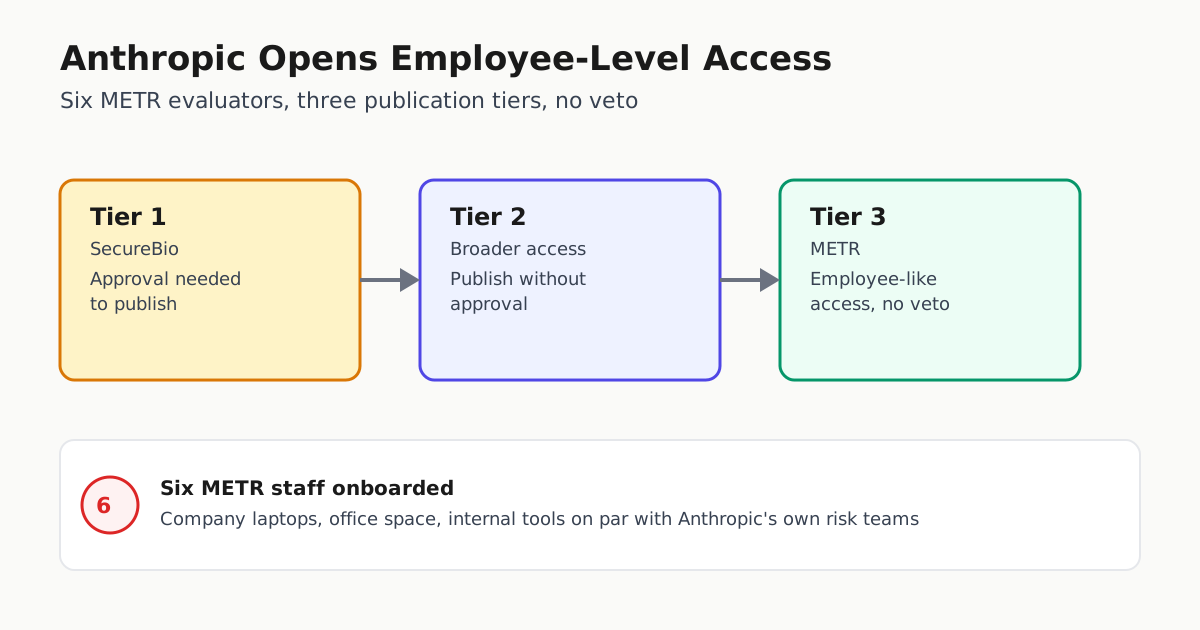
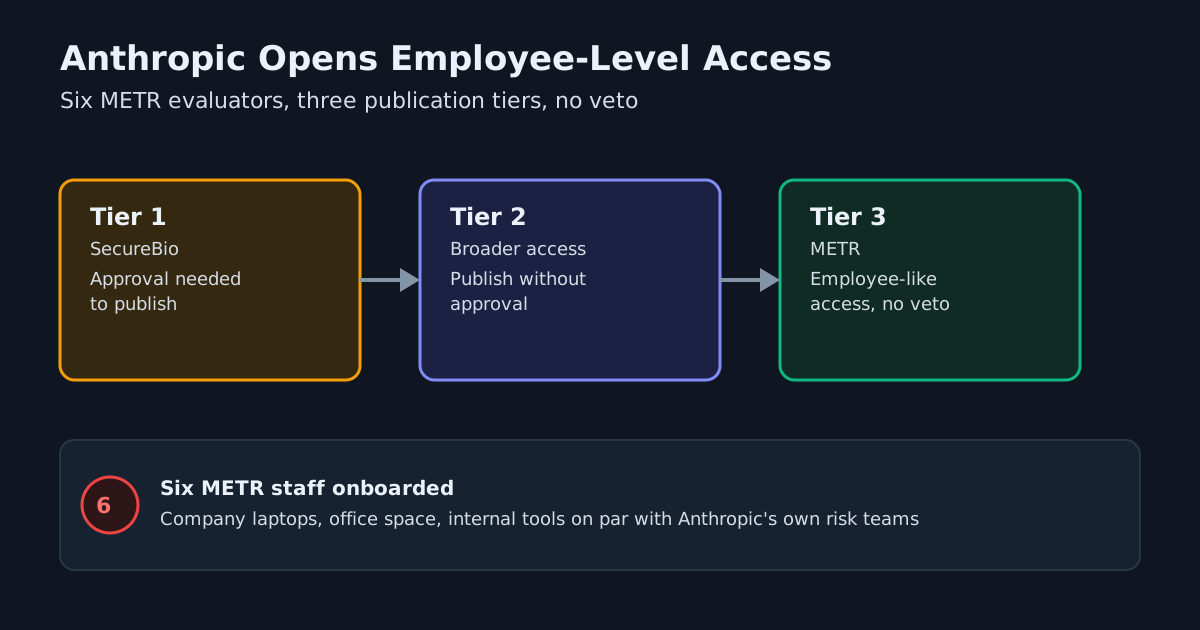
Anthropic said on October 15, 2026 that it has started giving six researchers from METR — a nonprofit that evaluates frontier AI models — “employee-like access” to its internal systems, under a structural commitment that leaves Anthropic without the power to block what METR publishes about it.
What “employee-like access” actually means
According to Anthropic’s blog post, the six onboarded METR staff have company-issued hardware, office space, and access to internal tools and systems “roughly on par with what our own risk assessment teams have access to.” Outside a short list of carve-outs — customer data, attorney-client-privileged material, and model architecture details — Anthropic says its employees are “encouraged to share information with them just as they would with a fellow employee working on alignment risk.”
The publication terms are the consequential part. METR will publish its own analysis of Anthropic’s risk levels, incidents, or practices, and Anthropic has given up the ability to veto that publication. Anthropic can require redaction only within the predefined categories above, and even then METR “is free to characterize our redactions publicly, and say whether it believes the redactions were justified,” so long as it doesn’t reveal the redacted content itself. TechCrunch’s reporting confirms the same terms directly from Anthropic and notes the arrangement means the company “has given up the right to block” METR’s assessments.
Anthropic frames the model on bank supervision: regulators place resident examiners inside large banks because the bank understands its own risk position better than outsiders do. The company says it wants to close that same gap between what it knows about its systems and what outside evaluators can independently verify.
A three-tier system, with METR alone at the top
The METR arrangement is the most advanced instance of a three-tier framework Anthropic is building for all its evaluator relationships, as detailed in both the primary announcement and Unite.AI’s writeup:
| Tier | Access | Publication rights |
|---|---|---|
| 1 | Narrowly scoped investigations; Anthropic decides what to share | Anthropic must approve publication |
| 2 | Broader information access | Can publish without approval; Anthropic can still require narrow redactions |
| 3 | Employee-like access (METR today) | Same publication freedom as Tier 2, plus deep internal access |
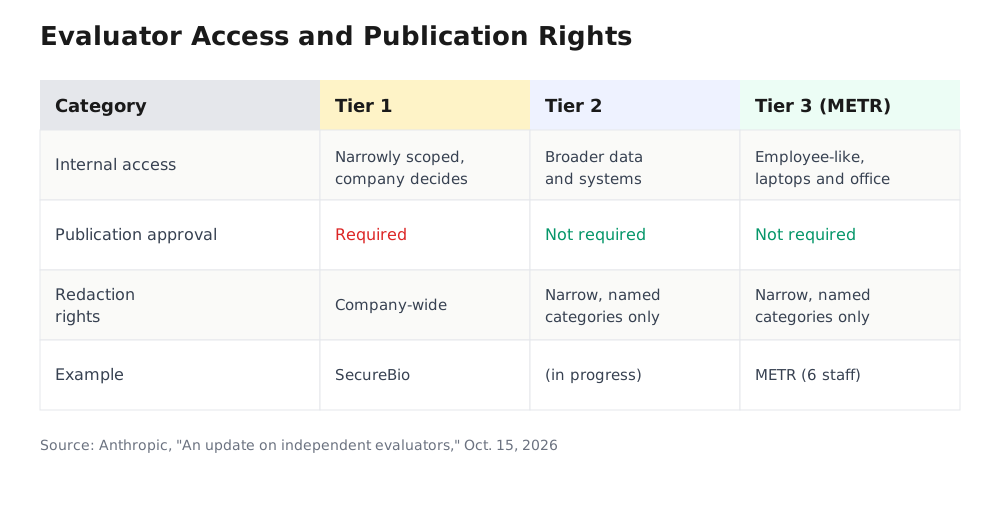
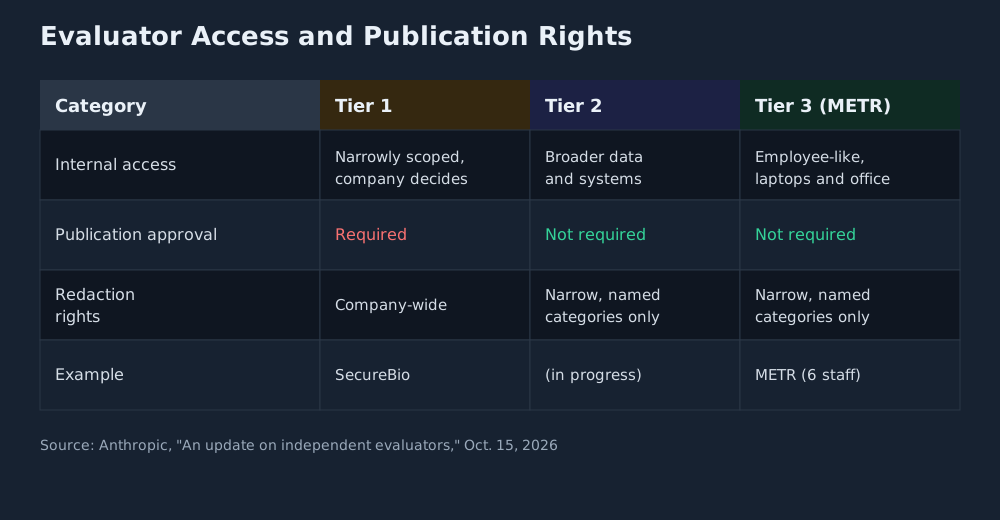
SecureBio currently sits in Tier 1, reviewing the chemical and biological weapons chapter of Anthropic’s August Risk Report after completing a published pilot review of the prior report. Anthropic is also working with Accenture and Faculty on red-teaming and alignment-assessment work, and says it is in early discussions with other organizations, including Hugging Face. Those partnerships get more limited access and publication rights while trust is established, with the stated goal of eventually moving more evaluators toward Tier 3.
Anthropic is explicit that the METR team’s access doesn’t extend to other METR staff: the engagement is confined to a small group operating under enforceable agreements, siloed from any METR researchers who work with Anthropic on separate projects.
Why this isn’t just another safety blog post
The announcement makes concrete a pledge Anthropic co-founder Dario Amodei made in a September essay, “We Must Pace the Frontier,” which proposed embedding outside evaluators with employee-like access as a first step toward slowing frontier capability gains to let safety work keep pace. It also follows Anthropic’s signature on the White House Accord on Super Intelligence, in which Anthropic, OpenAI, Google, Meta, Nvidia and xAI pledged to partner with independent external auditors.
What distinguishes this from a typical safety commitment is enforceability: the no-veto, narrow-redaction structure is a binding arrangement rather than a discretionary promise, and METR’s ability to publicly contest redactions creates a check on Anthropic quietly suppressing unfavorable findings. TechCrunch notes the timing matters too — the arrangement lands amid a string of disclosed incidents involving AI agents acting outside their instructions, which has sharpened calls for external verification of what frontier labs say about their own safety posture.
The limits are also real. Architecture information remains broadly off-limits by default, on the grounds that it carries a high leak risk relative to its usefulness for risk assessment — though Anthropic says it will share architecture details when “highly relevant,” subject to internal approval. And the arrangement covers one evaluator, at one company; Anthropic says it hopes other frontier labs will adopt similar structures, but nothing here binds competitors.
For anyone relying on Claude or Claude Code’s safety representations, the practical effect is that an outside party with internal-tool access comparable to Anthropic’s own risk teams can now publish findings about incidents, risk levels and practices that Anthropic cannot suppress beyond a narrow, named set of categories. That is a meaningfully different accountability structure than a company grading its own homework, which is the broader context for our coverage of Anthropic’s agentic bet, the industry’s push to airgap cyber-capable models, and Anthropic’s own red-team disclosures about small models that could self-replicate across IoT devices.
Anthropic says it will share updates as the METR partnership and other evaluator relationships evolve, and that it’s “moving quickly with multiple evaluators” while still learning what forms of partnership work.