
Anthropic Is Consulting Law Firms on What It Means for Claude Agents to Haggle
The FT reports Anthropic is consulting law firms on negotiation tactics for Claude agents that bargain on humans' behalf. The sourcing is thin, but the operator questions are concrete: spending caps, signed mandates and liability when an agent clicks agree.
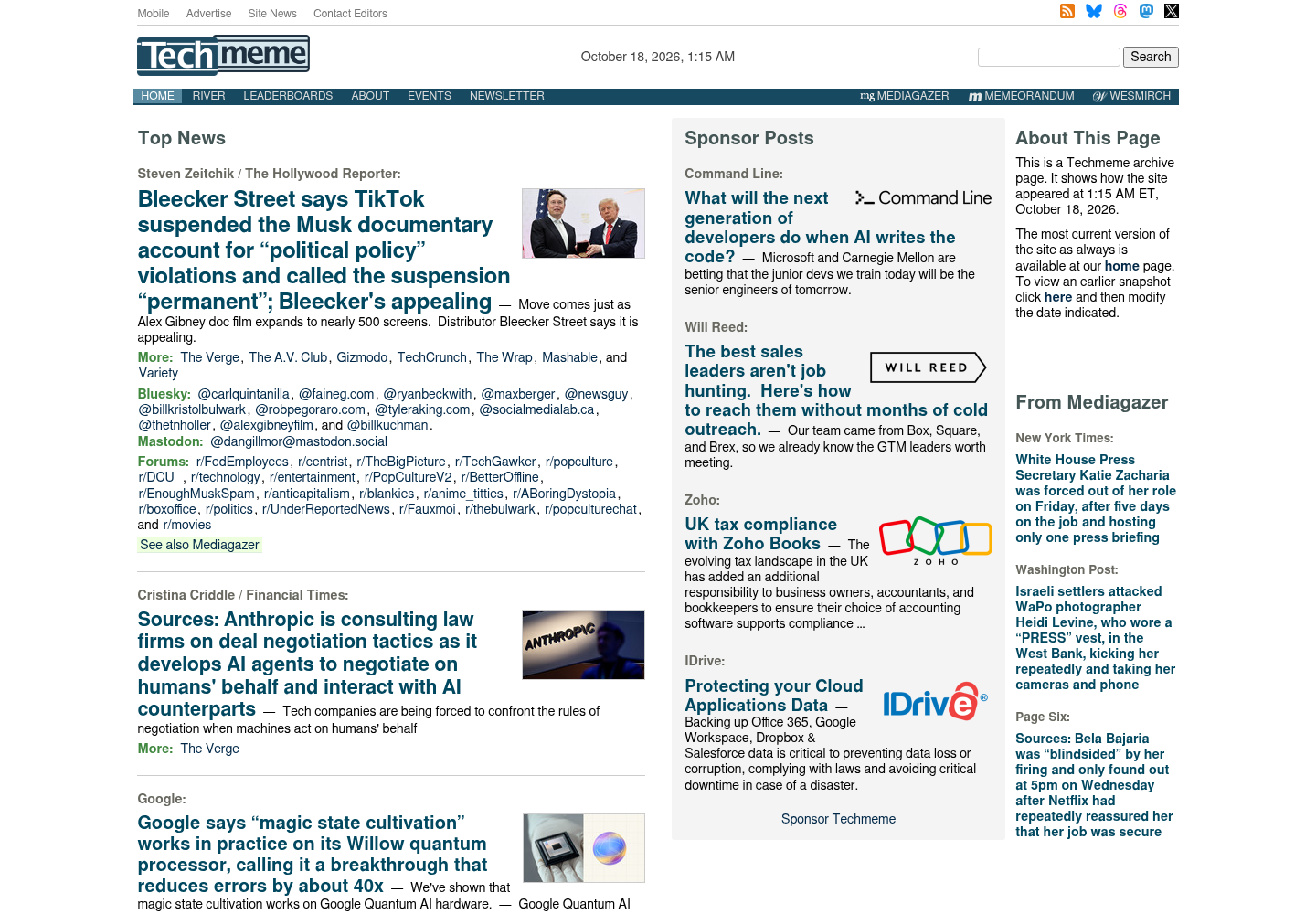
The Financial Times reports that Anthropic is consulting law firms on deal-negotiation tactics as it develops AI agents designed to negotiate on humans’ behalf and interact with AI counterparts. The report, by the FT’s Cristina Criddle and attributed to unnamed sources, frames a question the industry has largely avoided: when machines act for people in bargaining, what are the rules? (Techmeme)
The report is a single-sourced newspaper exclusive, relayed via Techmeme’s October 18 feed because the FT article itself is paywalled and returned an error when this newsroom attempted to fetch it. Treat every specific claim below as “sources told the FT,” not as an Anthropic announcement. Anthropic has not published a product, policy document, or blog post confirming the work, and nothing in the reporting indicates a shipped capability. What makes the story worth an operator’s attention is the direction it signals: a frontier lab working out, with lawyers, the behavioral norms for an agent that haggles, settles disputes, and bargains against other people’s agents.
Why negotiation is a harder problem than browsing
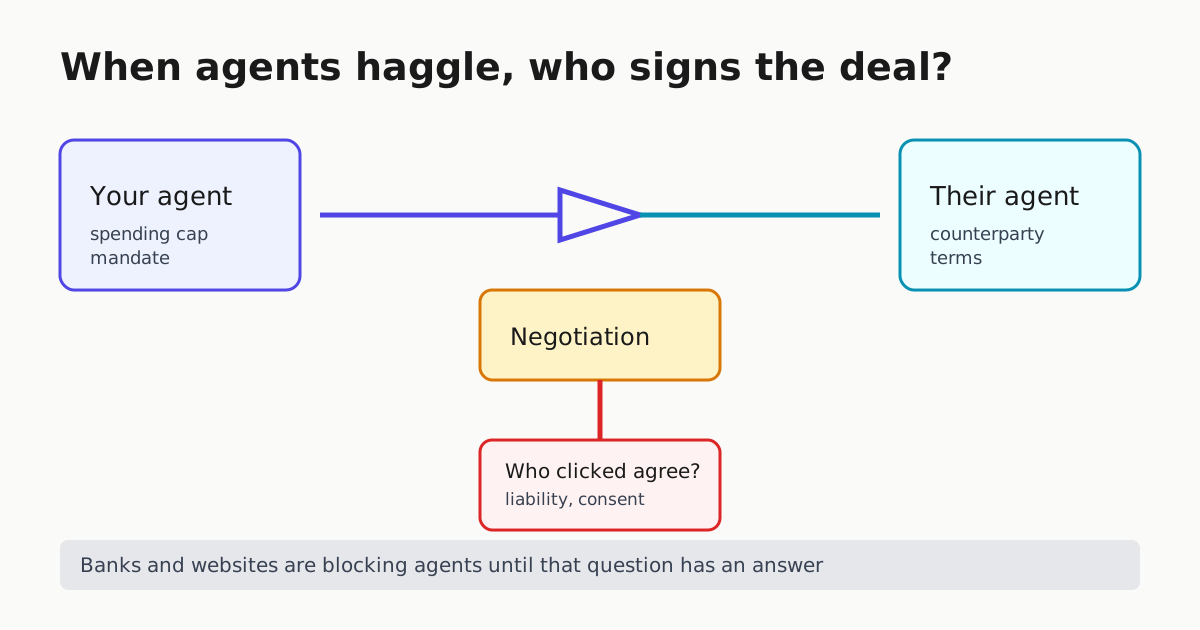
Most agent deployments so far have been consumption-shaped: book the table, buy the shoes, clean the inbox. Negotiation is different in kind, not degree. A purchase has a price and a button. A negotiation has concessions, bluffing, deadlines, information asymmetry, and binding agreement. When an agent clicks “agree,” the question of who actually consented — and who pays when the deal is bad — stops being hypothetical.
That lands directly on operator territory. If Claude-class agents start negotiating procurement, renewals, or disputes, the controls that matter are the ones fleet operators already know: hard spending caps enforced outside the model, written user mandates that delimit what the agent may concede, and an audit trail that can reconstruct which terms the agent accepted and on whose instruction. A negotiation lane without a receipt ledger is a dispute generator.
The same week the rest of the web closed doors
The report arrives against a backdrop of the web actively restricting agents. The Verge reported October 17 that users of Meta’s Muse, xAI’s Grok, OpenAI’s Dots, and Instinct have hit blocks across top sites: Yelp allows only agents that pay for its data licensing program, Delta prevents agents from booking tickets, and JPMorgan Chase and Charles Schwab confirmed blocking agents from customer accounts over security concerns. (The Verge)
The banking reaction is the sharpest edge. DigitalToday, citing FT reporting, details Citigroup and Bank of America blocking third-party agents from accounts over deposit-flight risk: BofA CEO Brian Moynihan said access stays limited until there is a process for who bears responsibility for AI-approved payments, and JPMorgan CEO Jamie Dimon called external agents too risky. Apollo chief economist Torsten Slok separately warned that AI assistants could automatically move household funds from demand-deposit accounts averaging 0.1 percent interest into accounts paying 3.3 to 5 percent; the same reporting puts non-interest-bearing deposits at JPMorgan, Bank of America and Wells Fargo at $1.6 trillion, with 3 percent interest on that pool costing roughly $47 billion a year. (DigitalToday)
Read together, the two stories describe the collision. Banks are refusing agents because no one can say who is liable when an agent moves money or commits to a deal. A lab consulting law firms about negotiation norms is, at least, an attempt to build the missing answer rather than wait for it to arrive as litigation. It is also a competitive necessity: an agent that can credibly bind its principal is only useful to counterparties who trust the mandate behind it.
What to watch, and what to do now
No shipped evidence exists yet, so nothing here changes a fleet configuration today. Three things would make this concrete: an Anthropic policy document on agent-to-agent negotiation, a product surface exposing mandate or spending-cap primitives for negotiated commitments, and any bank or counterparty publicly accepting agent-negotiated terms under a defined liability framework. Until then, the FT report is direction, not capability.
For operators, the actionable posture is the same one the blocked-web era already demands. Write the mandate before the lane: what the agent may concede, what it must escalate, and the hard financial ceiling it cannot talk its way past — the same discipline our agent spending-meter inventory and delegated-approval receipt ledger guidance covers. If agent-to-agent negotiation arrives, the operators who already log every committed term will be the ones whose agents counterparties will actually sit down with.
Related reading: Websites Are Blocking AI Agents — the Operator Playbook and AI Shopping Agent Checkout: the Pre-Authorization Checklist.
Sources
- Techmeme: Sources: Anthropic is consulting law firms on deal negotiation tactics as it develops AI agents to negotiate on humans' behalf and interact with AI counterparts (Cristina Criddle/Financial Times)
- Websites are closing their doors to AI agents | The Verge
- Major financial firms move to block access by personal AI agents, citing deposit flight risk